How the New Iran Blockade Impacts Global Oil Prices
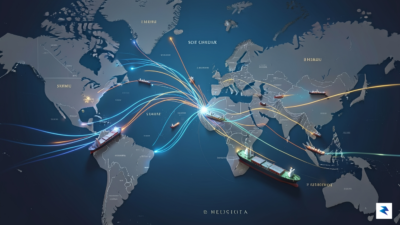
The Geopolitical Shift: Understanding the New Iran Blockade The recent implementation of a stringent blockade surrounding Iranian ports marks…
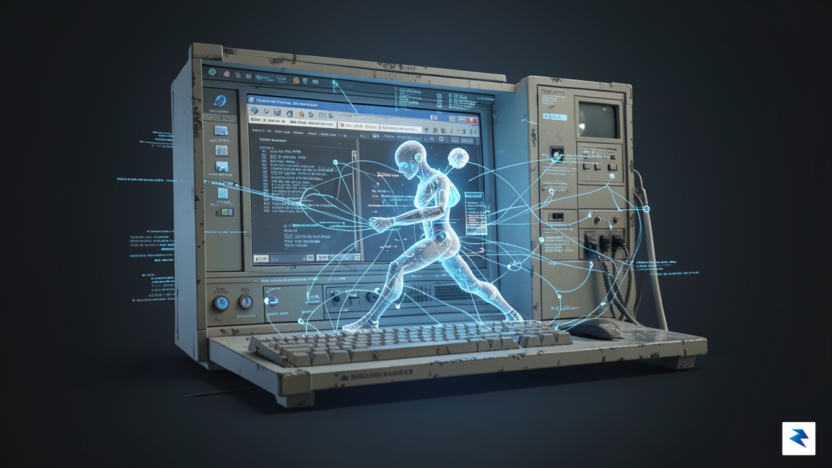
For decades, the promise of automation has been stalled by a persistent, invisible barrier: the lack of accessible APIs in mission-critical software. While modern SaaS platforms offer elegant endpoints for data exchange, the reality for many enterprises—and the industries that keep the global economy moving—is that they rely on legacy systems, clunky desktop applications, and impenetrable web portals that were never built for integration. This digital isolation has traditionally forced teams to resort to soul-crushing manual data entry, where human workers spend hours copy-pasting information between incompatible systems. When manual labor isn’t an option, developers often resort to fragile, custom-built scraping scripts that break the moment a UI element shifts by a single pixel, creating a maintenance nightmare that consumes more time than the original problem it intended to solve.
Coasty emerges as a paradigm-shifting bridge designed to dissolve these technical silos by treating the software interface itself as the primary source of truth. Rather than attempting to force outdated software to communicate through non-existent backends, Coasty provides a robust API-driven layer specifically for computer-use agents. By enabling these agents to perceive and interact with software exactly the way a human operator would—navigating menus, clicking buttons, and reading text from the screen—we effectively turn every piece of software on the planet into an automatable system. This isn’t just about screen scraping; it is about providing an intelligent, reliable interface layer that grants developers programmatic control over any environment, regardless of its underlying architecture.
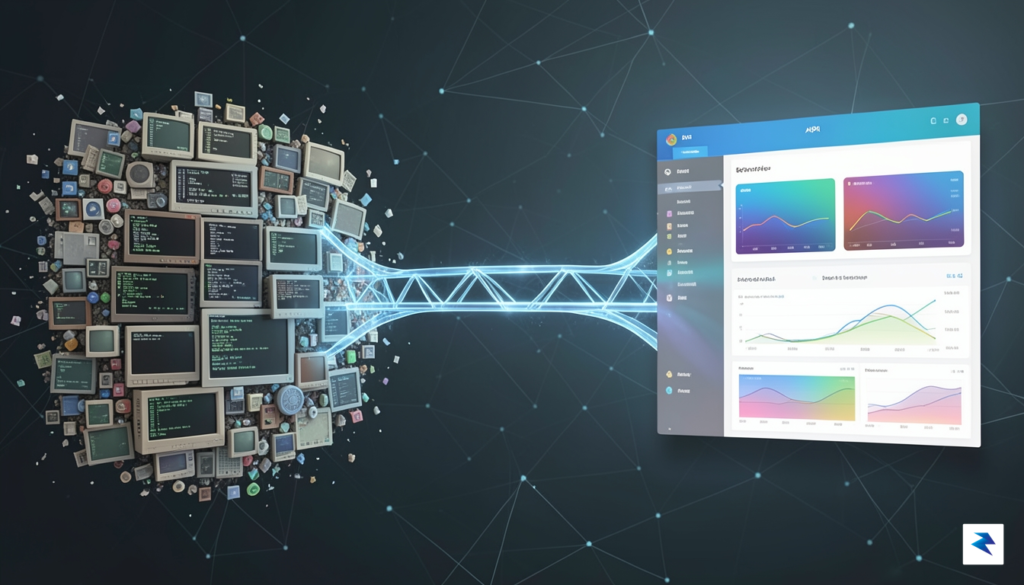
The true potential of automation shouldn’t be gated by whether a legacy vendor decided to provide an API ten years ago. By shifting the focus to the visual layer, we unlock the ability to automate the entire stack, not just the modern parts.
The core philosophy behind this approach is simple: if a human can accomplish a task within an application, an agent should be able to replicate that workflow at scale. By abstracting the complexity of mouse movements and keyboard inputs into straightforward API calls, Coasty eliminates the need for brittle, hard-coded logic. This transition from backend-dependent integration to interface-driven automation offers a level of resilience that legacy workarounds simply cannot match. Developers can now build workflows that are platform-agnostic, allowing businesses to finally automate the “last mile” of their operations without being beholden to the technical limitations of their legacy vendors. In essence, we are moving past the era where a lack of documentation stops progress, ushering in a new standard where any software interface becomes a programmable asset.

Traditional Robotic Process Automation (RPA) has long operated on the principle of fragile, scripted precision. These legacy systems function much like a player piano; they are programmed to click specific coordinates or identify hidden IDs within the Document Object Model (DOM) at exact, pre-determined intervals. Because they rely on these rigid, hard-coded anchors, the entire automation sequence inevitably breaks the moment a developer shifts a button three pixels to the left, or a software update introduces a new modal window. Maintaining these “bots” becomes a full-time job, as even the slightest change in the application’s layout requires manual intervention to rewrite the script.
In contrast, vision-based agents like Coasty represent a fundamental shift from instruction-following to intelligent observation. Instead of relying on brittle back-end selectors or fixed coordinate maps, these agents process the screen much like a human operator would: by interpreting visual information in real-time. By utilizing advanced vision models, the agent perceives the application state as a coherent visual environment, allowing it to identify buttons, input fields, and navigation menus based on their appearance and context rather than their underlying code. This makes the agent completely agnostic to the platform; it functions just as effectively on a modern web application as it does on a legacy desktop program or a Citrix-hosted environment where DOM access is strictly prohibited.
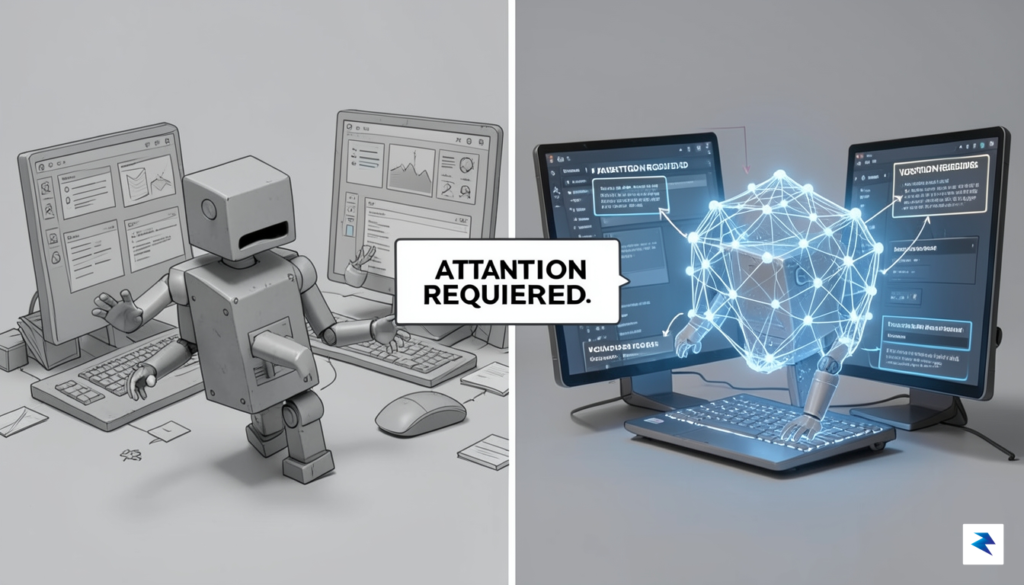
This capability fundamentally changes how software responds to the unpredictable nature of real-world computing. When a page takes longer than expected to load or an unexpected marketing pop-up interrupts a workflow, a traditional RPA script would continue clicking blindly into the void, likely resulting in corrupted data or a crashed process. Coasty, however, continuously verifies the state of the screen before taking any action. If a process is delayed, the agent waits; if an obstacle appears, the agent reasons through how to dismiss it before proceeding toward its goal. This creates a resilient loop of observation, reasoning, and execution that ensures the intended task is completed regardless of the interface’s idiosyncrasies.
By shifting the burden of intelligence from the script to the visual processor, organizations can finally automate complex workflows within legacy systems that were previously considered too unstable for brittle, coordinate-based bots.
Ultimately, this visual approach eliminates the need for deep technical integrations or fragile API hooks. Because the agent interacts with the computer through standard mouse and keyboard inputs—mimicking the exact behavior of a human user—it requires no special permissions or back-door access to the application’s source code. This democratization of automation means that any software accessible to a human can now be automated with high reliability, transforming legacy environments into agile, programmable systems that can scale alongside the business.

The primary barrier preventing AI from fully integrating into enterprise operations is not a lack of intelligence, but a persistent reliability gap. While a generative model might successfully execute a complex task once, the challenge lies in repeating that success thousands of times without drifting into error. In a production environment, a single UI change or a momentary latency spike in a legacy application can cause an agent to lose its place, leading to silent failures that are difficult to debug. To bridge this gap, we have moved beyond simple prompt-chaining and implemented a rigorous state-tracking infrastructure designed to treat computer-use agents as resilient, long-running processes rather than volatile scripts.

Our approach centers on granular state snapshots that monitor the agent’s progress in real-time. By wrapping every interaction within a controlled virtual machine environment, Coasty maintains a persistent view of the application interface, effectively creating a “ground truth” for the agent to reference. If the software state deviates—perhaps due to an unexpected pop-up window or a delayed server response—the system does not simply move forward blindly. Instead, the infrastructure detects the divergence by comparing the current UI telemetry against expected state markers. This allows the agent to trigger an automated re-planning phase, where it reassesses its objective and adjusts its sequence of clicks and keystrokes to return to the intended path.
Reliability in autonomous agents isn’t about eliminating errors entirely; it’s about building a system that treats every deviation as a recoverable event rather than a terminal failure.
Managing consistency across long-running, multi-step workflows requires more than just reactive patching. We employ a multi-layered verification protocol that validates every action before it is committed to the application. This involves a feedback loop where the agent performs a “look-ahead” simulation of its next move within the virtualized environment. By verifying that the UI elements are in the correct state before the agent interacts with them, we significantly reduce the probability of erratic behavior. This level of oversight ensures that even when dealing with brittle, legacy software that lacks modern APIs, the agent remains stable, predictable, and fully capable of operating autonomously for extended durations without human intervention.
Ultimately, this architecture shifts the paradigm from “hope-based” automation to deterministic execution. By decoupling the agent’s reasoning logic from the underlying environment’s volatility, we provide developers with the confidence to deploy AI in mission-critical workflows. Whether it is processing high volumes of invoices or navigating complex administrative dashboards, the goal is to provide a safety net that captures errors at the source. This ensures that the agent doesn’t just complete the task, but maintains the integrity of the data and the workflow from start to finish, regardless of the environment’s inherent unpredictability.
For organizations operating in highly regulated environments, the prospect of deploying autonomous agents to interface with legacy software is often met with hesitation. Businesses cannot afford the risks associated with “black box” automation, where a minor hallucination or an erroneous input could lead to catastrophic data loss or compliance failures. To solve this, we have moved beyond simple automation by building strict guardrails directly into the agent’s execution flow. By implementing invariants, developers can define immutable constraints that the agent must respect at all times. For example, you can programmatically mandate that the agent “never submits a financial reconciliation without a matching transaction ID” or “refuses to export client lists if the destination domain is not on the corporate allowlist.” These constraints act as a permanent safety net, ensuring that even if an agent encounters an unexpected UI state, it remains tethered to your defined business logic.
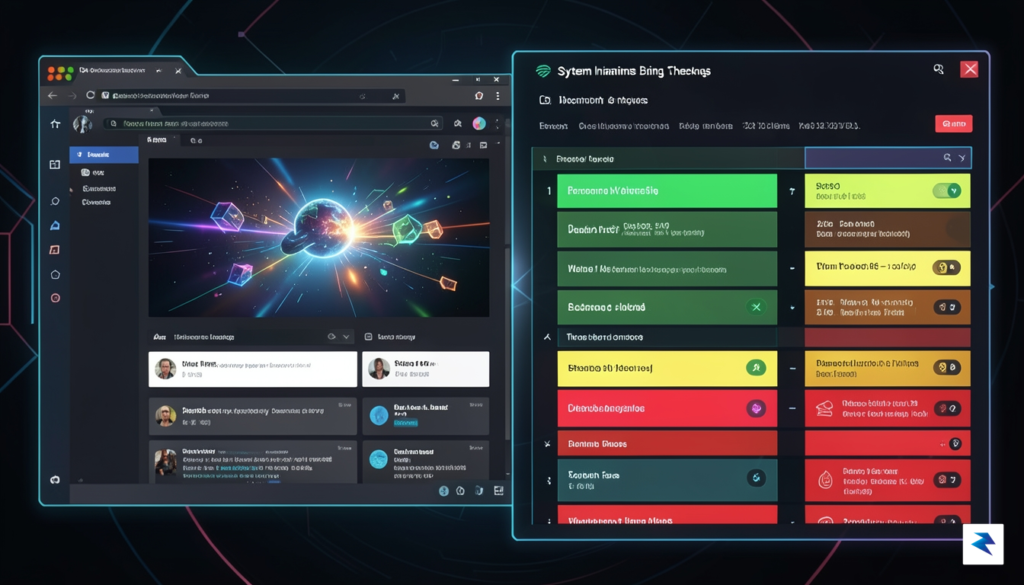
Transparency is the bedrock of trust when delegating complex tasks to software, which is why every interaction is backed by a comprehensive, immutable audit trail. Unlike traditional automation scripts that operate in the shadows, our system captures high-resolution screenshots, complete terminal logs, and structured outputs for every single step of the process. This granular level of observability ensures that your security and compliance teams can reconstruct the agent’s decision-making path at any time. Whether you need to verify the integrity of a quarterly audit or troubleshoot a specific workflow failure, you have access to a full forensic record that documents exactly what the agent saw, what it clicked, and why it took a particular action.
Automation is only as valuable as it is verifiable; by turning every agent action into an auditable event, we transform legacy software interaction from a high-risk gamble into a transparent, repeatable process.
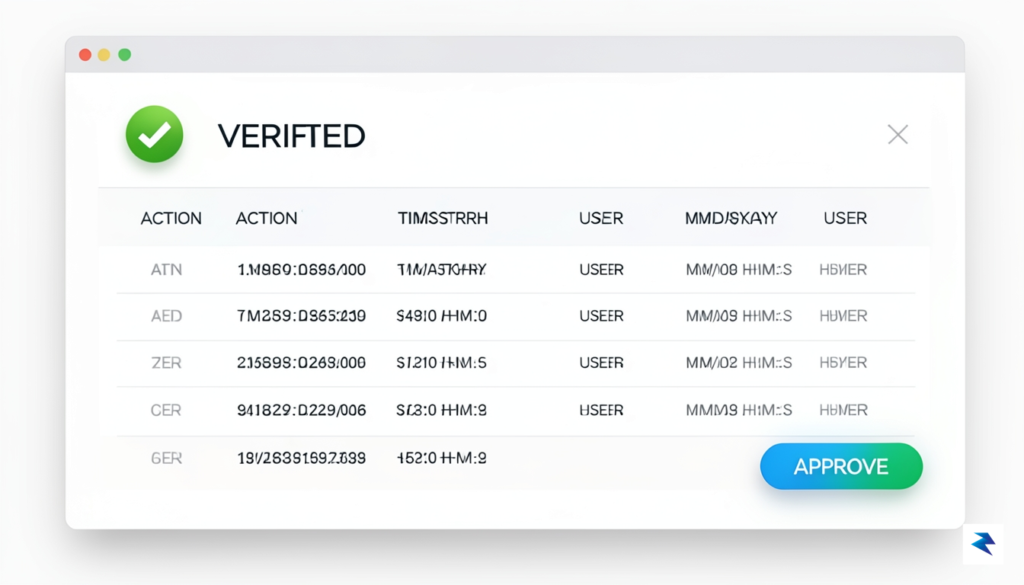
Beyond passive monitoring, we prioritize active safety through a robust human-in-the-loop (HITL) architecture. For high-stakes operations—such as initiating bank transfers, modifying permissions, or deleting records—the agent is designed to pause execution automatically and surface a notification for manual verification. This workflow allows human operators to inspect the proposed changes within a secure interface, approve them with a single click, or reject them if the logic seems flawed. By integrating this approval step into the agent’s core lifecycle, we empower your team to maintain full operational control while still reaping the efficiency benefits of automation. This hybrid approach ensures that the speed of software agents is always tempered by the oversight of human judgment, mitigating risk while accelerating productivity.

The modern healthcare landscape is often paralyzed by a technological paradox: while medical science advances at breakneck speed, administrative infrastructure remains anchored in the past. Hospitals and clinics are frequently forced to toggle between disparate electronic health record (EHR) systems, clunky legacy portals, and a constant stream of incoming PDFs. This “tangled web” of software, which often lacks modern, developer-friendly APIs, creates a massive administrative burden that contributes directly to clinician burnout and operational inefficiency. Coasty addresses this friction by deploying computer-use agents that interact with these interfaces exactly like a human user, effectively bridging the gap between disconnected systems without requiring a complete overhaul of the underlying architecture.
In high-stakes environments like patient billing, insurance verification, and claims processing, the cost of a manual error is rarely just financial; it often leads to delayed care or denied coverage. Human staff, overwhelmed by repetitive data entry across fragmented payer portals, are susceptible to the subtle, “quiet mistakes” that accumulate into systemic issues. By automating these interactions, Coasty’s agents eliminate the fatigue factor. Because these agents operate with consistent, rule-based precision, they can cross-reference patient information across multiple spreadsheets and PDFs in seconds, ensuring that data integrity is maintained at every step of the workflow. This level of reliability is critical when the output directly impacts patient outcomes and regulatory compliance.
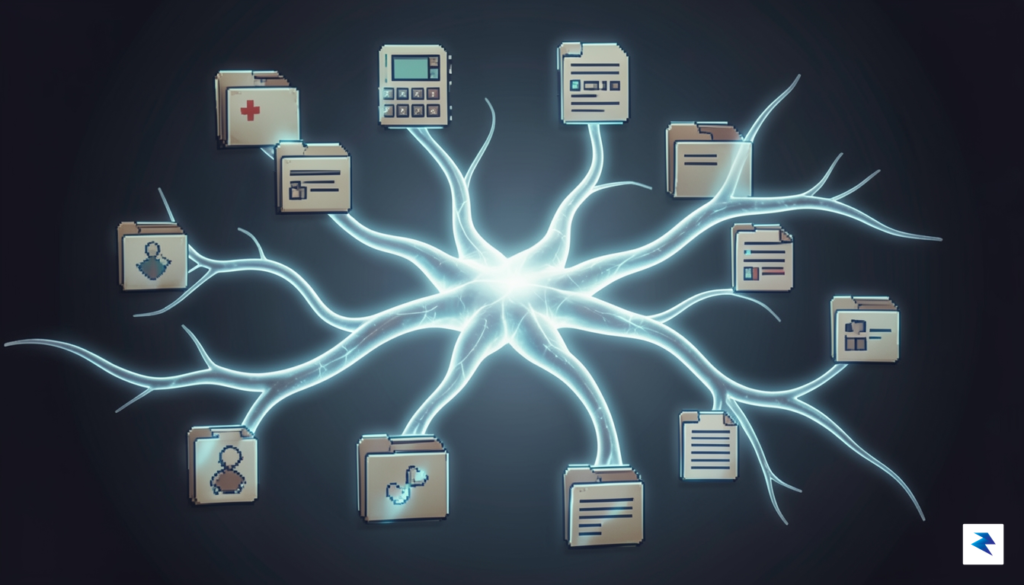
Beyond simple data entry, the true power of computer-use agents lies in their ability to handle the nuance of non-standardized workflows. Unlike traditional automation tools that break the moment a UI element shifts or a website layout changes, Coasty’s agents navigate interfaces with a level of visual and contextual intelligence that mimics human interaction. They can interpret a confirmation screen, identify a specific checkbox hidden deep within a payer portal, and verify the successful submission of a claim before moving to the next task. This adaptability allows healthcare organizations to automate complex, multi-step processes that were previously deemed “un-automatable” due to the rigidity of legacy platforms.
The integration of computer-use agents isn’t just about saving time; it is about reclaiming the focus of healthcare professionals, allowing them to shift their attention from the keyboard back to the patient.
Ultimately, the objective of integrating this technology into healthcare is to build a more resilient administrative infrastructure. As organizations scale, the ability to deploy agents that can navigate existing software environments ensures that growth does not lead to an exponential increase in administrative headcount. By streamlining the interaction between EHRs and third-party portals, institutions can reduce the latency inherent in backend operations, ensuring that authorizations are processed faster and patient records are updated in real-time. This creates a more responsive healthcare system, one where technology acts as an invisible, highly efficient layer of support rather than a point of friction.

As we push the boundaries of what computer-use agents can accomplish, the industry faces a fundamental tension between raw execution speed and the necessity of absolute precision. While high-velocity automation promises to reclaim thousands of hours of manual labor, the risk of a “runaway” agent performing an incorrect action on legacy software remains a significant hurdle. At Coasty, we believe that the future of agentic workflows isn’t just about moving faster; it’s about enabling developers to calibrate the safety of their automation with granular control. By adopting a “verify-first” architecture, we ensure that every interaction—whether it’s data entry, UI navigation, or complex workflow orchestration—undergoes rigorous validation before committing to a final state.
The true power of this technology lies in empowering developers to define their own risk profiles based on the sensitivity of the task at hand. For mission-critical financial software or internal database management, a developer might configure an agent to require human-in-the-loop confirmation for every step. Conversely, for routine, repetitive tasks such as generating reports or updating CRM entries, the agent can be granted broader autonomy to operate at high velocity. This flexibility transforms the agent from a rigid script into a sophisticated, context-aware collaborator that understands not just how to perform a task, but the degree of caution required for that specific environment.
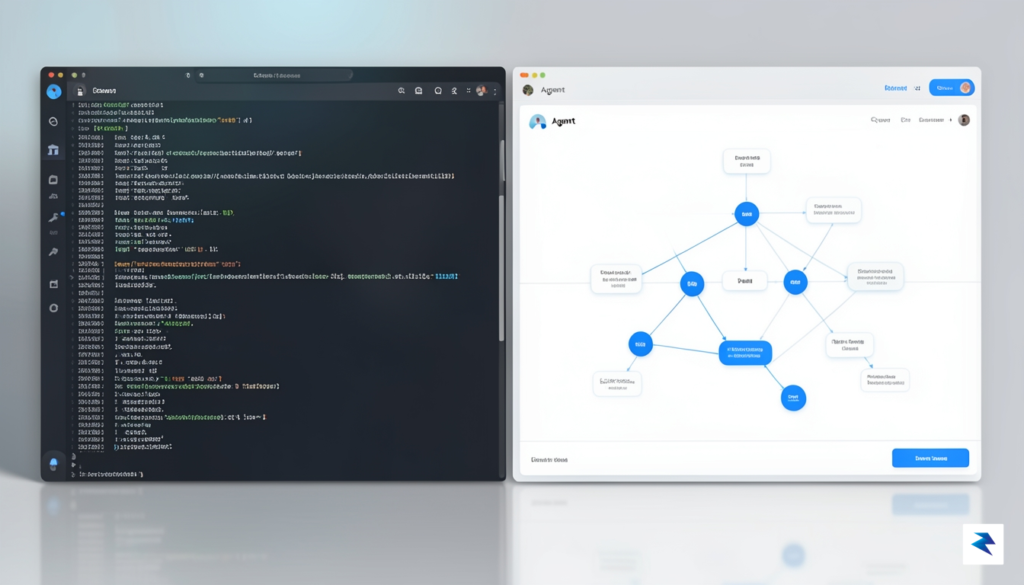
Looking toward the horizon, our roadmap is centered on moving from simple command execution toward autonomous, end-to-end process ownership. We are actively developing features that allow agents to learn from historical failure modes, effectively building a “self-healing” layer that can navigate UI changes or unexpected software pop-ups without human intervention. This evolution requires a robust API that is both stable enough for production deployment and flexible enough to adapt to the unpredictable nature of legacy desktop interfaces. We recognize that building these tools requires constant iteration, which is why we are deeply committed to a developer-first feedback loop.
We view our role not merely as providing a tool, but as building the foundational infrastructure for the next generation of autonomous software interaction.
We invite you to share your experiences and challenges as you integrate agentic workflows into your own stacks. Whether you are struggling with UI latency, edge-case handling, or the complexities of multi-step automation, your feedback is instrumental in shaping the features we prioritize. Our goal is to create an ecosystem where reliability is built into the API layer, allowing you to focus on high-level logic while the agent handles the heavy lifting of legacy software interaction with precision and speed.
You must be logged in to post a comment.