
UK to Introduce Midnight Social Media Curfew for Teens by 2027
Understanding the Proposed UK Social Media Curfew The proposed legislative framework represents a significant shift in how the United Kingdom…

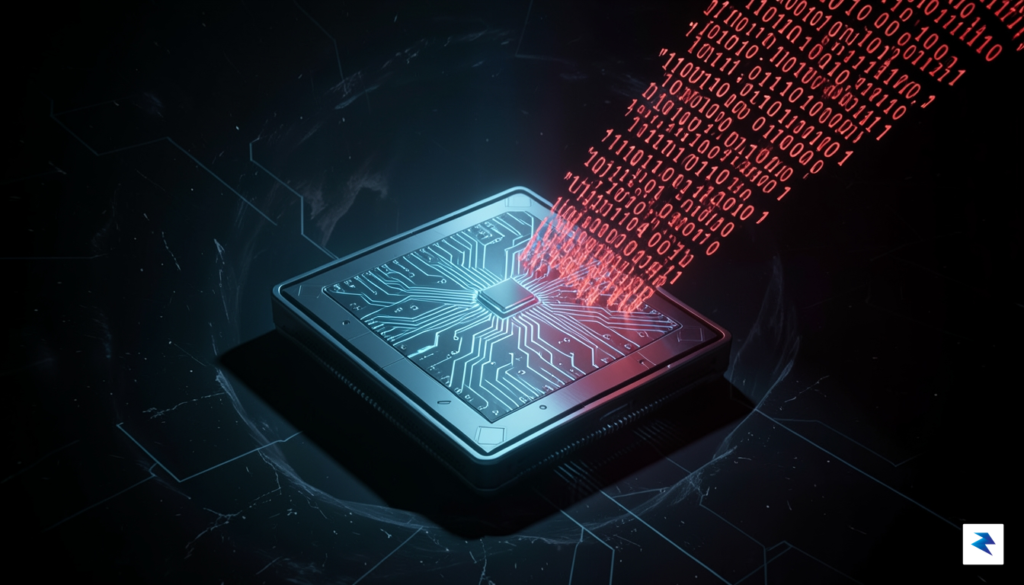
The exploitation of the Ostium protocol began with a sophisticated manipulation of the platform’s price-reporting mechanism, a critical vulnerability that allowed the attacker to bypass standard security checks. At the core of the attack was the manipulation of an off-chain oracle, which Ostium relied upon to determine the settlement prices for its decentralized perpetual contracts. By injecting falsified, future-dated data into the oracle pipeline, the perpetrator effectively “tricked” the protocol into recognizing artificial price discrepancies that did not exist in the broader market. This mismatch created a synthetic arbitrage opportunity that the automated smart contracts were programmed to honor, leading to the rapid draining of liquidity pools.

Once the corrupted price data was accepted as legitimate by the protocol, the attacker initiated a series of rapid-fire trade executions. Because the oracle reported prices that drastically deviated from the actual market value of the underlying assets, the smart contracts calculated massive, unearned profits for the attacker’s positions. The automation inherent in DeFi protocols—intended to provide frictionless trading—worked against the platform in this instance; the system automatically triggered payouts based on the falsified data, effectively automating the theft. Within a matter of minutes, the attacker had systematically liquidated the available reserves, leaving the protocol’s liquidity providers with significant losses.
The Ostium incident underscores a recurring paradox in DeFi: the very automation and real-time data integration that enable high-speed trading also create a singular point of failure when oracle inputs are compromised.
The timeline of this exploit highlights the brutal efficiency of modern decentralized attacks, as the entire incident unfolded in a brief, highly coordinated window. Following the initial injection of the malicious data, the protocol’s automated market maker (AMM) logic processed the fraudulent trades, resulting in an immediate and catastrophic outflow of assets totaling approximately $18 million. The impact on Ostium’s liquidity was instantaneous, as the rapid withdrawal of funds triggered circuit breakers far too late to mitigate the damage. This incident serves as a sobering case study for developers and investors alike, illustrating that even protocols with robust smart contract audits can remain defenseless if the external data feeds they depend upon are not sufficiently hardened against adversarial manipulation.
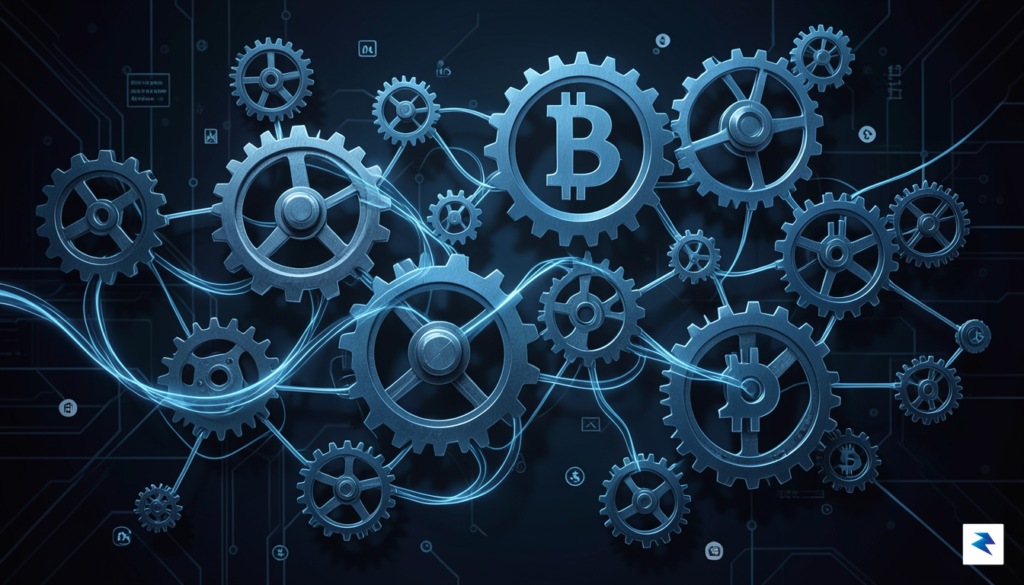
At their core, oracles function as the vital bridges connecting isolated blockchain environments to the vast, fluctuating data of the real world. Without these mechanisms, decentralized finance (DeFi) protocols would be unable to access accurate pricing for assets, execute automated trades, or calculate collateralization ratios. However, this critical dependency has transformed oracles into the Achilles’ heel of the ecosystem. By acting as the primary source of truth for smart contracts, oracles inadvertently become the most high-value targets for sophisticated bad actors. The recent $18 million exploit of Ostium serves as a stark reminder that even well-intentioned platforms are susceptible when their underlying data feeds are subjected to intense, targeted manipulation.

The rise in oracle-based attacks is far from an isolated phenomenon; it represents a systematic trend that is currently testing the structural integrity of the entire DeFi landscape. Hackers increasingly favor oracle manipulation because it allows them to force a protocol into executing unintended actions based on false information, rather than needing to find a flaw in the actual smart contract code. Common patterns in these exploits often involve liquidity draining through flash loans, where an attacker artificially inflates or deflates the price of an asset on a decentralized exchange that the protocol’s oracle happens to track. Once the oracle reports this skewed price, the attacker can drain the protocol’s liquidity pool by performing trades that are technically “correct” according to the manipulated data but devastatingly profitable for the exploiter.
The systemic risk posed by these vulnerabilities extends far beyond a single protocol, as the interconnected nature of DeFi means that a failure in one oracle feed can trigger a cascading liquidation event across multiple platforms.
This escalating wave of attacks highlights a fundamental challenge: maintaining absolute data integrity in a decentralized, trustless environment. When protocols rely on a single or narrow set of price feeds, they inherently lower the cost of entry for an attacker to influence the outcome. To combat this, the industry is gradually shifting toward more robust, multi-source oracle aggregators that dampen the impact of price spikes and anomalous data points. Nevertheless, as long as protocols remain tethered to external data that can be influenced by large-scale market movements, they will continue to face the threat of sophisticated exploitation. The Ostium incident is a sobering indicator that until the industry standardizes more resilient oracle architectures, the safety of cross-protocol liquidity will remain in a state of precarious flux.

At the center of the recent $18 million breach lies a sophisticated manipulation tactic known as the injection of “future-dated” price data. In a decentralized finance (DeFi) environment, protocols often rely on external oracles to determine the fair market value of assets before executing trades. By submitting price updates that carry a timestamp appearing to be in the future, an attacker can bypass traditional time-based security filters. When the protocol’s validation logic incorrectly assumes that a later timestamp inherently implies more current or accurate data, it inadvertently accepts the malicious input as the “new” truth. This creates a window of opportunity where the protocol executes transactions based on a distorted reality that has not yet occurred in the legitimate market.

The failure of standard validation protocols often stems from a lack of rigorous sanity checks regarding the relationship between network time and data timestamps. Many decentralized systems are designed to be fast and efficient, which sometimes leads developers to prioritize low latency over deep cryptographic verification of every incoming data point. If a system does not strictly enforce a “clock-drift” threshold—or if it fails to cross-reference the oracle’s reported time against the current block time—it becomes vulnerable to these temporal exploits. Because the data appears technically “newer” than the existing record, automated smart contracts perceive it as the most reliable information available, triggering unintended financial consequences without ever realizing the input is synthetic.
The core vulnerability lies not in the market itself, but in the protocol’s implicit trust in the temporal integrity of incoming data packets.
This attack vector underscores a critical distinction between traditional price feed poisoning and direct protocol interaction. While price feed poisoning typically involves manipulating the market itself—such as washing trading volumes on a small exchange to skew an average—the method used against Ostium is a direct injection exploit. The attacker does not need to move the actual market price; instead, they exploit the bridge between the oracle and the protocol. By manipulating the metadata accompanying the price, they trick the protocol into interacting with a “ghost” price that exists only in the manipulated feed. Ultimately, this demonstrates that even if an underlying asset’s value is stable, the protocol’s security is only as strong as its ability to verify the authenticity and temporal validity of the inputs it consumes.
To mitigate these risks, developers must shift toward more resilient architectures that demand strict synchronization. Implementing robust multisig verification for oracle data or integrating decentralized oracle networks that provide cryptographic proofs of origin can significantly reduce the likelihood of such breaches. Furthermore, incorporating “sanity check” layers—which reject any data point that deviates significantly from a sliding window of historical averages or arrives with a suspicious timestamp—provides a necessary safety net. As DeFi continues to mature, moving away from blind trust in data feeds toward a model of “trust, but verify” will be essential for protecting user capital from increasingly clever temporal manipulation.

The recent security breach at Ostium serves as a sobering reminder that price data integrity remains the Achilles’ heel of decentralized finance. To fortify ecosystems against such oracle-based manipulation, developers must shift from relying on singular data feeds to implementing robust, multi-layered defense architectures. Protocols should prioritize the integration of decentralized oracle networks that aggregate data from multiple independent nodes, thereby eliminating any single point of failure that a malicious actor might exploit. Furthermore, incorporating time-weighted average prices (TWAP) and sophisticated anomaly detection algorithms can act as a crucial buffer. By ensuring that trades are executed against smoothed price inputs rather than instantaneous, volatile snapshots, protocols can effectively neutralize the impact of artificial price spikes designed to drain liquidity pools.

For developers, the mandate is clear: defense-in-depth is no longer an optional luxury but a fundamental necessity. Beyond oracle aggregation, protocols should integrate automated circuit breakers that pause transactions if price deviations exceed a pre-defined threshold within a specific block timeframe. These “kill switches” provide a vital safety net, preventing the rapid depletion of collateral while automated monitoring systems investigate potential irregularities. Additionally, the industry must embrace a culture of continuous security validation. Relying solely on a pre-launch audit is insufficient; instead, protocols should maintain active bug bounty programs and employ real-time on-chain monitoring tools to identify and mitigate vulnerabilities before they can be weaponized by bad actors.
True protocol resilience is not measured by the absence of vulnerabilities, but by the effectiveness of the systems designed to contain a breach once a vulnerability is triggered.
For the average DeFi investor, the burden of due diligence has increased alongside the sophistication of these attacks. Before committing capital, users should move beyond assessing potential yields and instead scrutinize the technical security disclosures of the project. Key indicators of a mature protocol include a transparent history of multiple third-party audits, the implementation of timelocks on administrative functions, and the use of reputable, decentralized data providers. Investors should prioritize platforms that clearly document their oracle fallback mechanisms—specifically, how the system behaves if the primary data feed experiences latency or failure. By favoring transparency and technical rigor over pure speculative opportunity, the DeFi community can collectively incentivize developers to adopt higher security standards, eventually forcing out protocols that cut corners on infrastructure safety.
As the DeFi landscape matures, the focus on oracle security will likely move toward more advanced cryptographic solutions, such as zero-knowledge proofs for data validation and cross-chain consistency checks. These technologies promise a future where price data is not just aggregated, but cryptographically verified for authenticity and temporal accuracy. Until these standards become the industry norm, the responsibility remains a shared endeavor between protocol architects and the community. By demanding higher security transparency and supporting projects that build with resilience in mind, participants can contribute to a safer, more sustainable decentralized financial future that is capable of weathering even the most targeted sophisticated exploits.
You must be logged in to post a comment.