
New York Times Challenges DOJ Subpoenas: A Fight for Journalistic Independence
The Constitutional Stakes of the DOJ Subpoena The recent legal maneuver by The New York Times to quash federal subpoenas represents far more…


When an organization scales to support millions of concurrent users, the underlying infrastructure often balloons into a sprawling fleet of hundreds—or even thousands—of individual database servers. While this horizontal scaling is necessary to handle massive throughput, it introduces the notorious n+1 problem. In this scenario, every additional server added to the environment increases the cumulative burden on DevOps teams, not just linearly, but often exponentially. When your architecture consists of 768 distinct units, even a simple task like applying a security patch or updating a configuration file becomes a Herculean effort if each server is managed as a standalone entity.
Managing servers as individual units forces engineers into a cycle of repetitive, error-prone manual labor. DevOps teams find themselves performing “snowflake” management, where each server develops its own unique quirks, subtle configuration drifts, and inconsistent state over time. This fragmentation makes it nearly impossible to maintain a predictable environment; when a performance issue arises, troubleshooting becomes a nightmare because you cannot trust that all 768 nodes are operating under the same set of rules or parameters. The time consumed by these maintenance cycles effectively subtracts from the time available for innovation, tethering your brightest engineers to routine upkeep rather than strategic development.

Furthermore, treating servers as individual units acts as a severe bottleneck to organizational growth. As you attempt to scale further, the operational overhead eventually reaches a breaking point where the human cost of managing the infrastructure outweighs the technical benefits of adding more capacity. Capacity planning becomes a guessing game, as you are forced to aggregate data from 768 disparate sources to understand the health and utilization of your overall system. Without a unified abstraction layer, you lack the global visibility required to make informed decisions about resource allocation, leading to either costly over-provisioning or dangerous performance degradation.
The true cost of infrastructure isn’t just the hardware; it is the cognitive load required to keep hundreds of moving parts in perfect synchronization. If you manage servers one by one, you aren’t scaling your business—you are simply scaling your technical debt.
To break free from this cycle, organizations must pivot toward treating their entire fleet as a single, cohesive entity. By abstracting away the individual server level and implementing centralized orchestration, teams can shift their focus from “server management” to “service management.” This transition is not merely a convenience; it is a fundamental requirement for any company looking to maintain reliability and agility at scale. When you successfully unify your infrastructure, you regain the ability to deploy changes globally, enforce security policies consistently, and monitor system health through a single pane of glass, effectively turning a chaotic cluster into a high-performance, unified engine.
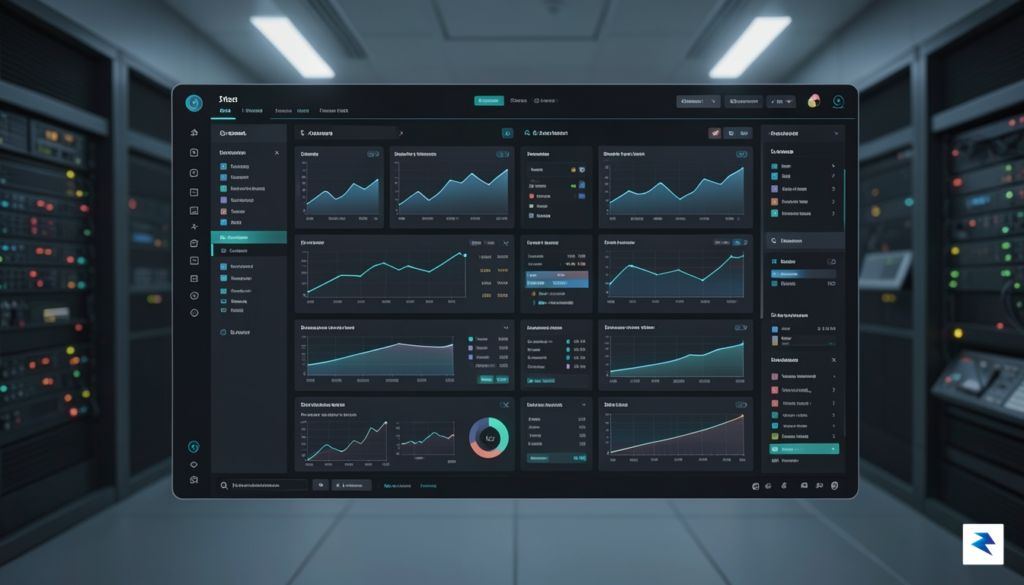
The traditional method of database administration, which relies on manual intervention and individual instance oversight, becomes mathematically impossible as your footprint grows toward the hundreds. When you are responsible for 768 distinct servers, the notion of “logging in” to check a status is not just inefficient; it is a recipe for catastrophic configuration drift. To master a fleet of this magnitude, the engineering mindset must undergo a fundamental paradigm shift: moving away from the server as the primary unit of management and toward the cluster as a logical, unified entity. By treating the entire fleet as a single, programmable data fabric, you can enforce global policies that apply uniformly, ensuring that whether you have one node or one thousand, the operational overhead remains constant.
This transition is rooted in the philosophy of Infrastructure as Code (IaC), where the desired state of the database environment is defined in declarative configuration files rather than via imperative, one-off scripts. When you treat your 768 servers as a single database entity, you effectively abstract away the underlying hardware and individual operating system instances. Instead of worrying about patching specific nodes or verifying local configurations, your team focuses on defining the “intent” of the fleet—such as security hardening, version consistency, and performance tuning—and letting an orchestration layer handle the heavy lifting. This layer acts as a translator, turning high-level directives into granular actions across the entire infrastructure.

By shifting the focus from managing individual servers to managing logical data clusters, you replace manual toil with scalable, repeatable automation.
The immediate benefit of this abstraction is a profound reduction in cognitive load for the engineering team. In a fragmented environment, each server represents a unique context that an engineer must hold in their memory, which inevitably leads to burnout and oversight. By centralizing the management plane, you remove the “snowflake” problem where minor differences in configuration create unpredictable behavior during peak traffic. Engineers no longer need to know the intimate details of every single machine; instead, they interact with a unified interface that provides visibility into the fleet’s health as a whole. This shift allows your brightest talent to stop acting as digital janitors and start focusing on high-level data architecture, performance optimization, and the delivery of features that drive business value.
Ultimately, treating your fleet as a logical unit provides the agility required to scale without linear increases in labor. When you adopt this approach, scaling from 768 servers to 1,000 becomes a matter of updating a single configuration parameter rather than repeating 232 individual procurement and setup workflows. This level of abstraction not only safeguards your environment against human error but also provides the consistency required to maintain high availability across vast, distributed systems. By distancing your team from the granular complexities of individual hardware instances, you gain the clarity needed to steer your data infrastructure toward long-term reliability and growth.
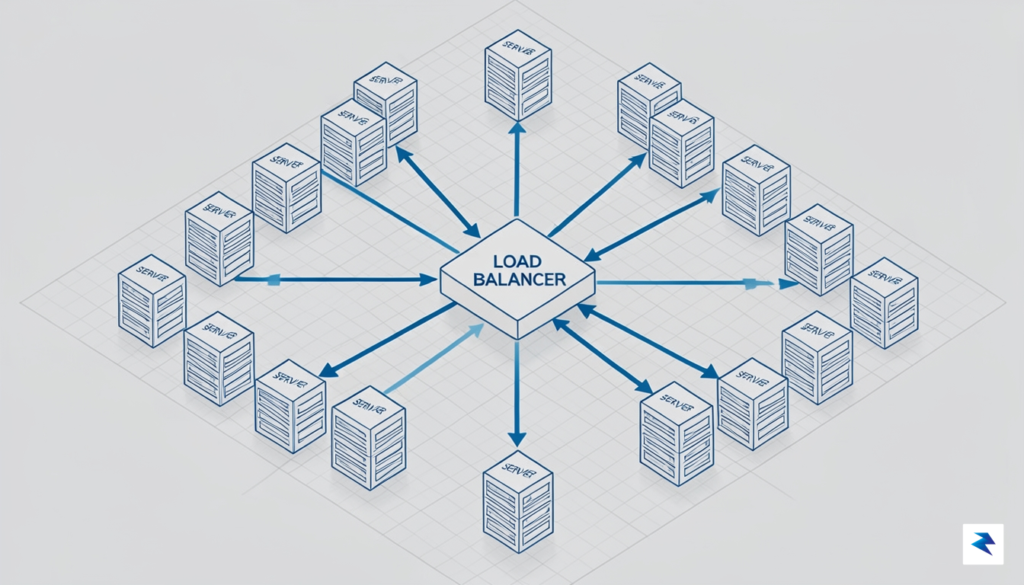
To orchestrate a fleet of 768 servers as a single, cohesive unit, the primary engineering challenge lies in masking the physical fragmentation of your infrastructure. This is achieved by introducing a robust proxy layer that sits between your application and the database clusters. Tools like Vitess, for example, act as an intelligent intermediary that intercepts queries, automatically routing them to the specific shard where the data resides. By abstracting the storage topology, developers no longer need to hardcode server IP addresses or manage connection strings for hundreds of nodes; instead, the application interacts with a single virtual endpoint, oblivious to the fact that its requests are being distributed across a massive, horizontally scaled backend.
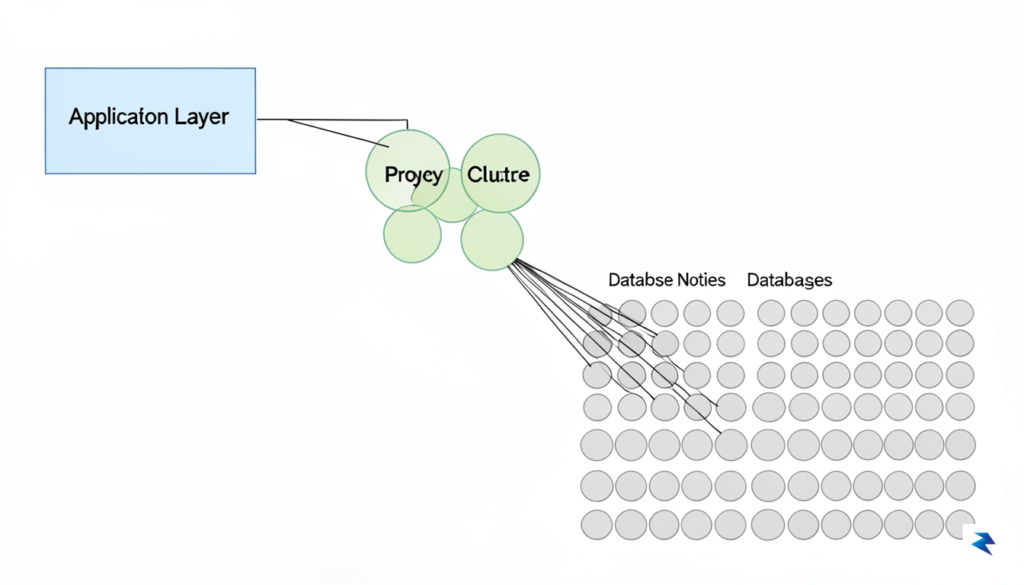
Beyond simple routing, the magic of scaling lies in the implementation of a unified control plane. This layer acts as the “brain” of the operation, maintaining a real-time registry of every server’s health, capacity, and current configuration. Through sophisticated service discovery mechanisms, the control plane ensures that if a node fails or a new one is provisioned to handle increased traffic, the proxy layer is updated instantaneously. This eliminates the need for manual intervention, effectively automating the lifecycle of your infrastructure. When the system detects a performance bottleneck, it can trigger automated provisioning workflows that spin up additional capacity and integrate it into the existing mesh without a single line of code being changed in the primary application.
The goal of a truly scalable architecture is to reach a state of “infrastructure transparency,” where the complexity of the hardware is entirely decoupled from the business logic of the software.
Ultimately, the goal is to transform 768 disparate entities into a singular, programmable fabric. By leveraging modern orchestration tools, engineers can treat the entire cluster as a managed resource pool rather than a collection of individual boxes. This unified approach provides several critical advantages for long-term reliability:
As your footprint grows, the reliance on this abstraction layer becomes absolute. Without it, the overhead of managing individual connections would quickly paralyze development velocity. By investing in a resilient, proxy-driven architecture today, you ensure that your system can scale from a handful of servers to nearly a thousand with the same level of operational simplicity.

When operating a fleet of 768 servers as a unified entity, the primary hurdle isn’t just connectivity; it is the fundamental struggle to maintain a single “source of truth.” In the context of the CAP theorem, we must accept that in the event of a network partition, we cannot simultaneously guarantee absolute consistency and perfect availability. For most large-scale systems, the goal is to favor consistency without allowing the latency of distributed consensus to grind operations to a halt. If one node updates a record while another remains unaware, the illusion of a single system fractures, leading to data drift that can corrupt downstream analytics and user experiences.
To combat this, we rely on sophisticated synchronization protocols that enforce ACID—Atomicity, Consistency, Isolation, and Durability—across distributed nodes. While standard databases handle these properties locally with relative ease, scaling them to hundreds of machines requires a distributed coordination service like Zookeeper or etcd. These tools act as the “brain” of the operation, ensuring that when an update is committed, it is acknowledged by a quorum of nodes before the system confirms success. This prevents the dreaded “split-brain” scenario, where different segments of your infrastructure diverge and start making contradictory decisions based on stale information.

Even with the most robust protocols, hardware failures and network jitters are inevitable in a fleet of this magnitude. When conflicts arise—for instance, when two nodes attempt to write to the same register simultaneously—the system must have a predefined strategy for resolution. Often, we implement “last-write-wins” policies or utilize vector clocks to determine causality, allowing the system to automatically reconcile differences without human intervention. This automated recovery is critical, as manual oversight on 768 machines would be logistically impossible and prone to catastrophic human error.
The core of distributed reliability is not the prevention of failure, but the mastery of automated state reconciliation.
Beyond simple conflict resolution, we emphasize the importance of idempotent operations and state-machine replication. By ensuring that every command can be applied multiple times without changing the result beyond the initial application, we create a system that can heal itself after a disruption. If a node goes offline, it can simply “replay” the transaction log upon reconnection to catch up with the rest of the fleet. This approach turns the fragility of individual hardware into the resilience of a collective, ensuring that even as thousands of operations occur per second, the data remains as coherent as if it were sitting on a single, isolated drive.

The evolution of infrastructure management has been defined by a relentless drive toward simplification, moving from the days of manual rack-and-stack provisioning to the sophisticated orchestration of massive distributed clusters. In the early years of database administration, scaling meant adding hardware and manually configuring replication, sharding, and failover mechanisms, which tethered engineering teams to the mechanical reality of their servers. Today, however, the paradigm has shifted toward treating vast arrays of hardware as a single, unified logic layer. This transition represents more than just a change in tooling; it marks a fundamental maturation in how we perceive the relationship between physical capacity and software requirements.

As we embrace the next generation of database engineering, the rise of serverless architectures and fully managed services has become the defining trend. By abstracting away the underlying node management, these systems allow developers to interact with a logical endpoint rather than a collection of individual instances. This move toward autonomy ensures that the infrastructure itself handles the heavy lifting of load balancing, automated patching, and elastic scaling, effectively insulating the application layer from the volatility of the backend. Consequently, the focus for modern organizations is shifting from the operational burden of “keeping the lights on” to the strategic pursuit of feature velocity and data-driven insights.
The true hallmark of advanced infrastructure is invisibility; when a system of 768 servers functions with the simplicity of a single instance, it stops being a bottleneck and begins to function as a force multiplier for innovation.
Ultimately, this abstraction is the single most significant factor in empowering developer productivity. When engineers are no longer bogged down by the intricacies of distributed state management or the manual reconciliation of server health, they can dedicate their cognitive load to building robust, high-performance features that provide genuine user value. Looking ahead, we expect to see even deeper integration of machine learning and autonomous tuning capabilities, where the database doesn’t just scale automatically, but also proactively optimizes query paths and resource allocation based on predictive patterns. By offloading the complexity of distributed systems to intelligent, self-healing layers, we are entering an era where the only limit to a developer’s output is their own creativity, rather than the constraints of the underlying hardware grid.
You must be logged in to post a comment.