
Is OnePlus Leaving the US and Europe? What We Know So Far
The Evolution of the Smartphone Market When OnePlus first emerged onto the scene, it did so with a singular, provocative mission: to act as…


For the past several years, the artificial intelligence sector has been locked in an escalating arms race defined by raw parameter counts and computational sheer force. The prevailing narrative suggested that if you simply scaled a model large enough—feeding it the entirety of the internet’s text—it would inevitably unlock a universal intelligence capable of handling any task with equal proficiency. However, as the initial novelty of these monolithic Large Language Models (LLMs) fades, a more sober reality has set in. Businesses are discovering that “general-purpose” often translates to “jack of all trades, master of none,” leading to what many now call AI bloat. This phenomenon occurs when enterprises pay massive premiums in latency and energy consumption for systems that are far too cumbersome for their specific operational needs.
The industry is currently hitting a critical inflection point where the sheer scale of a model is no longer viewed as a proxy for quality. Instead, we are witnessing a decisive migration toward specialized architectures that prioritize precision and domain expertise over brute-force generalization. By narrowing the scope of what a model is designed to do, developers can optimize for accuracy, speed, and cost-effectiveness in ways that massive, monolithic systems simply cannot achieve. This shift recognizes that an AI tasked with analyzing clinical diagnostic data or navigating complex legal documentation requires a fundamentally different training architecture than one designed for writing creative marketing copy.

Economic and performance metrics are driving this transition just as much as technical necessity. Smaller, task-specific models offer a compelling value proposition: they require significantly less hardware overhead, which translates into lower cloud infrastructure costs and faster deployment times. Furthermore, specialized models are inherently easier to audit and fine-tune, providing businesses with a level of transparency and control that is often missing in the “black box” nature of massive foundation models. When a model is built to excel in a focused domain, it minimizes the hallucination risks and extraneous information that often plague broader architectures.
The future of enterprise-grade AI lies not in the largest possible model, but in the most effective one. Efficiency is the new benchmark for innovation, moving us away from the era of computational excess and into an era of operational clarity.
Ultimately, the move away from the “one-size-fits-all” approach reflects a maturing market that demands tangible results rather than just impressive metrics. As organizations move from proof-of-concept experiments to high-stakes production environments, the reliability of a specialized, highly tuned model becomes far more valuable than the versatile but unpredictable nature of a generalist LLM. By embracing this evolution, companies are finally moving past the bloat, focusing their resources on tools that are not just capable of generating text, but are capable of delivering actual, measurable utility.
The long-anticipated moment has arrived as Thinking Machines officially steps out of stealth mode, not with a quiet whisper, but with the resounding debut of Inkling, their inaugural open-access model. This launch signifies far more than a mere technical achievement; it represents a strategic pivot in the landscape of artificial intelligence development. Inkling is introduced not just as another model in an increasingly crowded field, but as a tangible manifestation of Thinking Machines’ foundational belief that the future of truly impactful AI lies not in proprietary, opaque systems, but in transparent, accessible, and meticulously optimized architectures that foster innovation through collective understanding.
For too long, the progression of advanced AI has been shrouded in a veil of secrecy, with many of the most powerful models operating as “black boxes” whose internal workings remain hidden from public scrutiny and academic collaboration. Thinking Machines is directly challenging this paradigm, asserting that true progress, trust, and ethical deployment can only flourish within an environment of openness. By making Inkling an open-access model, they are actively inviting researchers, developers, and the broader community to inspect, understand, and build upon its foundations, thereby democratizing access to cutting-edge AI capabilities and accelerating the pace of shared discovery.
Inkling isn’t merely a theoretical offering; it embodies the very essence of Thinking Machines’ internal infrastructure philosophy, refined over years of quiet development. The company has dedicated itself to crafting highly efficient, specialized AI solutions designed to excel within specific domains, rather than pursuing the often-inefficient “one-size-fits-all” behemoths that dominate current headlines. This approach allows for greater control, deeper insights, and ultimately, more reliable and performant systems. Releasing Inkling is a direct testament to the efficacy of this philosophy, demonstrating that focused, well-architected models can deliver exceptional value and push the boundaries of what’s possible in intelligent systems.
In essence, Inkling serves as Thinking Machines’ bold declaration against the prevailing trend of ever-larger, closed models. It champions a future where intelligence is cultivated through clarity, precision, and collaborative effort. This strategic move is a clear statement that they are betting big on a different path—one where transparency builds trust, accessibility fuels innovation, and optimized specialization leads to genuinely superior intelligence, ultimately fostering a more robust, understandable, and beneficial AI ecosystem for everyone.

For years, the industry narrative has been dominated by the “bigger is better” philosophy, pushing massive, monolithic Large Language Models (LLMs) as the universal solution for every business problem. However, many organizations are now discovering that these behemoths are often ill-suited for the nuanced demands of the enterprise. When a model is trained to know everything about everything, it inevitably becomes a jack-of-all-trades but a master of none. This generalized approach creates significant friction, as enterprises grapple with high latency and astronomical compute costs that fail to translate into tangible operational value.

The core issue lies in the sheer overhead required to maintain these sprawling systems. Because these models are designed to process vast, unfiltered swathes of the internet, they are often bloated with unnecessary parameters that complicate deployment and skyrocket inference expenses. For a business that needs to perform a highly specific task—such as summarizing complex legal contracts or parsing proprietary technical documentation—the vast majority of a monolithic model’s “intelligence” is simply dead weight. This lack of domain-specific focus not only drains budgets but also introduces unacceptable delays in response times, making real-time enterprise applications sluggish and unreliable.
The pursuit of a universal AI model is often a pursuit of diminishing returns; depth and precision consistently outperform sheer breadth in high-stakes enterprise environments.
Beyond the logistical strain, the “hallucination” risks inherent in broad-knowledge models pose a genuine threat to corporate integrity. Because these models are trained on generalized, often noisy datasets, they frequently struggle to distinguish between verified facts and common misconceptions. In a professional setting, where accuracy is non-negotiable, a model that confidently fabricates information can lead to catastrophic errors in decision-making. Furthermore, relying on centralized, monolithic platforms raises severe data sovereignty and privacy concerns. When companies feed sensitive, proprietary data into a “black box” model hosted by a third party, they lose control over how that information is utilized, stored, and potentially leaked.
Ultimately, the transition toward specialized, smaller models represents a shift from vanity metrics to functional efficiency. Enterprises require systems that are not only accurate but also transparent, manageable, and tailored to the unique lexicon of their specific industry. By pivoting away from the “one-size-fits-all” trap, organizations can leverage models that are finely tuned for their specific workflows, ensuring that their AI investment remains both secure and highly performant. This shift is not just about saving on compute; it is about reclaiming control and ensuring that the technology actually serves the business, rather than forcing the business to conform to the limitations of a generalized digital brain.
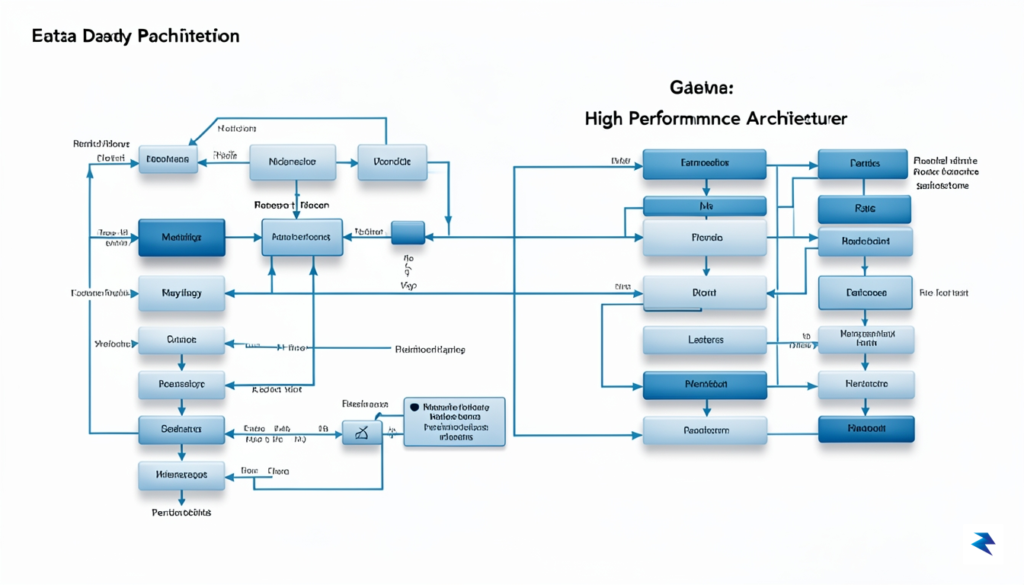
At the heart of Inkling lies a design philosophy that Thinking Machines terms “informed efficiency.” Rather than pursuing the industry-standard trend of indiscriminately scaling parameter counts—a practice that often leads to significant model bloat and diminishing returns—the engineering team prioritized precision. By identifying and stripping away redundant neural pathways that contribute little to high-level reasoning, the architecture achieves a leaner footprint without sacrificing cognitive depth. This surgical approach to model construction allows Inkling to maintain superior performance benchmarks while operating on a fraction of the hardware resources typically required by massive, monolithic language models.
The infrastructure optimization behind this breakthrough is multifaceted, focusing heavily on reducing the computational overhead during both the training phase and real-time inference. Unlike traditional models that demand high-end GPU clusters for even the simplest tasks, Inkling’s architecture is fine-tuned to maximize throughput per watt. This means that organizations can achieve lower latency and faster response times even when utilizing more modest hardware configurations. By streamlining the mathematical operations inherent in the model’s forward pass, the developers have ensured that Inkling remains agile enough for edge deployments while still retaining the complex reasoning capabilities usually reserved for data-center-scale AI.

Perhaps the most significant innovation in Inkling is its modular design, which empowers developers to move away from the “one-size-fits-all” paradigm that has dominated the AI landscape for years. Instead of being forced to deploy an entire multi-billion parameter engine for a specialized task, engineers can selectively utilize only the specific components of the model required for their unique use case. This modularity acts as a force multiplier for efficiency; by loading only the necessary weights into active memory, developers drastically reduce the system’s resource footprint and improve overall stability. This flexibility ensures that the model can be tailored to the specific constraints of the environment, whether it is running on a localized server or within a complex cloud ecosystem.
The true value of an AI model isn’t found in its total size, but in the ratio between its reasoning capability and the energy required to sustain it.
Ultimately, this architectural shift represents a fundamental change in how we think about AI development. By focusing on the synergy between training efficiency and inference speed, the team has successfully demonstrated that intelligence does not have to be synonymous with mass. This strategy not only lowers the barrier to entry for smaller organizations looking to integrate advanced AI into their workflows but also establishes a more sustainable roadmap for the industry at large. As Inkling continues to evolve, its core design principles suggest that the future of artificial intelligence will be defined by how much we can achieve with less, rather than how much we can force into an already overburdened system.

The introduction of Inkling represents far more than just another technical iteration in the crowded field of artificial intelligence; it signifies a fundamental shift toward the democratization of high-end computational infrastructure. For too long, the industry has been dominated by proprietary, impenetrable silos that keep the most powerful AI tools behind high subscription walls and restrictive APIs. By choosing to release an open model, Thinking Machines is effectively advocating for a collaborative future where innovation is built upon a foundation of shared standards rather than isolated, black-box systems. This move encourages a ripple effect across the developer community, where transparency becomes a competitive advantage rather than a liability, forcing the entire ecosystem to prioritize explainability and safety as core architectural requirements.
For developers, the integration of Inkling into existing workflows offers a rare opportunity to bypass the constraints of “one-size-fits-all” models that often struggle with specialized tasks. Because the model is open, engineers can fine-tune its parameters to match the specific needs of their applications, leading to higher efficiency and reduced latency. This modular approach allows teams to maintain ownership of their data pipelines and model behavior, which is essential for industries where compliance and security are non-negotiable. As these workflows become more streamlined, we can expect a surge in specialized AI applications that are both more performant and more reliable than the massive, general-purpose models that currently dominate the landscape.

Looking toward the next 18 months, the open-model space is poised for a period of rapid maturation and standardization. We are likely to see a decline in the dominance of massive, bloated models in favor of smaller, specialized, and highly efficient alternatives that can run on localized hardware. This transition is critical for the long-term viability of AI, as it reduces the massive energy consumption and computational costs currently associated with training and deploying large-scale neural networks. As Thinking Machines continues to champion this open-first philosophy, they are positioning themselves at the center of a new, decentralized standard that values precision over raw, unrefined scale.
The true measure of AI progress will not be how large a model can grow, but how accessible and adaptable it becomes for the builders solving real-world problems.
Ultimately, the long-term impact of this shift will be measured by the rate at which safety and transparency evolve alongside capability. When researchers can inspect the internals of a model, they can more effectively identify biases, address hallucinations, and implement robust guardrails that would be impossible to verify in a closed system. By inviting the global developer community to audit and build upon Inkling, Thinking Machines is not just releasing code; they are fostering a collaborative intelligence that could fundamentally change how we trust and deploy the next generation of digital infrastructure.
You must be logged in to post a comment.