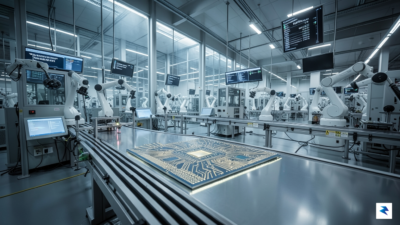
Inside CXMT’s $10 Billion IPO: China’s Quest for AI Dominance
The Strategic Rise of CXMT in the Global Semiconductor Landscape Emerging from the shadow of global industry giants, ChangXin Memory…


The landscape of artificial intelligence has long felt like a closed ecosystem, dominated by a handful of deep-pocketed incumbents whose proprietary models remain locked behind restrictive APIs and opaque development cycles. Into this high-stakes arena steps Thinking Machines Lab, a research collective that has spent the last two years operating in relative silence to build an alternative path forward. Their mission is as ambitious as it is necessary: to democratize access to high-performance intelligence without sacrificing the nuance required for complex, real-world reasoning. By prioritizing transparency and architectural versatility, the lab aims to prove that the future of machine learning does not necessarily belong to the largest corporations, but to those who can build more efficient, adaptable systems.

The centerpiece of this debut is Inkling, a formidable 975-billion-parameter foundation model that pushes the boundaries of what is possible for a newcomer in the field. By crossing the threshold into the near-trillion parameter class, Thinking Machines Lab has signaled that they are not merely experimenting with peripheral tools, but are competing directly for the top spot in the industry’s hierarchy. Unlike many of its contemporaries, which are often siloed into specific business applications, Inkling has been engineered as a general-purpose engine capable of handling everything from high-level linguistic synthesis to intricate logical problem-solving. The scale of this model is not just a vanity metric; it represents a fundamental shift in how the lab approaches data processing, allowing for a depth of contextual understanding that smaller, more specialized models often miss.
The arrival of Inkling marks a turning point where the barrier to entry for top-tier AI performance is finally beginning to erode, inviting a new era of collaborative and open-source innovation.
This release is a watershed moment for the industry, effectively challenging the monopolistic power dynamics that have defined the AI arms race since the advent of generative transformers. By entering the market with such an aggressive, feature-rich powerhouse, Thinking Machines Lab is effectively turning the tables on established players like OpenAI and Anthropic, forcing a conversation about whether industry dominance should be measured by capital investment or by the openness of one’s architecture. As the developer community begins to stress-test Inkling, the focus will likely shift toward its ability to integrate into existing infrastructures while maintaining a high degree of interpretability. If Inkling delivers on its promise of versatility, it will serve as a permanent disruption to the status quo, proving that the next generation of artificial intelligence can—and perhaps should—be built by those committed to the broader research community rather than proprietary silos.
While the previous generation of artificial intelligence models functioned primarily as sophisticated text processors, Inkling represents a fundamental architectural departure. Traditional Large Language Models (LLMs) were constrained by a text-first paradigm, treating visual and auditory data as secondary, often relying on clunky, third-party conversion layers to interpret non-textual information. In contrast, Inkling was engineered from the ground up as a native multimodal system. By integrating video frames and raw audio streams directly into its foundational training pipeline, the model avoids the information loss inherent in converting sensory data into linguistic tokens, allowing it to perceive the nuance of a flickering shadow or the inflection in a human voice with unprecedented fidelity.
This technical shift hinges on a specialized cross-modal attention mechanism that maps pixel-level spatial data and frequency-domain audio data into the same latent space as language. Instead of simply “reading” a video file through metadata, Inkling observes the temporal continuity of frames, enabling it to understand causality, motion, and spatial relationships within a scene. When processing audio, the model does not merely rely on speech-to-text transcription; it analyzes acoustic features—such as rhythm, tone, and ambient noise—to build a comprehensive context that mirrors human sensory input. Consequently, Inkling can differentiate between a speaker expressing genuine frustration versus sarcasm, a level of contextual awareness that has largely eluded legacy models.

“By eliminating the translation layer between our senses and our machine intelligence, we have moved beyond static analysis into the realm of true environmental comprehension.”
The real-world implications of this architectural evolution are profound, particularly for industries bogged down by unstructured media. In content analysis, Inkling can automatically index entire archives of raw footage, identifying specific objects, actions, or tonal shifts without requiring manual tagging. For automated transcription services, the model’s ability to synthesize audio cues with visual lip-reading ensures near-perfect accuracy even in noisy environments where text-only models would stumble. Furthermore, this capability paves the way for a new generation of video search optimization, where users can query a database using natural language to find exact moments—such as “find the clip where the presenter looks surprised while the background music crescendos”—transforming how we navigate the massive, unorganized libraries of digital media that define our modern era.

At the heart of the newly released Inkling model lies a staggering 975-billion parameter architecture, a figure that firmly positions it as a titan within the open-source landscape. While parameter counts are often dismissed as vanity metrics in the race for AI supremacy, the sheer scale of Inkling serves a distinct functional purpose: it acts as a high-fidelity engine for processing multimodal relationships. By utilizing nearly a trillion parameters, the model is able to map the intricate, non-linear connections between diverse data types—such as text, imagery, and structural logic—with a level of granularity that smaller models simply cannot replicate. This massive capacity allows Inkling to maintain a vast “world model” internally, enabling it to retrieve nuanced context and perform sophisticated reasoning tasks that require more than just pattern matching.

The true power of a 975-billion parameter model is not merely found in its storage capacity, but in the density of its reasoning pathways; it provides the model with the ‘depth of field’ necessary to navigate complex logical problems without losing track of subtle, foundational details.
The relationship between this massive parameter count and the model’s reasoning capability is essentially a matter of representational bandwidth. As a neural network expands, it gains the ability to store a more exhaustive array of linguistic and visual abstractions, effectively reducing the probability of “hallucinations” caused by over-generalized data. When a model operates at this scale, it doesn’t just memorize information; it develops a multifaceted understanding of causality and context. Consequently, Inkling can synthesize information across disparate domains, applying the logic found in a technical manual to a creative writing prompt or a complex coding challenge with remarkable consistency. This represents a significant leap forward in moving beyond simple query-response interactions toward true machine-assisted problem solving.
However, constructing a system of this magnitude introduces formidable engineering trade-offs that extend far beyond raw computational power. Training a 975-billion parameter model requires a highly distributed hardware infrastructure, necessitating massive clusters of specialized GPUs working in perfect synchronization to prevent bottlenecks. The energy requirements and the sheer complexity of model parallelism mean that even the most advanced research labs must navigate difficult decisions regarding latency and inference speed. To make Inkling functional for the broader community, the engineering team had to implement sophisticated compression and quantization techniques, ensuring that the model’s immense knowledge base remains accessible without requiring an entire supercomputing facility to run a single inference. Ultimately, this balance of scale and efficiency defines the next frontier of AI, where size is finally being tempered by practical, real-world utility.

The release of Inkling marks a decisive pivot away from the industry standard of proprietary, “black box” artificial intelligence. While major tech giants have increasingly sequestered their most powerful foundation models behind restrictive APIs, Thinking Machines Lab has opted for a transparent, open-source trajectory. By democratizing access to a 975B parameter architecture, the lab is actively dismantling the walls of vendor lock-in that have historically forced developers to tether their innovations to the fluctuating pricing and policy whims of a few dominant corporations. This strategy shifts the power dynamic from centralized gatekeepers toward a collaborative ecosystem where the underlying mechanics of machine intelligence are subject to public scrutiny and collective improvement.
For independent researchers and smaller enterprises, this shift is nothing short of transformative. When models are closed, developers are essentially building on rented ground, unable to audit the data or fine-tune the core architecture to suit specific industrial or creative needs. Inkling changes this calculus by allowing these groups to host, modify, and integrate high-performance AI directly into their own infrastructure. This autonomy is crucial for fields that require strict data sovereignty, such as healthcare or finance, where sending proprietary information through a third-party API is often a non-starter. By providing the weights and documentation openly, the lab is effectively lowering the barrier to entry for high-level AI research, ensuring that innovation isn’t reserved exclusively for those with the deepest pockets.

“True progress in artificial intelligence cannot happen in a silo. By making Inkling accessible, we are inviting the global community to build, break, and refine the future of machine intelligence together.” — Thinking Machines Lab Lead Researcher
Naturally, the decision to release such a potent model into the public domain brings valid questions regarding safety and misuse to the forefront. Skeptics often argue that open-sourcing massive models invites bad actors to bypass safeguards or strip away ethical guardrails. However, Thinking Machines Lab contends that “security through obscurity” is a fragile strategy in the age of advanced computation. Instead, they are banking on the principle that a vast, diverse community of developers is better equipped to identify vulnerabilities, mitigate biases, and stress-test the model’s performance than a small, internal team. By fostering a culture of radical transparency, the lab hopes to establish a new standard for responsible AI—one where security is built into the architecture through community-driven oversight rather than enforced through corporate gatekeeping.
Ultimately, the long-term impact of this open-source strategy will be measured by the diversity of applications that emerge over the coming years. When the fundamental tools of intelligence are no longer proprietary commodities, the creative potential for developers increases exponentially. We are likely to see a surge in specialized, highly efficient iterations of Inkling that cater to niche domains, effectively decentralizing the influence of AI development. If this model proves successful, it may very well force the industry’s hand, compelling larger firms to reconsider their closed-off stance in favor of a more collaborative, open-source future that prioritizes utility and accessibility over artificial scarcity.

The arrival of Inkling marks a pivotal shift in the artificial intelligence arena, signaling that the era of monolithic, walled-garden development is rapidly giving way to a more competitive, open-access ecosystem. By introducing a 975B parameter model that emphasizes both raw computational power and nuanced reasoning, Thinking Machines Lab is effectively challenging the long-standing hegemony held by industry giants like OpenAI and Anthropic. This move suggests that the “moat” around top-tier intelligence is shrinking; as high-capacity models become more accessible, the competitive advantage will no longer stem solely from the size of the parameter count, but rather from the efficiency of the architecture and the transparency of the deployment strategy.

As the market matures, we are witnessing a transition from the “gold rush” phase of AI development toward a period of strategic refinement. Established players will likely find themselves under increasing pressure to justify their proprietary black-box approaches as newcomers like Inkling demonstrate that high-performance models can coexist with more transparent development cycles. For developers and researchers, this means the landscape of the coming months will be defined by an influx of modular, multimodal tools designed for integration rather than isolation. We can expect a surge in specialized applications that leverage the unique strengths of Inkling, forcing established platforms to accelerate their own innovation roadmaps to maintain market share.
The true measure of a model’s success in today’s market is no longer just its benchmark performance, but how effectively it empowers a community to build, iterate, and innovate beyond the initial release.
Ultimately, the future of AI will be shaped by the feedback loops established between developers and the labs themselves. By leaning into an iterative development model, Thinking Machines Lab is betting on the idea that community-driven insights can refine a model faster than internal testing ever could. This collaborative ethos is set to become the industry gold standard, as the complexity of multimodal AI demands a diverse range of perspectives to identify flaws, optimize performance, and explore creative use cases. As we look ahead, the success of Inkling will likely serve as a blueprint for how future laboratories balance raw power with the necessity of an engaged, vocal, and contributing user base.
You must be logged in to post a comment.