Thinking Machines Lab Unveils Inkling: A New 975B Parameter AI Powerhouse
Introducing Inkling: A New Contender in the AI Arena The landscape of artificial intelligence has long felt like a closed ecosystem, dominated…
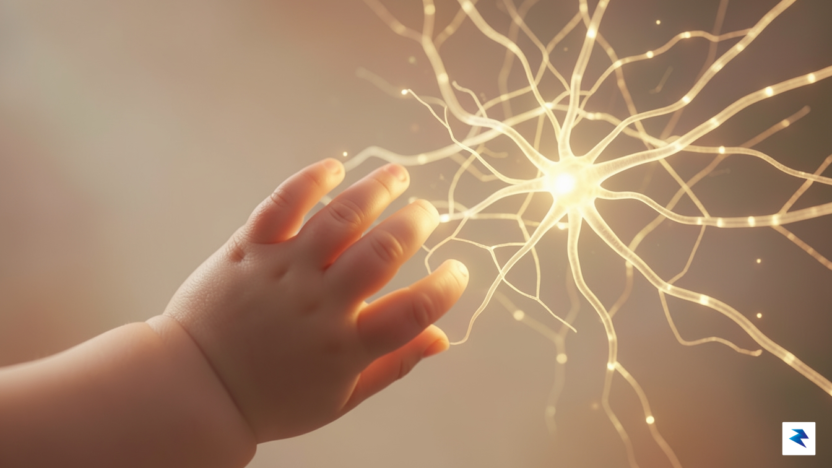
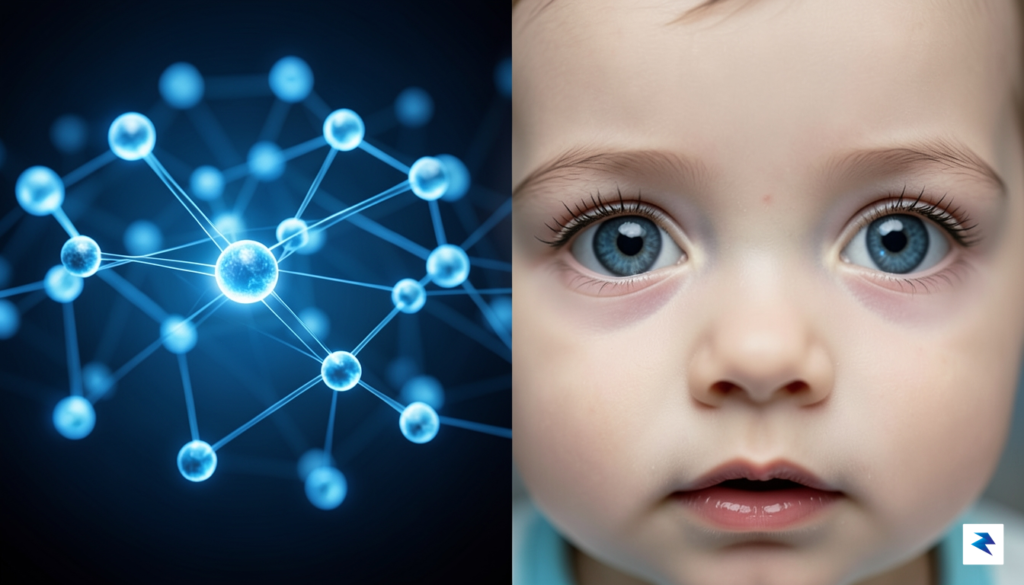
Modern artificial intelligence has achieved feats that were considered science fiction only a decade ago, from composing coherent essays to passing complex professional examinations. Yet, beneath this veneer of high-level performance lies a fundamental disconnect between statistical proficiency and genuine cognitive maturity. While a Large Language Model (LLM) can predict the next word in a sequence with uncanny accuracy, it does so by mapping the probabilistic relationships between tokens rather than grounding those words in a physical reality. In contrast, even a six-month-old infant possesses an innate “intuitive physics”—a foundational understanding that objects are solid, that they persist when hidden, and that they fall when dropped—long before they ever learn to speak a single word.
The gap between these two forms of intelligence is best understood through the lens of how they “learn” about the world. A human child grows through embodied experience; they touch, taste, manipulate, and observe the cause-and-effect mechanics of their environment. This developmental process is transparent and sequential, building layers of social reasoning and causal logic from the ground up. AI models, by contrast, are effectively “black boxes” that consume vast swaths of static data. They do not experience the world; they ingest representations of it. Because they lack this grounding, they can be easily fooled by logical inconsistencies that a toddler would intuitively recognize as impossible.
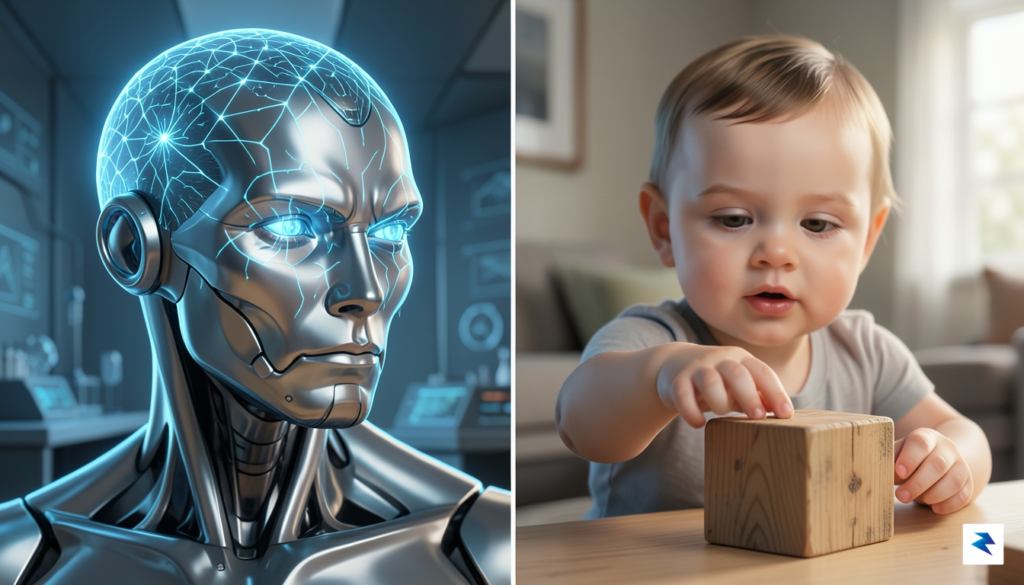
True intelligence is not merely the ability to retrieve information, but the capacity to construct a mental model of the world that functions reliably in unpredictable situations.
This distinction is crucial when analyzing why pattern matching does not equal cognitive maturity. When an AI identifies a cat in a photo, it is recognizing a statistical cluster of pixels that historically correlate with the label “cat” within its training set. When a toddler identifies a cat, they are integrating a multimodal experience: the texture of the fur, the specific sound of a meow, the unpredictable movement of the animal, and the emotional response it elicits. The child is building a comprehensive internal simulation that allows them to predict how the cat might behave in a new scenario. The machine, however, is tethered to its training data, unable to reason beyond the probabilistic boundaries of what it has already seen.
Ultimately, the current trajectory of AI development emphasizes breadth over depth, prioritizing the mimicry of human output over the replication of human cognitive architecture. While we celebrate the impressive generative capabilities of current systems, we must acknowledge that they function as advanced calculators of probability rather than sentient beings. Until an artificial system can move beyond passive pattern recognition to engage in the active, experimental, and social construction of reality that defines the human experience, it will remain a powerful tool rather than an intellectual peer to even the youngest among us.
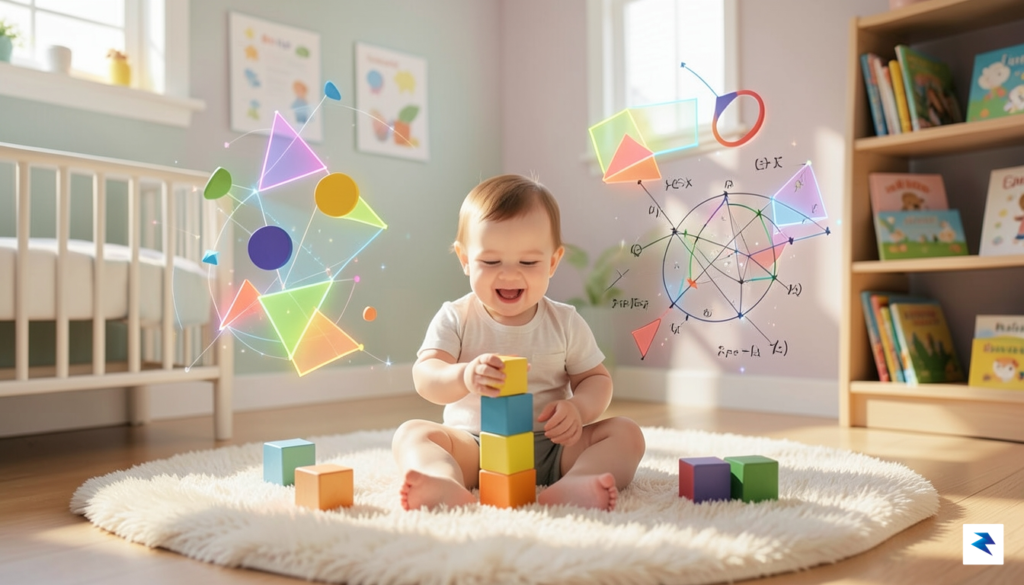
While modern large language models operate primarily as sophisticated statistical engines—predicting the next likely token in a sequence—an infant’s mind functions as a relentless, active laboratory. From the moment of birth, a baby is not merely absorbing data; they are conducting experiments. When a toddler repeatedly drops a spoon from their high chair, they are not just creating a mess; they are testing the fundamental laws of gravity and object permanence. This innate drive to “stress-test” reality allows the human brain to construct an internal simulation of the world, a mental scaffolding that exists independently of any single sensory input.
This process, often described by developmental psychologists as the development of “intuitive physics,” demonstrates that human cognition is built upon a foundation of causality rather than simple correlation. Infants possess a biological framework that expects objects to behave in predictable ways: they should not disappear into thin air, they should fall when released, and they should exist even when hidden behind a blanket. Unlike an AI, which requires a gargantuan corpus of static data to identify a pattern, an infant develops these world models through a tiny fraction of the information, driven by a profound and innate sense of curiosity.
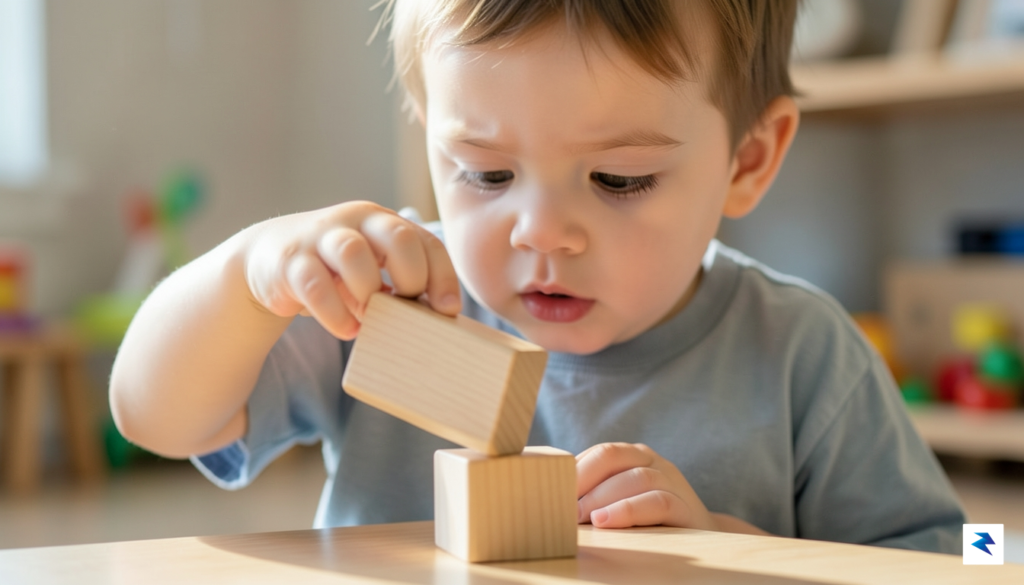
The disparity between biological intelligence and current silicon-based architectures lies in this fundamental methodology. AI models are constrained by their training sets; they are passive consumers of historical text and imagery, lacking the ability to venture out and gather new data through physical interaction. Because they lack a body to navigate the world, they cannot experience the “surprise” that occurs when their mental models are proven wrong. In human biology, it is precisely this surprise—the gap between what we expect to happen and what actually occurs—that triggers the most rapid and effective learning.
True intelligence is not found in the mastery of existing information, but in the capacity to build a predictive simulation of reality that functions even in novel, unseen environments.
By examining how biological brains translate sensory chaos into ordered, causal knowledge, we can begin to see exactly what is missing from our current AI software. We are currently attempting to build intelligence by teaching a machine to memorize the library, whereas the toddler is learning the rules of physics that allowed the books to be written in the first place. Until we can shift our architectures from static pattern matching to active, curiosity-driven exploration, our machines will remain remarkably clever parrots rather than genuine explorers of the physical world.

To train a modern large language model to recognize basic patterns or generate coherent prose, engineers must feed it trillions of words scraped from the corners of the internet, consuming petabytes of data and thousands of hours of supercomputing time. In stark contrast, a human toddler achieves a sophisticated understanding of language, physical causality, and social dynamics within a mere eighteen months, all while relying on a drastically smaller and more fragmented dataset. This disparity represents one of the most profound challenges in cognitive science and computer engineering: the data efficiency paradox. While artificial intelligence relies on brute-force statistical correlation, human infants operate with an internal efficiency that allows them to generalize complex rules from sparse, noisy, and highly limited sensory experiences.

The secret to this biological advantage lies in what researchers call “inductive bias”—the innate, evolutionary constraints that prime the human brain to learn specific things from the moment we are born. Unlike a machine learning model, which often begins as a “blank slate” requiring massive repetition to identify a simple object, the human brain arrives pre-wired with architectural priors. These biological structures act as a scaffold, allowing a child to learn the concept of an object’s permanence or the mechanics of a falling toy after seeing it happen only once or twice. Because our brains are already tuned to interpret the world through lenses of physics and causality, we do not need to process billions of iterations to “understand” the fundamental laws of our environment.
The human brain doesn’t just process information; it predicts it. By building internal models of how the world should work, we turn every momentary experience into a high-value learning opportunity, rather than just another data point in a massive, unorganized pile.
This evolutionary efficiency serves a critical survival purpose. In the wild, an organism that requires millions of iterations to learn that fire burns or that a predator is dangerous would not survive long enough to pass on its genes. Consequently, our brains have evolved to be masters of one-shot learning, where we extract the maximum possible wisdom from a single, high-stakes experience. We effectively “compress” reality into abstract concepts, allowing us to navigate new situations with intuition rather than raw computation. As we continue to push the boundaries of artificial intelligence, the gap between these two approaches remains a humbling reminder: true intelligence isn’t about how much data you can ingest, but rather how elegantly you can make sense of the little you already have.
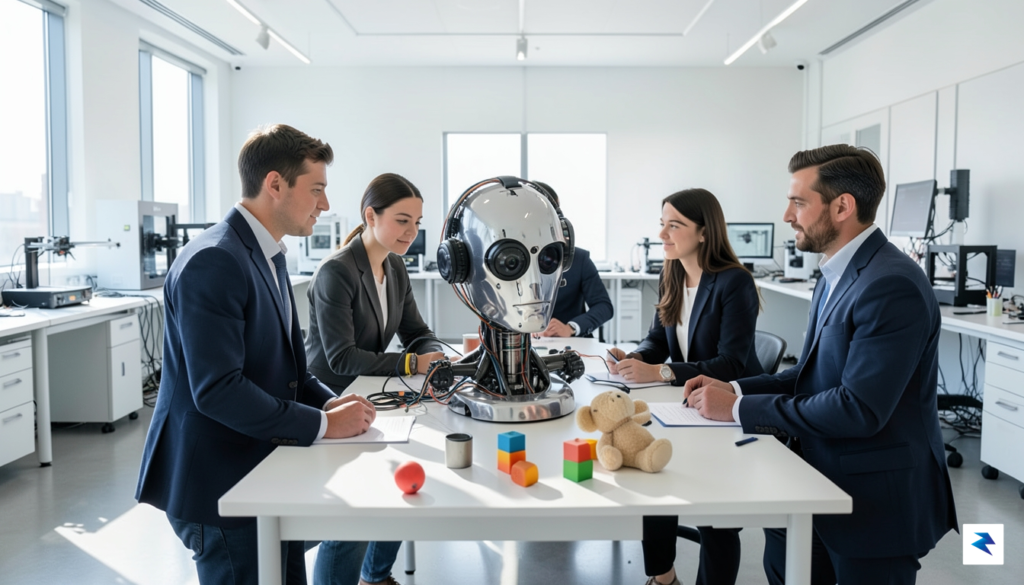
The quest to build truly intelligent machines has historically relied on feeding AI massive datasets, but a new frontier known as developmental AI is fundamentally changing the script. Rather than attempting to upload the sum total of human knowledge into a static model, researchers are now looking to the nursery for inspiration. By shifting the focus from supervised learning—where AI is told exactly what to look for—to a model of autonomous growth, scientists are building agents that learn through stages, much like human infants. This transition acknowledges that intelligence is not merely a collection of facts, but a dynamic process of active engagement with the world.
At the heart of this shift is the concept of curiosity-driven exploration. In traditional machine learning, an agent’s reward system is strictly defined by an objective, such as winning a game or identifying an image. In contrast, developmental agents are programmed with an intrinsic desire to minimize surprise and master their environment. When placed in simulated physical spaces, these digital “toddlers” start by randomly manipulating objects, eventually learning the fundamental laws of gravity, collision, and object permanence without a single line of explicit instruction. This mirrors the way a child stacks blocks not because they want to build a skyscraper, but because they are driven to understand how the world behaves when they intervene in it.
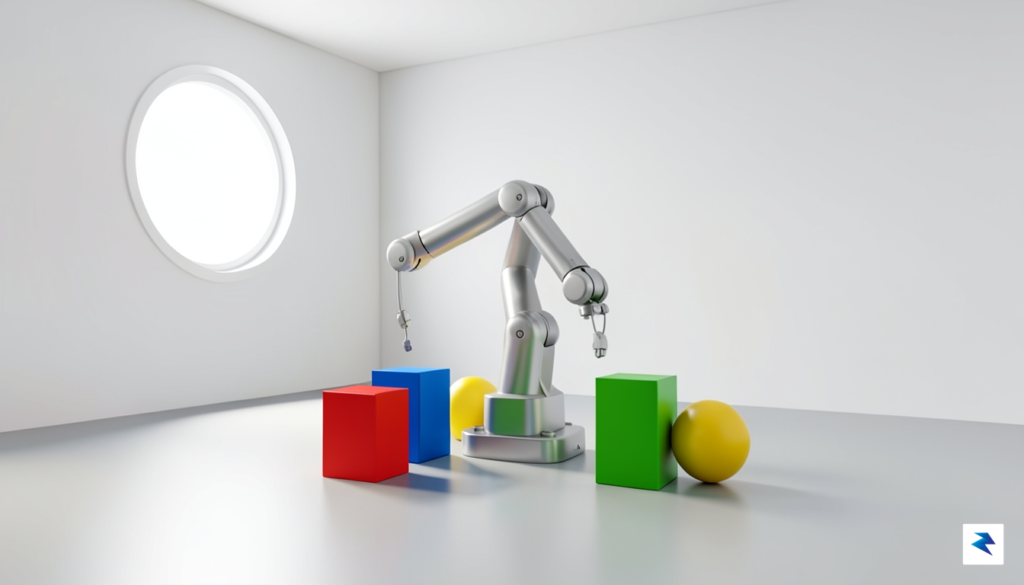
To achieve this, researchers are designing environments where AI agents must navigate “staged” learning paths. This methodology posits that intelligence requires a scaffolded foundation: an agent must first learn to track moving objects with its virtual gaze before it can understand how to grasp them, and it must understand how to grasp them before it can learn to use them as tools. This incremental complexity prevents the cognitive overload that plagues current large-scale models. By mimicking the biological constraints of a developing brain, researchers hope to cultivate a more robust form of intelligence that is generalizable across many different tasks, rather than being hyper-specialized in just one.
True intelligence is not a static destination reached through training data; it is an ongoing, adaptive process of interacting with reality and refining one’s internal model of the world based on the feedback loop of experience.
While this approach is undeniably promising, the challenge remains in scaling this intelligence for the long term. Can we successfully translate the messy, unpredictable nature of a human childhood into a digital framework that persists over years rather than days? The feasibility of this project depends on our ability to create agents that do not just store information, but actively build a conceptual library of how reality works. As we continue to refine these developmental models, we are slowly moving away from the era of the “all-knowing” static database and toward an era of machines that, much like their human counterparts, are constantly discovering the world for themselves.

To move beyond the current limitations of large language models, we must shift our perspective on what constitutes true intelligence. Modern AI systems are effectively gargantuan libraries of human knowledge, capable of predicting the next likely word in a sequence with uncanny precision. However, this statistical mastery is not equivalent to understanding; it is a simulation of competence rather than a genuine grasp of the physical world. While LLMs excel at manipulating symbols, they lack the foundational “common sense” that a toddler acquires within their first few years of life. Achieving Artificial General Intelligence (AGI) will require us to stop treating these systems as mere text processors and begin treating them as agents that must navigate and interact with reality.
The path toward a more robust, human-like intelligence likely leads away from the massive data centers of today and toward the principles of developmental psychology. A child does not learn by ingesting the sum total of human text; they learn through sensorimotor experience, trial and error, and the constant, iterative feedback of physical play. By observing how objects fall, how gravity functions, and how their own bodies move through space, children build an internal model of the world that is far more durable than any statistical correlation. If we want AI to progress, we must prioritize architectures that allow machines to ground their knowledge in sensory input, effectively “growing up” in a simulated or physical environment rather than simply memorizing the internet.
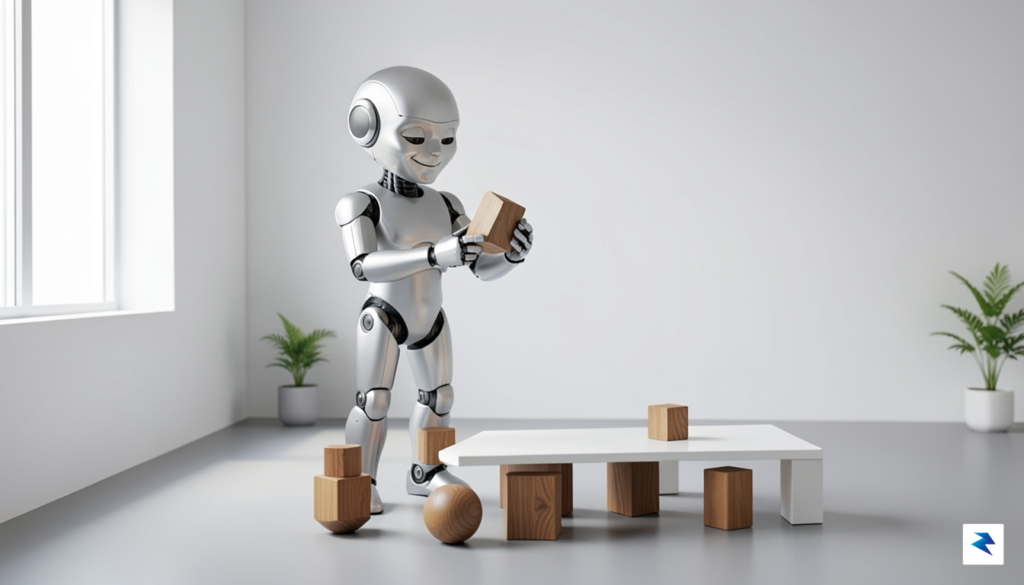
Ultimately, the realization of AGI will depend on a deeper, more profound synthesis between neuroscience and computer science. We have spent years trying to engineer intelligence from the top down, assuming that if we make a model big enough, it will eventually “spark” into consciousness. The reality is that the brain is a biological machine shaped by millions of years of evolutionary refinement, optimized for survival and interaction. By studying the developmental stages of the human brain, researchers can begin to incorporate “innate” structures—priors about space, causality, and object permanence—into the neural networks of the future. This collaborative approach suggests that the next generation of AI will not be defined by its ability to write essays or pass bar exams, but by its capacity to learn from experience, navigate uncertainty, and understand the core mechanics of the world around it.
True intelligence is not the ability to store information, but the ability to perceive, experiment, and adapt to the physical laws of our reality.
As we look to the future, it is becoming increasingly clear that the “crib” represents a far more sophisticated learning environment than the server rack. By pivoting toward developmental AI, we move closer to systems that possess genuine agency. This transition will be slow and challenging, requiring a move away from the quick wins of LLM-based chatbots toward the patient, iterative development of systems that can truly perceive the world. When AI finally achieves the ability to learn like a child, we will have unlocked a version of intelligence that is not only smarter but also more reliable, creative, and capable of solving the complex problems that current models simply cannot grasp.
You must be logged in to post a comment.