Stripe’s $53B PayPal Bid: Reshaping the Global Payments Landscape
The Strategic Anatomy of a $53 Billion Merger The reported $53 billion bid by Stripe for PayPal represents far more than just a colossal…
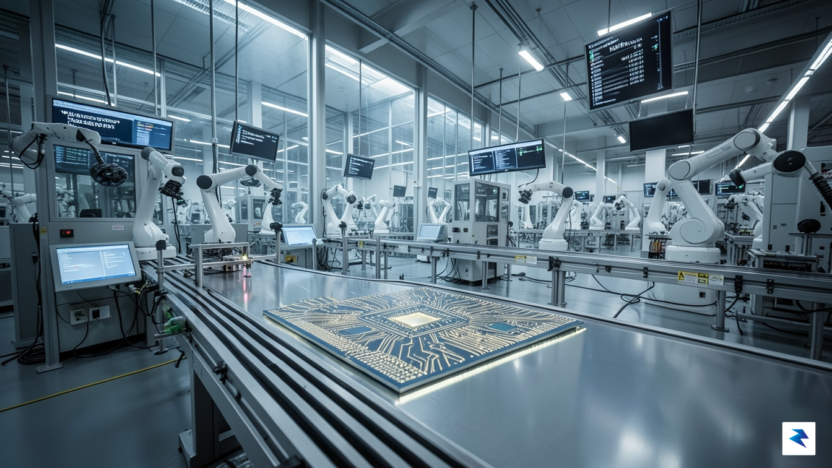

Emerging from the shadow of global industry giants, ChangXin Memory Technologies (CXMT) has rapidly evolved from a regional startup into the absolute cornerstone of China’s semiconductor ambitions. Established with the explicit backing of the state, the company serves as the primary instrument for fulfilling the ‘Made in China 2025’ initiative, which aims to reduce the nation’s heavy reliance on foreign technology imports. By focusing specifically on Dynamic Random Access Memory (DRAM)—a sector traditionally dominated by a select trio of firms in South Korea and the United States—CXMT has positioned itself as the essential bridge in China’s quest for technological sovereignty.

The strategic importance of CXMT cannot be overstated, particularly when considering the current trajectory of the artificial intelligence boom. DRAM serves as the high-speed workspace for any processor; without sufficient, high-bandwidth memory, even the most powerful AI chips become bottlenecks, unable to feed data to the computing cores fast enough to perform complex machine learning tasks. As Western export controls tighten around advanced silicon, China’s access to high-end memory modules has been severely restricted. Consequently, CXMT has been thrust into the role of a domestic savior, tasked with scaling up production to ensure that Chinese tech firms can continue developing sovereign AI models without depending on potentially unstable external supply chains.
“In the high-stakes theater of global chip competition, memory is no longer just a commodity component; it is a fundamental strategic asset that defines the ceiling of a nation’s artificial intelligence capabilities.”
Beyond its immediate technical output, the company represents a massive shift in how China approaches industrial policy. Rather than merely assembling finished products, Beijing has empowered CXMT to master the entire stack of DRAM manufacturing, from specialized circuit design to the complex lithography processes required for mass production. By pouring billions into R&D and securing capital through massive funding rounds, CXMT is effectively insulating the domestic market against the volatility of international trade restrictions. This transition from a follower to a front-line contender marks a pivotal moment in the global semiconductor landscape, proving that China is committed to building a self-sustaining ecosystem that can withstand the pressures of an increasingly fractured and competitive geopolitical environment.

The proposed $10 billion initial public offering from ChangXin Memory Technologies (CXMT) represents far more than a routine capital raise; it is a definitive turning point in China’s strategy to insulate its technological ecosystem from intensifying global trade restrictions. By targeting such a massive valuation on the Shanghai Stock Exchange, CXMT is signaling a transition toward domestic self-reliance, effectively bypassing the tightening constraints of Western venture capital and foreign equity markets. This influx of liquidity is intended to serve as the financial bedrock for a long-term infrastructure build-out, providing the company with the necessary runway to scale operations despite the increasingly difficult geopolitical landscape surrounding advanced semiconductor exports.
At the heart of this financial strategy is the urgent need to close the technological gap in memory hardware, a prerequisite for any nation aspiring to lead in the era of artificial intelligence. Large Language Models (LLMs) operate on massive datasets that require high-bandwidth memory (HBM) to function efficiently, as the speed at which data can be transferred between memory and processing units often becomes the primary bottleneck for AI training. By channeling these billions into aggressive research and development, CXMT aims to accelerate its production of high-performance DRAM, essentially creating a domestic supply chain that can keep pace with the voracious appetites of China’s burgeoning AI labs and cloud computing giants.

The capital infusion acts as a strategic hedge, transforming CXMT from a domestic manufacturer into a critical node in China’s national security architecture for the digital age.
Beyond hardware manufacturing, the capital allocation will be directed toward the relentless pursuit of human capital and infrastructure expansion. The global race for AI supremacy is as much about talent acquisition as it is about physical equipment; therefore, CXMT is expected to utilize its war chest to attract top-tier engineering talent and invest heavily in advanced lithography and packaging techniques. This comprehensive approach ensures that as the company scales its production facilities, it simultaneously builds a sustainable innovation pipeline. By integrating massive financial resources with a focus on both physical infrastructure and technical expertise, CXMT is positioning itself to be the vital backbone of China’s vision for sovereign, AI-driven economic growth.

In the face of tightening international export controls, ChangXin Memory Technologies (CXMT) has effectively transformed a policy of containment into a catalyst for domestic innovation. By being systematically cut off from the most advanced lithography tools and high-end hardware libraries typically sourced from global suppliers, the company has been forced to adopt an “innovation through necessity” strategy. This shift has required CXMT to accelerate the maturation of its internal R&D pipelines, focusing heavily on proprietary semiconductor architecture that does not rely on restricted foreign components. Rather than merely attempting to replicate existing methodologies, the firm is investing in localized manufacturing processes that bridge the gap between legacy nodes and the cutting-edge requirements of modern artificial intelligence.

To maintain parity with global titans like Samsung, Micron, and SK Hynix, CXMT has cultivated a resilient, self-sustaining supply chain that prioritizes domestic partnerships. This endeavor involves close collaboration with China’s burgeoning ecosystem of semiconductor equipment manufacturers, who are now tasked with producing the specialized tools necessary for high-density DRAM production. By nurturing these local relationships, CXMT is effectively insulating its production lines from geopolitical volatility. Furthermore, the company has made significant strides in intellectual property development, meticulously navigating the complex landscape of global patent law to ensure its designs are distinct, defensible, and tailored specifically to the high-bandwidth memory demands of the Chinese AI market.
The true test of CXMT’s resilience lies not in its ability to access restricted tools, but in its capacity to engineer a sovereign manufacturing methodology that achieves high yields without external interference.
The technical trajectory of the company is characterized by a relentless focus on process optimization and yield improvement. Because CXMT cannot always access the latest EUV (extreme ultraviolet) lithography systems, it has mastered the art of “multi-patterning” and other advanced optimization techniques to squeeze more performance out of standard deep ultraviolet (DUV) equipment. This technical ingenuity has allowed the firm to produce memory chips that are increasingly capable of supporting the intensive data throughput required for large language models and neural network training. By balancing these engineering workarounds with a massive influx of capital, CXMT is effectively narrowing the competitive chasm, signaling that it is no longer just a follower, but a formidable alternative in the global memory sector.

The pursuit of memory chip self-sufficiency by firms like CXMT represents far more than a corporate expansion strategy; it is a fundamental pillar of national security in the age of artificial intelligence. In this new era, data has become the most valuable commodity, and memory chips—specifically DRAM—serve as the critical infrastructure that allows AI models to process information at lightning speeds. By investing billions into domestic production, China is effectively attempting to insulate its technological ecosystem from the volatility of international trade restrictions and export controls. This shift toward digital sovereignty is designed to ensure that the nation’s core AI research and development efforts remain insulated from external disruptions, effectively creating an autonomous foundation for its future digital economy.

Reducing reliance on imported memory components fundamentally alters the trajectory of China’s AI research capacity. For years, the global semiconductor market has been dominated by a handful of players in South Korea and the United States, creating a bottleneck that many nations are now desperate to bypass. By fostering a domestic supply chain, China gains the ability to scale its AI infrastructure without the looming threat of supply chain cut-offs. This independence is essential for training the massive, energy-hungry large language models that define modern competitiveness. Without internal control over the hardware that stores and retrieves data, any nation’s AI ambitions remain tethered to the geopolitical whims of its suppliers, a vulnerability that Beijing is clearly no longer willing to tolerate.
The quest for semiconductor self-reliance is not just about economic growth; it is about building a resilient, impenetrable shield for a nation’s technological future.
This push, however, carries profound implications for the global order, pointing toward a potential bifurcation of the semiconductor market. As China accelerates its indigenous capabilities, the world may see the emergence of two distinct technological spheres: one aligned with Western standards and another built upon a proprietary Chinese foundation. This fragmentation could permanently alter international trade relations, moving the industry away from the hyper-efficient, globally integrated supply chains of the past toward a more regionalized, security-focused model. While this transition may lead to higher costs and technical redundancies in the short term, the long-term impact will be a vastly different geopolitical landscape where technological interdependence is replaced by strategic silos, forever changing how nations interact in the global digital economy.

For investors eyeing the semiconductor landscape in China, the potential public offering of ChangXin Memory Technologies (CXMT) represents a high-stakes entry into the heart of the nation’s technological sovereignty movement. On one hand, the investment opportunity is underpinned by an insatiable domestic demand for AI-ready infrastructure. As China accelerates its transition toward a localized high-tech ecosystem, CXMT is positioned as a primary beneficiary of state-backed initiatives designed to reduce reliance on Western memory chip manufacturers. The sheer volume of hardware required to support domestic data centers, generative AI models, and autonomous systems suggests a long-term growth trajectory that is largely insulated from international market fluctuations, provided the company can successfully scale its production capabilities.

However, navigating this landscape requires a sober acknowledgment of the geopolitical and technical volatility that defines the semiconductor sector today. The most significant risk remains the escalating trade tensions between Beijing and Washington, which have already resulted in stringent export controls on advanced lithography equipment and chip-making tools. Should these restrictions tighten further, CXMT may face insurmountable technical hurdles in shrinking its manufacturing nodes to keep pace with global leaders like Samsung or Micron. Beyond the geopolitical friction, the company must also contend with a crowded domestic market. While local demand is vast, the rapid influx of venture capital into the Chinese semiconductor space has created intense competition, forcing firms to balance aggressive expansion with the need for sustainable profitability in an industry known for its punishingly thin margins during cyclic downturns.
The path to market dominance for CXMT is paved with both immense state support and significant regulatory uncertainty; investors must weigh the security of domestic demand against the vulnerability of the global semiconductor supply chain.
Ultimately, the market outlook for this potential IPO is a study in contrasts. The upside is anchored in the company’s role as a critical pillar of China’s “Made in China 2025” strategy, which guarantees a captive market and consistent government subsidies. Conversely, the downside risk is tied to the fragility of international logistics and the difficulty of achieving technological parity without access to cutting-edge manufacturing ecosystems. For observers, the key performance indicator will be CXMT’s ability to achieve yield stability at advanced nodes while simultaneously navigating the ever-shifting landscape of international trade policy. Investors should approach this opportunity with the understanding that they are not merely betting on a company’s financial health, but on the resilience and future trajectory of an entire national industrial policy.
You must be logged in to post a comment.