
New York’s AI Revolution: How Governor Hochul is Automating State Regulations
The Digital Overhaul: How New York is Using AI to Simplify Bureaucracy For decades, New York’s regulatory landscape has grown into a…
For the better part of three decades, the world of game development was effectively cordoned off behind a digital velvet rope. Aspiring creators were forced to navigate a labyrinth of complex syntax, rigorous logic structures, and high-end software suites that demanded years of dedicated study just to render a simple moving object. This steep barrier to entry meant that the medium was largely reserved for those with the patience to master C++, C#, or specialized engine architecture. Consequently, the gap between having a visionary idea and actually building a playable experience was an chasm that few could successfully cross, leaving countless creative concepts trapped in the imaginations of their creators.
Roblox has long acted as a bridge across this chasm, democratizing the act of creation by providing a suite of accessible tools that turned millions of players into developers. However, the introduction of generative AI directly into its mobile application marks a profound shift in this trajectory. By moving these capabilities from desktop workstations to the palm of your hand, Roblox is not just improving efficiency; it is fundamentally altering the accessibility of the medium. Suddenly, the complex mechanics of world-building—such as scripting environmental interactions or generating intricate 3D assets—are no longer tasks of manual labor, but rather objectives achieved through natural language conversation.
This transition represents a major milestone in human-computer interaction, signaling a move from learning to code to learning to prompt. While traditional programming languages require a strict adherence to syntax and rigid logical frameworks, generative AI allows creators to focus on the “what” rather than the “how.” In this new era, the primary skill set is shifting toward conceptual clarity, descriptive accuracy, and iterative refinement. Think of it as a form of digital literacy where the ability to articulate a vision—to describe the mood, physics, and objectives of a virtual space—becomes far more valuable than the ability to write a flawless line of code.
The true power of AI in game design lies in its ability to flatten the learning curve, transforming the developer from a technical architect into a creative director.
Ultimately, this evolution suggests that we are entering a phase where the technical friction of development will eventually vanish entirely. When a mobile device becomes a studio, and a conversation with an AI model replaces the tedious manual scripting of game events, the diversity of games available to the public will inevitably explode. By lowering these barriers, platforms like Roblox are ensuring that the next generation of blockbuster games won’t necessarily be built by massive, well-funded teams, but by individuals who simply have the best ideas and the intuition to guide an AI to bring them to life.
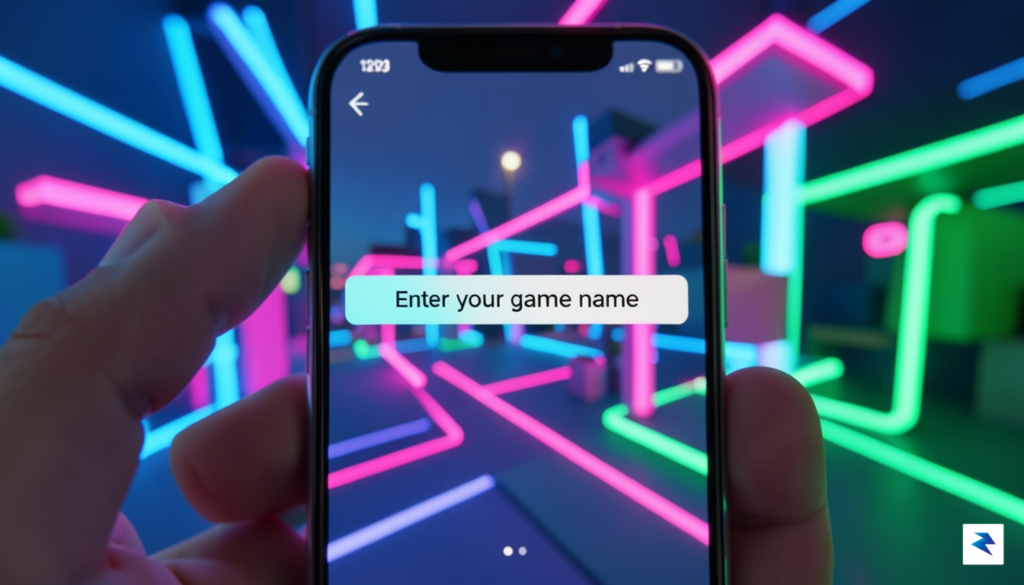
At the center of this mobile innovation is the intuitive Build feature, a sophisticated interface designed to bridge the gap between creative imagination and technical execution. When a user opens the mobile app, they are presented with a prompt box where they can input natural language instructions, such as “create a futuristic neon racing track” or “build a cozy medieval village square.” Behind the scenes, Roblox’s generative models analyze these text-based inputs to parse the user’s intent, identifying core themes, structural requirements, and aesthetic preferences. This process effectively converts abstract concepts into tangible, functional game foundations, placing the core building blocks directly onto the user’s workspace in a matter of seconds.

Once the initial foundation is generated, the tool offers a high degree of flexibility, allowing creators to refine their environment through iterative customization. Users are not locked into the AI’s first draft; instead, they can manipulate, resize, or delete specific objects, or even issue follow-up prompts to modify the existing layout. This collaborative workflow ensures that while the AI handles the heavy lifting of geometric placement and environment styling, the final creative vision remains firmly in the hands of the human developer. The platform encourages this back-and-forth dialogue, enabling users to layer complexity onto the AI-generated base until the scene perfectly aligns with their original intent.
The true power of this generative approach lies in lowering the barrier to entry, transforming “I have an idea” into “I have a playable space” within minutes rather than hours of manual asset placement.
However, it is vital to understand that current generative AI models possess inherent limitations regarding complex game logic and intricate interactive mechanics. While the tool is remarkably adept at spatial design and aesthetic generation, it is not yet capable of architecting advanced scripting or deeply nuanced game loops on its own. For more sophisticated gameplay—such as complex physics puzzles, unique inventory systems, or custom combat scripts—the platform manages expectations by positioning the AI as a scaffolding assistant. Developers are still encouraged to dive into the more advanced desktop-based scripting tools once they have established their game’s foundation on mobile. By balancing the ease of AI-assisted layout creation with the depth of the traditional Roblox engine, the platform provides a scalable pathway for creators of all experience levels to transition from casual mobile builders to full-fledged game developers.
By shifting the epicenter of game development to the palm of a user’s hand, Roblox is effectively tearing down the traditional barriers that have long separated casual players from professional developers. Historically, the prospect of building a 3D environment required high-end desktop hardware and a steep learning curve, which often served as a deterrent for younger, mobile-first audiences. With this new AI-powered mobile interface, the creative process is no longer a technical hurdle but an intuitive extension of play. By allowing users to describe their vision in plain language and seeing it manifest instantly within the game engine, Roblox is democratizing the digital landscape. This transformation ensures that imagination is no longer tethered by complex coding syntax or a lack of formal design training, allowing millions of aspiring creators to transition from passive consumers to active architects of their own virtual worlds.
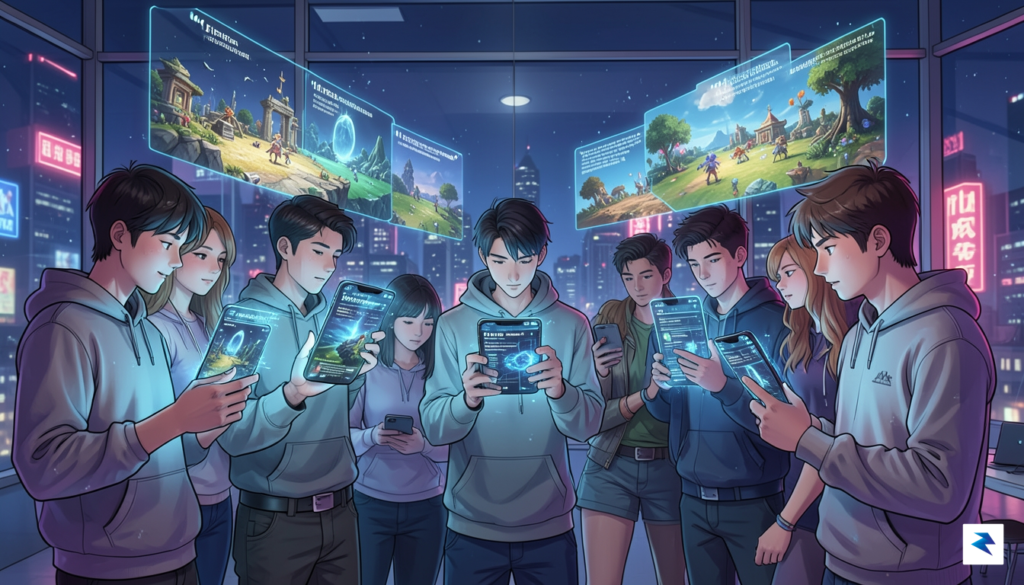
The true genius of this mobile-centric approach lies in its ability to foster collaborative building, turning game design into a vibrant social experience. When creation happens on a mobile device, it becomes portable and immediate, enabling friends to iterate on game mechanics or environmental design during their daily routines. This social layer is crucial because it mimics real-world collaborative development environments, where ideas are shared, critiqued, and built upon in real-time. By fostering this sense of community, Roblox encourages users to learn from one another, sharing tips on how to prompt the AI for better results or how to refine mobile-created assets. Consequently, the act of “making” becomes just as communal and engaging as the act of “playing,” cementing the platform’s status as a foundational pillar of modern digital social life.
The integration of AI into mobile creation provides a ‘low-floor, high-ceiling’ entry point that welcomes novices while offering a clear pathway to mastery for serious developers.
Beyond the immediate gratification of building a level in minutes, this feature serves as a sophisticated gateway into professional-grade development. As users become comfortable with the AI-assisted workflows, they naturally begin to peel back the layers of the platform, moving toward more advanced skills like Lua scripting and intricate 3D modeling. This “low-floor, high-ceiling” philosophy ensures that while a child might start by simply typing a request for a “lava obstacle course,” they are simultaneously being exposed to the logical structures and spatial reasoning required for professional game design. Over time, the mobile app acts as an educational scaffolding, gently guiding users toward more complex tools. By bridging the gap between simple mobile interactions and high-level technical proficiency, Roblox is not just keeping kids entertained; it is actively nurturing the next generation of software engineers, digital artists, and creative entrepreneurs.

The introduction of AI-powered development tools on Roblox marks a transformative moment, yet it is essential to distinguish between AI-generated content and AI-assisted creation. At its core, AI acts as a sophisticated force multiplier rather than a replacement for the human spark. While an algorithm can generate a basic environment, script a simple function, or populate a map with assets in seconds, it lacks the subjective intuition required to craft a compelling player experience. The true “soul” of a game—the emotional resonance, the thrill of a perfectly tuned jump, and the narrative depth that keeps players coming back—remains firmly in the domain of human imagination. By shifting the burden of repetitive, technical labor to these new tools, creators are empowered to stop fighting with syntax and start focusing on the higher-level architecture of their games.
In this new landscape, the most successful developers will be those who view AI as a collaborative partner. Think of these features as a digital assistant that handles the “grunt work” of game design, such as basic environmental layout or routine coding tasks, thereby freeing up valuable cognitive bandwidth. When a developer no longer needs to spend hours manually placing trees or debugging standard movement scripts, they can dedicate that time to refining complex gameplay loops and innovating within the social dynamics of the platform. This shift effectively democratizes the development process, allowing creators who might have been limited by technical proficiency to finally bring their complex, ambitious visions to life.
The most successful Roblox creators will likely be those who use these AI tools to handle repetitive tasks, freeing up their time to focus on complex gameplay loops, player engagement, and unique narrative design.
Naturally, some observers worry that lowering the barrier to entry will lead to a flood of low-quality, derivative content, potentially saturating the platform. However, it is worth noting that history has shown that when the cost of creation drops, the bar for quality usually rises in tandem. As it becomes trivial to generate a basic game, the competitive landscape will shift; players will naturally gravitate toward experiences that offer originality, personality, and deep engagement. Quality control will eventually become a matter of curation, where the creators who masterfully blend AI-driven efficiency with distinct, human-led creative vision will stand out from the noise. Ultimately, these tools do not diminish the value of a creator’s mind; rather, they provide a more powerful canvas upon which a truly great game can be painted.
The introduction of AI-driven development tools directly on mobile devices represents a fundamental shift in how the Roblox economy functions. By lowering the technical barriers to entry, the platform is effectively transforming millions of passive consumers into active producers. This democratization of game creation will likely lead to an explosion in the sheer volume of content available in the Creator Marketplace, forcing a shift in how Roblox surfaces high-quality experiences to its massive user base. As the supply of games increases exponentially, the platform’s discovery algorithms will become the most critical component of its business model, as they must now filter through a deluge of AI-generated prototypes to identify the next generation of viral hits.
This massive expansion of the creator pool will inevitably force an evolution in how developers are rewarded. We can expect Roblox to implement more sophisticated analytics and quality-control systems that prioritize long-term player retention over simple click-through rates. Furthermore, as AI-assisted games begin to dominate the trending charts, the ecosystem will likely pivot toward a model where high-quality curation and deep gameplay loops are valued above mere production speed. Developers who can effectively leverage AI to prototype rapidly and then polish their user experience will find themselves at a distinct competitive advantage, setting a new benchmark for what defines a “top-tier” game in the coming year.
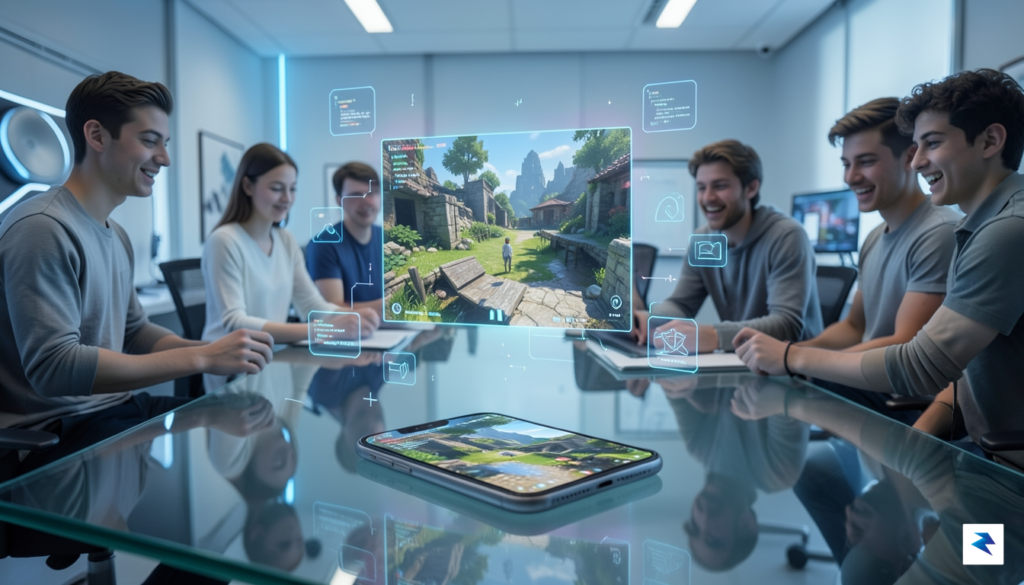
The true value of this update lies in the speed of iteration: when the friction between an idea and a playable prototype is reduced to near-zero, the platform’s capacity for innovation increases by orders of magnitude.
Looking ahead, the competitive landscape of the Roblox ecosystem is set to become significantly more dynamic and unforgiving. Smaller, nimble teams that adopt AI workflows early will likely disrupt established studios by iterating on feedback in real-time, effectively outmaneuvering larger, slower entities. We should anticipate a surge in hyper-niche, highly experimental games that cater to specific player subcultures, as the cost of failure drops significantly when development is accelerated by generative tools. Ultimately, this strategic move is not just about adding features; it is about cementing Roblox as the primary engine for the next generation of digital entertainment, where the line between player and developer is permanently blurred.
You must be logged in to post a comment.