Why AI Leaders Are Calling for Stricter State Regulation
The Shift Toward Proactive AI Regulation For many years, the rapidly evolving technology sector largely operated under a strong ethos of…
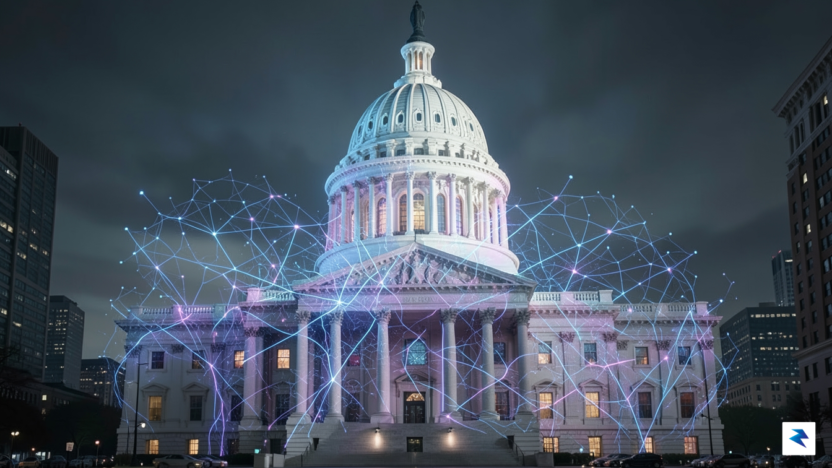

For decades, New York’s regulatory landscape has grown into a labyrinthine collection of administrative codes, rules, and statutes that often conflict with one another. With thousands of pages governing everything from business permits to environmental standards, the sheer volume of these policies has historically made it nearly impossible for human administrators to grasp the full scope of the state’s legal framework. This density creates a suffocating environment for small businesses and everyday citizens, who frequently find themselves tangled in outdated requirements or contradictory mandates that serve no modern purpose. The manual review process, which relies on exhaustive hours of legal scrutiny, has proven far too slow and prone to human error to keep pace with the needs of a rapidly evolving digital economy.
To combat this systemic paralysis, Governor Kathy Hochul has initiated an ambitious technological overhaul, deploying advanced artificial intelligence to perform an unprecedented audit of the state’s entire rulebook. Rather than relying on traditional legislative committees to spot inefficiencies one by one, the state is now utilizing machine learning algorithms designed to ingest, parse, and cross-reference every single line of current regulation. This AI-driven initiative is specifically tasked with flagging logical inconsistencies, identifying obsolete clauses that have lingered in the books for far too long, and highlighting administrative bottlenecks that stifle economic activity. By automating the discovery phase of regulatory reform, the state can finally visualize the hidden dependencies between disparate laws that have historically gone unnoticed.

The practical application of this technology marks a significant departure from standard government operations, shifting the burden of analysis from manual labor to high-speed computation. As the AI sweeps through the state’s massive data repositories, it provides policymakers with a clear, data-backed roadmap for where to cut red tape. Furthermore, this initiative is not merely about deletion; it is about creating a more coherent, transparent, and user-friendly regulatory ecosystem. By streamlining these processes, the state aims to reduce the time it takes for businesses to secure necessary permits and for residents to access essential services, ultimately fostering a more competitive environment for everyone living within the Empire State.
The integration of artificial intelligence into the administrative process represents a fundamental shift in how government functions, turning static, dusty legal codes into a dynamic, manageable resource for the public.
Ultimately, this technological transition serves as a bridge between the archaic bureaucratic structures of the past and the digital efficiency required for the future. By allowing algorithms to synthesize the complexities of state law, Governor Hochul’s administration is setting a standard for how modern governments can use innovation to improve civic life. As the analysis continues, the potential for a leaner, more responsive government grows, proving that digital transformation is not just a corporate trend, but an essential tool for effective public service in the twenty-first century.

At first glance, New York’s current trajectory regarding artificial intelligence appears to be defined by a striking contradiction. On one hand, the state has moved to implement a moratorium on certain data center operations, citing the significant strain these energy-intensive facilities place on the power grid and the potential conflict with ambitious climate goals. Critics might argue that this represents a fundamental wariness of the technology’s physical footprint. However, a deeper look reveals that this is not an outright rejection of innovation, but rather a calculated effort to decouple the growth of the AI industry from the environmental externalities that often accompany its expansion. By curbing the uncontrolled proliferation of energy-hungry infrastructure, the state is attempting to create a sustainable environment where progress does not come at the expense of its decarbonization commitments.

Simultaneously, the administration’s decision to utilize AI to scrub through thousands of state regulations demonstrates that New York is far from being a luddite in the digital age. Instead of viewing AI solely as a threat to resource allocation, the state is positioning itself as a primary consumer and implementer of these tools to optimize internal operations. This dual approach suggests that the administration distinguishes between the industrial demands of AI—which require strict environmental oversight—and the functional utility of AI, which can radically simplify a bloated bureaucracy. This strategy reflects a broader philosophy: that the government should not simply react to the rise of automated systems by creating restrictive barriers, but by actively integrating those systems to serve the public interest more efficiently.
The nuance of this strategy lies in the concept of “responsible AI adoption,” which prioritizes transparency and administrative efficiency over mere speed. By applying machine learning to the labyrinth of state rules, Governor Hochul is attempting to lead by example, proving that AI can be used to prune regulatory red tape that has stalled economic development for decades. This is an attempt to pivot the conversation away from the fear of runaway automation and toward the promise of a more responsive government. If the state can successfully use these tools to modernize its own cumbersome internal processes, it establishes a blueprint for how other sectors can leverage AI to solve complex, real-world problems while maintaining strict ethical and environmental guardrails. Ultimately, New York is signaling that it wants to be more than just a regulator; it wants to be a sophisticated, tech-forward operator that proves governance can evolve alongside the technology it oversees.
The goal is not to stop the engine of progress, but to ensure that the infrastructure supporting that engine remains aligned with the values and environmental responsibilities of the state.

Modern Large Language Models (LLMs) operate far beyond the limitations of traditional, keyword-reliant search engines. While a standard database might simply flag a document containing the word “environmental,” an LLM approaches the text with a sophisticated understanding of context, intent, and linguistic nuance. By leveraging advanced Natural Language Processing (NLP), these systems can parse millions of pages of dense legal jargon, transforming static text into a structured, searchable knowledge graph. This capability allows the state to move away from manual, piecemeal reviews and toward a holistic assessment of the entire regulatory landscape.

The core mechanics of this audit rely on three primary technical pillars: semantic search, named entity recognition (NER), and advanced pattern detection. Semantic search enables the AI to understand the “meaning” behind a regulation, allowing it to find relevant information even when the user employs different terminology than what is written in the law. Simultaneously, NER identifies specific actors, agencies, and geographic constraints mentioned across thousands of documents, linking them to their specific responsibilities. When combined with pattern detection, the AI can identify structural similarities or logical inconsistencies that a human reader might miss simply because the relevant pages are located in entirely different volumes of the state code.
The true power of AI in governance lies in its ability to maintain a ‘global view’ of state policy, ensuring that a rule drafted for one agency does not inadvertently create a compliance burden or a legal loophole in another.
Perhaps the most significant advantage of this technology is its capacity to identify conflicting or overlapping regulations. In a system as vast as New York’s, laws often grow in silos, leading to a sprawling architecture of rules that may unintentionally contradict one another. LLMs excel at cross-referencing these mandates by mapping out the dependencies between different sections of the law. If one regulation mandates a specific reporting standard while another, newer rule implicitly requires a different format, the AI flags this discrepancy for human review. By highlighting these friction points, the technology allows policymakers to streamline outdated or redundant requirements, ultimately reducing administrative bloat and providing a more efficient, transparent experience for both citizens and businesses interacting with the state.

Transitioning the complex web of state regulations into the hands of artificial intelligence introduces the persistent challenge of the “black box” problem. When an algorithm scans thousands of pages of legal text to identify redundancies or inefficiencies, it often arrives at conclusions through patterns that are not readily apparent to human observers. This lack of interpretability creates a significant hurdle for public trust; if citizens and legislators cannot understand the logic behind a proposed policy change, they may struggle to accept the legitimacy of the outcome. Without clear, explainable pathways, there is a risk that the nuances of administrative law—often written with specific, granular protections in mind—could be stripped away by an algorithm that prioritizes efficiency over the original intent of the regulation.

To mitigate these inherent risks, the state must prioritize a “human-in-the-loop” framework that keeps experts at the helm of every decision-making process. Relying solely on automation is a precarious strategy, as AI models can inadvertently perpetuate existing societal biases or fail to account for the evolving political landscape that informs public policy. By integrating rigorous human oversight, officials can ensure that every AI-generated suggestion is scrutinized for fairness, legality, and practical utility. This vetting process serves as a necessary safety valve, preventing the blind adoption of algorithmic suggestions that might look optimal on paper but prove disastrous in the messy, real-world application of state governance.
True accountability in the age of automation requires that technology acts as a consultant to human expertise, never as a replacement for the moral and legal judgment required in public service.
Ultimately, the successful implementation of this initiative rests on the state’s ability to maintain institutional transparency. New York’s approach involves subject matter experts—ranging from legal scholars to department heads—who act as the final arbiters of any proposed regulatory adjustment. These experts are tasked with cross-referencing AI outputs against constitutional mandates and public interest requirements to ensure that no vital rule is accidentally discarded. Through this multi-layered review, the state aims to strike a delicate balance: leveraging the lightning-fast data processing capabilities of modern technology while maintaining the deliberate, thoughtful, and accountable nature of democratic lawmaking.

New York’s ambitious initiative to digitize and scrutinize its entire regulatory framework represents a potential watershed moment for public administration nationwide. By deploying artificial intelligence to map the labyrinth of state rules, policymakers are shifting from a paradigm of reactive, manual oversight to one of proactive, data-informed management. If successful, this model offers a scalable blueprint for other states and local municipalities that have long struggled to navigate the bloat of legacy administrative systems. By automating the identification of contradictory, redundant, or obsolete mandates, governments can effectively prune the thicket of bureaucracy that often stifles innovation and prevents the efficient delivery of public services.

The economic implications of this transition are profound, particularly regarding business compliance and regional growth. For small business owners and entrepreneurs, the current regulatory landscape is often an expensive and time-consuming obstacle course. When AI is utilized to clarify requirements and eliminate conflicting standards, the cost of compliance drops significantly, allowing businesses to redirect capital toward hiring, expansion, and research. Furthermore, a streamlined regulatory environment enhances a state’s competitive edge, making it a more attractive destination for startups and established firms alike that seek regulatory certainty rather than administrative unpredictability. When rules are clear, consistent, and accessible, the barrier to entry for new economic players is lowered, fostering a healthier, more dynamic marketplace.
The true promise of this technological shift lies not in the total removal of regulation, but in the creation of a ‘smart’ government that operates with precision rather than overwhelming force.
Looking toward the future, this data-driven approach promises a leaner, more responsive government architecture that evolves alongside societal needs. As administrative systems become digitized and analyzed by algorithms, the feedback loop between policy implementation and real-world outcomes becomes drastically shorter. This allows for evidence-based reform, where ineffective rules are retired not because of political pressure, but because the data clearly demonstrates they no longer serve a vital public purpose. Ultimately, New York’s experiment suggests that the future of public management is one of stewardship through transparency, where technology acts as a force multiplier for common-sense governance and ensures that the state functions as a facilitator of growth rather than a source of unnecessary friction.
You must be logged in to post a comment.