
Beyond Deep Learning: Why Classical Machine Learning Still Detects AI Text Best
The Evolution of AI Detection: Moving Beyond Transformers The digital landscape is currently witnessing an unprecedented surge in synthetic…

The journey toward what we now recognize as Gemini Notebook began long before its initial public debut, rooted in an experimental initiative known as Project Tailwind. When Google first introduced this concept, it was designed as a specialized research assistant capable of synthesizing information from a user’s own documents. By grounding the AI’s responses strictly within uploaded files, Project Tailwind addressed a critical pain point for students, researchers, and professionals: the tendency for large language models to “hallucinate” or drift away from factual evidence. This foundational focus on grounded reasoning eventually paved the way for the official launch of NotebookLM, which quickly carved out a niche as an indispensable tool for academic synthesis and complex document analysis.
Following its launch, the platform rapidly evolved from a niche experiment into a robust powerhouse, consistently adding features like audio summaries and source-citing capabilities. As the user base expanded, it became clear that the tool was no longer just a simple notebook, but a sophisticated gateway into Google’s most advanced reasoning engines. This growth trajectory necessitated a shift in identity; simply labeling the tool as a “notebook” began to feel restrictive given its expanding ability to connect disparate data points across the broader Google workspace. The evolution was not merely functional but existential, reflecting how the tool had transformed from a static document reader into a dynamic, interactive research partner.
The rebranding to Gemini Notebook serves as a signal to the market that Google’s research-centric AI tools are no longer isolated experiments, but are now core components of the unified Gemini ecosystem.
The strategic decision to fold the platform under the Gemini brand is a calculated move to harmonize Google’s AI portfolio. In an increasingly crowded landscape, brand consistency is paramount for user recognition and trust. By aligning the tool with the Gemini name, Google is signaling to its users that the underlying intelligence powering their document analysis is the same state-of-the-art technology driving their broader AI interactions. This unification ensures that as Google continues to push the boundaries of multimodal learning and long-context processing, users can expect a seamless experience that bridges the gap between their private research libraries and the massive knowledge base of the Gemini models.
Ultimately, this rebranding represents more than just a marketing update; it is an acknowledgement that the “notebook” metaphor has been outgrown by the technology itself. As users integrate these tools into their daily workflows, they are interacting with a sophisticated AI infrastructure that learns, adapts, and synthesizes information in real time. By bringing this tool under the Gemini umbrella, Google is effectively centralizing its AI narrative, making it easier for professionals to understand the scope and power of the ecosystem they are plugging into. This shift ensures that the platform remains a competitive, cohesive, and essential piece of the modern digital intelligence toolkit.
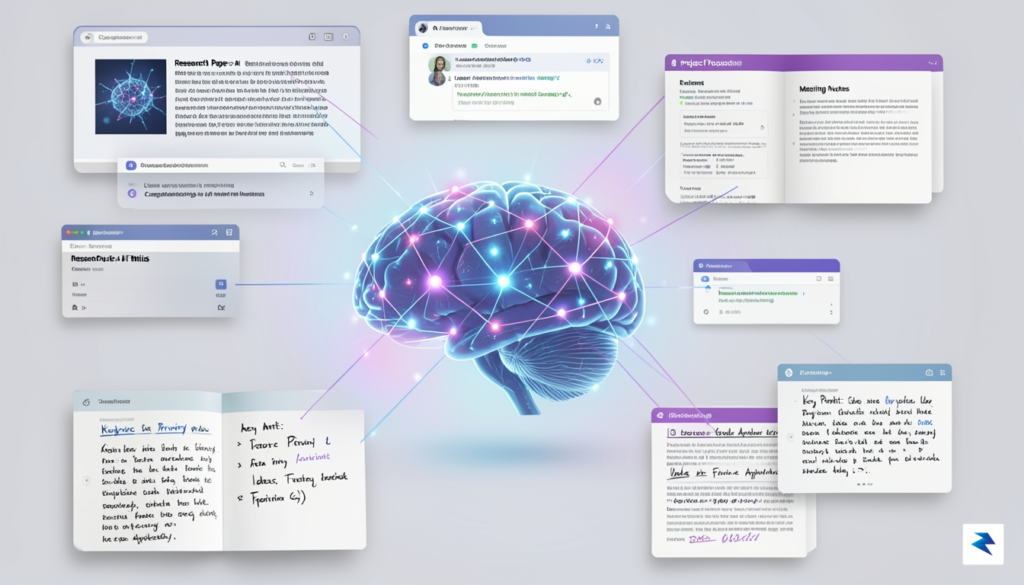
The rebranding of NotebookLM to Gemini Notebook represents far more than a simple nomenclature change; it signals a fundamental pivot in how Google architects its AI ecosystem. By aligning this research-heavy tool directly with the Gemini brand, Google is signaling that its specialized, context-aware AI is no longer a peripheral experiment but a core pillar of its unified generative strategy. This integration allows the tool to move beyond basic document summarization and into the realm of a sophisticated reasoning engine, leveraging the massive parameter sets of the latest Gemini models to interpret complex datasets with unprecedented nuance. Instead of treating your documents as static files, the platform now views them through the lens of a multimodal architecture that understands deep structural relationships, logic, and intent across vast amounts of information.
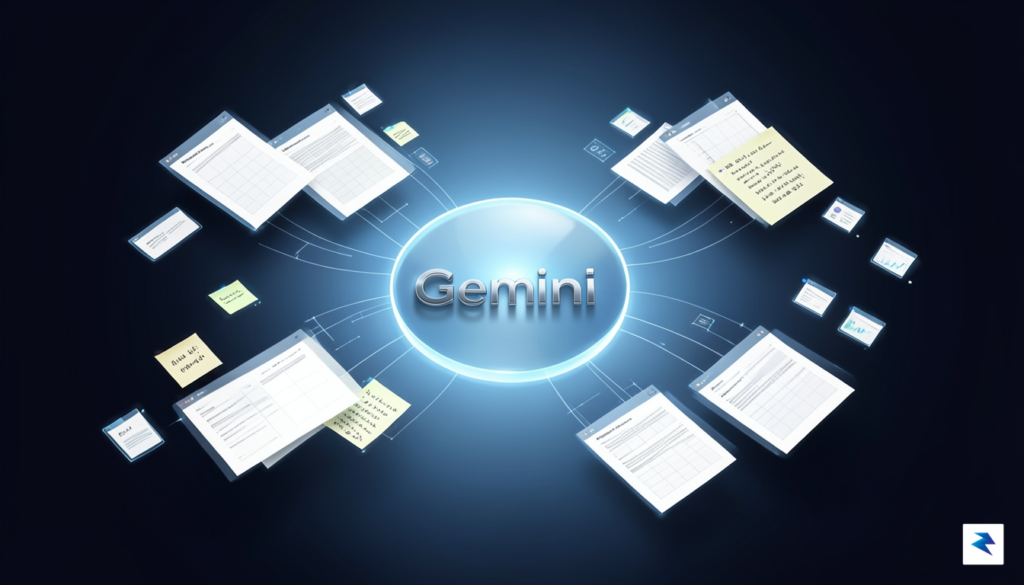
The true power of this shift lies in the seamless synergy between the tool and the broader Google Workspace environment. Users can now pull information directly from Drive and Docs with a higher degree of fidelity, as the underlying Gemini models are better equipped to maintain context across different file types and formats. This interconnectedness transforms the research experience from a siloed task into a fluid workflow where Gemini acts as an intelligent intermediary. By tapping into the same infrastructure that powers Google Search and Workspace, the tool benefits from real-time data processing improvements, ensuring that the insights generated are not only accurate but also reflect the most current information available within a user’s private ecosystem.
The integration of Gemini into this platform is not merely a branding exercise; it is a technical upgrade that enables the tool to reason over private data with the same depth as a general-purpose large language model, while strictly maintaining the user’s data boundaries.
From a technical perspective, this deeper integration addresses one of the most critical challenges in generative AI: the balance between creative synthesis and factual accuracy. By anchoring the model’s responses to specific, user-provided source material, the platform minimizes the “hallucination” risks typically associated with broader generative models. The updated architecture allows for more precise citation and source tracing, meaning users can confidently verify the provenance of every claim. As Google continues to refine its Gemini models, we can expect this tool to become increasingly proactive, potentially identifying connections between disparate documents that a human researcher might overlook, thereby elevating the standard for automated document analysis and knowledge synthesis.
While the broader Gemini ecosystem continues to expand into every corner of Google’s service suite, the decision to maintain this specific tool as a dedicated, standalone workspace is a deliberate move toward preserving deep-work productivity. Unlike a general-purpose chatbot interface, which is designed to handle a chaotic variety of tasks ranging from travel planning to creative writing, this specialized environment is architected specifically for source-grounded intelligence. By keeping the application separate from the main chat window, Google acknowledges that serious research, academic synthesis, and complex project management require a focused digital “desk” rather than a fragmented conversation stream.
The primary advantage of this focused workspace philosophy lies in the reduction of cognitive load for the user. When you are deeply immersed in analyzing hundreds of pages of research papers, legal documents, or project notes, the last thing you need is the distraction of a general-purpose AI trying to guess your intent or shifting context between unrelated prompts. A standalone application creates a contained, persistent environment where the AI’s primary directive is to serve as a reliable reference tool for the specific library of documents you have provided. This separation ensures that the model’s focus remains anchored to your uploaded materials, minimizing the likelihood of “hallucinations” or irrelevant tangents that often plague generalist interfaces.
Maintaining a specialized interface is not just a design choice; it is a functional necessity for users who treat their AI as a collaborative research assistant rather than a casual conversationalist.
Furthermore, the commitment to keeping this tool distinct addresses the long-term concerns of power users regarding app longevity and workflow stability. Users who rely on this platform for professional projects often fear that their specialized workflows will be swallowed by larger, less predictable consumer products. By maintaining a separate identity, Google signals that this is a core utility designed for sustained, high-fidelity work. This reliability is essential for researchers who need to know exactly how their data is being ingested, processed, and cited. When the environment is stable and predictable, it becomes a trusted cornerstone of a user’s intellectual infrastructure, allowing them to build complex knowledge bases without the anxiety that their workspace will change drastically overnight.
Ultimately, the value of this standalone experience is found in its ability to offer a “low-noise” environment. By stripping away the conversational fluff—the social chitchat, the web-search integration, and the general assistant capabilities—the platform allows the user to engage in a direct, high-speed dialogue with their data. This specialization makes it a far more powerful instrument for synthesis than any general assistant could hope to be, ensuring that the technology remains a precise tool for insight rather than just another window into a crowded, general-purpose chatbot.
The transition to the Gemini brand signifies far more than a simple aesthetic refresh; it marks a fundamental shift in how the platform processes information and assists in complex intellectual tasks. At its core, the service continues to prioritize source grounding, ensuring that every generated insight is tethered directly to the documents you upload. By maintaining this strict adherence to your provided materials, the tool minimizes the risk of hallucinations often found in broader AI models, offering a reliable foundation for academic research, legal discovery, or professional report synthesis. Furthermore, the platform’s ability to handle multimodal inputs—ranging from PDFs and text files to slide decks and web links—remains a hallmark of its design, allowing users to consolidate fragmented information into a single, coherent knowledge base.
By integrating the more advanced Gemini underlying architecture, the platform now exhibits a significantly enhanced capacity for reasoning across massive datasets. Where previous iterations might have struggled to maintain context over hundreds of pages, the updated engine excels at identifying nuanced relationships between disparate documents. This increased “context window” means you can upload entire books, lengthy meeting transcripts, or stacks of financial records, and the AI will reliably synthesize connections that would take a human researcher hours to uncover. This shift effectively transforms the platform from a simple chatbot into a high-level research assistant capable of performing sophisticated thematic analysis at scale.
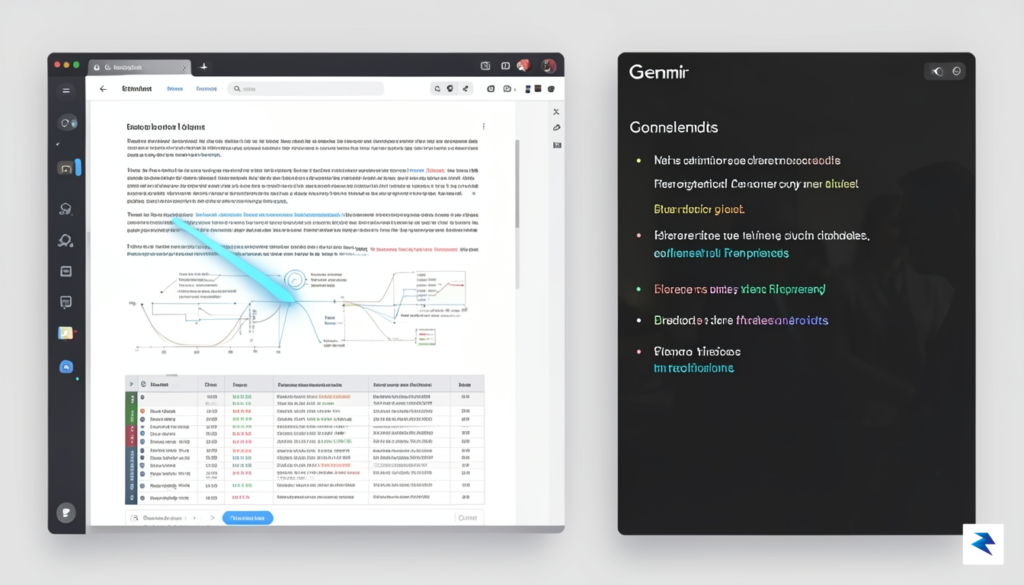
To fully leverage the power of this unified ecosystem, users should adopt a structured approach to how they input their data. When preparing for professional or academic projects, it is best to organize your source material into focused “notebooks” that share a common theme, rather than dumping all your files into a single repository. This allows the model to maintain higher precision when answering complex queries, as the scope of the information it must parse remains highly relevant. Additionally, take advantage of the citation features; by clicking on the links provided within the AI’s responses, you can instantly verify the source material, ensuring your final output is not only accurate but also fully defensible.
The true power of this transition lies in the ability to turn raw, unorganized documentation into structured, actionable insights with unprecedented speed and accuracy.
For those engaged in long-form writing, the platform’s new capabilities allow you to move fluidly from the “discovery” phase of research to the “synthesis” phase of drafting. Try using the tool to generate detailed outlines based on your uploaded PDFs, then follow up by asking it to draft specific sections using only the tone or evidence found in those documents. By treating the AI as an iterative partner rather than a one-off query engine, you can streamline your workflow significantly, moving from a pile of disconnected files to a polished, professional deliverable in a fraction of the time it previously required.

The rebranding of this platform is far more than a simple shift in nomenclature; it signals a fundamental evolution in how we bridge the gap between raw data and actionable intelligence. As we look toward the horizon, the trajectory of AI-driven research is moving rapidly away from passive summarization and toward a model of active, cross-functional synthesis. We are entering an era where our digital tools will no longer just respond to prompts but will instead function as proactive research partners that anticipate the connections between disparate documents, emails, and web-based resources. By integrating the full power of the Gemini ecosystem, these tools are set to transform personal knowledge management from a static archive into a living, breathing cognitive engine that continuously refines our understanding of complex topics.
Looking ahead, we can expect the roadmap for Gemini Notebook to prioritize deep interoperability, allowing it to act as the central nervous system for our professional and academic workflows. Imagine a future where the AI doesn’t just synthesize a single uploaded PDF, but instead weaves together insights from your real-time calendar, archived research papers, and live collaborative workspaces. This transition from “chatting” with an AI to having it “do” the work—such as drafting project outlines, identifying structural gaps in a thesis, or automatically surfacing contradictory data points across a vast digital library—represents a massive leap in utility. The focus is shifting toward agents that possess context-awareness, meaning the tool will eventually understand not just what you are asking, but the specific intent and long-term goals behind your inquiry.
The true power of AI in knowledge work lies not in the speed of its output, but in its ability to synthesize multiple streams of information into a cohesive, nuanced perspective that a human researcher might otherwise miss.
Furthermore, the move toward real-time, multi-user collaboration will likely redefine the landscape of AI-assisted scholarship. As these environments become shared spaces, research teams will be able to interrogate the same knowledge base simultaneously, with the AI providing a unified ground truth that evolves as the team adds new findings. This collaborative intelligence will reduce the friction of information silos and ensure that every member of a project is operating from the same updated, AI-validated foundation. Ultimately, for the deep thinker, the evolution of Gemini Notebook is an essential development. It provides a sanctuary for complex, slow-burn intellectual work in an age of fragmented attention, ensuring that our personal knowledge bases remain robust, searchable, and—most importantly—intelligently synthesized for years to come.
You must be logged in to post a comment.