
Why GrapheneOS Is a Critical Privacy Tool for Domestic Abuse Survivors
The Digital Landscape of Domestic Abuse Digital abuse has evolved into a sophisticated and often invisible mechanism of control, fundamentally…
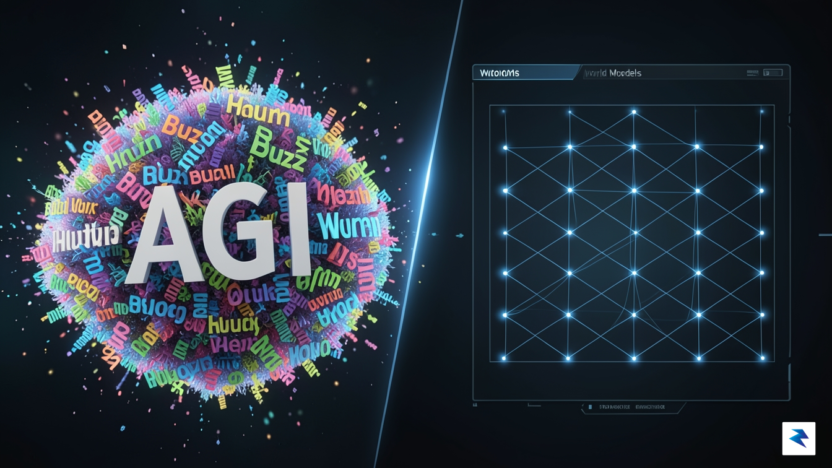

The current landscape of artificial intelligence is defined by a frantic race toward a finish line that remains perpetually undefined. While venture capitalists and tech evangelists frequently invoke the term “AGI”—or Artificial General Intelligence—to describe a future where machines possess human-like cognitive versatility, the term has increasingly morphed from a legitimate academic North Star into a potent marketing instrument. By promising a looming era of superintelligence, companies can capture public imagination and secure massive capital, yet this narrative often obscures the messy, incremental reality of software development. Alexandre LeBrun and a growing cohort of industry pragmatists are now pushing back, arguing that the fixation on these abstract, sentient-like capabilities is not merely speculative, but arguably a dangerous distraction from the engineering work required to build reliable, functional systems.
When we characterize AI solely through the lens of impending superintelligence, we fundamentally misalign the public’s expectations with the current state of the technology. This hype cycle forces developers to frame every incremental improvement in pattern recognition or data synthesis as a precursor to a god-like intellect, rather than what it actually is: sophisticated statistical modeling. The risk here is twofold: it invites excessive regulatory scrutiny based on science-fiction scenarios while simultaneously devaluing the genuine utility that AI provides when it is treated as a specialized tool. Instead of solving concrete problems in healthcare, logistics, or scientific research, the industry risks pouring resources into “solving for consciousness,” a goal that remains scientifically unfalsifiable and practically irrelevant for most enterprise applications.

The obsession with AGI shifts the focus away from the measurable, high-value outcomes that AI can deliver today, turning the pursuit of software excellence into a pursuit of digital mythology.
Ultimately, the pivot toward utility—the approach championed by labs like AMI—represents a mature evolution in how we view the lifecycle of innovation. By stripping away the grandiose labels and the baggage of the “superintelligence” myth, developers are free to focus on robustness, safety, and specific domain expertise. When we stop measuring our progress against the impossible standard of a sentient machine, we begin to see the immense value in building systems that are simply, reliably, and profoundly useful. This shift in perspective is essential for the industry to move beyond the current cycle of inflated expectations and toward a sustainable future where AI acts as a reliable partner in human progress rather than a mysterious, over-promised specter.

The current obsession with Artificial General Intelligence (AGI) often traps researchers in a race to mimic the human mind, but Alexandre LeBrun and his team at AMI Labs are steering toward a more pragmatic destination: the world model. Unlike Large Language Models (LLMs), which operate primarily as sophisticated engines for predicting the next token in a sequence, a world model attempts to grasp the underlying structure of reality. While an LLM might successfully mimic human prose by analyzing statistical patterns in language, it does so without a true internal map of the physical or logical constraints that govern our environment. By focusing on world models, AI developers are effectively moving away from the “stochastic parrot” paradigm toward systems that comprehend causality, spatial awareness, and objective truth.
To understand the transition, one must distinguish between linguistic fluency and cognitive grounding. Traditional models are essentially high-dimensional statistical mirrors; they reflect the data they were fed, which often leads to hallucinations or logical inconsistencies when they encounter scenarios outside their training distribution. A world model, by contrast, acts as a simulator of reality. It learns the “rules of the game”—the physics of cause and effect, the permanence of objects, and the logical consistency of systems. Instead of merely guessing which word comes next, a world model simulates potential outcomes based on these learned constraints, allowing the AI to reason through problems with a degree of reliability that pure language models simply cannot achieve.

A truly useful AI does not need to be a digital human; it needs to be a digital system that understands how the world works, allowing it to navigate complexities that are beyond the reach of simple pattern matching.
This shift in architecture provides a much more stable foundation for high-stakes decision-making. When an AI is built as a world model, it becomes grounded in something empirical rather than purely anecdotal. For instance, if an AI is tasked with optimizing a supply chain or diagnosing a technical fault, it doesn’t just rely on text-based probabilities; it evaluates the specific parameters of the environment, testing its reasoning against the logic of the system it is operating within. This creates a predictable, deterministic quality that is essential for real-world utility. By prioritizing the development of these models over the elusive goal of human-like consciousness, AMI Labs is building machines that are less about “seeming” intelligent and more about actually solving the messy, complex problems that define our physical world.

In the rapidly evolving landscape of artificial intelligence, the vocabulary we choose is far more than a mere stylistic preference; it is a foundational pillar of scientific integrity. When developers and industry leaders reach for labels like “AGI” or “superintelligence,” they are not just describing software architecture—they are invoking a narrative of omnipotence that carries significant weight. By resisting the allure of these hyperbolic terms, Alexandre LeBrun and the team at AMI Labs are making a deliberate, structural choice to ground their work in the verifiable reality of engineering rather than the speculative realm of science fiction. This commitment to semantic precision serves as a vital safeguard against the runaway expectations that currently threaten to derail public trust in the technology sector.

The danger of anthropomorphizing software cannot be overstated, as it fundamentally distorts how the public and investors perceive functional tools. When we describe a specialized agent as “superintelligent,” we inadvertently suggest a level of conscious agency and moral reasoning that simply does not exist within the current codebase. This linguistic drift creates a dangerous feedback loop: users begin to attribute human-like intent to algorithmic outcomes, leading to disappointment when systems inevitably fail to mimic human nuance or, conversely, creating moral panic over risks that are not currently applicable to narrow AI. By maintaining a rigorous, engineering-focused lexicon, developers can foster a more mature dialogue that centers on utility, reliability, and specific task performance rather than the pursuit of a nebulous, god-like intelligence.
“Precision in language is the first requirement of scientific progress; when we replace technical accuracy with marketing-driven metaphors, we confuse the tools we build with the myths we fear.”
Furthermore, the choice of terminology has profound implications for the regulatory environment that will inevitably shape the future of the industry. When an entire field labels its outputs as “superintelligent,” it invites a level of broad, sweeping regulatory scrutiny that may be entirely ill-suited for the specialized, productive agents actually being deployed. By framing their research through the lens of tangible utility and verifiable outcomes, AMI Labs is effectively advocating for a regulatory framework that understands the nuances of machine learning as a set of sophisticated tools. This approach helps to distinguish between the meaningful application of AI in industry and the abstract, often sensationalized discussions of existential risk. Ultimately, by anchoring the discourse in the reality of what these systems can actually achieve, we pave the way for a more stable, sustainable, and productive era of technological innovation.
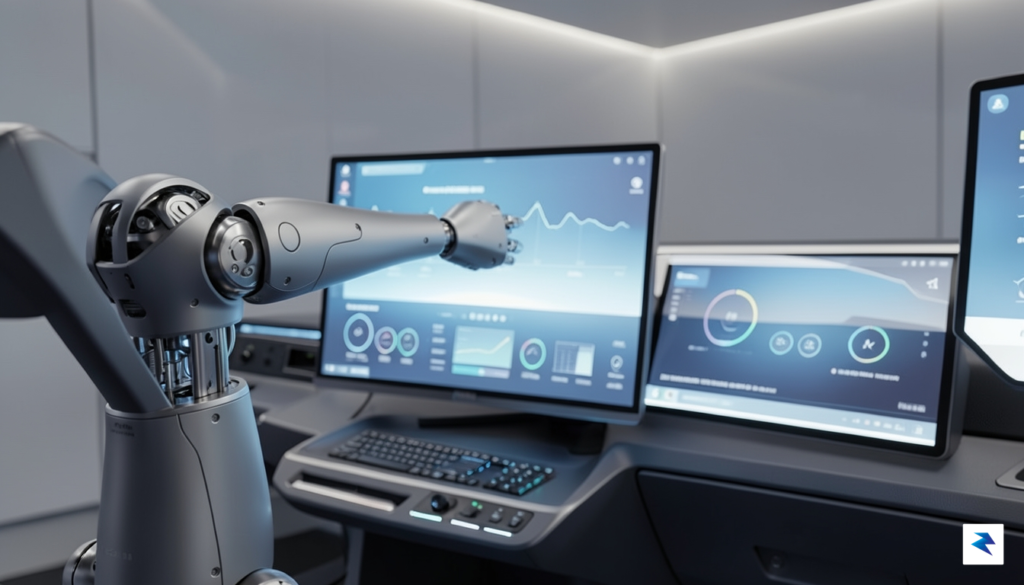
The pursuit of true autonomy does not necessitate the simulation of consciousness or the attainment of a nebulous, god-like intelligence. Instead, AMI Labs is charting a course defined by practical, task-oriented capabilities that allow systems to navigate both the digital and physical realms with precision. By prioritizing world models that understand the constraints and mechanics of specific environments, the company is building tools capable of executing complex, multi-step workflows that were previously tethered to human intervention. This approach moves the goalposts away from the abstract dream of sentience and toward the concrete reality of functional, high-value problem solving.

At the core of this strategy is the conviction that reliability and safety must always supersede the allure of “general” intelligence. In an enterprise setting, an AI that performs a specific, high-stakes task with 99.9% consistency is infinitely more valuable than a hypothetical superintelligence that is prone to unpredictable hallucinations. AMI Labs focuses on the granular details of operational success, ensuring that their systems act as powerful force multipliers for human productivity. By automating the arduous, repetitive, or cognitively taxing elements of a business process, these tools empower human workers to focus on creative strategy and high-level decision-making rather than being replaced by the software they oversee.
True autonomy is not about creating a digital replacement for human identity; it is about building a sophisticated, reliable partner that can handle the complexity of the modern world without constant supervision.
To achieve this, the engineering focus shifts toward building robust world models that can interpret dynamic inputs and adjust behavior accordingly. These systems are designed to bridge the gap between intent and outcome by breaking down high-level objectives into actionable, verifiable steps. Whether it is managing intricate supply chain logistics or automating specialized data analysis, the objective is to create systems that respect the boundaries of their domain while delivering measurable results. This measured, utility-first philosophy ensures that as artificial intelligence continues to evolve, it remains a tethered, manageable, and deeply beneficial asset to the human workforce.
Ultimately, the value of technology is measured by the specific problems it solves rather than the broad claims it makes. By eschewing the hype surrounding AGI, AMI Labs is cultivating a culture of technical rigor that prizes utility above all else. When software becomes a seamless extension of human intent—capable of operating independently within clearly defined parameters—it transforms the landscape of enterprise automation. This is the future of autonomy: not a detached, super-intelligent observer, but a dedicated, capable tool that works tirelessly to push the boundaries of what is possible in the human-centric economy.

The race toward artificial general intelligence has long functioned as a siren song for the tech industry, drawing massive investments and endless cycles of media hype. However, as the initial novelty of generative models begins to fade, a new, more pragmatic consensus is emerging. The companies that will define the next decade of artificial intelligence are unlikely to be those chasing the abstract, ill-defined goal of superintelligence. Instead, they will be the organizations that treat AI as a sophisticated utility—a tool designed to solve specific, high-friction problems rather than a digital deity waiting to be summoned. By pivoting from the theoretical pursuit of generality to the quantifiable delivery of value, the industry can finally ground itself in the reality of user needs.
Prioritizing real-world impact requires a fundamental shift in how developers approach the product lifecycle. Rather than focusing on how many parameters a model can store or how broadly it can mimic human reasoning, the focus must shift to the tangible outcomes it generates for the end user. This means building systems that are reliable, interpretable, and seamlessly integrated into existing workflows. Developers should be asking not just what a model can do, but what it should do to meaningfully improve a person’s day-to-day existence. When utility becomes the primary metric of success, the obsession with creating a god-like entity vanishes, replaced by the far more satisfying pursuit of creating tools that actually work.
Success in the coming decade will be measured not by the complexity of a model’s architecture, but by the simplicity and effectiveness of the solutions it provides to everyday challenges.
As the AI sector matures, we are entering a period of necessary professionalization. The industry is moving away from the “move fast and break things” mentality that characterized the early days of large language model deployment and toward a more mature, impact-oriented framework. This evolution will likely mirror the development of the internet: we stopped talking about the internet as a mysterious, all-encompassing force and began seeing it for what it truly is—a powerful infrastructure for commerce, communication, and information. Similarly, as AI transitions into a ubiquitous utility, the hype surrounding “superintelligence” will likely dissipate, leaving behind a robust ecosystem of specialized tools that make our lives more efficient, creative, and productive.

Ultimately, the true mark of progress isn’t the creation of a machine that can do everything poorly, but a system that can do specific, vital tasks exceptionally well. When we stop holding AI to the impossible standard of human-level general intelligence, we open the door to a future where technology is judged by its ability to serve human intent. The next phase of this technological revolution won’t be defined by the loudest proclamations of progress, but by the silent, steady improvement of the tools that support the modern world. In this future, the value is not found in the mystery of the machine, but in the clarity of the result.
You must be logged in to post a comment.