
OpenAI’s Screenless Future: What We Know About the New AI Speaker
The Evolution of Ambient Computing: Beyond the Smartphone For over a decade, our relationship with digital intelligence has been defined by…


The traditional paradigm of crypto portfolio management has long been defined by manual oversight, where users are tethered to their screens to execute trades, rebalance assets, and navigate the complexities of decentralized finance. However, as artificial intelligence matures from simple chatbot interactions into sophisticated autonomous agents capable of performing complex reasoning and executing multi-step workflows, the financial landscape is shifting toward a more automated future. We are entering an era where AI agents could feasibly handle the day-to-day operations of a crypto portfolio, identifying market opportunities and executing transactions with a speed and precision that human traders simply cannot match. This transition represents a fundamental move away from reactive management toward proactive, intent-based financial autonomy.
Yet, this convenience introduces a significant architectural risk. Currently, most AI-integrated financial tools rely on hot wallets or browser-based extensions, forcing users to expose their private keys to networked environments to allow the AI to “sign” transactions. This reliance on hot storage creates a massive attack surface, as a single vulnerability in the AI’s software stack or an unexpected malicious prompt could grant an unauthorized entity full control over a user’s assets. For the average investor, the trade-off between the efficiency of AI-driven trading and the catastrophic risk of total fund loss is simply too steep, stalling widespread adoption of autonomous financial agents.
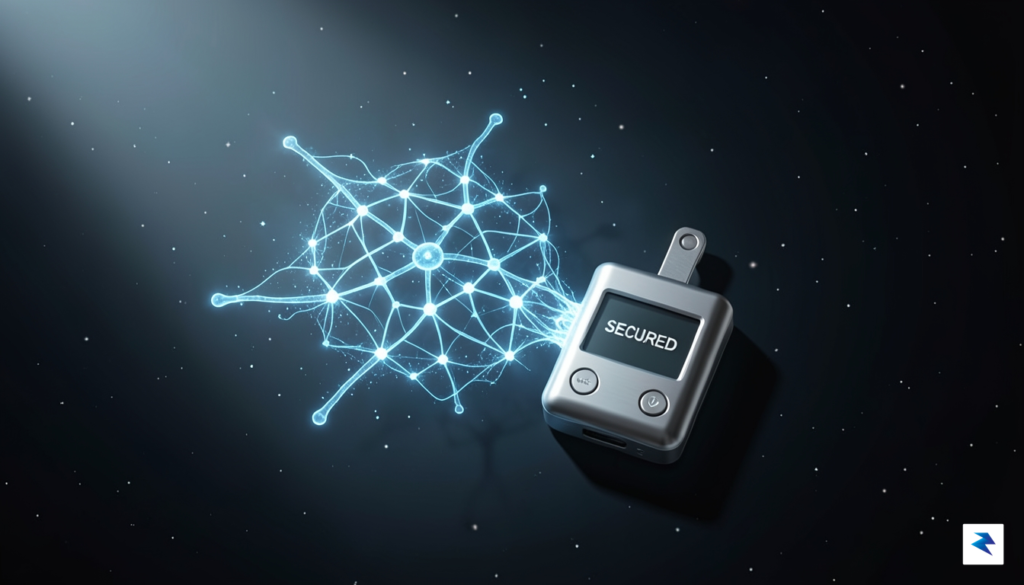
Ledger is positioning itself to bridge this critical gap by proposing a model that divorces the intelligence of the agent from the authority of the private key. By keeping the signing process within a hardened, offline environment, the company aims to establish a new gold standard for AI-assisted finance. In this proposed architecture, an AI agent can propose or initiate a transaction based on market data, but it cannot authorize the transfer of funds without the explicit, cryptographically secure confirmation of the hardware device. This effectively traps the private keys in a digital vault where they remain untouchable by even the most advanced AI software, ensuring that the human owner maintains the ultimate “kill switch” over their wealth.
The core of this innovation lies in the principle of “intent-based” security: the AI acts as a sophisticated assistant that handles the complexity of the blockchain, while the hardware remains the unyielding gatekeeper of the assets themselves.
By decoupling these two functions, Ledger is addressing the fundamental tension between convenience and custody. This approach not only protects users from the inherent risks of autonomous software but also empowers them to deploy AI agents with a level of confidence previously unavailable in the crypto space. As we look toward a future where financial workflows are increasingly delegated to machines, this hardware-backed security layer becomes more than just a preference—it becomes an essential safeguard for the next generation of decentralized finance.
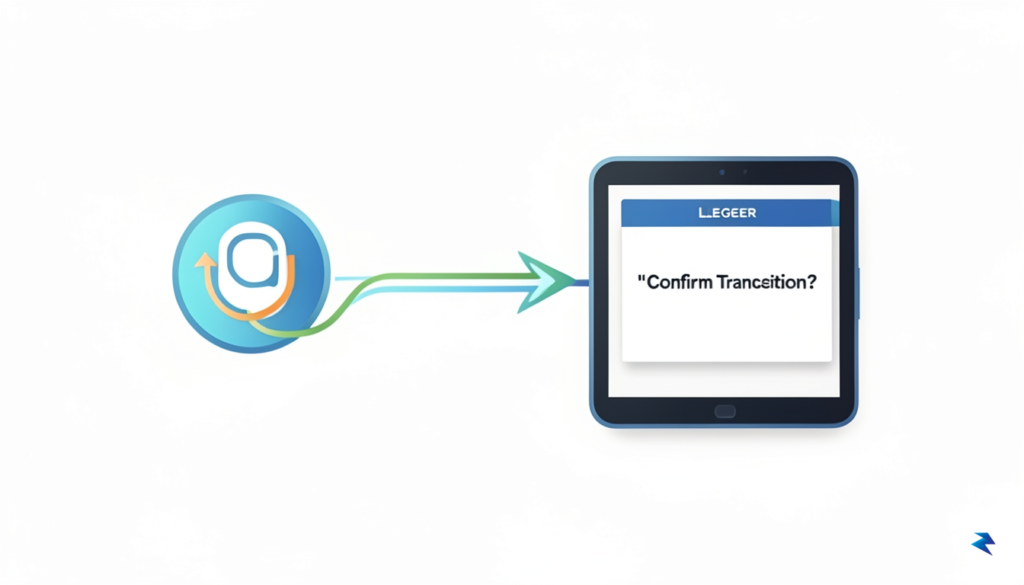
At the heart of Ledger’s AI integration lies a fundamental shift in how automated agents interact with blockchain protocols: the separation of intent from execution. While an AI agent might be sophisticated enough to analyze market trends, identify liquidity pools, or suggest complex yield-farming strategies, it is intentionally designed as a “watch-only” participant in your financial life. When the AI identifies a potential transaction, it does not gain access to your private keys or the ability to initiate a blockchain broadcast. Instead, the agent acts as an automated assistant that prepares a transaction proposal, which is then securely funneled through the Ledger ecosystem for your final review.
The technical handshake occurs through a secure bridge that ensures the AI’s suggestions remain entirely non-custodial. When the agent constructs a transaction, it sends a payload to your Ledger device that clearly outlines the destination, the asset amount, and the smart contract interactions involved. This is where the Human-in-the-Loop protocol becomes non-negotiable. Before any funds leave your wallet, the physical Ledger device acts as a hardware firewall. You are presented with the transaction details on the device’s screen, forcing a deliberate, manual confirmation that confirms you—not the algorithm—are the ultimate arbiter of your assets.
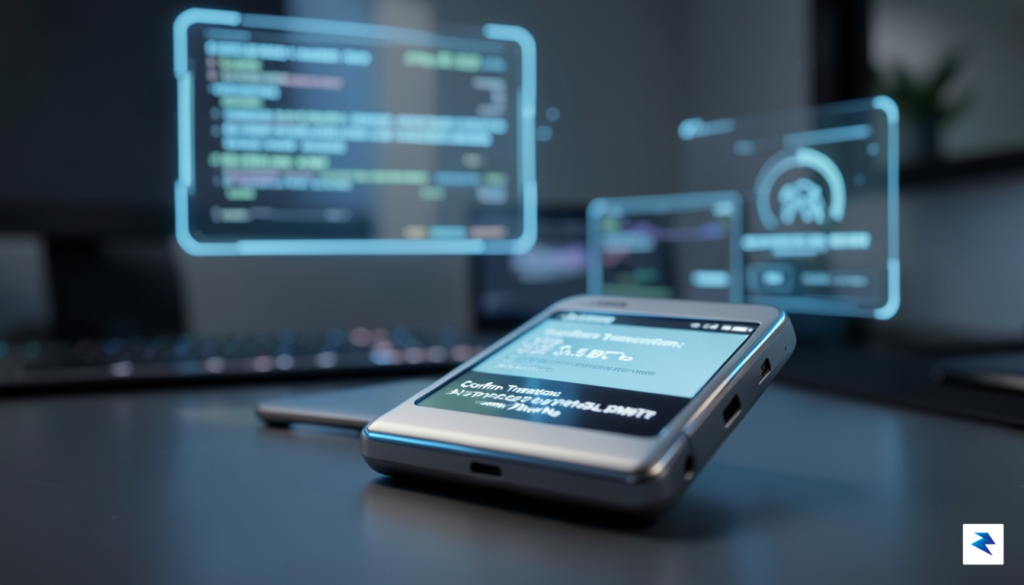
This architecture is particularly vital for maintaining protection against the growing risks of blind signing, a common vulnerability in DeFi where users approve transactions without fully understanding the underlying smart contract code. By enforcing this physical verification step, Ledger ensures that even if an AI agent is compromised or tricked into suggesting a malicious transaction, the attack fails at the final hurdle. The hardware device decodes the transaction data, providing a human-readable summary of what the AI is actually asking you to sign. Because the private keys never leave the Secure Element of the Ledger device, the AI agent remains a tool for convenience rather than an authority with autonomy.
The core philosophy is simple: the AI provides the intelligence to navigate the complexities of the crypto market, but the hardware provides the ironclad security to ensure that you remain the sole controller of your destiny.
Ultimately, this approach solves the “autonomy versus security” dilemma that has hindered the adoption of autonomous agents in finance. By keeping the user in the loop, Ledger effectively transforms the AI from a dangerous, high-privileged actor into a helpful, low-privileged advisor. Whether you are rebalancing a portfolio or executing a cross-chain swap, the process remains transparent, audited, and strictly controlled by your physical interaction with the device. This rigorous separation of duties ensures that you can leverage the speed of artificial intelligence without ever compromising the “not your keys, not your coins” principle that remains the bedrock of self-custody.

The primary apprehension for any digital asset holder when integrating artificial intelligence is the potential loss of control over their private keys. However, the fundamental architecture of this new approach distinguishes itself by ensuring that the AI agent functions strictly as an informed manager rather than a traditional custodian. Unlike centralized exchange-based trading bots that require you to deposit your funds into a third-party wallet where they hold the keys, this system keeps your assets firmly anchored within the secure environment of your hardware device. The AI acts as a sophisticated interface—an assistant that can analyze market trends, propose transactions, and optimize your portfolio—but it remains entirely incapable of moving funds without your explicit, physical authorization.
To maintain this boundary, there is a critical distinction between read access and sign access. The AI is granted the ability to scan your transaction history and market data to provide actionable intelligence, but it possesses zero authority to initiate or authorize a signature request. When the AI proposes a transaction, it functions much like an architect sketching a blueprint; it offers a plan, but the actual construction—the signing of the transaction—remains locked behind the physical hardware. This ensures that even if an AI agent were compromised or malfunctioned, it would lack the cryptographic permissions necessary to bypass the security protocols embedded within your device.

The core of this security model lies in the physical button press requirement, which serves as an immutable gatekeeper. Within the hardware architecture, the private keys are stored in a secure element that is physically isolated from the internet and the AI-driven software layer. Because the signature process is hardwired to require manual interaction, no amount of AI-driven automation can trigger a transfer of funds on its own. This creates a fail-safe mechanism where the human user serves as the final and only authority for every outgoing transaction, effectively neutralizing the risk of automated theft or unauthorized protocol interaction.
The security philosophy is simple: the AI provides the intelligence to navigate the complex crypto landscape, but the hardware wallet maintains the final word on execution.
By shifting the paradigm away from custodial AI models, this strategy reinforces the self-custody promise that defines the industry. In a traditional custodial setup, the service provider manages your keys, creating a single point of failure that is highly susceptible to platform hacks or internal malice. By contrast, by keeping the AI at arm’s length from the private keys, the user retains full sovereignty. You gain the efficiency of advanced data processing and automated strategy management without ever having to relinquish the cryptographic ownership of your portfolio. This balance of convenience and security ensures that you remain the master of your assets, utilizing AI as a tool for empowerment rather than a proxy for control.

The integration of artificial intelligence into self-custodial hardware wallets represents a paradigm shift for the everyday crypto investor, moving us from manual management to a state of autonomous financial oversight. Rather than spending hours monitoring charts or manually executing trades across fragmented liquidity pools, users can delegate complex decision-making to AI agents that operate within the secure, hardened environment of a Ledger device. This technology functions as an invisible co-pilot, constantly analyzing vast datasets to rebalance portfolios in real-time. If market volatility spikes, the AI can preemptively adjust asset allocations based on the user’s pre-defined risk tolerance, ensuring that the portfolio remains optimized without the investor needing to lift a finger.

Beyond simple rebalancing, these AI agents excel at identifying intricate DeFi opportunities that would be nearly impossible for a human to track manually. For instance, the system can automatically migrate idle assets from low-yield liquidity pools to protocols offering superior risk-adjusted returns, effectively maximizing capital efficiency around the clock. By continuously scanning for yield farming opportunities, lending protocol updates, and emerging decentralized exchange incentives, the AI ensures that your capital is always working at its highest potential. This proactive approach eliminates the friction of manual asset hopping and significantly reduces the time required to maintain a sophisticated, diversified crypto strategy.
True autonomous finance is defined by the ability to execute complex financial logic locally, ensuring that while the agent performs the heavy lifting, the user never surrenders the master keys to their digital wealth.
For active traders and long-term hodlers alike, the impact on daily life is profound because it introduces a layer of automated risk mitigation that works even while you sleep. The AI agent can be configured to trigger emergency “circuit breakers”—such as automatically moving volatile assets into stablecoins if a specific smart contract shows signs of distress or if market sentiment indicators plummet below a certain threshold. This is not about relinquishing control; it is about empowering the user with an intelligent layer that filters out noise and executes strategy with precision. By automating the most tedious and error-prone aspects of crypto management, this technology transforms the hardware wallet from a passive vault into a dynamic, high-performance financial engine that protects and grows your assets with unprecedented efficiency.

While the allure of automated crypto management is undeniably strong, it is crucial to recognize that delegating financial decisions to artificial intelligence is not a “set it and forget it” solution. At the heart of this challenge lies the infamous “black box” problem: many advanced machine learning models arrive at their conclusions through complex, multi-layered processes that even their developers struggle to fully explain. When an AI suggests a high-stakes trade or a liquidity rebalancing strategy, it often does so without providing the clear, logical chain of thought required for a user to make an informed risk assessment. Relying on an opaque algorithm to steward your digital wealth necessitates a high degree of skepticism, as users may find themselves unable to audit the reasoning behind a potentially disastrous financial move.
To mitigate these risks, users must prioritize the development of AI literacy. Just as one would not trust a financial advisor without understanding their investment philosophy, one should not deploy an AI agent without a firm grasp of the parameters and prompts governing its behavior. The quality of an AI’s output is inherently tied to the quality of its instructions; therefore, users must cultivate the ability to craft precise, constrained prompts that prevent the agent from straying into high-risk strategies. Furthermore, transparency regarding the underlying model’s data sets and training biases is essential. If the AI is trained on historical data that does not account for modern market volatility or black swan events, its decision-making capabilities may fail precisely when they are needed most.
The integration of AI into finance is a powerful tool for efficiency, but it must be tempered by rigorous human oversight. Transparency in algorithmic decision-making remains the ultimate safeguard against unseen technical pitfalls.
Ultimately, the most effective defense against the unpredictability of autonomous agents is the implementation of hardware-enforced security. By keeping the private keys strictly within a secure hardware environment, users create a vital “kill switch” that prevents even the most sophisticated AI from executing unauthorized transactions. If an AI model experiences a logic error, or if a malicious actor attempts to manipulate its prompts to drain a wallet, the hardware layer serves as the final arbiter. This architecture ensures that while the AI acts as a digital navigator for your portfolio, the ultimate authority remains firmly in the hands of the human owner. By combining the speed of machine learning with the immutable security of physical cold storage, users can explore this new frontier without sacrificing the foundational principles of self-custody.

You must be logged in to post a comment.