
Ledger’s New AI Strategy: Managing Crypto Without Sacrificing Your Keys
The Evolution of Crypto Management: AI Agents Meet Hardware Security The traditional paradigm of crypto portfolio management has long been…
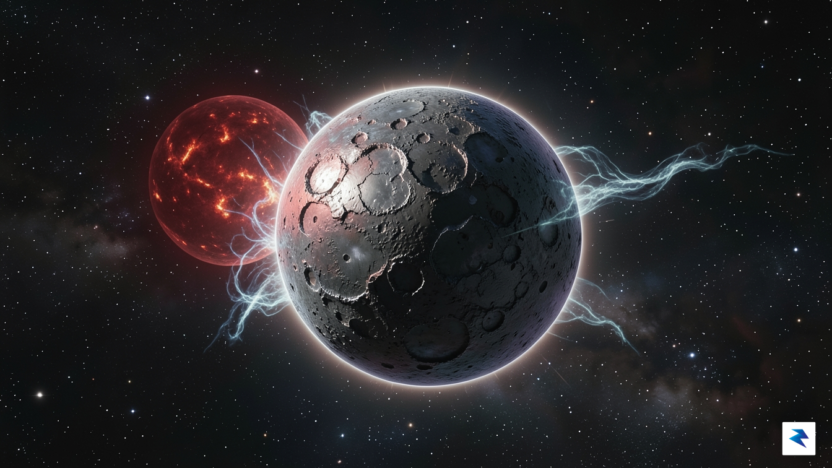
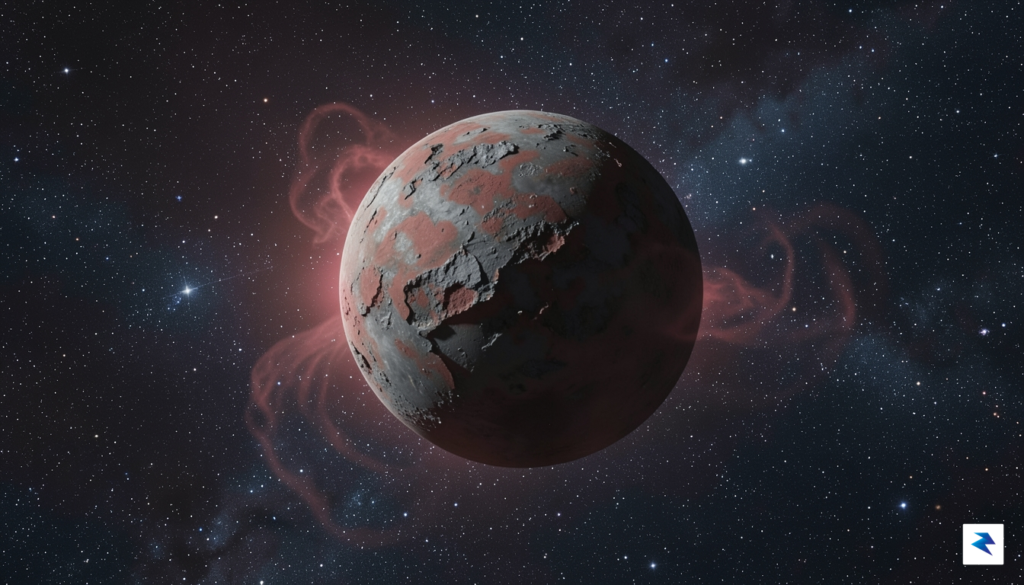
Recent observations of GJ 367b, a fascinating rocky exoplanet orbiting a red dwarf star, have provided scientists with truly unprecedented insights into the atmospheric evolution of small, dense worlds beyond our solar system. This particular planet, roughly the size of Mars and boasting about half the mass of Earth, is situated approximately 31 light-years away from us, making it one of the closest ultra-short-period exoplanets known. Its extreme proximity to its host star means it completes an orbit in less than eight hours, subjecting it to intense radiation and presenting a unique laboratory for studying planetary dynamics under harsh conditions. For these reasons, GJ 367b has rapidly become a critical target for astronomers seeking to understand the diverse fates of exoplanetary atmospheres.
The scientific breakthrough regarding GJ 367b centers on the detection of helium actively escaping from its atmosphere. Utilizing advanced telescopes and sophisticated spectroscopic techniques, researchers were able to analyze the light from the host star as it passed through the exoplanet’s atmosphere during transits. This method allowed them to identify the distinct spectral signature of helium, a lightweight gas, indicating that the planet is actively shedding its atmospheric envelope. This discovery represents a significant milestone in exoplanetary science, as it provides direct evidence of atmospheric loss from a rocky planet, a process that is fundamental to understanding how planetary atmospheres evolve over cosmic timescales.
The methodology employed for this groundbreaking detection involved observing the planet as it transited in front of its star, momentarily dimming the star’s light. By precisely measuring the changes in the starlight’s spectrum during these transits, scientists could discern which elements were present in the exoplanet’s atmosphere. The identified helium signature, specifically its excited state, suggests that the planet is experiencing a robust and continuous outflow of gas. This isn’t just about helium; because helium is relatively heavy for an escaping gas, its detection strongly implies that even lighter gases, such as hydrogen, are also being stripped away, painting a vivid picture of a planet undergoing significant atmospheric erosion due to its star’s powerful radiation.
GJ 367b’s status as a critical target for study is multifaceted. Its relative proximity to Earth, combined with the brightness of its host star, allows for high-precision measurements that would be impossible for more distant or fainter systems. Furthermore, its ultra-short orbital period means that transits occur frequently, enabling scientists to gather a wealth of observational data in a comparatively short time. This wealth of data is crucial for characterizing the atmospheric escape process in detail, helping us to model the dynamics of exoplanetary atmospheres and predict their long-term evolution. Consequently, GJ 367b serves as a vital case study, acting almost like a cosmic Rosetta Stone for decoding the atmospheric secrets of small, dense exoplanets and informing our broader understanding of planetary habitability across the galaxy.
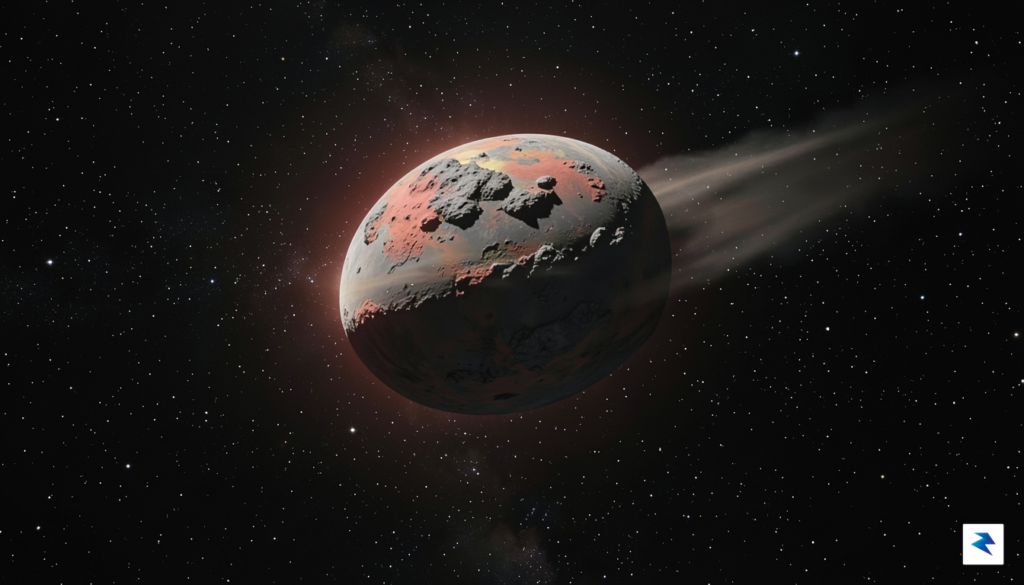
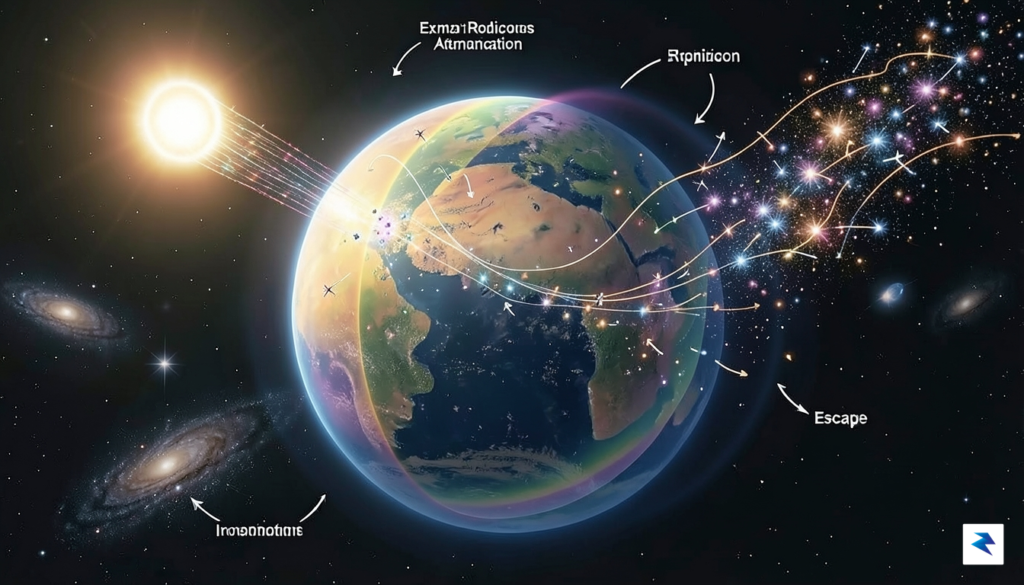
The discovery of helium bleeding away from a rocky exoplanet serves as a dramatic reminder that planetary atmospheres are not static shells, but rather volatile, evolving structures. On worlds orbiting close to their host stars, the atmosphere is engaged in a constant, high-stakes tug-of-war against extreme stellar forces. The primary engine behind this atmospheric loss is a process known as photoevaporation. When a star emits high-energy X-ray and extreme ultraviolet (EUV) radiation, it bombards the upper reaches of a planet’s atmosphere, heating the gases to thousands of degrees. This intense energy injection causes the lighter gas particles to gain enough velocity to reach escape velocity, effectively boiling them off into the cold, unforgiving vacuum of space.

Helium acts as a particularly effective “tracer” for this phenomenon because of its unique physical properties. Unlike hydrogen, which is incredibly light and prone to rapid loss, helium is heavier and requires more sustained, intense energy to be driven out of a planet’s gravitational well. When astronomers detect a significant signature of escaping helium, it suggests that the planet is undergoing a profound transformation. By studying this specific spectral fingerprint, researchers can calculate the rate of mass loss, which provides a direct window into the dynamic conditions of the planet’s upper atmosphere. Essentially, helium serves as a diagnostic tool that reveals how much of a planet’s original substance is being stripped away over geological time scales.
The rate at which an atmosphere escapes is a delicate balance between the star’s radiation pressure and the planet’s own gravitational grip; when the energy input exceeds the gravitational binding energy, the atmosphere inevitably begins to bleed into space.
Beyond the thermal impact of photoevaporation, stellar winds—streams of charged particles flowing from the star—also play a critical role in scouring the atmosphere. These winds act like a relentless sandblaster, eroding the outer layers of the atmosphere and physically pushing gas away from the planet. For rocky worlds located within the habitable zone of active M-dwarf stars, this process is intensified. Because these stars often exhibit violent flares and magnetic activity, the atmospheric erosion can be far more aggressive than what we observe in our own solar system. Understanding these mechanics is vital, as the total loss of an atmosphere could mean the difference between a world that might support liquid water and one that becomes a barren, airless rock. By mapping these escape processes, we are not just observing the death of an atmosphere; we are learning the fundamental rules that dictate whether a rocky planet can retain the conditions necessary for life.

The discovery of exoplanets like GJ 367b, orbiting within what astronomers term the “habitable zone” of their star, initially sparks excitement about the potential for life beyond Earth. This zone is traditionally defined as the region where conditions are just right for liquid water to exist on a planet’s surface, a fundamental prerequisite for life as we know it. However, the reality of atmospheric escape from GJ 367b presents a profound challenge to this simplistic definition. We are confronted with a compelling paradox: how can a planet be considered ‘habitable’ if it cannot retain the very gaseous shield essential for stabilizing surface temperatures, protecting against radiation, and allowing liquid water to persist over geological timescales?
The ability of a rocky planet to hold onto its atmosphere is intricately linked to its mass and gravitational pull. For GJ 367b, which is classified as a super-Earth with about 55% the mass of our home planet, its relatively smaller stature plays a critical role in its struggle against atmospheric loss. While larger terrestrial planets, like Earth or even more massive super-Earths, possess sufficient gravity to anchor a substantial atmosphere, smaller worlds are far more vulnerable. Lighter elements, such as hydrogen and helium – which are indeed observed escaping from GJ 367b – are particularly susceptible to being lost to space, especially when subjected to intense stellar radiation. This threshold of planetary mass, below which atmospheric retention becomes a losing battle, fundamentally redefines what it means for a world to be truly capable of sustaining conditions conducive to life, moving beyond mere orbital proximity to its star.
Furthermore, the impact of stellar irradiation cannot be overstated in this atmospheric drama. GJ 367b orbits its red dwarf star incredibly closely, completing a full revolution in just under eight hours. Red dwarfs, while smaller and cooler than our Sun, are often incredibly active, particularly in their youth, emitting powerful flares and a torrent of high-energy X-ray and ultraviolet radiation. This intense bombardment heats the upper layers of the exoplanet’s atmosphere, energizing gas molecules to the point where they achieve escape velocity and are stripped away into the vacuum of space. Without a protective atmosphere, the planet’s surface would be exposed to extreme temperature swings between day and night, deadly cosmic radiation, and the complete absence of any medium for weather or the stable circulation of water, rendering the very concept of surface liquid water effectively moot.
Ultimately, the case of GJ 367b forces us to adopt a more nuanced and comprehensive understanding of habitability. It reveals that merely residing within the so-called “goldilocks zone” is only one piece of a much larger, more complex puzzle. True habitability demands a delicate balance of intrinsic planetary properties—including sufficient mass and a strong magnetic field to deflect stellar winds—and a relatively stable stellar environment over billions of years. Planets that cannot maintain a stable, long-lived atmosphere, regardless of their orbital sweet spot, are unlikely candidates for harbouring life as we comprehend it. This vital research pushes astronomers to look beyond simple distance metrics, compelling us to consider the intricate interplay of planetary physics and astrophysics when assessing the true potential for life on worlds far beyond our own solar system.

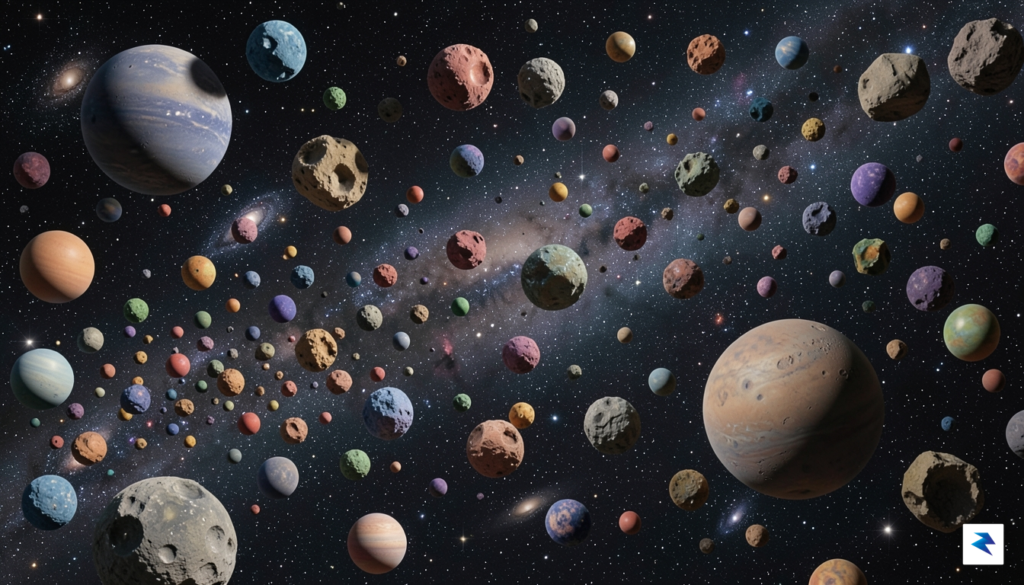
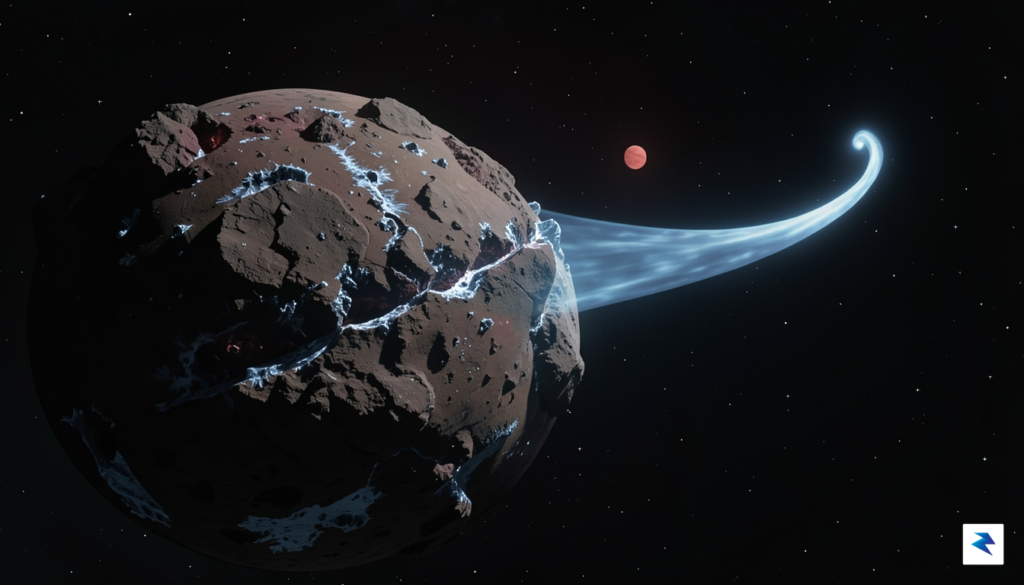
The discovery of helium escaping from the atmosphere of GJ 367b offers far more than just a snapshot of a single, scorching world; it provides a vital calibration point for our broader search for life beyond our solar system. By observing how this compact, iron-rich planet manages its volatile elements under the intense radiation of its host star, astronomers are essentially decoding the life history of rocky worlds. Unlike the TRAPPIST-1 system, where multiple Earth-sized planets reside in a more temperate balance, GJ 367b represents an extreme end-member of planetary evolution. Studying such an outlier allows researchers to establish the “survival threshold” for atmospheres, helping us distinguish between planets that can retain life-sustaining gases and those destined to be stripped bare by their stellar neighbors.
These findings significantly update our prevailing models of planetary formation and survival, particularly regarding the role of high-energy radiation. Historically, scientists often struggled to predict exactly when and how a rocky planet might lose its primary atmosphere—the gaseous envelope it gathers during its chaotic birth. GJ 367b acts as a masterclass in this process, demonstrating that even a dense, metallic core cannot always guarantee the retention of a light-element atmosphere when subjected to proximity-driven erosion. By quantifying the rate of helium loss, we can better estimate the “evaporation valley”—a observed gap in the distribution of exoplanet sizes—and refine the timeline for when an atmosphere must be stabilized or replenished to remain viable for potential biology.
The atmospheric trajectory of GJ 367b serves as a benchmark for future exoplanet surveys, transforming our theoretical understanding of planetary longevity into a concrete, observational science.
Ultimately, this study acts as a critical benchmark for the next generation of space-based observatories. As we aim our instruments toward more temperate, Earth-like candidates, the data gathered from GJ 367b will function as a filter, allowing us to rule out worlds that are likely to be “dead” or stripped of their protective layers. This rigorous approach saves invaluable observation time, ensuring that we focus our most sensitive technology on planets that possess the structural integrity to maintain a stable, long-term climate. Through the careful analysis of escaping gases on nearby worlds, we are not just cataloging distant rocks; we are learning how to read the complex, billion-year-old stories of planets that might one day reveal signs of life.

The discovery of helium escaping from a rocky world like GJ 367b marks a pivotal shift in how we perceive the longevity and stability of exoplanetary atmospheres. As we transition from the era of simply finding these distant worlds to the era of detailed atmospheric forensics, our tools are becoming increasingly sophisticated. The James Webb Space Telescope (JWST) currently serves as our most powerful lens, allowing us to peer through the chemical signatures of these distant skies with unprecedented clarity. By observing the transit of GJ 367b across its host star, astronomers can now tease out the subtle spectral fingerprints of helium, carbon, and oxygen, providing us with a dynamic map of how these planets lose mass over geological timescales.
Looking ahead, the next generation of ground-based observatories, most notably the Extremely Large Telescope (ELT), will provide the necessary high-resolution data to complement space-based missions. While the JWST excels at capturing the broad composition of planetary atmospheres, the ELT’s massive light-gathering power will allow us to observe the minute velocity shifts of gas particles, essentially providing a 3D view of the escaping wind. This combination of space and ground-based assets will enable researchers to move beyond static snapshots, allowing for the development of complex, time-dependent models of atmospheric escape. These models are crucial because they help us determine whether a planet like GJ 367b is a fleeting remnant of a much larger, gas-rich world or a resilient rocky core that has managed to retain a thin, life-sustaining envelope.
The study of GJ 367b serves as a masterclass in planetary evolution, demonstrating that even the most desolate, irradiated rocks can hold onto an atmospheric history that speaks to the violent formative years of their parent star systems.
To fully grasp the implications of these observations, we must also invest in sustained, long-term monitoring programs. Planets do not exist in isolation; they are subject to the temperamental moods of their host stars, which can flare and shift over years or even decades. By maintaining a consistent observational baseline, we can correlate atmospheric loss events with stellar activity cycles, effectively untangling the influence of the star from the intrinsic chemistry of the planet itself. This persistent approach is our best chance at characterizing the true diversity of rocky worlds within the habitable zone, ensuring that we do not mistake a transient state for a permanent one.
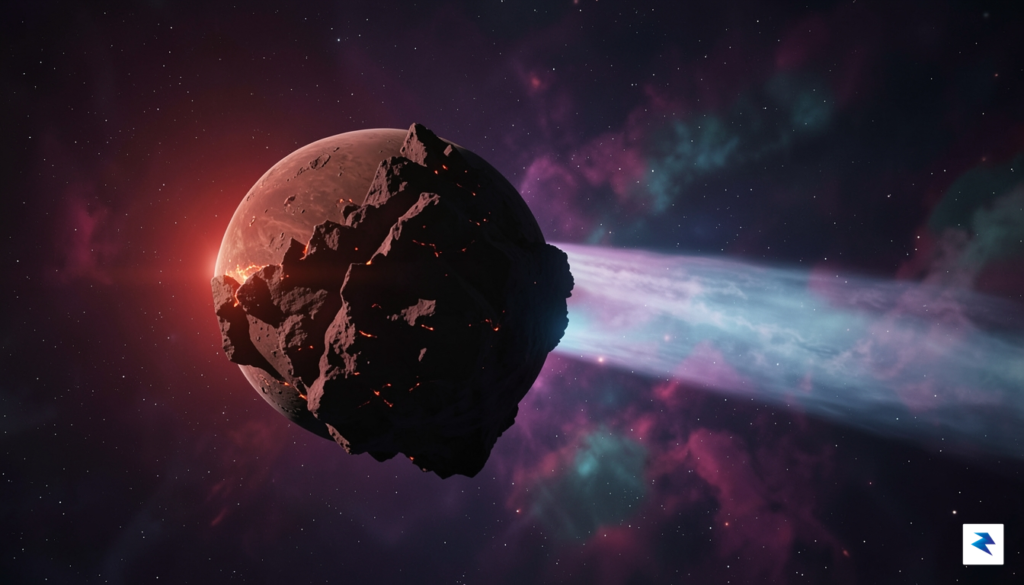
Ultimately, the technological leap we are experiencing is not just about detecting new signals; it is about refining our understanding of the delicate balance required for a planet to remain habitable. As we continue to refine our atmospheric models and integrate data from the next generation of telescopes, we are inching closer to answering the profound question of how common rocky, atmosphere-bearing worlds truly are in the galaxy. The journey of GJ 367b is only the beginning of a larger narrative—one that promises to redefine our place in the cosmos by mapping the survival stories of the worlds that orbit the stars around us.
You must be logged in to post a comment.