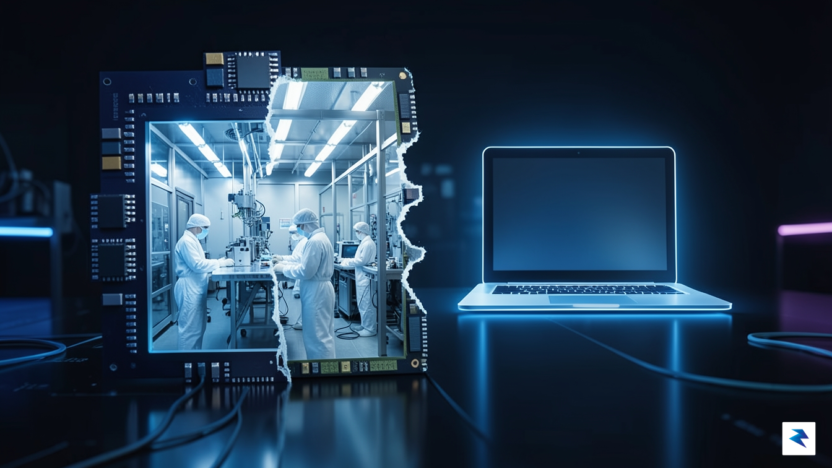
The Strategic Implications of Apple-Intel Collaboration
The potential integration of Apple into Intel’s domestic manufacturing pipeline marks a watershed moment for the American semiconductor industry. For years, Apple has relied almost exclusively on the Taiwan Semiconductor Manufacturing Company (TSMC) to produce its high-performance silicon, a strategy that prioritized geographical efficiency and cutting-edge process nodes in East Asia. However, recent comments from Donald Trump suggest a significant geopolitical and economic pivot, positioning Apple as the cornerstone of a revitalized “Made in America” chip strategy. By bringing a company of Apple’s sheer scale and technical demand to domestic foundries, the initiative aims to bridge the gap between policy ambition and industrial reality, effectively turning Intel’s ambitious foundry aspirations into a viable, high-volume commercial engine.
Securing Apple as a client is widely viewed as the “holy grail” for any domestic foundry because of the company’s unparalleled volume and exacting standards for power efficiency and performance. Unlike smaller players, Apple dictates the roadmap for global chip architecture; its involvement would provide Intel with the necessary capital and technical pressure to accelerate its own manufacturing capabilities. This partnership represents a fundamental departure from the status quo, where the most valuable tech company in the world essentially ignored the domestic manufacturing ecosystem in favor of specialized overseas partners. If this transition takes hold, it would signify that the U.S. has finally reached a competitive threshold where a leading-edge designer can rely on domestic soil without sacrificing the elite performance that defines its product line.
“The partnership between a premier chip designer like Apple and a foundational foundry like Intel represents the missing link in the United States’ long-term goal of supply chain sovereignty.”
Historically, the relationship between these two tech giants has been complex, defined by Apple’s high-profile departure from Intel’s x86 architecture in favor of its proprietary, ARM-based “Apple Silicon.” While that shift was a blow to Intel’s dominance in the PC market, this new rumored collaboration suggests a pragmatic evolution where the two companies find common ground in manufacturing logistics rather than processor architecture. By leveraging Intel’s expanding domestic foundry footprint, Apple could mitigate the risks associated with global supply chain volatility, particularly those centered in the Taiwan Strait. Ultimately, this move is not merely a logistical update; it is a profound strategic realignment that seeks to tether the future of American consumer electronics to the strength and resilience of domestic semiconductor fabrication.
Understanding the Domestic Semiconductor Landscape

For decades, the United States progressively offshored the intricate and capital-intensive process of semiconductor manufacturing, prioritizing cost-efficiency and specialized expertise found abroad. This strategic decision, while economically rational at the time, inadvertently created significant supply chain vulnerabilities, a reality starkly highlighted by recent global events and geopolitical tensions. Consequently, there is now an undeniable imperative to reverse this trend, fostering a robust return to domestic chip production to safeguard national security, ensure economic resilience, and maintain technological leadership in an increasingly complex world. This shift is not merely about bringing jobs home; it’s about re-establishing control over a critical technology that underpins everything from defense systems to consumer electronics.
At the very heart of this national endeavor lies Intel Foundry Services (IFS), the company’s dedicated business unit aimed at becoming a major player in the global foundry market. IFS is strategically positioned to offer advanced manufacturing capabilities right on American soil, directly challenging the dominance of established global giants like TSMC and Samsung. By opening its cutting-edge fabrication facilities to external customers, Intel is providing a crucial domestic option for companies that design chips but do not manufacture them, thereby diversifying the global supply chain and ensuring a more secure source for leading-edge silicon. This move represents a significant strategic pivot for Intel, transforming it from primarily an integrated device manufacturer into a foundry service provider competitive at the highest levels of process technology, such as its eagerly anticipated Intel 18A node.
However, the economics of advanced chip manufacturing in the U.S. present unique challenges, primarily due to higher labor, regulatory, and operational costs compared to overseas counterparts. This is where government intervention, specifically through the landmark CHIPS and Science Act of 2022, becomes absolutely pivotal. The CHIPS Act allocates billions of dollars in federal subsidies, grants, and tax incentives designed to bridge this cost gap, making domestic production financially viable and attractive for semiconductor companies. These significant investments are essential in offsetting the initial capital outlay and ongoing operational expenses, thereby encouraging firms like Apple to consider manufacturing their sophisticated chip designs at facilities in the U.S., leveraging Intel’s advanced foundry capabilities rather than relying solely on foreign foundries.
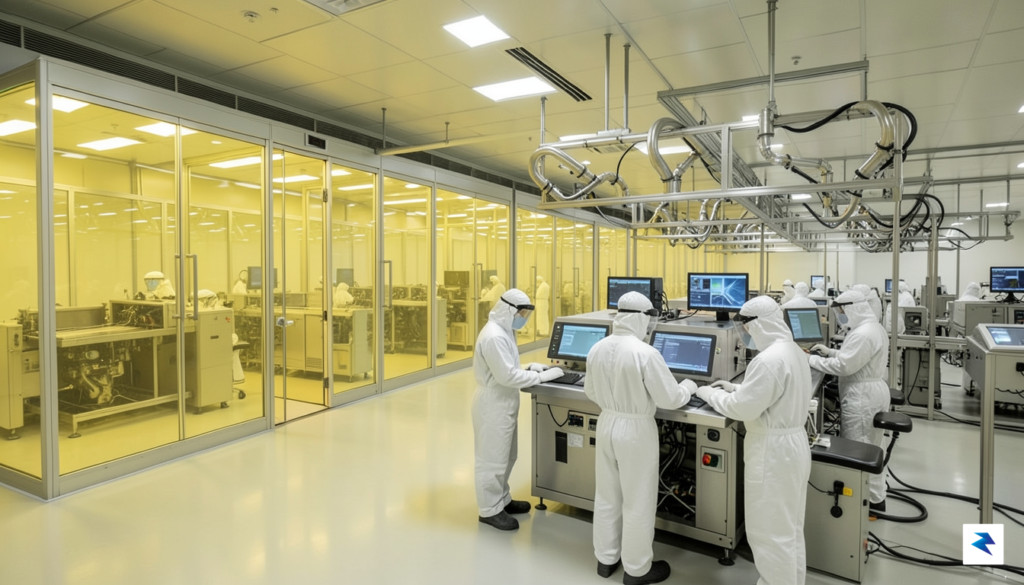
Furthermore, building and operating high-end chip manufacturing facilities demands an extraordinary level of infrastructure and investment that extends far beyond financial incentives. These are not simply factories; they are colossal, highly complex ecosystems that require immense amounts of pristine land, vast quantities of ultra-pure water, and reliable, high-capacity electricity grids. Constructing a state-of-the-art fabrication plant, or “fab,” involves years of planning, billions of dollars in capital expenditure, and the installation of incredibly precise equipment, such as extreme ultraviolet (EUV) lithography machines, each costing hundreds of millions of dollars. Maintaining the required “cleanroom” environments, which are thousands of times cleaner than a surgical operating room, also necessitates highly specialized infrastructure and a continuous supply of skilled engineers and technicians.
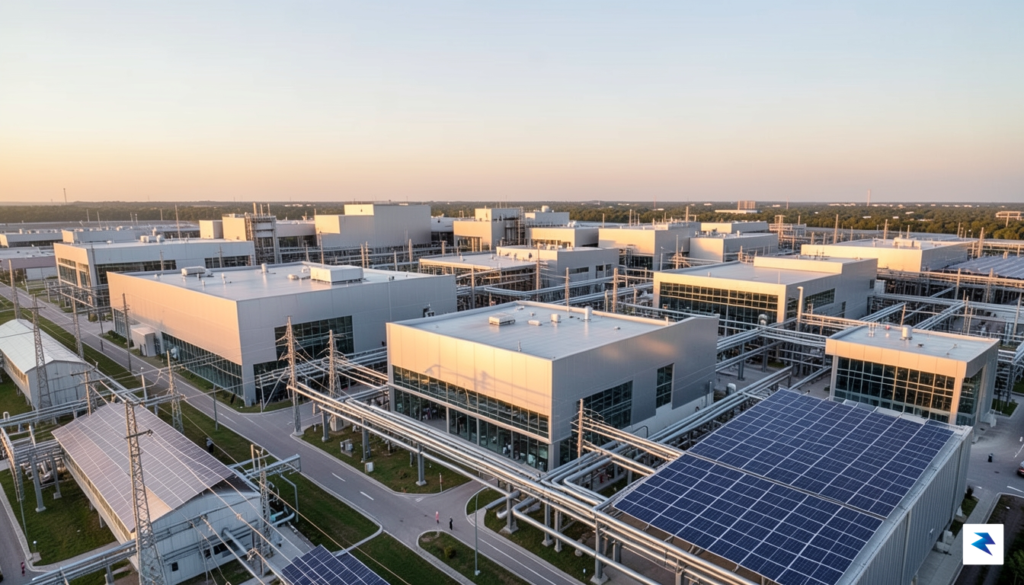
The vision is to cultivate a resilient and innovative domestic semiconductor ecosystem that can withstand future disruptions and drive American technological leadership for generations to come. By combining Intel’s renewed commitment to foundry services with the catalytic financial support of the CHIPS Act, the U.S. is embarking on a comprehensive strategy to reclaim its position at the forefront of advanced manufacturing. This multi-faceted approach aims not only to reduce reliance on foreign supply chains but also to foster a new era of innovation, job creation, and national security, ensuring that the critical components of our digital future are designed and produced on American soil.
Supply Chain Resilience and the China Factor

For decades, Apple’s manufacturing dominance has rested on a highly optimized, yet geographically concentrated, supply chain centered in East Asia. While this model enabled unprecedented scale and cost efficiency, it has increasingly become a strategic liability in an era defined by heightened geopolitical volatility. By pivoting toward domestic partnerships—most notably with Intel—Apple is engaging in a calculated process of “de-risking.” This transition is not merely an operational shift; it represents a fundamental recalibration of how global tech giants view their reliance on manufacturing hubs that are increasingly sensitive to trade disputes, cross-strait tensions, and shifting international alliances.
The risks inherent in over-relying on Taiwan and China for semiconductor production have moved from hypothetical scenarios to boardroom priorities. Taiwan’s semiconductor industry, while world-leading, sits at a precarious intersection of global diplomatic friction, creating a single point of failure that could paralyze the modern electronics economy overnight. Consequently, policymakers in Washington have prioritized the concept of “sovereign tech”—the idea that a nation’s technological infrastructure, particularly regarding advanced microchips, must be resilient enough to withstand external shocks or total decoupling. This push for domestic production is a vital component of national security, ensuring that the critical components driving the next generation of artificial intelligence and mobile computing are not held hostage by foreign supply chain disruptions.

Transitioning production to U.S.-based facilities like Intel’s foundry services presents a unique set of challenges regarding quality control and operational standards. Apple is notoriously protective of its hardware specifications, and maintaining that level of precision while integrating new domestic partners requires significant long-term investment and iterative refinement. However, the potential rewards are substantial: by diversifying its manufacturing footprint, Apple can insulate itself from regional crises while simultaneously leveraging American innovation hubs. This transition suggests a future where “Designed in California” is increasingly matched by a robust “Made in the USA” semiconductor backbone.
The shift toward localized chip production is not an abandonment of global trade, but rather a strategic expansion of supply chain geography designed to ensure long-term operational continuity in a fractured geopolitical landscape.
Ultimately, the collaboration between a consumer electronics titan like Apple and a foundational foundry like Intel signals a sea change in industrial policy. As US policymakers continue to incentivize the expansion of domestic semiconductor manufacturing, the goal is to create a self-sustaining ecosystem that reduces dependence on unstable international trade routes. While the transition will be gradual and fraught with logistical hurdles, the imperative to secure the digital supply chain has clearly overtaken the previous, singular mandate of minimizing manufacturing costs.
Challenges in Domestic Manufacturing Scaling

Transitioning the world’s most advanced semiconductor production to American soil is a monumental undertaking that transcends mere construction of facilities. At the heart of this challenge is the daunting issue of manufacturing “yield”—the percentage of functional chips produced on a single silicon wafer. In established Asian hubs like Taiwan, processes have been refined over decades to achieve near-perfect yields, minimizing waste and maximizing efficiency. Replicating this level of precision in a new domestic ecosystem requires an almost impossible learning curve, as even a microscopic speck of dust or a minor thermal fluctuation can render thousands of dollars’ worth of silicon entirely useless.
Beyond the technical complexities of the cleanroom, the United States faces a severe labor market bottleneck. The semiconductor industry requires a highly specialized workforce, ranging from process engineers to nanolithography technicians, yet the current domestic pipeline for these experts is insufficient to meet the aggressive scaling goals set by companies like Intel. Training a workforce capable of managing the hyper-complex tools required for cutting-edge nodes takes years of intensive study and on-the-job experience. Without a robust influx of talent, Intel risks having state-of-the-art facilities that lack the human capital necessary to operate at full capacity.
Economic viability also presents a significant hurdle, particularly regarding the price gap between US-made silicon and established Asian production. The cost of labor, regulatory compliance, and raw materials in the United States is markedly higher, which threatens to inflate the final price of Apple’s consumer hardware. For a company that prides itself on maintaining specific profit margins while delivering top-tier performance, this discrepancy is not merely a line-item concern; it is a fundamental threat to their business model. Balancing these higher overhead costs while attempting to remain competitive against international rivals will require unprecedented operational efficiency.
Success in domestic manufacturing hinges not just on capital expenditure, but on the seamless integration of supply chains that currently stretch across the Pacific.
Finally, there is the logistical nightmare of integrating a new foundry partner into Apple’s existing, deeply proprietary silicon architecture. Apple’s chips are not “off-the-shelf” components; they are custom-designed products that rely on a tight synergy between hardware design and the specific manufacturing processes of the foundry. Shifting this workflow to Intel requires a complete recalibration of Apple’s design parameters and quality control standards. This partnership must bridge the gap between two different corporate cultures and technical methodologies, ensuring that the transition does not lead to performance regressions or supply chain bottlenecks that could delay global product launches.
Future Outlook for US Tech Sovereignty


The prospect of a deepened partnership between Apple and Intel represents more than just a logistical shift; it signals a fundamental restructuring of how American companies approach their hardware pipelines. By potentially localizing the production of high-performance silicon, these corporations are moving toward a model where control over the manufacturing process becomes a primary competitive advantage. As the global economy pivots toward AI-driven hardware and increasingly specialized processors, the ability to secure a domestic supply chain will likely insulate these firms from the geopolitical volatility that has historically disrupted consumer electronics availability. If this domestic manufacturing blueprint proves successful, it could catalyze a broader industry trend, compelling other tech giants to prioritize on-shore facilities to ensure that their next generation of devices remains shielded from international trade friction.
However, the transition toward a revitalized domestic semiconductor ecosystem is not without its economic complexities. In the short term, consumers might face fluctuations in pricing as the industry absorbs the higher costs associated with building and operating state-of-the-art foundries within the United States. Yet, over the next decade, this investment could stabilize the market by reducing reliance on long-distance logistics and mitigating the risks of global shortages. As manufacturing efficiency improves through automation and cutting-edge process nodes, the premium on “Made in the USA” chips may decrease, eventually allowing for a more predictable cadence of product launches and a more resilient supply chain that can better withstand unexpected global disruptions.
The true test of this partnership will be the industry’s ability to maintain a consistent policy environment that encourages long-term capital investment over short-term quarterly gains.
Looking ahead, the success of this initiative rests heavily on the stability of government support and the continuity of domestic manufacturing policies. For the American tech sector to reclaim its mantle as a global leader in hardware production, stakeholders must commit to a multi-decade strategy that transcends political cycles. This involves not only tax incentives and subsidies but also the cultivation of a specialized workforce capable of operating the next generation of fabrication tools. If Apple and Intel can establish a sustainable, scalable manufacturing rhythm, they will set a new standard for technological sovereignty, ensuring that the critical components powering the next decade of consumer electronics are designed and built on home soil. Ultimately, this shift represents a move toward a more integrated, secure, and self-reliant technological future for the American consumer market.