
New Crypto-Stealing Malware Spreads Via USB: How to Secure Your Wallet
The Anatomy of the New Crypto-Stealing Malware Recently, security researchers at Microsoft uncovered a highly sophisticated new strain of…


The conversation surrounding digital safety in the United Kingdom has evolved significantly following the implementation of the Online Safety Act. While this landmark legislation places a heavy burden of responsibility on tech giants and platform providers to shield minors from harmful content, policymakers are increasingly recognizing the technical loopholes that allow younger users to bypass these safeguards. At the heart of this ongoing policy debate is the role of Virtual Private Networks (VPNs), which are currently being scrutinized for their potential to mask a user’s true location and identity, effectively rendering age-gating mechanisms toothless.
Government officials are currently exploring how to integrate more robust verification frameworks that ensure users are who they claim to be before accessing restricted content. The core concern is that sophisticated, privacy-focused tools like VPNs can be used to circumvent geo-blocking and age-verification protocols that platforms have been mandated to install. Consequently, the government is not looking to outlaw the technology itself, but rather to investigate whether there is a viable regulatory path to restrict how these tools interact with platforms mandated to enforce age-gating. This shift represents a broader effort to close the gap between legislative intent and the practical realities of a borderless internet.

It is essential to clarify that there is no immediate or comprehensive ban on VPN technology currently on the table; rather, we are seeing the beginning of a complex policy discussion regarding the balance between individual privacy and mandatory child safety standards.
To understand the scope of these proposals, one must distinguish between the regulation of the technology itself and the regulation of the *use* of that technology in specific high-risk contexts. Policymakers are concerned that if a minor can simply toggle a VPN to appear as though they are accessing the internet from a different region—or to bypass the verification checks entirely—the protections promised by the Online Safety Act become little more than digital suggestions. As a result, the government is looking at technical standards that might require platforms to detect or limit access when a VPN connection is identified, particularly when it is used to bypass age-appropriate design codes.
Moving forward, the focus will likely remain on industry-wide solutions that prioritize user identity verification without necessarily compromising the underlying encryption that VPNs provide. Whether this involves a more rigorous standard for age-checking software or new requirements for ISPs to flag certain types of traffic remains to be seen. For the average UK household, this underscores a critical shift in the digital landscape: the era of “anything goes” internet access is being replaced by a more regulated environment where the government is actively seeking to enforce digital age boundaries through both legislative pressure and technological mandates.

At their core, Virtual Private Networks (VPNs) serve as a fundamental layer of digital armor for the average internet user. By creating an encrypted tunnel for your web traffic and masking your actual IP address—the unique numerical label assigned to your device—these tools effectively hide your digital footprint from internet service providers, advertisers, and malicious actors. For millions of UK households, this technology is not a luxury; it is a necessity for maintaining cybersecurity. Whether someone is accessing sensitive banking information on a vulnerable public Wi-Fi network at a coffee shop or ensuring that personal data remains private from intrusive tracking algorithms, the VPN acts as a vital buffer that preserves the sanctity of the individual’s digital life.
Beyond personal privacy, the professional landscape has become inextricably linked to VPN technology. In an era where hybrid and remote work are the new standard, businesses rely heavily on these encrypted connections to allow employees to access internal servers, sensitive corporate data, and proprietary software from outside the office firewall. Without the ability to securely tunnel into these environments, the operational capacity of the UK’s workforce would be severely compromised. Consequently, VPNs are widely regarded by cybersecurity professionals as an essential component of modern digital hygiene, providing a secure bridge between home-based endpoints and organizational infrastructure.

While regulators focus on the potential for misuse, it is vital to remember that VPNs were designed to protect legitimate users, not to facilitate illicit activity. Stripping away these tools would leave millions of everyday citizens more exposed to data theft and surveillance.
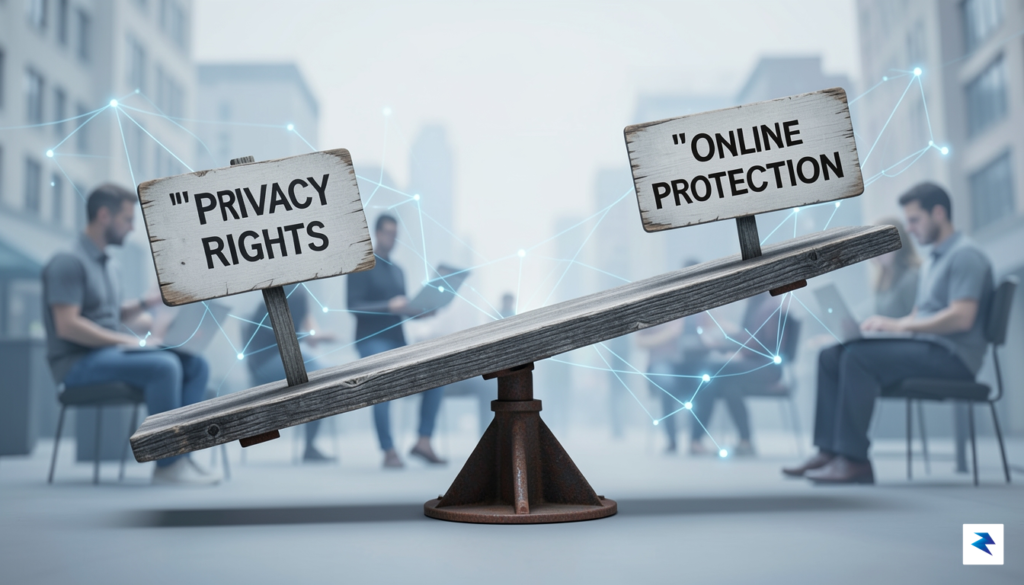
However, this same functionality creates a significant dilemma for government regulators currently tasked with implementing stringent age-verification measures. From the perspective of policymakers, the very features that keep users anonymous and untraceable also act as a sophisticated loophole. Because a VPN can make a user appear as though they are browsing from a different country or simply hide their connection origin, it can effectively bypass “age-gate” systems designed to restrict access to adult content or age-inappropriate digital services. This creates a tension between the government’s mandate to protect younger users from harmful online material and the public’s established right to data privacy. As the debate over these age-gating proposals continues to evolve, the challenge lies in finding a regulatory middle ground that addresses safety concerns without dismantling the essential privacy infrastructure upon which modern internet connectivity relies.

The government’s proposal to implement age-gating for VPN traffic introduces a monumental technical hurdle that threatens to disrupt the fundamental architecture of the modern internet. At its core, the internet was designed for the seamless flow of data, not for the granular, real-time inspection of encrypted traffic. Attempting to force an age-verification layer onto a protocol specifically designed to mask the origin and nature of data creates a perpetual “cat and mouse” game. VPN providers and sophisticated users are already adept at utilizing obfuscation techniques—such as changing protocols or masking traffic patterns to look like standard HTTPS web browsing—which would likely render broad-spectrum government blocks ineffective almost as soon as they were deployed.
Furthermore, the practical application of this policy at the Internet Service Provider (ISP) level presents a severe dilemma regarding user privacy and network integrity. To effectively identify and gate VPN traffic, ISPs would need to engage in deep packet inspection (DPI) on a massive scale. This process involves analyzing the metadata and, in some cases, the headers of millions of concurrent connections to discern whether a packet belongs to a VPN tunnel. Such a requirement would not only impose a significant performance tax on UK digital infrastructure, potentially slowing down connectivity for everyone, but it also fundamentally undermines the privacy protections that VPNs are intended to provide in the first place.

The enforcement of age-gating on encrypted tunnels forces a choice between total network transparency—which compromises privacy for all users—and a fragmented internet where legitimate business operations are frequently caught in the crossfire.
The risk of “over-blocking” remains perhaps the most significant unintended consequence of this regulatory path. Many legitimate businesses, financial institutions, and remote workers rely on VPNs to secure sensitive data and maintain encrypted communication channels. If an age-gating system is too blunt, it could inadvertently cut off access to essential cloud services, corporate intranets, or banking portals that utilize similar VPN-like tunneling protocols. Implementing a system that can accurately distinguish between a teenager circumventing a gaming restriction and a professional accessing a secure corporate server is an engineering challenge of the highest order. Without a highly nuanced approach, the UK government risks stifling the digital economy and alienating millions of law-abiding citizens who rely on these tools for security rather than evasion.

The conversation surrounding digital safety, particularly for younger internet users, invariably brings to the forefront a profound ethical and legal dilemma: how do we balance the government’s compelling duty to protect its citizens, especially minors, with the fundamental right to individual digital privacy and autonomy? This tension lies at the very heart of the UK government’s proposals concerning VPNs and age verification. On one side, there is a clear societal expectation that children should be shielded from harmful online content and exploitation. On the other, the methods proposed to achieve this, such as mandating age-gates and potentially restricting tools like Virtual Private Networks, raise serious questions about surveillance, censorship, and the future of an open internet.
At its core, the debate over VPN regulation is a conflict between state-mandated safety measures and the foundational right to encryption. VPNs, by their nature, encrypt internet traffic and obscure a user’s IP address, offering a layer of privacy and security that many deem essential in an increasingly surveilled digital landscape. For privacy advocates, any move to restrict or undermine VPN usage, even under the guise of child protection, represents a dangerous precedent. They argue that eroding the ability of individuals to encrypt their communications and maintain anonymity online could pave the way for mass surveillance, allowing governments or other entities to monitor the digital activities of law-abiding citizens without proper oversight. This concern is not merely theoretical; it stems from a broader apprehension about a ‘slippery slope,’ where initial, seemingly benign regulations could incrementally lead to a more controlled and less free internet environment.
Furthermore, privacy organisations and civil liberties groups have voiced significant apprehension regarding the practical implications of age-gating technologies, especially if they are enforced in a way that compromises user anonymity. While the intention to create a ‘safer internet’ is widely supported, the means to achieve it are subject to intense scrutiny. For example, if age verification systems require users to submit personal data, such as identification documents, across a multitude of websites, it creates vast databases of sensitive information that could be vulnerable to data breaches or misuse. This potential for aggregated personal data to be compromised, or even exploited, runs directly counter to the principles of privacy that many believe are paramount in a democratic society. Therefore, the government’s pursuit of a safer online space must be meticulously weighed against the potential erosion of individual freedoms and the risk of unintended consequences.
The challenge, therefore, is to identify solutions that effectively protect vulnerable groups without inadvertently compromising the digital rights of the broader population. Striking this delicate balance requires more than just technological solutions; it demands a robust public discourse, transparent policymaking, and a clear understanding of the ethical implications of internet regulation. As the UK government pushes forward with its age-gate proposals, the dialogue between those advocating for stringent safety measures and those championing digital privacy rights will undoubtedly intensify, shaping the future landscape of online freedom for everyone.

For the average UK household, it is essential to understand that there is no immediate shift in the functionality of your home internet or the tools you use to secure your privacy. The current discussions surrounding age-gating and VPN regulation remain in the proposal and consultation phase, meaning that your existing software will continue to operate as normal for the foreseeable future. However, the shifting regulatory landscape serves as a clear signal that the UK government is prioritizing stricter oversight of online spaces. Instead of waiting for legislative mandates to arrive at your doorstep, now is the opportune time to transition toward a more proactive approach to managing your family’s digital footprint and understanding the implications of evolving internet policies.

Because the regulatory environment is fluid, the most effective strategy for any household is to stay informed through official government channels rather than relying on speculation found on social media. Public consultations and policy papers published by the Department for Science, Innovation and Technology (DSIT) provide the most accurate timeline regarding how age-verification technologies might be implemented. By keeping an eye on these official updates, you can prepare for potential changes to service terms or authentication requirements well before they become mandatory. Being well-informed allows you to make educated decisions about your household’s privacy tools, ensuring you are not caught off guard by sudden shifts in platform accessibility or security requirements.
True digital safety is built on a foundation of open dialogue and shared learning, rather than a reliance on software filters that can often be bypassed or circumvented.
While software-based restrictions and VPN limitations often dominate the conversation, experienced digital safety advocates suggest that these tools should only be one component of a broader strategy. Relying solely on technical barriers often creates a false sense of security; instead, focus on fostering an environment of digital literacy where family members understand the risks and benefits of the sites they visit. Engage in regular, honest conversations with younger internet users about why age-gating exists and the importance of healthy online habits. When children and teenagers understand the why behind online regulations, they are far more likely to make responsible choices when navigating the web, whether a VPN is active or not.
Ultimately, the goal is to cultivate a household culture that values critical thinking and responsible navigation. Consider implementing the following best practices to stay ahead of the curve:
You must be logged in to post a comment.