
Security Without Surveillance: The Best Camera-Free Smart Home Gadgets
The Case for Camera-Free Home Security In an era where smart home technology is increasingly defined by constant visual monitoring, a growing…


The trajectory of Databricks represents one of the most calculated and successful pivots in modern enterprise software history. Initially conceived as a commercial engine for Apache Spark, the company spent its formative years establishing itself as the go-to utility for big data processing and complex analytics. By democratizing distributed computing, Databricks solved the “data silos” problem for early-adopter enterprises, yet the leadership recognized early on that raw processing power alone would not be enough to sustain long-term hypergrowth. They realized that for data to truly provide value, it needed to be unified, accessible, and ready for advanced machine learning models.
This realization birthed the “Data Lakehouse” architecture, a transformative framework that bridged the gap between the cheap storage of data lakes and the structured reliability of traditional data warehouses. By collapsing these two historically separate stacks into a single, cohesive platform, Databricks eliminated the friction that typically paralyzed data teams. This was not merely a technical upgrade; it was a strategic repositioning that turned the company into the foundational layer for the modern enterprise data stack. As companies began to store their entire operational histories within this unified architecture, Databricks became the essential gatekeeper for any organization looking to scale its analytics operations.

The transition to the Lakehouse model provided the necessary infrastructure for what would eventually become the generative AI era, proving that data governance and high-performance storage are the prerequisites for artificial intelligence.
The most recent and defining chapter of this evolution involves the seamless integration of LLM workflows and generative AI capabilities directly into the platform. When the generative AI boom arrived, many software providers were caught scrambling to bolt on third-party integrations, but Databricks was uniquely prepared. Because they had already succeeded in centralizing the enterprise’s data, they offered a secure, governed environment where proprietary data could be used to train and fine-tune large language models. By empowering companies to build their own AI models on their own private data, Databricks effectively captured the highest-value tier of the AI market.
Ultimately, this pivot was a matter of survival and vision. In an industry where software tools are frequently commoditized, Databricks avoided stagnation by moving higher up the value chain. By evolving from a data processing tool into a comprehensive AI powerhouse, they ensured that they were no longer just a vendor of infrastructure, but a critical partner in the creation of proprietary intelligence. This transition explains why the market has rewarded the firm with such a staggering $188 billion valuation; investors are not just betting on a data platform, but on the engine room of the next generation of enterprise artificial intelligence.

The staggering $188 billion valuation assigned to Databricks is not merely a reflection of the current exuberance surrounding artificial intelligence; it represents a fundamental shift in how institutional investors perceive the underlying plumbing of the modern digital economy. While many tech startups have seen their valuations deflate in the wake of rising interest rates, Databricks has defied the gravity of the broader market by proving that its infrastructure is indispensable to the Fortune 500. This valuation underscores a profound confidence in the company’s ability to pivot from a spark-processing specialist into the central nervous system for enterprise-grade generative AI. By positioning itself as the bridge between raw, messy corporate data and the sophisticated models of tomorrow, the company has convinced its backers that it holds the keys to the most valuable asset in the modern enterprise: clean, actionable data.

To understand the magnitude of this achievement, one must look at the trajectory of the company’s funding history. Previous rounds were driven by explosive growth in data warehousing and cloud-native analytics, but the latest surge in valuation is rooted in a different strategic imperative: the democratization of AI development. Investors are no longer betting on a software tool; they are betting on a platform ecosystem. The company’s success in fostering an open-source approach—specifically through its embrace of the MosaicML acquisition and the open-sourcing of model architectures—has created a “stickiness” that is nearly impossible for competitors to replicate. Once a massive organization integrates its governance, security, and machine learning pipelines into the Databricks Data Intelligence Platform, the cost and complexity of switching become prohibitive, effectively locking in long-term revenue stability.
The true value of Databricks lies in its role as a neutral, open-source-friendly infrastructure layer that prevents companies from being beholden to the proprietary “black box” models of a single cloud provider.
In the venture capital world, the “second act” is notoriously difficult to pull off. Many companies capture lightning in a bottle with a single product, only to stagnate when the market shifts or their initial technology becomes commoditized. Databricks has successfully navigated this danger zone by repeatedly reinventing its value proposition. It evolved from a specialized data processing engine into a comprehensive data lakehouse, and now, into an AI-native powerhouse. This evolution demonstrates a rare maturity in leadership and technical strategy, signaling to Wall Street that the company is not just a participant in the AI boom, but a primary architect of it. By solving the perennial enterprise problem of data fragmentation, they have secured a position as the essential foundation upon which the next decade of corporate innovation will be built.

The distinction between closed-source black-box APIs and open-weight models represents one of the most critical schisms in the current artificial intelligence landscape. While closed models—often managed by a handful of tech giants—offer convenience, they also trap businesses in a “walled garden” where the underlying logic, training data, and security protocols remain opaque. By championing open-weight architectures like DBRX, Databricks is effectively flipping the script, providing developers with the transparency necessary to inspect, audit, and fine-tune models to their specific organizational needs. This shift is not merely philosophical; it is a tactical move to ensure that companies retain sovereignty over their intellectual property and data pipelines.

Databricks’ commitment to open-weight models serves as a bridge for enterprises that are wary of vendor lock-in. When a corporation builds its core business logic on top of a proprietary API, any change in that provider’s pricing, model performance, or terms of service can pose an existential risk. By offering high-performance, open alternatives, Databricks empowers engineers to host their own versions of these models, ensuring they remain in complete control of their stack. This level of autonomy is particularly vital for industries subject to strict regulatory oversight, such as healthcare or finance, where the ability to audit the decision-making process of an AI model is not just a preference but a legal requirement.
“The future of enterprise AI isn’t about renting intelligence from a central authority; it’s about mastering the infrastructure that allows companies to own their outcomes.”
Furthermore, this strategy significantly lowers the barrier to entry for custom AI development. When developers have access to the raw weights of a model, they can perform domain-specific fine-tuning that is impossible with a generic, off-the-shelf API. Whether it is optimizing for specific technical jargon, localized languages, or proprietary internal data sets, open weights provide the architectural flexibility needed to move beyond surface-level AI applications. By fostering an ecosystem where developers are treated as partners rather than mere subscribers, Databricks is cultivating deep-rooted long-term loyalty. This developer-centric approach ensures that as companies scale their AI initiatives, the underlying infrastructure provided by Databricks becomes an indispensable foundation for their innovation rather than a replaceable utility.
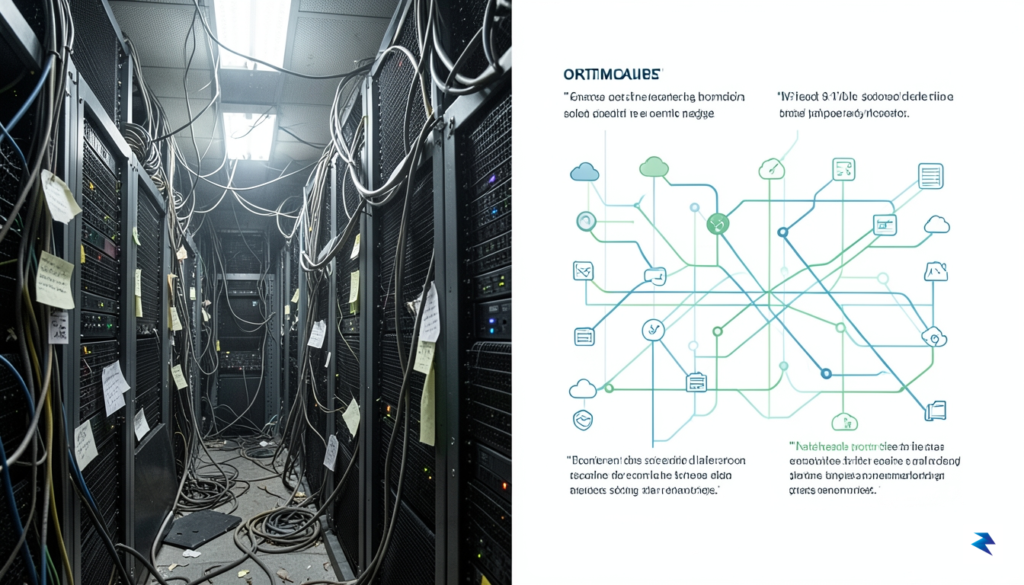
As the initial gold rush of generative AI begins to stabilize, enterprise leaders are moving past the experimental phase and confronting the harsh reality of unit economics. The excitement surrounding massive, proprietary language models is increasingly being tempered by the practical necessity of operational efficiency. Recent research from Databricks has provided a critical reality check for businesses, demonstrating that massive doesn’t always mean better. By benchmarking specialized, open-source models against their proprietary counterparts, the company has revealed that smaller, optimized models can frequently outperform industry giants in specific coding tasks, offering a far more attractive return on investment.
This shift in focus highlights the so-called “hidden costs” that often catch enterprises off guard during the scaling process. While the upfront price of an API call might seem manageable, the cumulative impact of high-latency inference, the compounding expense of continuous fine-tuning, and the architectural overhead of massive parameter counts can quickly turn a promising AI initiative into a financial burden. For many organizations, the true cost of AI isn’t just the model itself, but the energy, compute, and engineering time required to maintain it in a production environment. Databricks’ findings suggest that by opting for smaller, highly tuned models that reside closer to the data, companies can significantly reduce their inference overhead without sacrificing the quality of their output.
The most successful enterprises are no longer asking which model is the biggest, but rather which model is the most efficient for their specific business logic. True ROI is found at the intersection of performance, speed, and cost-per-token.

To navigate this new landscape, businesses must move away from the “one-size-fits-all” approach to model deployment. Evaluating AI spend requires a rigorous audit of performance versus ROI. This involves testing model latency during peak workloads, analyzing the cost-per-query for mission-critical tasks, and determining whether a generic model is actually providing value or simply adding unnecessary complexity. Organizations that prioritize transparency in their AI infrastructure—leveraging open architectures that allow for modular upgrades and optimizations—are far better positioned to scale sustainably. By treating AI as a component of their data stack rather than a black-box service, companies can effectively control their bottom line while still reaping the benefits of cutting-edge intelligence.
The landscape of enterprise artificial intelligence is currently defined by a frantic race for dominance, yet Databricks has managed to carve out a unique position that transcends the typical rivalry between cloud hyperscalers and specialized software startups. While cloud giants like AWS and Google Cloud provide the raw infrastructure necessary for compute-heavy workloads, and competitors like Snowflake focus heavily on data warehousing, Databricks has successfully positioned itself as the unified fabric connecting these disparate worlds. By integrating data governance directly with high-performance model training, the company has built a formidable moat. This architectural philosophy ensures that organizations do not have to choose between the scalability of the cloud and the specialized, often sensitive, requirements of internal data privacy.
In an era where model commoditization is accelerating—often driven by the rapid, high-profile advancements from OpenAI—the real value for enterprise clients is shifting away from the models themselves and toward the proprietary data used to refine them. Databricks excels by offering a “data-centric” AI strategy. Unlike startups that offer black-box AI tools, Databricks provides a platform where security, compliance, and governance are baked into the workflow. This is a critical differentiator for industries such as finance, healthcare, and government, where the ability to audit the provenance of data used to train a model is just as important as the model’s performance. They are effectively selling the “picks and shovels” of the AI gold rush, ensuring that as models become easier to build, the underlying infrastructure remains indispensable.
The true competitive advantage of Databricks is not found in a single breakthrough algorithm, but in its ability to turn chaotic, siloed enterprise data into a curated asset ready for machine learning at scale.
Despite this momentum, the company faces significant headwinds as the market begins to show signs of saturation. The barrier to entry for building AI infrastructure is dropping, and legacy database providers are rapidly retrofitting their own suites with generative AI capabilities. To sustain its $188 billion valuation, Databricks must navigate the tension between maintaining its open-source roots—exemplified by its commitment to the MosaicML acquisition and open-weight models—and the need to deliver proprietary, high-margin enterprise services. The rapid pace of innovation means that today’s technical advantage can quickly become tomorrow’s industry standard, forcing the company to constantly evolve its stack to remain the primary hub for data intelligence.

Ultimately, the company’s resilience will depend on its ability to convince the C-suite that it offers a more stable, long-term ecosystem than the fragmented alternatives currently flooding the market. By fostering an environment where data engineers, data scientists, and business analysts can collaborate on a single platform, Databricks mitigates the risk of “AI sprawl,” where companies end up with dozens of disjointed tools that fail to communicate. As long as they remain the bridge between raw, unstructured data and production-grade AI, they are well-positioned to withstand the pressures of a crowded and increasingly volatile market.
You must be logged in to post a comment.