
Moonshot’s Kimi K3 Disrupts AI Landscape: What It Means for Markets
The New Contender: How Moonshot’s Kimi K3 Is Reshaping AI Benchmarks The artificial intelligence landscape, long dominated by a triad of…

For years, Robinhood stood at the center of a firestorm regarding the “gamification” of retail investing. With its confetti-filled screens, intuitive mobile interface, and commission-free structure, the platform was frequently accused of encouraging impulsive, high-stakes behavior that blurred the lines between savvy wealth building and reckless gambling. Critics pointed to these design choices as deliberate psychological nudges, designed to keep users swiping and trading with little regard for the fundamental risks involved in volatile markets. This narrative cast the platform as the digital equivalent of a casino floor, where the house edge was replaced by the allure of speculative day trading.
However, the current trajectory of the company suggests a deliberate and strategic departure from this controversial identity. Under the leadership of CEO Vlad Tenev, Robinhood has been aggressively pivoting toward a model that prioritizes long-term financial health over the rapid-fire transaction volume that once defined its reputation. This shift is not merely cosmetic; it is being reflected in the integration of robust educational resources, retirement accounts, and research tools that encourage users to think in terms of decades rather than minutes. Tenev’s central argument is that the democratization of finance is a vital public service, one that should not be discredited by the actions of a small subset of speculative traders.
“We are moving from a world where finance was gated and exclusive to one where everyone has a seat at the table. Our focus now is on providing the tools to help our customers navigate that table with discipline and strategy, rather than luck.”
By distancing itself from the “gambling” label, Robinhood is attempting to rebrand retail trading as a legitimate, essential tool for personal financial empowerment. The company contends that the ability to buy fractional shares and participate in the market is a fundamental right that, when paired with the right educational infrastructure, can bridge the wealth gap. As the platform matures, the challenge for Tenev lies in proving that a user-friendly interface does not have to be a dangerous one. By emphasizing steady, informed investment habits, Robinhood is betting that its future lies in long-term customer loyalty rather than the ephemeral excitement of the trade. Whether the public perception will fully shift alongside these internal changes remains a defining question for the company’s next chapter in the financial services sector.
The introduction of election-linked financial products represents a significant departure from traditional brokerage offerings, fundamentally altering how retail investors interact with the political landscape. By creating derivatives that allow users to place bets on the outcome of the presidential race, Robinhood has effectively turned political sentiment into a tradable asset class. These election contracts operate by allowing participants to buy “Yes” or “No” positions on specific candidates, with the value of these contracts fluctuating based on polling data, public perception, and real-time news cycles. Unlike conventional stocks, which are anchored to corporate earnings and tangible assets, these instruments are tethered entirely to the binary nature of a democratic election, making them uniquely susceptible to rapid, sentiment-driven price swings.

This strategic pivot is not merely a technical update; it is a calculated effort to capture the attention of a demographic that is deeply engaged in the current cultural and political zeitgeist. Robinhood is banking on the idea that users who are already invested in the “Trump trade”—whether through his social media company’s stock or broader market indices—will find a more direct way to capitalize on their political predictions. However, this shift introduces a layer of financial risk that goes beyond the standard volatility of the stock market. Because these contracts are event-based, they lack the long-term compounding potential of equity investing, functioning instead as a high-stakes, zero-sum game where one party’s gain is strictly defined by another’s loss.
“The integration of political event contracts into retail platforms invites a new era of speculative participation, where the line between a citizen’s civic duty and an investor’s portfolio management begins to dissolve.”
Furthermore, the volatility associated with these products is inherently tied to the unpredictable flow of political news, which can shift in an instant. While seasoned traders often use sophisticated models to gauge political risk, the average retail investor may find themselves ill-equipped to handle the sudden, violent price corrections that occur whenever a new poll is released or a campaign scandal breaks. By lowering the barrier to entry for this type of speculation, Robinhood is not only expanding its product suite but is also normalizing a form of “gamified” trading that prioritizes immediate, headline-driven outcomes over disciplined, long-term financial planning. As these tools become more accessible, the platform faces the ongoing challenge of ensuring that its users distinguish between strategic hedging and the inherent dangers of pure, high-stakes speculation.

The introduction of political event contracts represents a high-stakes pivot for Robinhood, placing the brokerage squarely at the intersection of financial innovation and federal oversight. Unlike traditional stocks or exchange-traded funds, which represent ownership in corporate entities, political betting instruments are intrinsically linked to the volatile outcomes of democratic processes. This shift invites intense scrutiny from regulators like the Commodity Futures Trading Commission (CFTC), which has historically maintained a firm stance against gambling on elections, citing the potential to undermine the integrity of the democratic process. By entering this space, Robinhood must navigate a complex legal landscape where the boundary between a predictive market and a pure wager remains dangerously thin.

Ethically, the core concern lies in the potential for “gamification,” where the gravity of national governance is reduced to a series of high-beta bets. Critics argue that when retail investors are encouraged to profit from political turmoil, it risks eroding the deliberative nature of civic engagement. Robinhood maintains that these contracts provide a mechanism for “price discovery”—essentially capturing the collective wisdom or sentiment of the electorate. However, the psychological impact on an audience accustomed to fast-paced mobile trading cannot be ignored; the thrill of a political win can quickly mirror the addictive feedback loops found in casino-style applications, raising significant questions about the firm’s duty to protect its users from outsized risk.
The challenge for any modern brokerage is balancing the democratization of complex financial instruments with the inherent responsibility to safeguard retail participants who may not fully grasp the binary, “winner-take-all” nature of political betting.
To mitigate the risk of legal blowback, the platform is likely leaning on structured compliance frameworks that categorize these products as distinct from standard securities. Unlike traditional prediction markets, which often operate in decentralized or niche environments, Robinhood’s mainstream reach demands a level of transparency and capital requirements that are significantly more rigorous. They are not merely launching a product; they are attempting to standardize a previously fringe asset class under the watchful eyes of federal investigators. Whether this approach proves to be a revolutionary step in market efficiency or a regulatory overreach remains to be seen, but the firm’s trajectory suggests they are betting on the former, hoping to define the rules of the game before the regulators finalize them.

The modern retail investor is no longer confined to the sterile, long-term horizon of traditional retirement accounts. For a younger generation raised in the age of algorithmic feeds and hyper-connected social media, the act of trading has evolved into a form of digital expression that blurs the lines between financial strategy and personal identity. Platforms like Robinhood have successfully tapped into this shift by offering interfaces that prioritize speed, accessibility, and a sense of community. For many users, placing a trade on a high-stakes political event is not merely an attempt to generate capital; it is a way to place a concrete bet on their worldview, effectively turning their personal convictions into a public scorecard.
Social media acts as the primary engine for this behavior, creating a feedback loop where market volatility is amplified by real-time commentary. When political events unfold, they are immediately filtered through the lens of influencers and viral threads, triggering a potent sense of fear of missing out (FOMO). In this high-velocity environment, waiting for traditional financial analysis feels antiquated to a demographic accustomed to instant gratification. Consequently, the urge to participate in event-based trading—whether on election outcomes or policy shifts—becomes a way to stay socially relevant. Investors feel that by having “skin in the game,” they are more deeply plugged into the cultural zeitgeist than those watching from the sidelines.
The integration of political events into trading platforms transforms the market into a living, breathing extension of the 24-hour news cycle, where the barrier between civic engagement and financial speculation becomes increasingly porous.
The demographic breakdown of these users reveals a fascinating trend: they are largely digital natives who view traditional financial institutions as opaque and exclusionary. By streamlining the barrier to entry, Robinhood has fostered an environment where trading feels more like a game of skill than a slow-moving investment strategy. While critics argue this approach borders on gambling, the participants themselves often view it as an evolution of the market. They are not looking for the steady, incremental gains of index funds; they are seeking the thrill of being right in a volatile, rapidly changing world. This mindset represents a fundamental shift in the psychology of finance, moving away from passive accumulation toward active, event-driven participation that mirrors the unpredictability of the digital age.

At the core of Vlad Tenev’s strategy is a transition from being a mere entry point for retail stock market participation to becoming a comprehensive “financial hub” for the digital-first generation. This long-term vision treats the brokerage app not as a static ledger of equity holdings, but as a dynamic ecosystem where users can manage their entire financial lives—from traditional retirement planning to speculative event-based trading. By diversifying the platform’s offerings, Tenev aims to capture a larger share of a user’s wallet, ensuring that the app remains relevant regardless of current market cycles or economic volatility. The integration of cryptocurrency, gold, and political event contracts signals a fundamental belief that the future of finance is inherently multifaceted, requiring a user interface that feels less like a bank and more like a modern, accessible utility.
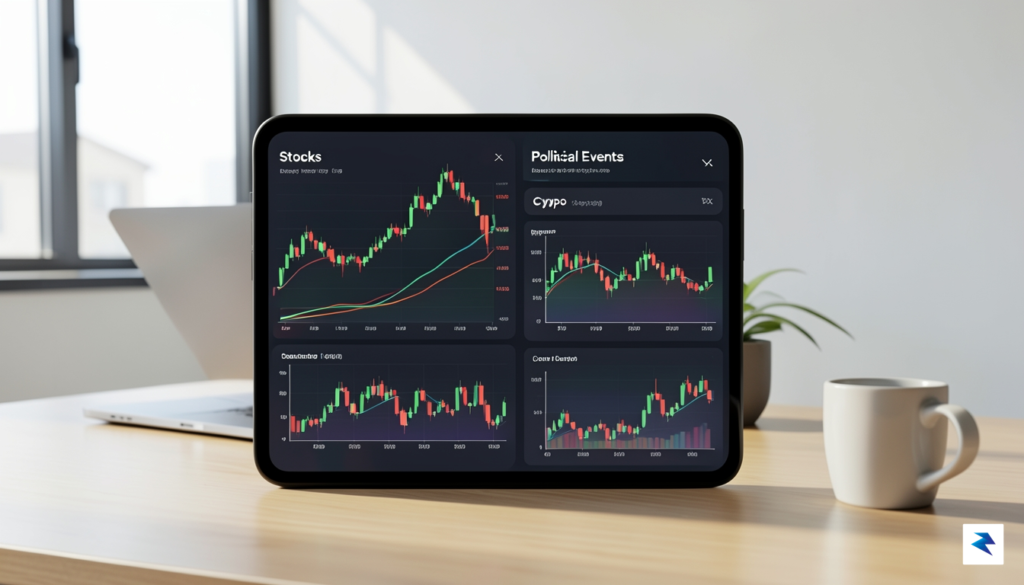
The sustainability of these unconventional revenue streams, particularly event-based trading, remains a focal point of scrutiny for critics and investors alike. While traditionalists might view wagering on election outcomes or policy shifts as a departure from core investment principles, Tenev frames these products as democratized access to hedging tools and predictive markets. By leveraging predictive data, the platform provides retail users with instruments once reserved for institutional players. However, this expansion forces Robinhood to walk a fine line: it must maintain high engagement through gamified, high-velocity trading while simultaneously building the infrastructure required for serious, long-term wealth management. The success of this roadmap depends on the platform’s ability to prove that its users are not merely chasing short-term thrills, but are instead utilizing these varied instruments to navigate an increasingly complex global landscape.
Ultimately, the transition of a brokerage into an all-encompassing financial platform hinges on the company’s ability to balance innovation with user protection, ensuring that accessibility does not come at the cost of long-term financial health.
Whether Robinhood can successfully shed the “gambling” label depends largely on whether it can successfully scale its educational resources alongside its product suite. Tenev’s vision suggests that if the platform can prove its tools help users make informed, strategic decisions—regardless of the underlying asset—the perceived stigma will eventually fade. To achieve this, the company is prioritizing robust data-driven insights and low-friction navigation, aiming to elevate the average user’s financial literacy. If this bet pays off, Robinhood won’t just be a place where people trade; it will be the central nervous system of personal finance for a generation that demands speed, transparency, and constant connectivity. The ultimate goal is to shift the narrative from the mechanics of trading to the outcomes of financial empowerment, effectively redefining what it means to be a modern investor.
You must be logged in to post a comment.