
Beyond Training: Why $400 Million Is Flowing Into Inference Chips
The Shift from Training to Inference Infrastructure For the past several years, the artificial intelligence landscape has been defined by a…
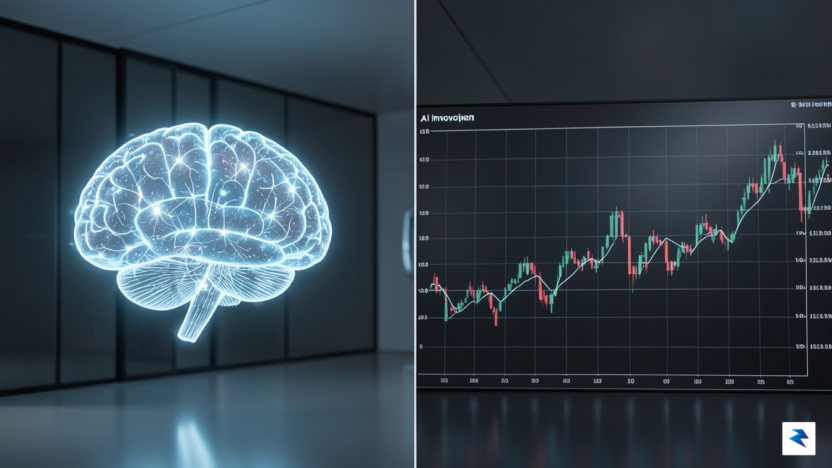
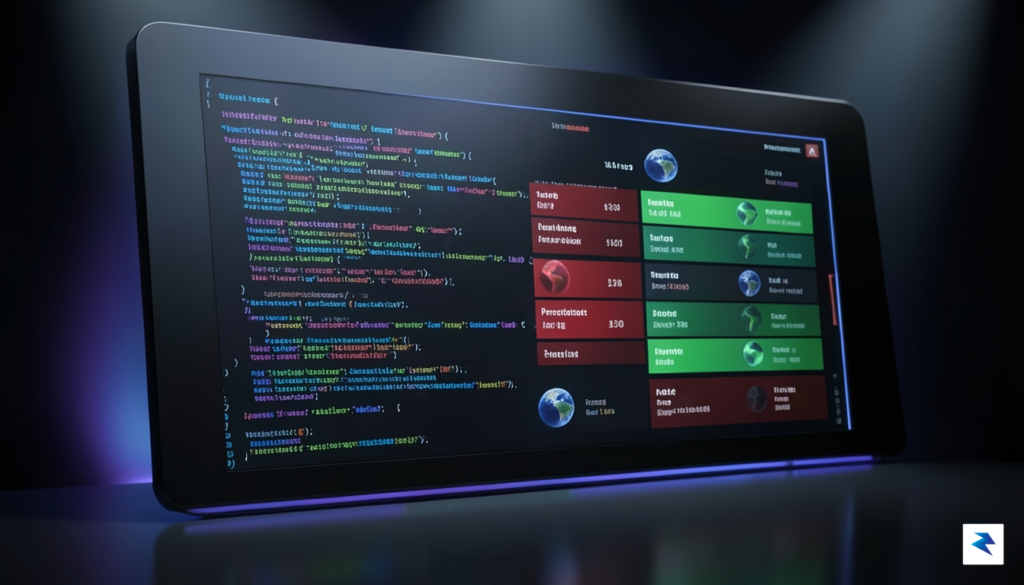
The artificial intelligence landscape, long dominated by a triad of Silicon Valley titans, has suddenly faced a formidable disruption from Beijing-based Moonshot AI. With the debut of its Kimi K3 model, the company has vaulted into the spotlight by shattering performance expectations in highly specialized coding benchmarks. While market incumbents like OpenAI’s GPT series and Anthropic’s Claude have set the gold standard for reasoning and development tasks, Kimi K3 has demonstrated a surprising edge in front-end coding proficiency. This shift is not merely a marginal improvement in output but a significant milestone that suggests the technical gap between Western and Eastern large language models is closing faster than many analysts previously anticipated.

At the heart of this disruption is the model’s performance in complex front-end architecture tasks, where precision and logical structure are paramount. Recent evaluations indicate that Kimi K3 excels at translating abstract user requirements into clean, functional code, often outperforming its counterparts in debugging efficiency and syntax adherence. For developers, this represents a massive inflection point; the ability of a model to handle the nuances of modern web frameworks with such high accuracy suggests that the barrier to entry for complex software engineering is lowering. By consistently hitting higher benchmark scores, Moonshot AI has forced the industry to reconsider the assumption that Western models hold a permanent monopoly on advanced logic and creative problem-solving capabilities.
The rise of Kimi K3 proves that the AI arms race is no longer confined to specific geographic borders, signaling a new era of global competition that prioritizes model efficiency and specialized domain expertise.
Perhaps most disruptive to the existing AI ecosystem is Moonshot AI’s strategic decision to offer Kimi K3 as a free-to-use resource for many users. This move mirrors the early days of internet expansion, where accessibility was the primary catalyst for rapid adoption and widespread innovation. By democratizing access to a top-tier coding engine, Moonshot is not only challenging the subscription-based revenue models of its rivals but is also rapidly gathering the vast quantities of user data needed to iterate and improve the model further. This compounding effect creates a flywheel of development that could potentially leave legacy models struggling to match the pace of innovation. As the market reacts to these technical breakthroughs, stakeholders are beginning to realize that the influence of these AI agents now extends far beyond software development, reaching into the very heart of global financial markets and digital infrastructure.

The emergence of Moonshot AI’s Kimi K3 has sent ripples through the software engineering community, primarily because it manages to bridge the gap between architectural theory and practical frontend implementation. While industry leaders like GPT-4 and Claude 3.5 Sonnet have long dominated the conversation, they often struggle with the subtle, state-dependent nuances of complex UI frameworks. Kimi K3, however, demonstrates an uncanny ability to navigate deep component hierarchies and manage intricate reactivity models, such as those found in modern React or Vue ecosystems. By prioritizing context retention over raw parameter size, the model maintains a persistent understanding of how modular components interact, which is a critical necessity for building scalable, production-grade interfaces.

When evaluating frontend coding performance, benchmarks typically focus on three core pillars: logical consistency, DOM manipulation accuracy, and the ability to handle asynchronous state transitions. In these technical trials, Kimi K3 has shown a distinct advantage by minimizing the “hallucination” of deprecated library features—a common pitfall that plagues many other large language models. While GPT-4 often defaults to verbose, boilerplate-heavy solutions, Kimi K3 tends to favor idiomatic, concise code that respects the specific design patterns defined in a project’s existing codebase. This suggests that the model has been fine-tuned with a deeper sensitivity to modern development workflows, allowing it to act more like a senior developer who understands the long-term maintainability of a project rather than a junior coder who simply churns out functional but disorganized snippets.
The true measure of a coding assistant isn’t just the ability to write valid syntax, but the capacity to architect a system that remains readable and performant as complexity grows.
For developers and startups operating under tight constraints, the shift toward Kimi K3 represents more than just a change in tool preference; it signals a new era of cost-effective, high-performance programming. Because Kimi exhibits such high proficiency in frontend logic, teams can significantly reduce the amount of time spent on debugging and refactoring generated code. This efficiency gain is particularly pronounced in large-scale applications where state management can quickly become a bottleneck. By closing the performance gap between proprietary leaders and agile challengers, Moonshot AI is effectively democratizing access to high-level coding intelligence, forcing a reevaluation of the current market hierarchy where expensive, proprietary API calls were once the only viable path to automated software development.
Ultimately, the rise of Kimi K3 challenges the status quo by proving that engineering excellence is not exclusively held by a handful of Western-based labs. As the model continues to integrate into more developer environments, the focus will likely shift from which model has the most parameters to which model provides the highest utility per token. For the frontend developer, this means a future where the AI assistant is a reliable collaborator that understands the difference between simply “making it work” and “making it right.”

The recent turbulence in Bitcoin’s price trajectory serves as a potent reminder that digital assets remain inextricably linked to the broader technology sector. When Moonshot’s Kimi K3 platform outperformed established giants like Claude and GPT in specialized coding benchmarks, the ripple effects were felt far beyond the software development industry. This shift in the AI landscape triggered a wave of institutional reassessment, proving that Bitcoin is still frequently treated as a high-beta tech play rather than a disconnected store of value. As capital rotates into the companies spearheading the next generation of artificial intelligence, crypto markets often experience corresponding bouts of volatility as liquidity is redirected toward these high-growth opportunities.

Investors are currently navigating a climate defined by profound risk aversion, where any sign of technological disruption can lead to rapid portfolio rebalancing. Because Bitcoin is often viewed by retail and institutional traders alike as a proxy for speculative technology, it is highly sensitive to shifts in the macroeconomic narrative. When a new player like Kimi demonstrates superior capabilities in logic and coding, it forces market participants to reconsider their allocation strategies. If the “tech-lead” mentality prevails, traders will prioritize entities that demonstrate immediate utility and innovation potential, often liquidating positions in crypto assets to secure capital for the latest AI-driven equity plays.
The tight coupling between digital assets and the tech sector suggests that Bitcoin’s price discovery is increasingly dependent on the velocity of innovation in the wider software and computing ecosystem.
This “tech-lead” mentality creates a distinct feedback loop where crypto markets effectively mirror the sentiment of the Nasdaq or other tech-heavy indices. Contemporary traders are not just looking at halving cycles or regulatory updates; they are meticulously tracking breakthroughs in large language models and machine learning efficiency. Consequently, when the status quo is challenged—as it was with the recent Kimi performance benchmarks—the resulting market anxiety manifests as a sell-off in Bitcoin. Until the asset class can demonstrate a more robust decoupling from speculative equity flows, investors should expect these rapid fluctuations to continue whenever the technological horizon shifts unexpectedly.
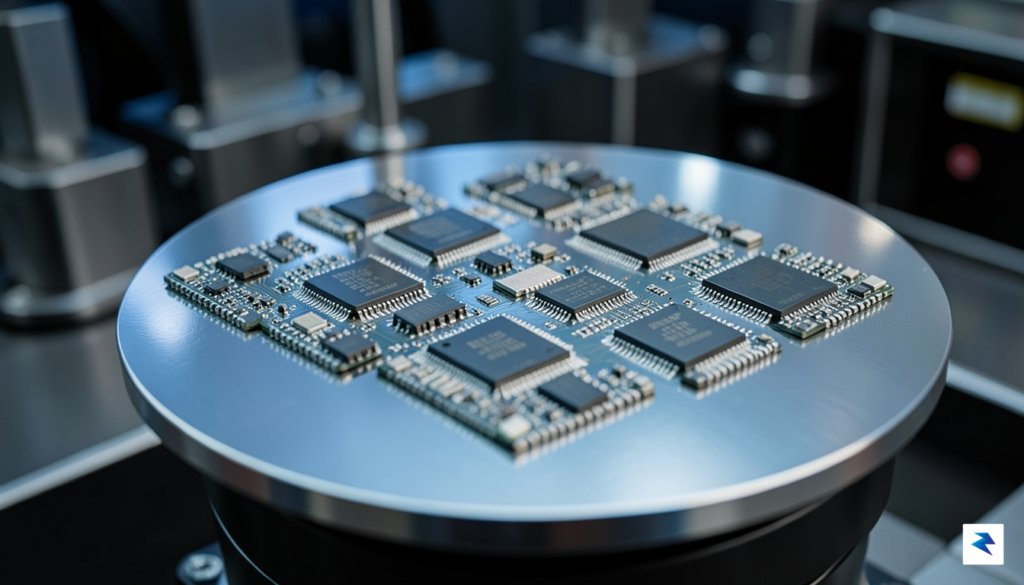
The recent ascent of high-performance large language models, particularly those originating from emerging competitors like Moonshot AI’s Kimi, has sent a clear signal that the AI arms race is no longer solely about sheer scale. For months, the semiconductor industry has thrived on the assumption that the demand for increasingly powerful GPUs would grow linearly with the complexity of AI models. However, as new software architectures become more efficient at processing code and data, the necessity for a constant, exponential ramp-up in raw hardware throughput is being called into question. Investors are beginning to realize that if models can achieve “human-level” coding proficiency with less energy and computational overhead, the hyper-growth trajectory of chip manufacturers may eventually hit a plateau.
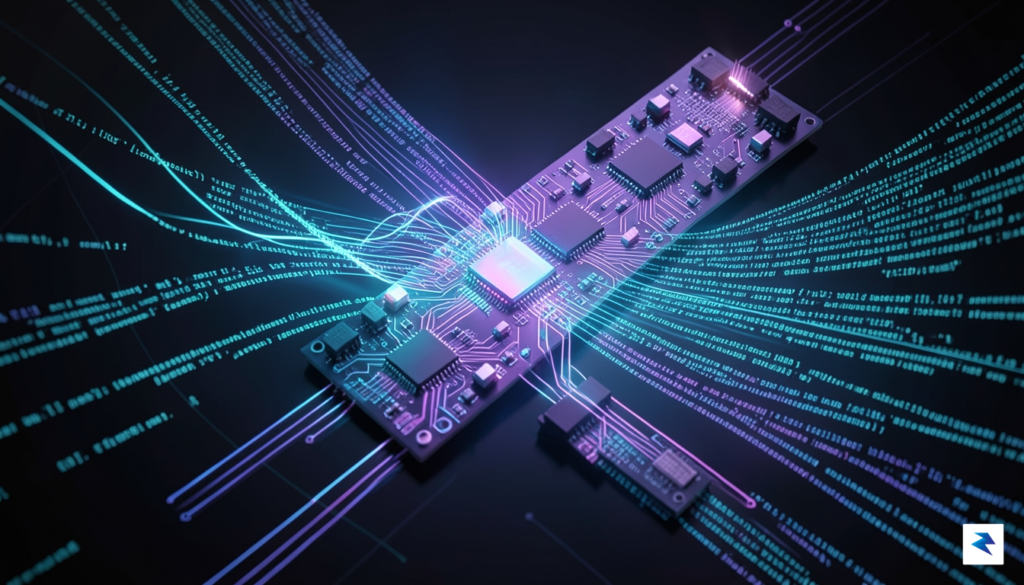
This shift in sentiment is reflected in the recent volatility seen across the semiconductor sector, which has long served as the backbone of the current market rally. Major chip designers and manufacturers, previously viewed as invincible engines of growth, are now facing a re-evaluation of their long-term valuations. When the software layer of the AI stack optimizes itself—as seen with the emergence of Kimi’s competitive edge—the pressure shifts back to the hardware firms to prove that their next generation of silicon will still provide a mandatory competitive advantage. Market participants are increasingly sensitive to the risk of “growth saturation,” where the supply of high-end chips might eventually outpace the actual utility requirements of newly optimized, leaner AI applications.
The semiconductor sector often acts as a bellwether for the broader tech economy; when chip stocks struggle, it frequently signals that the market is bracing for a transition from speculative exuberance to a focus on tangible, sustainable returns.
Furthermore, corrections in the chip sector have historically served as a leading indicator for broader market shifts, acting as a barometer for how much “froth” remains in the tech industry. As competition intensifies within the AI hardware and software pipeline, the industry is witnessing a decoupling between the most hyped firms and those that provide essential, long-term infrastructure. Investors are moving away from a “buy at any price” mentality, opting instead for a more discerning approach that weighs hardware demand against the reality of software efficiency. This adjustment is painful in the short term, yet it is a necessary maturation phase that will ultimately determine which players possess the structural durability to survive a landscape where software innovation is moving faster than hardware production cycles.

The emergence of Moonshot AI’s Kimi K3 as a top-tier contender in coding benchmarks signals a profound transformation in the global artificial intelligence arms race. For months, the industry narrative has been dominated by the giants of Silicon Valley—OpenAI and Anthropic—whose flagship models, GPT-4 and Claude 3.5 Sonnet, have served as the undisputed gold standards for reasoning and software engineering. However, the rise of a high-performing challenger from Beijing suggests that the era of Western hegemony in generative AI is facing its most significant test to date. This shift indicates that the focus of innovation is rapidly moving away from raw parameter count and toward architectural efficiency, cost-effectiveness, and real-world utility in specialized tasks like programming.

For incumbents like OpenAI and Anthropic, this development serves as a stark reminder that the “moat” around proprietary large language models is shrinking faster than previously anticipated. While these established firms maintain a substantial advantage in brand recognition and enterprise integration, their technical dominance is no longer absolute. If Kimi K3 can achieve comparable—or superior—results with a more streamlined architecture, it suggests that the massive capital expenditure required to train the next generation of “frontier” models may face diminishing returns. Consequently, the industry is likely to witness a pivot toward hyper-optimized models that are not only cheaper to run but also more accessible to developers in emerging markets who require high-performance tools without the premium pricing of US-based platforms.
The true battle for AI supremacy is no longer defined by who has the most data, but by who can build the most efficient engine for solving complex, real-world problems at scale.
Looking ahead, we are entering a new phase of global competition where model accessibility and regional optimization take center stage. Rather than a temporary dip in performance metrics, the success of Moonshot’s latest iteration marks a fundamental shift in market leadership, signaling that innovation is becoming increasingly decentralized. Future industry trends will likely favor companies that can offer high-context windows and specialized coding capabilities to the global developer community without the latency and regulatory friction associated with centralized, US-centric cloud services. Whether this leads to a permanent displacement of current leaders remains to be seen, but one thing is certain: the AI landscape is diversifying, and the competitive pressure on the status quo has never been more intense.
You must be logged in to post a comment.