
The Climate Crisis: Why FIFA’s Future Depends on More Than Just Goals
The Growing Clash Between Professional Soccer and a Warming Planet For decades, the global sporting community treated climate change as a…


For the past several years, the artificial intelligence landscape has been defined by a singular, insatiable hunger: the race for massive compute power required to train foundational models. This era of the “AI gold rush” saw capital pouring almost exclusively into high-end GPU clusters, treating raw training capacity as the ultimate competitive moat. However, as these large language models reach a level of maturity where their capabilities are no longer just theoretical, the industry is witnessing a profound shift in priorities. The focus is no longer solely on the expensive, months-long process of “building the brain,” but rather on the economic imperative of making that brain usable in the real world.

This transition represents a move from the experimental phase to the operational phase of the AI revolution. While training requires massive, monolithic clusters of GPUs working in tandem to process trillions of parameters, the deployment phase—known as inference—presents an entirely different set of technical challenges. In the production environment, the goal is not to learn new patterns, but to deliver lightning-fast, low-latency responses to millions of concurrent users. As businesses integrate AI into customer service, software development, and diagnostic tools, the bottleneck has shifted from the laboratory to the user interface. Consequently, investors are beginning to recognize that the next multi-billion-dollar opportunity lies in hardware specifically engineered for the efficiency of execution rather than the brute force of learning.
The true economic sustainability of AI depends on moving from the “training tax” to the “inference dividend,” where hardware is optimized to lower the cost per query to a fraction of its current level.
The hardware requirements for this new phase are markedly distinct. Unlike the power-hungry, generalized architecture of the chips used for training, inference demands hardware that is highly optimized for energy efficiency, reduced thermal output, and rapid, real-time data processing. If training is akin to building a massive library, inference is the process of staffing it with librarians capable of finding any book in a fraction of a second without burning the building down in the process. This is precisely why we are seeing a surge in capital flowing into specialized inference chips. These processors are designed to handle specific inference tasks with far greater precision, allowing companies to scale their AI offerings without incurring the unsustainable energy and hardware costs that currently define model deployment. As the market pivots, it is clear that the winners of the next decade will be those who can bridge the gap between AI’s vast potential and its practical, scalable, and affordable reality.

The recent $400 million financing package represents a fundamental shift in how the AI industry capitalizes its most vital resource: hardware. Moving beyond the traditional venture capital model—which relies on equity dilution to fund massive operational burn rates—this deal utilizes asset-backed debt financing. By treating specialized inference chips as collateral, lenders are essentially betting on the long-term utility of the hardware rather than just the software stack running on top of it. This marks a maturing of the AI infrastructure market, where the physical assets themselves have become liquid enough to underwrite significant institutional debt.
In traditional venture capital, investors exchange cash for ownership, hoping for an eventual exit through an IPO or acquisition. In contrast, this debt-based mechanism allows companies to scale their computing capacity without continuously diluting their cap table. Because inference chips—the engines that power chatbots and image generators after they are trained—have a more predictable revenue profile than experimental training clusters, they serve as excellent candidates for debt. Lenders are comfortable backing this specific hardware because it performs a repetitive, essential service that generates consistent cash flow, providing a clear pathway for the loan to be serviced over time.

However, the risk/reward profile for this type of lending is nuanced, particularly given the lightning-fast pace of semiconductor innovation. Unlike real estate or heavy machinery, which may hold value for decades, inference chips face the constant threat of obsolescence as newer, more efficient architectures reach the market. Lenders are navigating this by structuring these deals with strict covenants and potentially shorter amortization schedules that align with the useful life of the silicon. They are not merely looking at the current market value of the hardware; they are assessing the likelihood that these chips will remain the industry standard for inference tasks for the next three to five years.
The pivot toward asset-backed lending signals that investors now view AI compute as a utility rather than a speculative experiment, effectively treating high-end silicon as the new digital equivalent of industrial infrastructure.
Ultimately, this deal underscores the transition of AI from a research-heavy endeavor to a capital-intensive utility. By leveraging debt to secure specialized hardware, companies are essentially building a private version of a public utility grid. If this model proves successful, we can expect to see a wave of similar financing vehicles that treat GPU and inference chip clusters as tangible, bankable assets. This evolution is vital for the ecosystem, as it decouples the growth of physical compute capacity from the volatile whims of equity markets, ensuring that the necessary hardware infrastructure can scale at the pace required by the AI revolution.

For years, the gold rush of artificial intelligence was defined by the gargantuan task of training foundation models. Investors poured billions into the general-purpose GPUs required to process massive datasets, viewing the “intelligence” of the model as the ultimate product. However, as the industry matures, the economic spotlight is shifting toward the operational reality of running these models at scale. Inference—the process where a trained model actually performs a task, such as answering a query or generating an image—is where the real business value is unlocked. If training is the R&D phase of the AI era, inference is the manufacturing floor, and for software companies, the unit economics of this stage will determine whether their AI products remain viable long-term.
The transition toward specialized inference chips is driven by the urgent need to protect profit margins. In the current SaaS landscape, every token generated represents a tangible cost in electricity, compute time, and hardware depreciation. When a company relies on expensive, power-hungry general-purpose GPUs for simple inference tasks, the cost-per-query can quickly erode the profitability of the service. By shifting toward chips specifically engineered for inference, companies can achieve significantly higher throughput and lower latency. This isn’t just about saving a few cents per request; it is about establishing a sustainable business model where the cost of providing the service scales linearly with growth rather than exponentially, effectively turning efficiency into a formidable competitive moat.

Furthermore, investors are recognizing that the “performance-per-watt” metric has become the new benchmark for success. General-purpose GPUs were designed for versatility, making them exceptionally powerful but inherently inefficient for the repetitive, high-volume nature of inference. Specialized inference silicon, by contrast, strips away the unnecessary complexity of training architectures to focus exclusively on executing pre-trained weights with maximum speed. This specialization allows developers to slash their energy bills and hardware requirements, providing a clearer path to profitability in a crowded market. Companies that solve these efficiency bottlenecks are finding themselves with a distinct advantage, as they can deliver faster, more responsive AI experiences to users while maintaining lower operational overhead than their competitors.
The shift from general-purpose training hardware to specialized inference chips represents the maturation of the AI industry from an experimental phase to a sustainable economic engine.
As the market continues to evolve, the ability to control these unit economics will likely dictate the next generation of industry leaders. We are entering a phase where the “intelligence” of a model matters less than the ability to deploy that intelligence affordably. Investors are betting $400 million on inference because they understand that the software companies of tomorrow will be won or lost on the back of their inference costs. By backing silicon that prioritizes latency and power efficiency, these financiers are essentially securing the infrastructure that will allow AI applications to become as ubiquitous and cost-effective as the cloud computing services that underpin the modern internet.

The recent $400 million influx into inference-focused hardware signals a profound transition: we are moving away from the era of venture-backed experimentation and into the industrialization of artificial intelligence. Much like the expansion of the transcontinental railroad or the rollout of national electrical grids, AI infrastructure is maturing into an asset class defined by heavy capital expenditure and long-term debt financing. By shifting the funding burden from equity-based venture capital to debt structures, these companies are mirroring the financial models used by utility providers and telecommunications firms, treating compute power as a reliable, depreciable industrial commodity rather than a speculative software play.
This shift toward debt financing is particularly revealing because it forces a rigorous, bank-level assessment of the “useful life” of AI hardware. In the past, venture capitalists were often comfortable with the high-risk, high-reward nature of hardware development, but institutional lenders require a predictable return on assets. Consequently, these financiers are increasingly viewing inference chips not as fleeting tech novelties, but as durable equipment that can be collateralized. However, this creates a unique tension in an industry where chip architectures evolve at a breakneck pace, often rendering hardware obsolete within eighteen months. Lenders are now forced to calculate the “residual value” of silicon in a market where today’s cutting-edge accelerator could be tomorrow’s legacy equipment.
The transition to debt financing effectively treats compute as a utility, shifting the focus from explosive valuation growth to operational efficiency and long-term asset utilization.
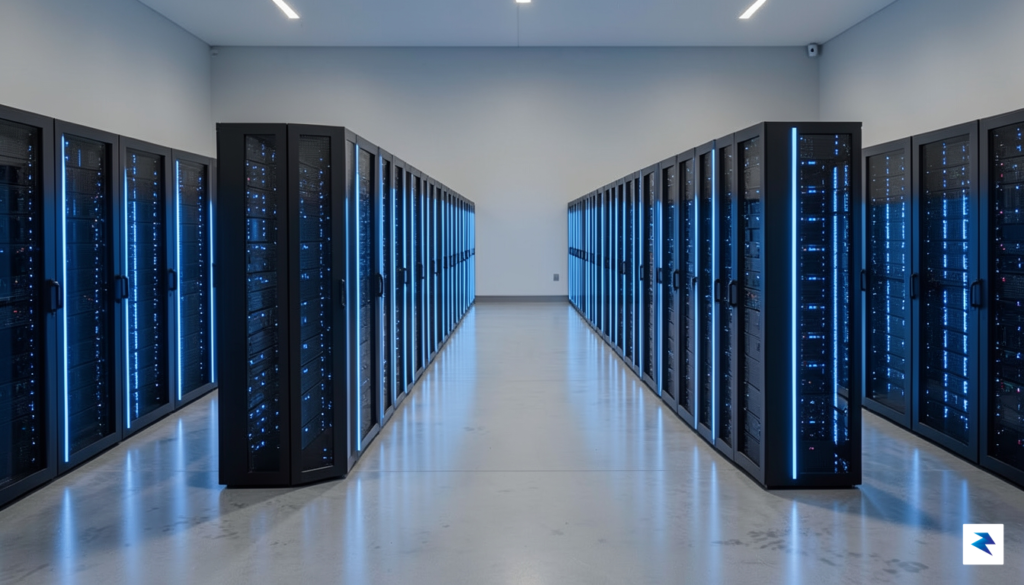
By securing capital without diluting equity, startups are essentially testing a new playbook for the AI sector. This precedent suggests that founders can maintain control of their companies while scaling the physical infrastructure necessary to meet global demand, provided they can prove their hardware maintains economic utility beyond the rapid innovation cycles of training models. If this model succeeds, it will likely trigger a wave of similar deals, further separating the “compute-utility” providers from the software-layer AI companies. Ultimately, this financial engineering serves as a stabilizing force, moving the industry toward a more mature, sustainable footing where the focus shifts from merely building the fastest chip to building the most reliable, cost-effective infrastructure for the digital economy.

The recent infusion of $400 million into inference-focused hardware marks a decisive pivot from the experimental “training” era of artificial intelligence toward a robust operational phase. For years, the industry was obsessed with the sheer scale of compute required to teach models how to think, but this new capital injection signals that the market is finally prioritizing how those models actually perform in the real world. By shifting focus toward inference chips—which are optimized for speed, efficiency, and cost-effectiveness during the execution phase—financiers are betting that the next wave of value will be generated by deploying intelligent applications at a massive, sustainable scale rather than merely building larger, more expensive models.

This shift will likely catalyze a new generation of “chip-backed” startups, where hardware procurement and software development are inextricably linked from day one. In the past, companies relied on general-purpose GPUs that were expensive and often ill-suited for the specific demands of running continuous, low-latency AI services. Now, we are likely to see more ventures that secure specialized, energy-efficient infrastructure as a core competitive advantage. By aligning hardware capability with specific product goals, these companies can bypass the bottlenecks of global supply chains that currently prioritize massive, energy-hungry training clusters, allowing them to innovate faster and with significantly lower overhead costs.
The transition toward inference-first infrastructure represents the maturation of the AI sector, moving from the laboratory’s theoretical potential to the consumer’s practical reality.
Furthermore, this move directly addresses the mounting pressures of global energy consumption and hardware scarcity. As AI becomes an everyday utility, the current model of relying on power-intensive training hardware is simply not scalable for the long term. By investing in chips specifically designed to minimize energy waste during the inference process, the industry is creating a more sustainable framework for growth. This is not just a logistical improvement; it is an economic necessity that will ultimately drive down the cost of AI-powered services. As the price of compute drops, developers will be able to integrate sophisticated intelligence into everything from household appliances to mobile operating systems, making high-end AI products significantly more affordable and accessible to the average consumer.
Ultimately, this $400 million investment is a harbinger of a broader trend: the commoditization of AI deployment. As infrastructure providers move away from one-size-fits-all hardware, they are building a foundation that supports a diverse, thriving ecosystem of applications. When the cost of running an AI model becomes negligible, we will move past the era of “AI as a spectacle” and enter a period where intelligent, responsive technology becomes an invisible, yet indispensable, part of our daily lives.
You must be logged in to post a comment.