
23andMe Settles for $18M Over Major Data Breach: What Users Need to Know
Understanding the 23andMe Data Breach Settlement In late 2023, the landscape of digital privacy was permanently altered when 23andMe, a titan…


The recent retreat of Bitcoin below the $63,000 threshold acts as a stark indicator of a broader tectonic shift in global investor sentiment. For months, markets were buoyed by an insatiable appetite for high-growth sectors, particularly those linked to artificial intelligence and speculative technology stocks. However, as the initial euphoria surrounding AI-driven productivity gains begins to face the sobering reality of valuation concerns and macroeconomic pressure, we are witnessing a classic “risk-off” migration. In this environment, capital that once flowed freely into volatile assets is rapidly retreating, seeking the sanctuary of cash and traditional safe-haven instruments as investors prioritize capital preservation over speculative upside.
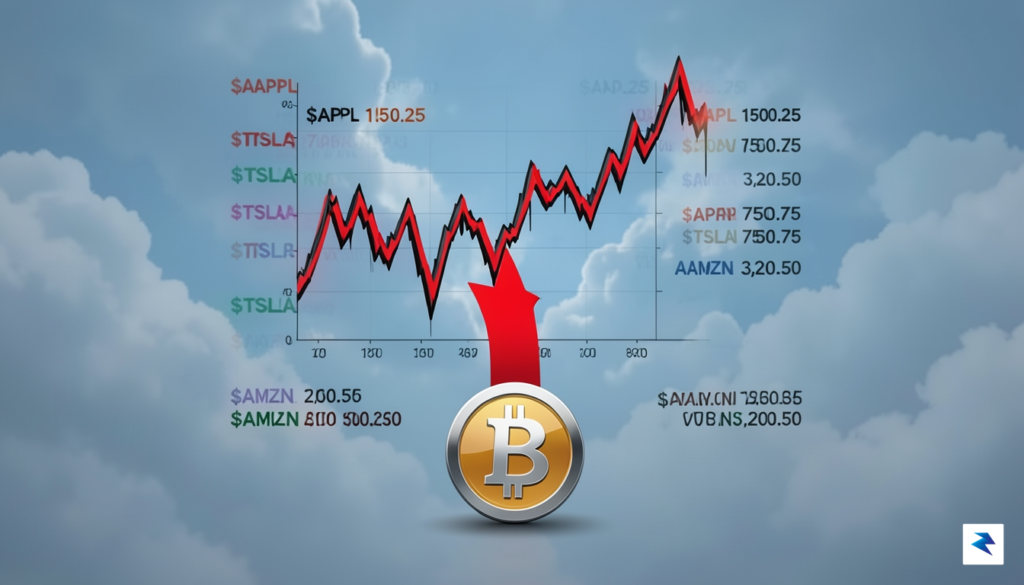
This transition is largely driven by the tightening correlation between traditional equities and digital assets. While proponents of cryptocurrency often market Bitcoin as an independent hedge against fiat instability, the reality of current market liquidity tells a different story. When major equity indices experience significant volatility—spurred by fears of economic cooling or geopolitical uncertainty—crypto markets frequently suffer from a liquidity drain. Institutional investors, who now hold significant positions in both tech stocks and digital assets, often liquidate their most liquid holdings first to cover margin requirements or to rebalance portfolios in response to broader market stress. Consequently, Bitcoin acts less like a store of value and more like a high-beta proxy for risk-on market sentiment.
The movement toward risk-off sentiment is rarely a singular event; it is a psychological cascading effect where uncertainty regarding interest rates and sector-specific bubbles forces a structural reassessment of risk parity across all asset classes.
Beyond the immediate math of portfolio rebalancing, there is a profound psychological component to this shift. Investors are increasingly wary of “AI fatigue,” where the exponential gains in hardware and software companies are being questioned for their immediate revenue impact. When the stock market struggles to maintain its momentum, that collective anxiety spills over into the crypto ecosystem, which is inherently sensitive to shifts in global liquidity. As traders move toward the sidelines, liquidity dries up, making Bitcoin and its peers more susceptible to sharp, downward price swings. This cycle of caution reinforces itself, leading to a climate where holding cash—once considered a “losing” strategy due to inflation—is suddenly viewed as the most prudent tactical maneuver until the market finds a new, stable floor.

The meteoric rise of artificial intelligence has dominated market discourse for over a year, turning tech giants into the primary drivers of global equity indices. However, the relentless momentum that once defined this sector is currently hitting a wall of exhaustion. As investors begin to question whether the astronomical valuations assigned to AI-focused hardware and software companies are sustainable, the “AI bubble” narrative has shifted from speculative excitement to cautious skepticism. This fatigue is no longer a localized issue within the Nasdaq; it has spilled over into the broader risk-on environment, creating a domino effect that is now pulling cryptocurrency markets into the fray.
Institutional portfolios are often heavily weighted toward high-beta assets that perform exceptionally well during periods of optimism. When sentiment shifts, these same institutional players are forced to execute rapid rebalancing strategies to protect capital. Because Bitcoin and tech stocks share a common pool of liquidity, a selloff in the S&T sector often forces traders to liquidate their most liquid assets to cover margin calls or harvest gains before further depreciation occurs. Consequently, Bitcoin is being treated not as a distinct digital gold, but as a high-growth tech proxy that sits at the top of the risk-on spectrum. When the appetite for “speculative tech” wanes, Bitcoin is frequently the first asset sold to deleverage, regardless of its underlying technological fundamentals.
Ultimately, the current market environment reflects a broader reassessment of risk, where the correlation between tech stocks and crypto serves as a barometer for global liquidity and investor confidence.
Whether this correction represents a fleeting, temporary pullback or a fundamental valuation reset remains a subject of intense debate among analysts. If the AI sector continues to grapple with cooling demand and shrinking profit margins, we may see a prolonged period of consolidation across both stock and crypto markets. Conversely, if investors find a new floor for these valuations, the current volatility could be viewed as a necessary pruning phase that eliminates speculative froth. For now, the crypto market remains tethered to the health of the tech sector, waiting for the broader risk-off wave to recede before it can decouple and reclaim its independent momentum.

Beyond the cooling enthusiasm for artificial intelligence, a palpable sense of unease has gripped global markets as geopolitical friction intensifies. The escalating tensions between the United States and Iran have injected a fresh layer of volatility into the financial landscape, forcing investors to re-evaluate their exposure to high-beta assets. When international stability is called into question, capital markets typically undergo a profound “flight to safety,” where investors aggressively move liquidity away from speculative instruments and toward traditional defensive bastions like government bonds, gold, and the U.S. dollar.
This risk-off migration is rarely selective, often sweeping across all digital asset classes regardless of their underlying utility. While proponents have long championed Bitcoin as “digital gold” or a geopolitical hedge, its recent price action suggests a different reality: it is currently trading as a high-risk tech asset, highly sensitive to macro-level panic. As uncertainty regarding potential conflict in the Middle East rises, the liquidity that once flowed into crypto during periods of relative calm has been curtailed, leading to the sharp downward pressure that pushed Bitcoin below the $63,000 threshold.

The disconnect between the “digital gold” narrative and real-world trading behavior highlights the immaturity of crypto markets when faced with sudden, large-scale macroeconomic shocks.
Furthermore, the current environment has fundamentally altered trading volumes and market sentiment. During periods of geopolitical calm, crypto traders often seek out volatility for profit; however, when the threat of war looms, the motivation shifts from wealth generation to capital preservation. This change in investor psychology results in lower participation rates and a thinning of the order book, which exacerbates price swings even further. As the selloff spreads from the AI-heavy tech sector to the crypto ecosystem, it becomes clear that Bitcoin is not yet decoupled from the broader risk-on sentiment that defines the global economy. Until the macro environment stabilizes, Bitcoin will likely remain tethered to the ebb and flow of geopolitical headlines, struggling to prove its mettle as a true safe haven in times of acute global distress.
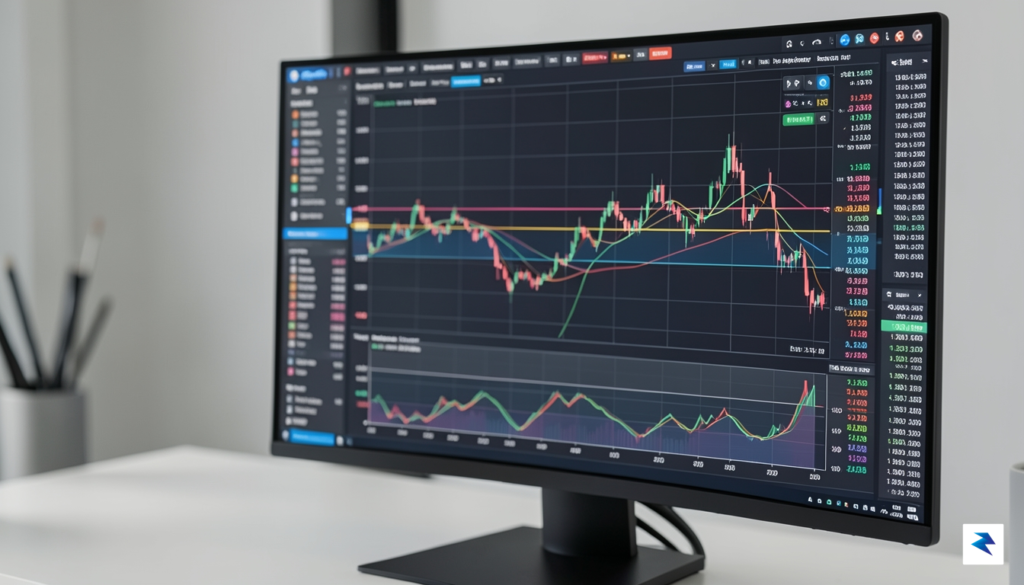
The recent slide beneath the $63,000 threshold has triggered a flurry of technical scrutiny, as investors scramble to determine whether this move represents a long-term trend reversal or a localized capitulation event. When we examine the Relative Strength Index (RSI), which has dipped into territory often associated with bearish momentum, it becomes clear that the selling pressure has been intense and sustained. However, as the indicator approaches levels historically linked to oversold conditions, the velocity of the decline often begins to wane. This does not necessarily signal an immediate V-shaped recovery, but it does suggest that the market is beginning to reach a point of exhaustion where the risk-to-reward ratio for new short positions becomes increasingly unfavorable.
Historical precedents offer a compelling, albeit cautious, roadmap for navigating these turbulent waters. In previous cycles, when Bitcoin has faced similar macroeconomic headwinds—such as the recent contagion from AI-driven equity selloffs—the asset has frequently found temporary floors near confluence zones where moving averages align with psychological support levels. While past performance is never a guarantee of future outcomes, the presence of strong buying interest at lower levels during prior drawdowns serves as a reminder that institutional accumulation often accelerates when prices deviate significantly from their moving averages. Traders should monitor the $60,000 psychological barrier closely, as a successful defense of this region could provide the necessary base for a consolidation phase.
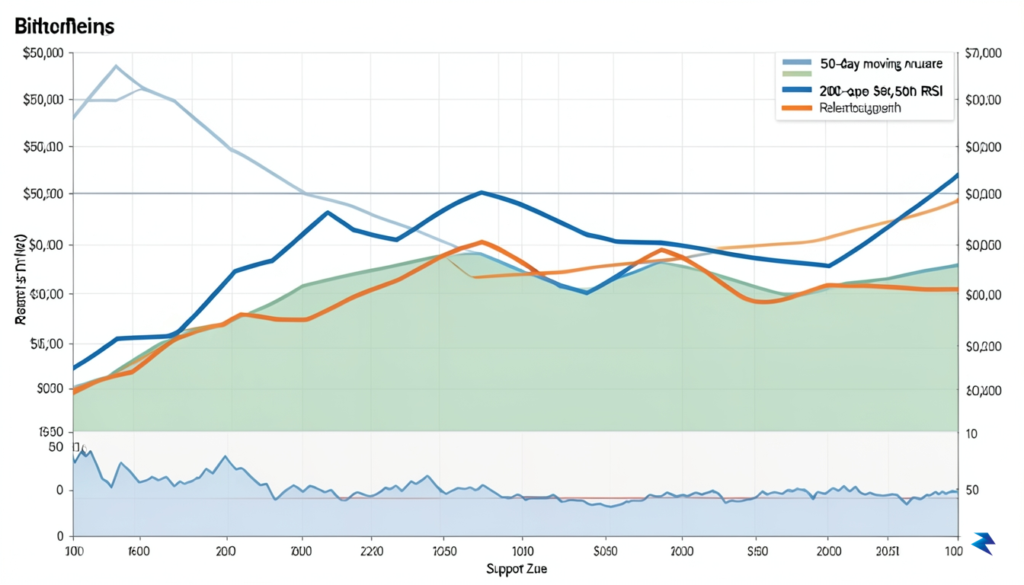
Discerning between a fleeting “dead cat bounce” and a genuine structural bottom is currently the most difficult challenge facing market participants. A dead cat bounce is typically characterized by a sharp, short-lived recovery on low volume that lacks the fundamental support required to break previous resistance levels. Conversely, a structural bottom usually features a period of “basing,” where volatility compresses and volume profiles shift to favor accumulation over distribution. If Bitcoin manages to stabilize and form a higher low on the daily timeframe, it would provide a much stronger technical signal than a violent spike triggered solely by short-covering.
Key takeaway: Technical indicators currently suggest that while the immediate trend is bearish, the market is entering a zone of extreme caution where the probability of a stabilization phase is rising significantly.
Ultimately, investors should keep a watchful eye on key support levels, particularly the $59,500 and $61,000 regions, which have acted as significant pivot points in the recent past. If these levels fail to hold, the focus will likely shift to deeper support, necessitating a reevaluation of the broader risk-off sentiment currently permeating both traditional and digital asset markets. As the situation evolves, maintaining a disciplined approach—balancing the urge to “buy the dip” with the reality of current volatility—remains the most effective strategy for navigating this period of uncertainty.

Market volatility is not a glitch in the digital asset ecosystem; it is a core feature that defines the landscape. While seeing Bitcoin dip below the $63,000 threshold can trigger an immediate urge to react, it is essential to distinguish between temporary price noise and the fundamental value proposition of your holdings. For long-term investors, these periods of heightened turbulence are often best met with a disciplined, systematic approach rather than reactive adjustments that can erode capital. By grounding your strategy in objective data rather than market sentiment, you can transform periods of uncertainty into opportunities for accumulation and portfolio rebalancing.

One of the most effective tools for weathering these storms is the consistent practice of dollar-cost averaging (DCA). By committing to fixed, periodic investments regardless of the prevailing price, you effectively lower your average cost basis over time and remove the psychological burden of attempting to time the market perfectly. This mechanical approach ensures that you are buying more units when prices are depressed and fewer when they are inflated, effectively turning market selloffs into a tailwind for your long-term position size. When macro pressures—such as the recent cooling in tech stocks or broader geopolitical concerns—drive down valuations, the DCA investor remains composed, viewing the downturn as an automated discount on future growth potential.
True resilience in investing is rarely about predicting the bottom; it is about maintaining a consistent strategy that survives the volatility of the middle.
Beyond systematic purchasing, robust risk management and diversification remain the bedrocks of a healthy portfolio. It is vital to ensure that your exposure to digital assets is sized appropriately relative to your broader financial situation and risk tolerance. Relying too heavily on a single asset class—or worse, a single narrative—can lead to emotional trading when macro headwinds shift. By diversifying across different asset classes, you create a buffer that prevents localized sector selloffs from compromising your entire financial plan. Furthermore, maintaining a clear separation between your speculative holdings and your core long-term investments can help you stay rational when the headlines turn bearish.
Ultimately, the most significant risk during a market drawdown is often the investor’s own emotional response. Panic selling frequently locks in losses that might have been temporary, while the desire to “wait for a clearer trend” often leads to missing the inevitable recovery. By focusing on the long-term utility and institutional maturation of Bitcoin, rather than the frenetic updates of the daily news cycle, you can maintain the perspective necessary to endure short-term contractions. History has shown that markets tend to reward those who possess the patience to look past the immediate noise and focus on the structural developments that continue to unfold beneath the surface.
You must be logged in to post a comment.