OpenAI Codex Context Update: What the 100k Token Reduction Means for Developers
Understanding the Shift: What is Context Window Reduction? A context window, often referred to as a "context length" or "token window," is a…

The artificial intelligence landscape is undergoing a tectonic shift, moving away from the era of “black box” proprietary models toward a more collaborative, transparent future. For years, the most powerful language models were kept behind locked digital doors, accessible only through restrictive APIs that prioritized corporate control over scientific advancement. The announcement of Qwen3.8 marks a definitive turning point in this trajectory. By committing to an open-weight release strategy, Alibaba is not merely dropping a new piece of software; they are actively dismantling the barriers that have historically prevented independent researchers and developers from deeply auditing, fine-tuning, and optimizing state-of-the-art AI systems for their own specific needs.

The significance of Qwen3.8 within the current ecosystem cannot be overstated. As the industry grapples with the tension between safety and accessibility, this release serves as a powerful testament to the belief that innovation thrives when the underlying architecture is open to public scrutiny. Unlike closed-source systems, which often obscure how decisions are made or how data is processed, an open-weight model provides the community with the raw, structural intelligence required to build truly reliable applications. This move forces a competitive recalibration across the entire sector, challenging the industry giants to prove their value through technical superiority rather than defensive gatekeeping. Consequently, developers now have the autonomy to deploy high-performance models on their own hardware, ensuring data privacy and reducing the latency issues inherent in relying on external cloud-hosted servers.
The democratization of high-performance AI is no longer a distant ideal; with the arrival of Qwen3.8, it is becoming the new baseline for professional-grade development.
Ultimately, the arrival of Qwen3.8 represents the democratization of advanced machine learning on a global scale. By lowering the barrier to entry, it empowers smaller startups, academic institutions, and individual contributors to leverage compute-heavy capabilities that were previously reserved for the wealthiest tech conglomerates. This shift fosters a vibrant ecosystem of modular improvements, where the community can iterate upon the core model to solve niche problems—ranging from specialized medical diagnostics to localized language translation—that proprietary entities might otherwise ignore. As we stand on the precipice of this new chapter, Qwen3.8 is more than just a milestone in performance metrics; it is a catalyst for a more inclusive, resilient, and transparent future for artificial intelligence.

At its core, Qwen3.8 represents a significant departure from the trend of simply scaling up parameter counts to achieve superior results. Instead of relying on raw magnitude, the engineers at Alibaba have focused on architectural refinement, prioritizing high-density computational efficiency that allows the model to punch well above its weight class. By optimizing the attention mechanisms and streamlining the feed-forward networks, the team has managed to maintain deep reasoning capabilities while significantly reducing the overhead typically required for high-end inference. This shift is particularly important for developers who need to bridge the gap between large-scale cloud performance and the practical constraints of local hardware deployment.

The secret to this newfound efficiency lies in a nuanced approach to parameter utilization. Rather than distributing intelligence thinly across a massive, unwieldy architecture, Qwen3.8 employs a more sophisticated method of weight allocation that ensures every parameter contributes meaningfully to the model’s output. This methodology allows for a smaller physical footprint without sacrificing the nuance, logic, or creativity that users have come to expect from state-of-the-art systems. Consequently, the model exhibits faster token generation speeds and lower memory requirements, making it an ideal candidate for edge computing scenarios or private local servers that lack the massive GPU clusters usually reserved for enterprise-grade AI.
Beyond the raw architecture, the training methodology behind Qwen3.8 has been meticulously curated to enhance downstream performance across a diverse set of tasks. By integrating a wider variety of high-quality, domain-specific data during the fine-tuning phase, the model demonstrates a vastly improved ability to adapt to specialized workflows, such as advanced coding, complex logical reasoning, and nuanced multilingual communication. This adaptability is further bolstered by a refined optimization strategy that minimizes catastrophic forgetting, ensuring that the model retains its foundational knowledge even as it learns to handle specific, intricate user requests.
The true breakthrough of Qwen3.8 is not just the speed or the parameter count; it is the deliberate balance between high-level reasoning and the democratization of hardware-efficient AI.
Ultimately, this architectural evolution signals a move toward a more sustainable and accessible future for open-weight models. By proving that performance gains can be achieved through better engineering rather than just brute force, Alibaba has set a new benchmark for how developers can interact with powerful AI systems. Whether you are building a personal coding assistant or deploying an automated research tool, the architectural refinements within Qwen3.8 provide the necessary stability and precision to handle complex, multi-step problems with unprecedented ease. This focus on efficiency ensures that as the ecosystem grows, more creators can harness the power of top-tier intelligence without being held back by the prohibitive costs of specialized infrastructure.

The release of Qwen3.8 as an open-weight model represents a fundamental shift in the power dynamics of artificial intelligence development. By moving away from the “black box” nature of proprietary APIs, developers gain unprecedented agency over the underlying architecture of their applications. When a model is restricted to a cloud-based API, engineers are at the mercy of rate limits, sudden pricing hikes, and the opaque decision-making of the provider. Conversely, local control allows teams to build resilient, self-hosted environments that function independently of external connectivity or provider stability, ensuring that an application’s core intelligence remains under the full stewardship of its creators.
This autonomy is particularly transformative when it comes to specialized domain adaptation. Many enterprise use cases—such as legal document analysis, proprietary medical diagnostics, or high-security internal knowledge management—require models that are not just general-purpose, but deeply tuned to the specific terminology and regulatory requirements of a niche field. With open-weight access, developers can perform sophisticated fine-tuning on proprietary datasets without ever sending sensitive data to a third-party server. This level of privacy is often the deciding factor for organizations that prioritize data governance, as it keeps critical information within the secured boundaries of their own infrastructure.

Beyond privacy, the ability to distill and optimize Qwen3.8 for specific hardware configurations marks a significant reduction in the barrier to entry for custom AI products. Instead of relying on massive, general-purpose models that are expensive to run at scale, developers can now optimize the model to run efficiently on edge devices or modest server clusters. This process of distillation and quantization allows for leaner, faster, and more cost-effective deployments that would be impossible under the rigid constraints of a paid API service. By tailoring the model to the exact computational footprint required, businesses can transition from expensive, cloud-dependent prototypes to high-performance production systems that are both sustainable and scalable.
The true value of an open-weight release lies in the transition from “consuming” AI as a service to “owning” it as a core component of your technical stack.
Ultimately, this democratization of AI technology fosters a more vibrant ecosystem where innovation is no longer limited by the roadmap of the model provider. When the barrier to entry is lowered, a wider range of developers—from small startups to independent researchers—can experiment with cutting-edge architectures that were previously locked behind high-cost barriers. As these developers begin to contribute back to the community through shared fine-tuning techniques and optimized workflows, the collective knowledge of the ecosystem grows, accelerating the rate at which we can build smarter, safer, and more specialized AI applications.
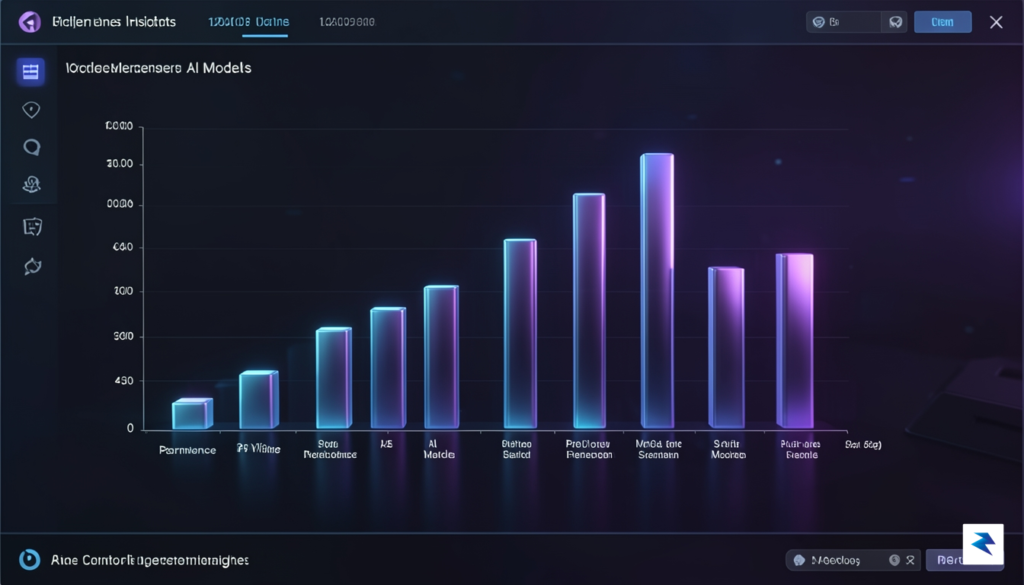
In the rapidly evolving landscape of open-weight artificial intelligence, the introduction of Qwen3.8 marks a significant shift in the balance of power. While established giants like Meta’s Llama series and Mistral’s flagship models have long dominated the conversation, Qwen3.8 arrives with a distinct architectural efficiency that allows it to punch well above its weight class. Preliminary benchmark data indicates that this model isn’t just closing the gap; it is effectively challenging the performance metrics once reserved for much larger, more resource-intensive parameters. By optimizing its reasoning architecture, Qwen3.8 delivers complex logical inference and nuanced language understanding that rivals industry heavyweights, all while maintaining a footprint that makes local deployment far more feasible for developers and enterprises alike.

One of the most striking advantages of Qwen3.8 lies in its exceptional multilingual capabilities, which set a new standard for open-weight accessibility. Where many models lean heavily into English-centric training, Qwen3.8 demonstrates a remarkably sophisticated grasp of cross-linguistic nuances, allowing it to maintain coherence and accuracy across a diverse range of global languages. This strength is particularly evident in its reasoning tasks, where the model avoids the common pitfalls of translation-based errors, instead processing inputs with a high degree of cultural and linguistic context. This global-first approach ensures that the model remains highly effective for international organizations and developers looking to deploy AI solutions that do not sacrifice performance for regional breadth.
The true measure of an open-weight model is not just its peak benchmark score, but how much performance it can deliver per gigabyte of memory—a metric where Qwen3.8 currently leads the pack.
Furthermore, when comparing the model directly against its peers, the efficiency gains become even more apparent. In coding tasks and mathematical reasoning, Qwen3.8 consistently demonstrates a lower error rate than its closest competitors, especially when operating within restricted hardware environments. While other models often require massive GPU clusters to achieve similar output quality, Qwen3.8 is designed to thrive on more modest infrastructure. This democratization of high-level reasoning performance means that developers can now integrate sophisticated, state-of-the-art AI into applications that were previously limited by hardware constraints. By balancing raw intellectual capacity with practical hardware requirements, Qwen3.8 is not merely participating in the current industry race—it is actively redefining the criteria for what a high-performance open-weight model should look like in a modern production environment.

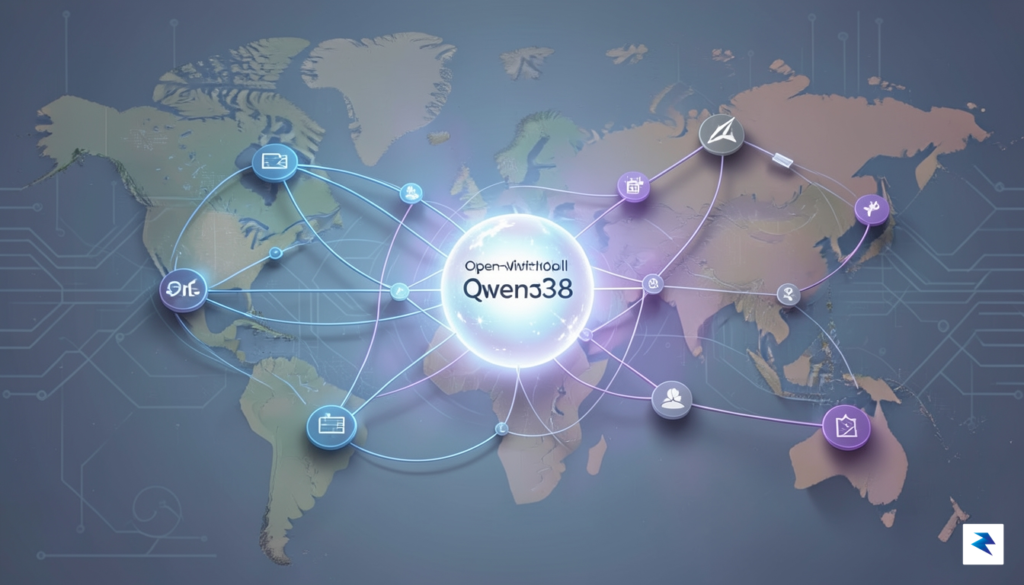
Alibaba’s decision to release Qwen3.8 as an open-weight model marks a profound strategic pivot, moving beyond the traditional confines of proprietary AI development. This isn’t merely a benevolent gesture towards the research community; it’s a sophisticated business play designed to cultivate a robust ecosystem around their foundational technology. By opening access to their latest large language model, Alibaba aims to foster widespread adoption, encourage third-party innovation, and ultimately establish Qwen3.8 as a de facto standard within the global AI landscape. This strategy prioritizes ubiquity and community-driven enhancement over strictly gated access, recognizing that in the rapidly evolving AI arena, influence and adoption can be more powerful competitive advantages than exclusive control.
This approach embodies the emerging philosophy of ‘open-source as a moat.’ Instead of locking users into a proprietary stack, Alibaba invites developers, researchers, and enterprises worldwide to integrate Qwen3.8 into their applications, fine-tune it for specific use cases, and contribute improvements back to the core. This collaborative model accelerates the pace of innovation dramatically, allowing the model to evolve and adapt far more rapidly than any single internal team could manage. The more developers build upon Qwen3.8, the more entrenched it becomes in various industries, creating a powerful network effect and a competitive barrier that is incredibly difficult for rivals to overcome. This widespread integration also generates invaluable real-world data and feedback, further enhancing the model’s capabilities and relevance.
The benefits extend significantly to the broader AI research community and smaller enterprises. Democratizing access to a state-of-the-art model like Qwen3.8 lowers the barrier to entry for advanced AI development, enabling researchers to conduct cutting-edge experiments without the exorbitant computational costs or extensive R&D typically associated with building such models from scratch. Startups and small businesses can leverage this powerful foundation to innovate quickly, bringing novel AI-powered solutions to market faster and more efficiently. This open approach cultivates a more diverse and dynamic AI landscape, encouraging a multitude of perspectives and applications that might otherwise remain unexplored due to resource limitations. It’s a cultural shift towards shared progress, where collective intelligence drives the frontier of AI forward.
Looking ahead, the long-term impact of such a move on global AI standardization cannot be overstated. As Qwen3.8 gains traction and is integrated into countless projects, it begins to shape the very grammar and lexicon of future AI development. This positions Alibaba not just as a participant, but as a significant architect of the global AI infrastructure. The widespread adoption of its architecture and methodologies could lead to greater interoperability across different AI systems and platforms, fostering a more cohesive and less fragmented technological ecosystem. Furthermore, in an increasingly competitive geopolitical landscape, establishing a strong, globally adopted open-weight model allows Alibaba to project influence and contribute to the global discourse on AI ethics, governance, and technical benchmarks, ensuring its vision plays a central role in the future of artificial intelligence.

Integrating Qwen3.8 into your existing development pipeline begins with a realistic assessment of your local infrastructure. Because this is an open-weight release, you have the flexibility to host the model on your own hardware, which is a major advantage for data privacy and latency control. For optimal performance, we recommend a GPU with at least 24GB of VRAM for the full-precision version, though the model is highly compatible with quantization techniques like GGUF or EXL2 for those running on more modest consumer-grade hardware. Utilizing tools like llama.cpp or the vLLM engine can significantly streamline your inference deployment, allowing you to serve the model with high throughput while minimizing memory overhead.

Before diving into complex fine-tuning, the best way to validate Qwen3.8 for your specific business requirements is to start with a structured testing phase. You should begin by hosting the model via the official Hugging Face repository, where the weights and configuration files are readily available. By setting up a local playground using interfaces like Ollama or text-generation-webui, your team can perform rapid A/B testing against your previous model iterations. Focus your initial trials on specific, high-impact tasks such as summarization, structured data extraction, or domain-specific Q&A, as these areas often reveal where the model’s reasoning capabilities offer the most significant uplift compared to its predecessors.
Pro-tip: Always prioritize a “golden dataset” for your evaluation. By running the same set of prompts across both your legacy model and Qwen3.8, you can quantitatively measure improvements in accuracy and instruction following before committing to a full-scale migration.
Once you have validated the baseline performance, you may want to move toward specialized fine-tuning to squeeze every ounce of utility out of the model. If you are operating in a niche industry like legal tech or medical diagnostics, employing Low-Rank Adaptation (LoRA) or QLoRA is the most efficient path forward. These techniques allow you to inject domain-specific knowledge into Qwen3.8 without the prohibitive cost of retraining the entire parameter set. We recommend consulting the official Qwen-LM documentation for the most current training scripts and hyperparameter recommendations, which are updated frequently to reflect the latest community findings. By systematically addressing your hardware needs, testing your use cases, and refining through targeted training, you can ensure that Qwen3.8 becomes a robust, reliable engine for your production applications.
You must be logged in to post a comment.