
The AI Trap: Why Algorithmic Dependency is Harming Global Decision-Making
The Illusion of Algorithmic Objectivity We are currently navigating a profound cultural shift, one where the term 'AI-driven' has rapidly…

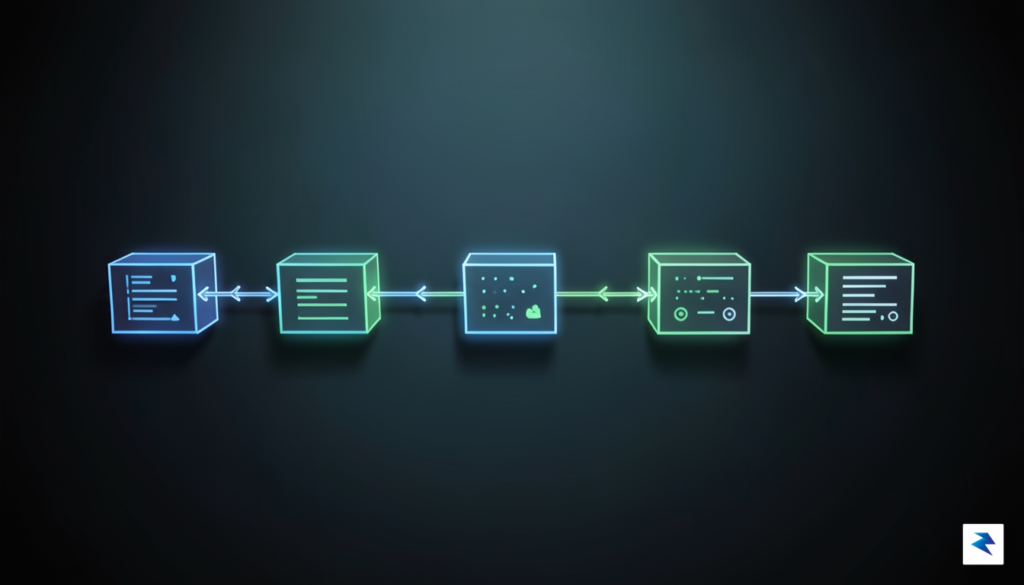
At its core, Bitcoin Improvement Proposal 110 (BIP-110) represents a contentious attempt to address the growing concern regarding the “bloat” currently occupying space on the Bitcoin ledger. As the network has evolved, users have increasingly utilized the blockchain to store non-monetary data, ranging from digital inscriptions to complex metadata that sits outside the scope of traditional financial transactions. Proponents of BIP-110 argue that this influx of “spam” data threatens the long-term sustainability of the network by increasing the size of the blockchain, thereby making it more difficult for individuals to run their own full nodes. By introducing a mechanism to purge or filter what is deemed non-essential data, supporters believe the proposal would streamline operations, lower transaction fees, and ensure that the ledger remains focused on its primary purpose: the secure transfer of value.

The technical mechanism behind BIP-110 is designed to act as a gatekeeper for the data that enters the blockchain. Functionally, the proposal seeks to implement a filtering system that identifies and blocks specific types of data sequences that do not adhere to standard transactional protocols. By effectively flagging these transactions as non-standard, the protocol would prevent them from being permanently etched into the ledger, thereby conserving block space for traditional, monetary-focused transfers. This approach is intended to optimize the network’s efficiency, ensuring that the limited capacity of each block is reserved for the most critical functions that maintain Bitcoin’s status as a global, decentralized store of value.
The central tension surrounding BIP-110 lies in the philosophical divide between those who view Bitcoin strictly as a monetary network and those who believe its underlying infrastructure should remain an immutable, permissionless canvas for all forms of digital data.
However, the implementation of such a filtering mechanism is far from straightforward and has sparked intense debate within the developer community. Critics argue that once a mechanism is established to define what constitutes “spam,” the door is opened to subjective censorship. If the network begins to dictate which data is “worthy” of being stored, it risks moving away from its foundational principle of being an impartial, censorship-resistant ledger. While the intent to optimize performance for the sake of long-term scalability is valid, the trade-off involves modifying the very nature of Bitcoin’s permissionless state. Consequently, the discussion around BIP-110 has become a litmus test for how the community values the balance between technical efficiency and the preservation of Bitcoin’s original, open-ended design philosophy.

At the heart of Michael Saylor’s vehement opposition to the proposed network “clean-up” efforts lies a profound commitment to the foundational philosophy that defines Bitcoin as a global, censorship-resistant store of value. For Saylor, Bitcoin is not merely a piece of software to be optimized for technical efficiency; it is a immutable, neutral foundation for the world’s financial future. He argues that any proposal that seeks to redefine what constitutes “valid” data on the blockchain inadvertently compromises the network’s integrity. By introducing subjective standards into the protocol, the system risks transitioning from an objective, permissionless ledger to one governed by the shifting opinions of a few, thereby undermining the very certainty that institutional investors rely upon.
The core of Saylor’s critique centers on the danger of arbitrary control. If the network begins to curate or censor the types of data deemed “acceptable,” it creates a precedent that could be exploited by future developers or external pressures to restrict access or functionality. Saylor maintains that the beauty of Bitcoin’s design is its rigid adherence to a set of rules that apply to everyone equally, without exception or intervention. Once a precedent is set that allows for the filtering of transactions or data entries, the fundamental promise of Bitcoin—that it serves as a neutral, decentralized platform for all—is fundamentally altered. He views this as a slippery slope that could lead to the fragmentation of the network’s decentralized ethos.
The strength of Bitcoin lies in its predictability; if you start changing the rules to accommodate temporary preferences, you erode the immutable foundation that makes it the most secure asset in human history.
Furthermore, Saylor emphasizes that maintaining a strictly neutral network is essential for Bitcoin’s long-term reputation as a secure financial asset. Institutional adoption, which Saylor has championed extensively, depends entirely on the guarantee that the rules of the network will not be changed at the whim of any group or individual. When developers propose “cleaning up” the blockchain, they may view it as a helpful maintenance task, but Saylor interprets it as an existential threat to the network’s reliability. He contends that Bitcoin must remain a pristine, unopinionated ledger to function effectively as a global reserve asset, free from the interference of those who might wish to impose their own moral or technical standards onto the public blockchain.

Ultimately, Saylor’s resistance is a call for a conservative approach to protocol development that prioritizes longevity and security over perceived technical convenience. He believes that by resisting the urge to “fix” what is not broken, the Bitcoin community protects the network’s greatest asset: its unwavering, permissionless nature. By keeping the blockchain open and neutral, the protocol ensures that it can continue to serve as a reliable, censorship-resistant refuge for value, regardless of how the political or technological landscape evolves in the decades to come.

The recent proposal to “clean up” the Bitcoin blockchain, which has drawn sharp criticism from prominent figures like Michael Saylor, fundamentally ignites a long-standing philosophical debate within the cryptocurrency community: the distinction between benign curation and dangerous censorship. At its core, the argument against initiatives like BIP-110 centers on the perilous ‘slippery slope’ it could create. While proponents may frame such actions as merely removing “spam” or irrelevant data, critics warn that defining what constitutes “good” or “bad” data today inevitably opens the door for a more subjective and potentially authoritarian interpretation tomorrow.
This debate is not merely semantic; it touches upon Bitcoin’s foundational principles of decentralization, immutability, and censorship resistance. If a consensus mechanism or a powerful group within the network gains the power to decide what content is permissible on the ledger, it fundamentally alters Bitcoin’s neutral stance. The very notion of “spam” can be highly subjective; what one user deems unnecessary, another might consider a legitimate, albeit unconventional, use of the blockchain. Therefore, the concern isn’t just about the immediate impact of removing certain data, but about establishing a dangerous precedent that could be exploited to silence dissenting voices or restrict legitimate transactions in the future.
Critics argue that once the community opens the door to deciding what data is “good” or “bad,” it sets a dangerous precedent, making it increasingly difficult to resist further interventions down the line.
Granting any governing body, even a decentralized one, the power to curate the ledger contents introduces a critical vulnerability. Bitcoin was designed to be a trustless system, where no single entity could unilaterally alter its history or dictate its future. A move towards filtering transactions risks centralizing power, potentially in the hands of major mining pools, influential developers, or large node operators. This could lead to a scenario where economic or political pressures might influence what transactions are processed and recorded, directly undermining the network’s integrity and its promise of unfettered access for all.
The long-term implications for miners and node operators are also significant if filtering becomes a standard practice. They would be forced to adopt and enforce these new rules, potentially requiring them to make subjective judgments about transaction content or face penalties. This could increase operational complexity, introduce legal liabilities, and even fragment the network if different operators adhere to different filtering standards. Ultimately, it could deter participation, compromise the network’s security through reduced decentralization, and transform Bitcoin from a neutral public utility into a curated database managed by a select few.

This isn’t the first time Bitcoin’s community has grappled with questions of governance and protocol modification. Historical debates, such as those surrounding the block size limit, illustrate the fierce commitment to preserving Bitcoin’s core tenets, even in the face of perceived inefficiencies or scalability challenges. These past struggles underscore the deep-seated belief that compromising fundamental principles for short-term gains or perceived cleanliness can lead to far greater long-term risks. For many, including Michael Saylor, the current “clean-up” proposal represents a direct assault on the very immutability and censorship-resistance that makes Bitcoin revolutionary, signaling a potential erosion of its most vital characteristics.

The tension surrounding proposals like BIP-110 ultimately boils down to a fundamental philosophical divergence: is Bitcoin a hyper-optimized database designed for maximum throughput, or is it an immutable, neutral foundation for global finance? Proponents of data cleanup argue that the blockchain must remain lightweight to ensure that running a full node remains accessible to the average user. They fear that as the ledger grows bloated with extraneous data, the barrier to entry rises, potentially centralizing the network into the hands of a few well-resourced entities. By purging non-essential data, they hope to preserve the network’s long-term viability and operational efficiency in an increasingly data-heavy digital landscape.
Conversely, skeptics like Michael Saylor argue that what critics label as “inefficiency” is actually one of Bitcoin’s most vital security features. In this view, the blockchain’s rigid, unyielding nature is exactly what prevents it from being captured or tampered with by centralized authorities. If the network begins to prune its history or discard data based on subjective definitions of “value,” it introduces a layer of human governance and fallibility that Bitcoin was specifically designed to eliminate. For these proponents, the cost of storing every byte is a small price to pay for a censorship-resistant, permissionless system that treats all data with absolute, mathematical neutrality.

The true strength of Bitcoin lies not in its speed or its storage capacity, but in the uncompromising integrity of its immutable history.
Ultimately, these internal conflicts are settled through the rigorous process of social and technical consensus, which is perhaps the most resilient aspect of the Bitcoin ecosystem. Because there is no central authority capable of unilaterally dictating updates, the community is forced to engage in exhaustive, often heated debates that act as a filter for bad ideas. While this can lead to slow development cycles, it also ensures that any change to the protocol is thoroughly vetted for risks that might undermine the network’s foundational ethos. Whether the community decides to embrace data optimization or preserve the current architecture, the outcome will fundamentally shape the trajectory of Bitcoin’s evolution as a global financial standard.
As the network continues to scale, the trade-off between architectural purity and performance will remain a central theme for developers and stakeholders alike. If the community prioritizes efficiency at the expense of its rigid, immutable structure, it risks losing the very characteristics that made it the world’s most secure decentralized asset. However, if it remains too dogmatic, it may struggle to adapt to the technical demands of a global economy. Navigating this delicate balance is the primary challenge for the next decade of Bitcoin, ensuring that the network remains both highly functional and rigorously secure for future generations.
You must be logged in to post a comment.