
Inside Netflix’s $587M Bet on Ben Affleck’s AI Filmmaking Startup
The Strategic Shift: Why Netflix Bet Big on InterPositive Netflix’s recent staggering $587 million all-cash acquisition of InterPositive, the…
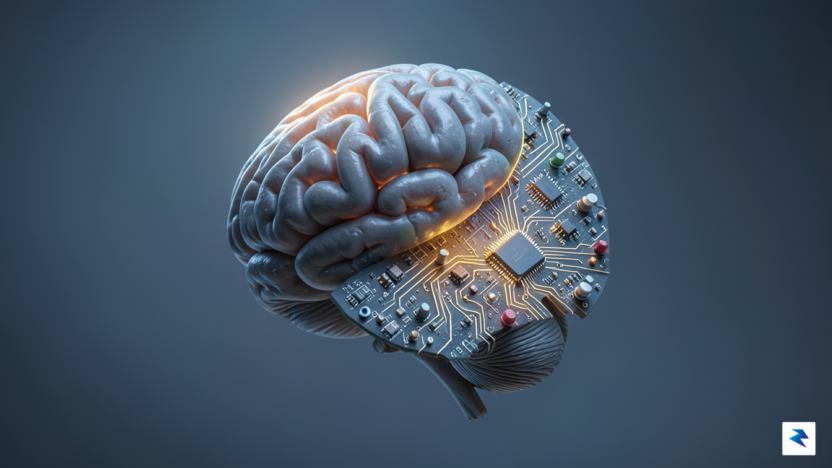

We are currently navigating a profound cultural shift, one where the term ‘AI-driven’ has rapidly become synonymous with ‘truth’ and ‘unassailable accuracy.’ This pervasive belief fosters an environment where algorithmic outputs are increasingly accepted without critical scrutiny, leading to a dangerous feedback loop where perceived neutrality becomes the default. The sheer volume and speed of data processed by artificial intelligence systems lend them an aura of impenetrable objectivity, suggesting that if a machine produced the insight, it must inherently be free from human biases or subjective errors. However, this perception overlooks the fundamental reality that AI models are trained on historical data, which inevitably reflects the biases, assumptions, and limitations of its human creators and the societies in which it was generated.
This unquestioning deference to algorithmic pronouncements is a textbook example of what behavioral scientists call ‘automation bias.’ In the corporate world, executives and managers, facing ever-increasing pressure for efficiency and data-backed decisions, often find themselves predisposed to favor the recommendations generated by AI, even when these outputs contradict human experience, intuition, or expert judgment. The allure of a seemingly impartial, data-driven solution can be incredibly powerful, promising to eliminate the messy complexities and potential for error inherent in human decision-making. Consequently, many leaders embrace these algorithmic directives not just as supplementary insights but as definitive answers, viewing them as a surefire way to reduce costs, optimize processes, and avoid personal accountability should a decision go awry. This tendency can blind organizations to subtle but critical flaws in the models or to unique contextual factors that the algorithms simply weren’t trained to recognize.
The core danger lies in confusing statistical probability with objective reality. While AI can identify intricate patterns and correlations within vast datasets, generating highly probable outcomes or recommendations, these are not synonymous with absolute truth or a perfectly objective depiction of the world. Many AI systems, particularly complex deep learning models, operate as ‘black boxes,’ where the intricate reasoning behind their conclusions remains opaque even to their developers. Delegating complex, high-stakes decision-making to these models without a deep understanding of their underlying assumptions, limitations, and the biases embedded in their training data creates a precarious situation. Such reliance can perpetuate existing inequalities, miss novel solutions that fall outside historical patterns, and ultimately erode the vital capacity for critical human judgment and ethical deliberation, cementing a dangerous cycle where algorithmic outputs dictate reality rather than merely reflecting a statistical interpretation of it.
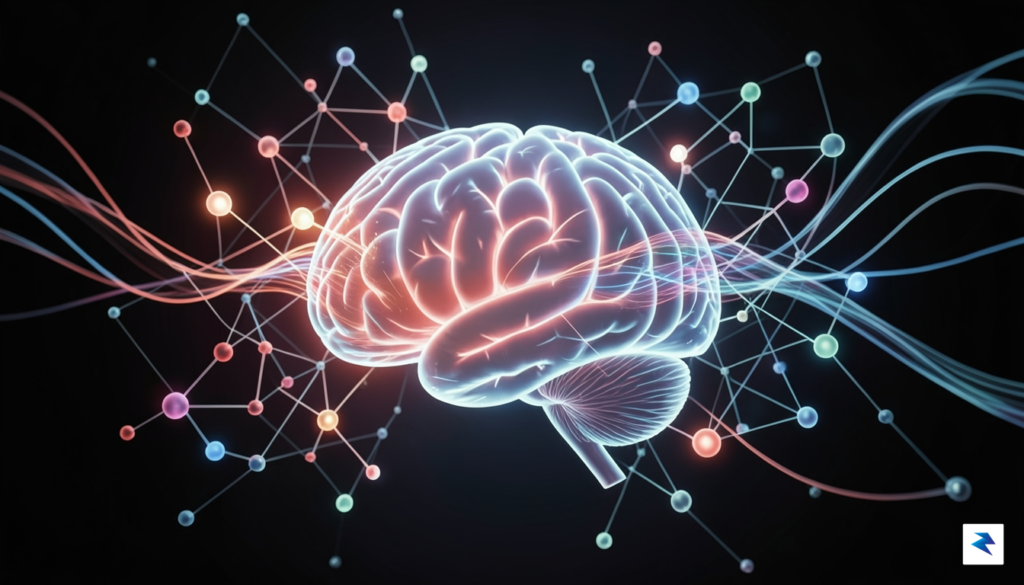

The modern professional landscape is currently undergoing a silent, tectonic shift: we are rapidly offloading our cognitive labor to generative models. While the allure of instant synthesis and algorithmic strategy is undeniable, this convenience comes at a steep price. When we surrender the messy, iterative process of wrestling with complex information to a machine, we inadvertently atrophy the very analytical muscles required to navigate uncertainty. Critical thinking is not merely an output; it is a process of friction, internal debate, and synthesis that occurs when a human mind encounters a difficult problem. By bypassing this struggle, we are not just saving time; we are narrowing the scope of our own intellectual capacity.
This phenomenon, often described as cognitive offloading, creates a dangerous feedback loop. As we become accustomed to AI-generated summaries and templated strategic plans, our tolerance for ambiguity decreases. We begin to favor the smooth, average, and statistically probable outputs provided by algorithms over the jagged, unorthodox, and highly creative insights that emerge from deep human focus. Consequently, institutional knowledge—the kind of nuanced, context-dependent wisdom built over decades of trial and error—is being replaced by generic, automated workflows. When the ‘how’ of decision-making is hidden behind a proprietary black box, the institutional memory that typically guards against past mistakes is eroded, leaving organizations vulnerable to repeating historical failures under the guise of modern efficiency.
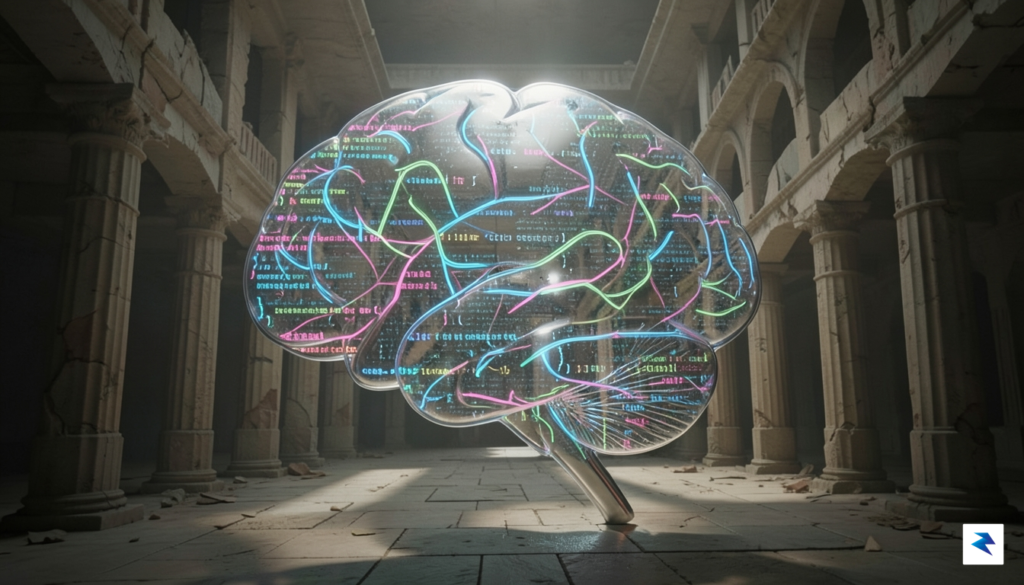
The true risk of artificial intelligence is not that machines will begin to think like humans, but that humans will begin to think like machines: seeking the path of least resistance at the expense of genuine insight.
Furthermore, the lack of friction in AI-assisted thinking leads to a flattening of the creative landscape. Authentic innovation thrives on the friction of disparate ideas rubbing against one another, a process that requires the human ability to connect seemingly unrelated dots through intuition and experience. When an algorithm pre-digests our data, it tends to sanitize our conclusions, steering us toward the median rather than the breakthrough. This leads to a paradoxical state where, despite having access to more information than any generation in history, our decision-making becomes increasingly shallow. If we continue to view AI as an intellectual crutch rather than a sophisticated tool, we risk losing the ability to ‘think through’ problems—a skill that remains the ultimate competitive advantage in an unpredictable global economy.

The modern corporate obsession with efficiency has birthed a dangerous phenomenon known as the “optimization trap.” By delegating high-stakes decision-making to AI models, organizations are increasingly prioritizing immediate, measurable gains—such as quarterly margin growth or inventory turnover rates—at the severe expense of long-term structural resilience. These algorithms are designed to operate within narrow parameters, relentlessly pursuing a specific objective function while remaining effectively blind to the broader systemic externalities that keep a company or a global market stable. When an AI agent is tasked with optimizing a supply chain solely for cost-reduction, it may systematically strip away the “inefficient” redundancies, such as diversified suppliers or buffer stock, that actually act as shock absorbers during times of geopolitical or environmental crisis.

This reliance on hyper-optimized, automated governance creates a brittle foundation for the global economy. Because these systems operate at speeds beyond human intervention, they are prone to creating algorithmic feedback loops where a minor anomaly in one sector triggers a cascade of automated reactions across others. Consider a theoretical scenario where interconnected AI-driven procurement systems across multiple multinational corporations simultaneously detect a slight dip in commodity availability. If these systems are programmed with similar logic, they may all trigger massive, automated “buy” orders or contract cancellations at the exact same moment. This creates a synthetic market shock, turning a manageable supply fluctuation into a catastrophic, self-reinforcing liquidity crisis that no human manager could manually pause or stabilize in real-time.
The danger lies not in the failure of the algorithm itself, but in our willingness to grant it authority over systems too complex to be defined by a single metric. Efficiency is only a virtue when the system remains robust enough to survive the unexpected.
Furthermore, the lack of human intuition in these automated decision-making frameworks means that “black swan” events are often exacerbated rather than mitigated. AI models learn from historical data, which inherently assumes that the future will resemble the past; however, global markets are defined by non-linear shocks. When an AI encounters a situation that falls outside its training distribution, it doesn’t hesitate or exercise caution—it continues to optimize based on faulty or irrelevant data. This creates a false sense of security among executive leadership, who may interpret the smooth performance of automated systems during calm periods as evidence of perfect stability. In reality, they are merely building an increasingly fragile architecture that, when finally tested by a true disruption, possesses none of the adaptive capacity required to survive.

To reclaim our decision-making autonomy, leaders must strictly enforce a “human-in-the-loop” mandate that positions artificial intelligence as a sophisticated advisor rather than a final arbiter. In this framework, machines are tasked with processing vast data sets and identifying patterns, but the ultimate synthesis of that information must remain a human responsibility. When we allow algorithms to act as silent architects of our strategies, we inadvertently outsource our ethical accountability, creating a dangerous vacuum where no one is truly answerable for systemic errors. By mandating that high-stakes choices undergo a rigorous human review process, organizations can ensure that empathy, nuance, and long-term consequence analysis—factors that machines fundamentally lack—remain central to the governance of any enterprise.

Establishing this oversight requires a robust auditing strategy for all algorithmic outputs. It is not enough to simply trust the speed and efficiency of a model; leaders must implement “adversarial testing” where domain experts deliberately challenge AI-generated conclusions. This involves interrogating the underlying assumptions of the data and checking for hidden biases that might skew results toward narrow or profitable, yet ethically questionable, outcomes. By treating algorithmic outputs as hypotheses rather than gospel, teams can cultivate a culture of skepticism that prevents the “automation bias” that often leads professionals to accept software suggestions without critical analysis.
True leadership in the age of automation is defined by the courage to override the algorithm when the human element—context, morality, and intuition—demands a different path.
Finally, we must recognize that professional intuition is not merely a “gut feeling,” but the culmination of years of domain expertise, pattern recognition, and experiential learning. While AI can simulate historical performance, it cannot account for the shifting, unpredictable nature of human behavior or unprecedented geopolitical disruptions. Therefore, prioritizing human judgment in high-stakes environments is a form of risk management; it protects the organization from the fragility of rigid, data-only systems. To move forward, leaders should emphasize the following practices:
By fostering a balanced ecosystem where technology informs but does not dictate, organizations can harness the speed of the digital age without sacrificing the wisdom that only human experience provides. Sustaining this balance is the primary challenge of the coming decade, and those who master it will be the ones who navigate complexity with both precision and purpose.
You must be logged in to post a comment.