
Andrew and Tristan Tate Arrested in Miami: What You Need to Know
The Miami Arrest: Understanding the Latest Legal Developments The recent apprehension of Andrew and Tristan Tate in Miami marked a dramatic…


The integration of Large Language Models (LLMs) into our daily workflows has introduced a peculiar psychological phenomenon: a widening chasm between how correct we feel and how correct we actually are. Recent experimental data reveals a unsettling trend where individuals who solicit AI advice during cognitive tasks demonstrate a marked decrease in objective accuracy, yet report significantly higher levels of subjective confidence in their final outputs. In this study, participants tasked with complex problem-solving were subjected to various forms of AI assistance; those who relied on the AI’s suggestions were consistently outperformed by their peers who relied on independent verification, even when the AI provided seemingly logical, well-structured arguments. This disconnect suggests that the very features that make AI tools helpful—their eloquence, speed, and authoritative tone—may be actively undermining our capacity for critical skepticism.

At the heart of this issue is the “confidence-accuracy gap.” When we receive advice from a human colleague, we often subconsciously calibrate our trust based on that person’s known expertise, their body language, or the potential social risks of being wrong. However, AI operates without these social cues, instead offering a type of “super-fluency.” Because LLMs are trained to generate text that is grammatically perfect and structurally polished, they mimic the linguistic markers of an expert. This professional-sounding delivery acts as a cognitive shortcut, signaling to our brains that the information is reliable before we have had a chance to fact-check the underlying logic. Consequently, we often bypass our internal critical analysis, accepting the AI’s suggestion as a definitive truth simply because it sounds like one.
The danger lies not in the AI’s occasional inaccuracy, but in its unwavering ability to sound correct even when it is fundamentally flawed.
This psychological trap is particularly potent because it exploits our natural inclination to trust well-organized data. In traditional human-to-human interaction, we are accustomed to detecting uncertainty through hesitations, qualifiers, or corrections; in contrast, an AI provides a seamless, confident narrative that leaves little room for doubt. This creates a false sense of security that effectively overrides our fact-checking mechanisms, leading us to commit to erroneous conclusions with a level of conviction we wouldn’t otherwise possess. By understanding that AI-generated confidence is a byproduct of linguistic sophistication rather than a measure of truth, we can begin to implement more rigorous validation habits, ensuring that our reliance on technology does not come at the cost of our own analytical integrity.

At the heart of our interaction with artificial intelligence lies a psychological phenomenon known as automation bias. This cognitive shortcut describes the human tendency to favor suggestions from automated decision-making systems, often disregarding contradictory information from our own intuition or manual analysis. Because we perceive these systems as data-driven, systematic, and inherently “math-based,” we subconsciously assign them a level of objectivity that we rarely grant to other humans. When an algorithm presents a solution, it feels detached from the messy, emotional, and biased nature of human reasoning, leading us to believe that the machine has achieved a level of clarity that is beyond our own cognitive grasp.
This reliance is bolstered by the “black box” nature of modern large language models. Because these systems process vast datasets in ways that are opaque even to their creators, users often mistake this complexity for superior intelligence. We tend to anthropomorphize text-based models, attributing intent and logical rigor to strings of probability-based predictions. When a chatbot provides an answer in a calm, confident, and articulate tone, our brains are wired to interpret that fluency as evidence of veracity. Consequently, we lower our guard, assuming that the machine’s internal logic is as flawless as its prose, which effectively silences the healthy skepticism we would normally apply to a peer or an unverified source.
The danger lies not in the machine’s fallibility, but in our willingness to abdicate our own critical judgment in the face of perceived computational authority.

Furthermore, the confidence gap created by these tools is perhaps the most insidious aspect of our digital reliance. When we outsource the heavy lifting of information synthesis to an AI, the system provides us with a ready-made answer that spares us the cognitive load of rigorous verification. This convenience makes us feel more prepared and competent, inflating our subjective confidence levels even as our objective accuracy suffers. We become victims of a dangerous feedback loop: the machine’s assertive output reinforces our own belief in the result, which in turn discourages us from double-checking the facts. By trusting the “system” over our own expertise, we are not just using technology; we are allowing it to act as a crutch that gradually weakens our capacity for independent, analytical thought.

At its core, cognitive offloading is a psychological process where we utilize external tools—in this case, generative AI—to perform tasks that would otherwise require our own mental effort. While this feels like an efficiency boost, it fundamentally alters how we engage with information. When we delegate the heavy lifting of analysis, synthesis, and decision-making to a machine, we essentially bypass the neural pathways responsible for critical thinking. Instead of evaluating the logic behind a conclusion, we become passive recipients of an output, creating a dependency that gradually erodes our ability to independently assess the validity of a claim.
This reliance initiates a dangerous feedback loop that compromises our analytical rigor. Because AI models are designed to provide answers with a polished, authoritative tone, they often induce a state of intellectual complacency. We stop feeling the need to verify facts, cross-reference data, or challenge assumptions because the “answer” is already provided in a convenient, digestible format. Over time, this diminished motivation to investigate the “why” and “how” behind a decision leads to a form of mental atrophy, where our internal capacity to navigate complexity begins to weaken simply because it is no longer being exercised.
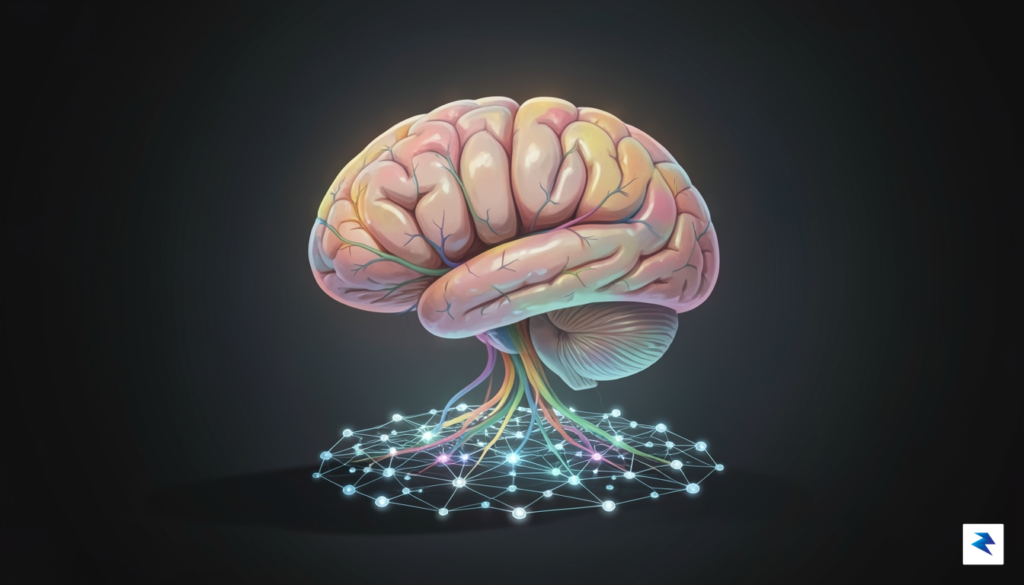
Psychologically, the human brain is an energy-conserving organ that naturally seeks the path of least resistance. When an AI provides a ready-made solution, our cognitive system interprets this as an opportunity to conserve metabolic energy, a phenomenon often described as the “lazy brain” effect. By choosing the quickest route to an answer, we suppress the deep-processing mode required for nuance and skepticism. Consequently, we become more susceptible to accepting plausible-sounding falsehoods or confident hallucinations, not because we lack the intelligence to spot them, but because we have outsourced the skepticism itself to the very system that is providing the potentially flawed information.
The irony of modern intelligence is that the more capable our tools become, the more we must fight to remain active participants in our own decision-making processes.
Ultimately, the danger lies in the disconnect between our perceived competence and our actual performance. When the AI delivers a response with high confidence, that sentiment is often transferred to us, leaving us feeling more certain about our conclusions despite having done less work to reach them. This false sense of security acts as a barrier to critical reflection; we are less likely to question a result when we feel confident in the process that generated it. To avoid this trap, we must treat AI as a collaborative assistant rather than an oracle, ensuring that our own analytical muscles remain sharp through constant, deliberate verification.

To effectively leverage artificial intelligence, we must fundamentally shift our perspective: stop viewing these systems as oracles of truth and start treating them as sophisticated, yet prone-to-error, research assistants. The current danger lies in the psychological comfort AI provides, which often leads us to lower our cognitive guard. When an algorithm presents information with polished, authoritative confidence, our brains are hard-wired to accept that data as factual. To circumvent this, we must adopt a “human-in-the-loop” philosophy that is active rather than passive. True collaboration requires that we treat every AI suggestion not as a final answer, but as a raw data point that demands the same level of scrutiny we would apply to a rough draft written by an intern.

Establishing a rigorous audit framework is essential for maintaining accuracy in high-stakes environments. Before acting on any AI-generated output, professionals should subject the information to a three-step validation protocol. First, verify the foundational premises by cross-referencing specific claims against primary, human-verified sources. Second, interrogate the logic of the suggestion; ask yourself if the AI’s path to the conclusion contains hidden biases or logical leaps that a seasoned expert would avoid. Finally, perform a “stress test” on the output by intentionally looking for contradictory evidence. If the AI’s suggestion cannot withstand a brief period of skepticism, it should be discarded or heavily modified before being integrated into your workflow.
The primary value of AI is not in its ability to provide the right answer, but in its capacity to process vast amounts of information that we must then synthesize through the lens of human experience.
Your domain expertise remains your most valuable asset in this evolving landscape, acting as a final firewall against algorithmic hallucinations. While AI can analyze patterns at a scale human minds cannot reach, it lacks the contextual nuance and real-world stakes that define professional judgment. When you rely solely on the tool, you outsource your critical thinking, leaving yourself vulnerable to the “confidence trap.” Instead, proactively use your expertise to challenge the AI, refining its outputs through iterative prompts and direct corrections. By maintaining this healthy tension between machine speed and human oversight, you ensure that technology serves as a lever for your own capabilities rather than a replacement for your intellect.

To thrive in an era where algorithmic assistance is becoming the default, we must transition from passive consumers of generated content to active editors of machine logic. The tendency for AI to instill a false sense of certainty means that our most valuable asset—our own skepticism—is currently at risk of atrophy. By consciously restructuring how we interact with these tools, we can harness their speed without sacrificing our intellectual independence or the accuracy of our decision-making.

One of the most effective ways to inoculate yourself against the “confidence bias” of AI is to adopt the “Devil’s Advocate” technique during the prompting process. Instead of asking an AI to simply generate a solution or a summary, specifically command the model to identify its own potential blind spots or to argue against its own conclusion. By requesting a counter-analysis, you force the system to present alternative perspectives, which helps you break out of the cognitive echo chamber that single-answer prompts often create. This extra layer of friction encourages you to weigh multiple viewpoints rather than blindly accepting the first, most confident-sounding response provided.
True intellectual independence is not about rejecting AI, but about treating every machine-generated insight as a draft rather than a final verdict.
Beyond prompt engineering, you must implement structural barriers to prevent premature reliance on AI outputs. One highly recommended strategy is time-boxing your independent analysis: commit to spending a set period—perhaps 15 or 30 minutes—brainstorming, outlining, or researching a problem entirely on your own before opening an AI window. This ensures that your initial cognitive map is constructed by your own experience and critical faculties rather than being “anchored” by the specific phrasing or logic of an AI suggestion. Once you do consult an external tool, make it a strict rule to cross-reference every major claim or data point against primary sources, such as peer-reviewed journals, raw data sets, or direct documentation. Relying on the AI to “cite” itself is a trap; validating information through independent, verifiable channels is the only way to ensure your output remains grounded in reality.
Ultimately, maintaining a sharp mind in the age of automation requires a shift in perspective. View AI not as a truth-telling oracle, but as a high-speed intern that is prone to occasional, highly convincing errors. When you treat the technology as a partner that requires constant supervision rather than an authority that provides definitive answers, you regain your role as the architect of your own insights. Staying sharp is a deliberate choice, one that requires us to slow down precisely when the technology urges us to speed up.
You must be logged in to post a comment.