
From $120k to $200: How I Built My Own Bowling Scoring System
The Hidden Cost of Proprietary Bowling Infrastructure For decades, the bowling industry has languished in what many operators call the…
Developing a dungeon crawler on the Commodore 64 serves as a definitive rite of passage for any retro computing enthusiast. Throughout this series, we have meticulously built the foundation of a virtual world, moving from simple screen navigation to the implementation of complex environmental data structures. As we arrive at this eighth installment, the focus shifts from static exploration to the introduction of active, hostile entities. This transition is significant because it forces us to confront the inherent limitations of the C64’s built-in BASIC interpreter, which was never designed to handle the high-speed, real-time calculations required for modern-style gaming.
The challenge of programming a “Goblin Attack” system in such a constrained environment is a masterclass in efficiency and logic. Standard C64 BASIC is notoriously slow, and attempting to manage dynamic sprites or complex enemy AI using traditional, bloated code will quickly lead to sluggish performance and flickering screens. Instead, we must employ procedural-style programming—a method that relies on tight loops, memory-mapped variables, and modular subroutines to keep the execution cycle lean. By structuring our goblin encounters as a series of calculated logic checks rather than heavy graphical overlays, we ensure that the game remains responsive and engaging even under the processor’s limited clock speed.
Beyond the technical hurdles, building a dungeon crawler is about mastering the art of the “illusion.” Because memory is precious and cycles are few, every line of code must serve a dual purpose: it must advance the narrative of the encounter while simultaneously managing the state of the game world. When a player engages a goblin, the system is not merely rendering an image; it is processing a complex state machine that tracks health, random attack variables, and positional logic within a tight memory footprint. This requires a shift in mindset from traditional high-level programming, where resources are seemingly infinite, to a disciplined approach where every byte is accounted for.
Success in C64 development is rarely about raw power; it is about the clever manipulation of constraints to create a seamless user experience.
As we integrate these hostile entities into our codebase, we are effectively bridging the gap between a static map and a living, breathing game world. The procedural patterns we use to move and animate these goblins are the same principles that defined the golden age of 8-bit software. By learning to optimize these interactions now, you are not just completing a project—you are gaining a deeper understanding of how the C64 manages logic and memory, a skill set that is essential for anyone looking to push the boundaries of this iconic hardware.
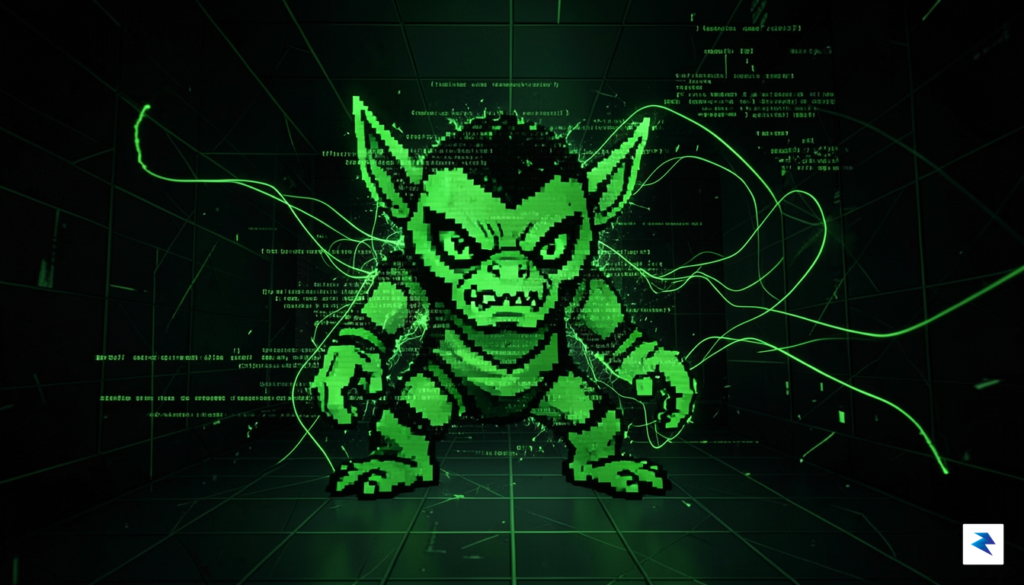
To bring a dungeon to life, the goblin must transition from a static sprite into a responsive entity. We achieve this by establishing a simple state machine that governs the enemy’s behavior based on its proximity to the player. At the heart of this logic are two variables, EX and EY, which track the goblin’s current screen coordinates. By comparing these values against the player’s coordinates, PX and PY, we can dictate whether the goblin should wander aimlessly or actively close the gap. This decision-making process is handled within a dedicated subroutine that fires every game tick, ensuring the enemy feels like a persistent threat rather than a mere background prop.
When the goblin is outside the player’s immediate field of vision, we utilize the RND(1) function to generate pseudo-random movement, simulating a patrol. However, once the player enters a defined range, the logic shifts to a tracking algorithm. We calculate the difference between the player and the enemy coordinates; if PX > EX, the goblin increments its horizontal position, and if PX < EX, it decrements accordingly. This same approach is applied to the vertical axis, allowing the enemy to navigate diagonally toward the player. It is a rudimentary form of artificial intelligence that creates the illusion of intent, making the dungeon crawl significantly more tense as the player is forced to react to the goblin’s persistence.
The key to a believable enemy is not perfect pathfinding, but consistent, predictable aggression that challenges the player’s positioning.
Crucially, the movement logic must be constrained by collision detection to prevent the goblin from walking through dungeon walls. Before the program updates the EX or EY variables, it must perform a check against the screen memory map or the array holding our wall data. By using a command like PEEK to check the character code at the target coordinate, we can verify if the space is occupied by a wall character (such as a solid block or a door). If the check returns a value corresponding to a wall, the goblin’s move is nullified, forcing it to slide along the barrier instead of passing through it. This simple “check-before-move” loop is the foundation of spatial awareness in BASIC, ensuring that your dungeon remains a solid, physical environment rather than a collection of overlapping sprites.
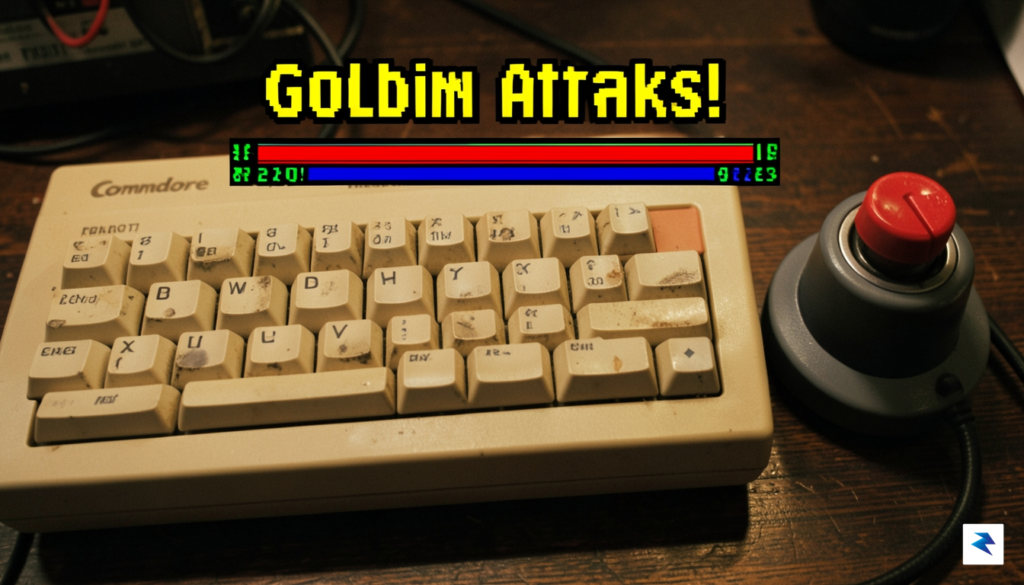
At the heart of any compelling dungeon crawler lies a robust turn-based combat system that balances tension with fairness. In the context of our C64 BASIC project, the combat loop is essentially a high-frequency check that runs every time the player attempts to move. By structuring our logic to pause the exploration phase the moment coordinates overlap, we transform the game from a simple navigation exercise into a tactical challenge. This state management is achieved by comparing the player’s current X and Y variables against the goblin’s position array before finalizing any movement command. If these values align, the program bypasses the standard map update and triggers the combat subroutine instead.
Once the system detects that the player and the goblin occupy the same space, the combat loop takes control of the program flow. This transition is vital because it prevents the player from “walking through” enemies and forces a direct confrontation. We implement this by utilizing a series of IF...THEN conditional statements that check for collision triggers. Once a collision is confirmed, the game enters a localized loop that calculates the outcome of the exchange based on predetermined strength and health variables. Because BASIC executes code line by line, we must carefully structure these checks to ensure the player has the first opportunity to strike, effectively maintaining the turn-based integrity of the encounter.
Calculating damage in an 8-bit environment requires a delicate balance of randomness and fixed values. We typically utilize the RND(1) function to generate a degree of unpredictability, ensuring that every swing of the sword doesn’t yield the exact same result. By multiplying the random output by a maximum damage constant and adding a base minimum, we can create a range of outcomes that keep the player guessing. It is equally important to update the health variables immediately after the calculation; failure to do so results in “ghost” combat where enemies appear defeated but continue to block the player’s path. Once the health variable for either party hits zero, the logic must trigger a cleanup routine that removes the goblin sprite from the screen and clears its position from the game board.
To ensure the game remains engaging, always provide immediate visual feedback during combat—such as a screen flash or a sound effect—so the player understands that a successful hit or a retaliatory strike has occurred.
Finally, the game loop must be resilient enough to handle the transition back to exploration mode seamlessly. After the combat resolution, the program should reset the combat-active flag to zero, allowing the main movement loop to resume its polling of the joystick or keyboard. This cyclical nature of checking, resolving, and returning to the idle state is what gives the dungeon its dynamic feel. By mastering this sequence, you provide the player with a reliable rhythm, turning every room entry into a potential moment of excitement rather than just a static movement through a grid.

When working within the constraints of the Commodore 64’s 1MHz 6510 processor, the inherent slowness of the BASIC interpreter becomes your primary adversary. As you begin adding multiple goblins to your dungeon crawler, you will likely notice the gameplay becoming sluggish as the interpreter struggles to calculate movement logic in real-time. To maintain a responsive experience, you must transition from writing code that is merely functional to code that is computationally efficient. The most effective way to achieve this is by minimizing variable lookups; every time the interpreter encounters a variable name, it must search through a list in memory to find its address, which consumes precious clock cycles during your main game loop.
One pro-tip for seasoned C64 developers is to use integer variables whenever possible and to keep your most frequently accessed variables at the very beginning of your program. Because the BASIC interpreter searches for variables in the order they are defined, placing your goblin coordinates and player status variables at the top of your code can shave off milliseconds of processing time. Furthermore, you should avoid repeated calculations inside your enemy logic loops. If you need to perform a specific math operation—such as determining the distance between the player and a goblin—calculate it once and store the result in a temporary variable rather than re-calculating the formula every time the goblin needs to make a move.
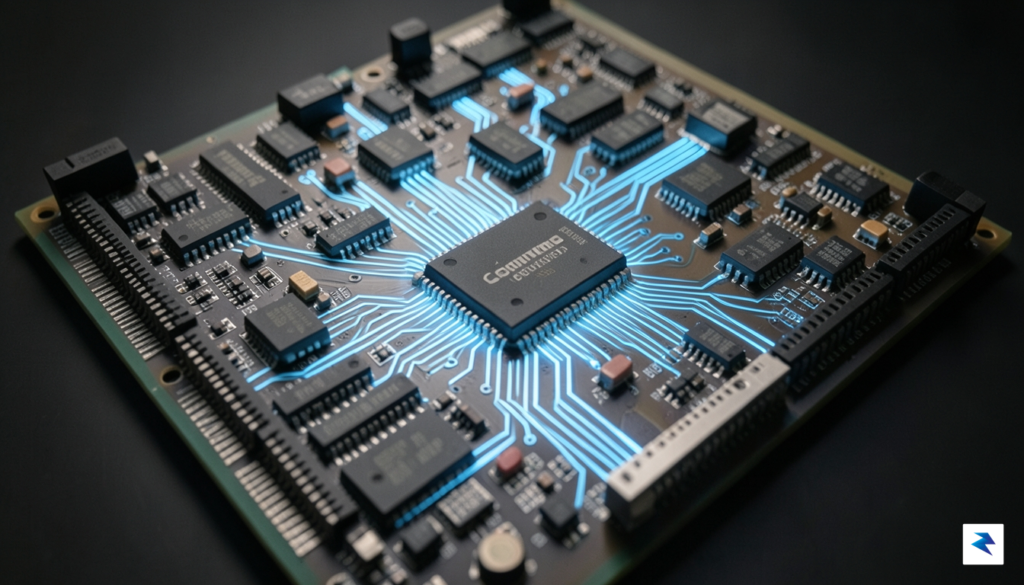
For operations that require extreme speed, such as updating the goblin’s position on the screen, relying on standard BASIC commands like PRINT can be an exercise in frustration. Instead, you should embrace the power of PEEK and POKE to manipulate the video memory directly. By writing values directly into the screen RAM (starting at memory address 1024), you bypass the overhead of the BASIC display routines. This allows for near-instantaneous updates, which is essential when you have multiple enemies moving simultaneously. While this approach requires a deeper understanding of the C64 memory map, the resulting boost in frame rate is well worth the extra effort required to map your game grid to specific memory offsets.
To keep your game snappy, always prioritize efficient memory management over complex, nested logical structures. Remember that in 8-bit programming, simple and direct code will almost always outperform elegant but heavy abstraction.
Finally, consider organizing your code into logical blocks that execute conditionally. Rather than having a giant loop that processes every goblin on every tick, you might implement a simple “turn-based” system where only a subset of enemies updates during any given cycle. By distributing the processing load across multiple frames, you ensure that the player never experiences a jarring drop in input responsiveness. Combining these techniques—minimizing lookups, leveraging direct memory access, and staggering your logic updates—will transform your goblin attack system from a sluggish prototype into a fluid, professional-feeling dungeon crawler.
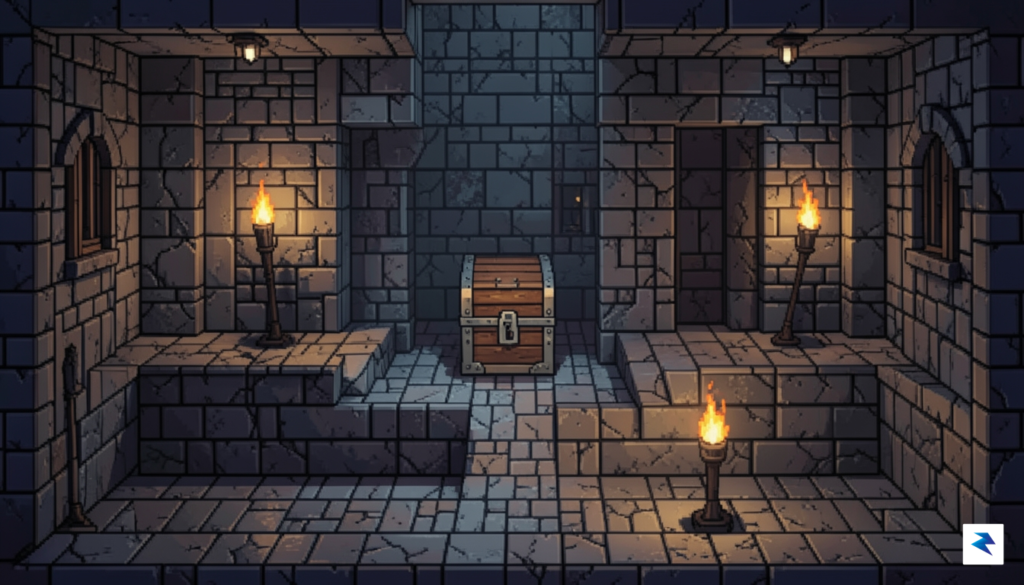
With the core logic of the Goblin Attack system successfully integrated into your dungeon crawler, your project has officially graduated from a static map into a living, breathing environment. However, the true beauty of C64 development lies in the iterative process of refinement, where small tweaks can transform a simple grid-based movement script into a polished gaming experience. Now that you have a functional combat loop, your next objective should be to leverage the Commodore 64’s unique hardware capabilities to elevate the atmosphere and depth of your world.
One of the most rewarding ways to enhance your dungeon is by tapping into the legendary MOS Technology 6581 SID chip. While BASIC is often criticized for its slow execution speed, you can trigger simple sound effects—such as a low-frequency pulse for enemy movement or a sharp, high-pitched tone for a successful attack—by using the POKE command to address the sound registers directly. Integrating these audio cues provides the player with immediate feedback, making the threat of a goblin encounter feel tactile and urgent rather than purely visual.
Beyond audio, consider diversifying your bestiary to create a more strategic gameplay loop. By expanding your enemy data arrays, you can introduce different archetypes, such as slow-moving armored trolls that require multiple strikes to defeat, or fast-moving spectral entities that move twice for every single player turn. You might also look into persistence by implementing basic file I/O routines. Saving the player’s health status, current dungeon level, and inventory to a virtual disk image or tape file is a quintessential skill for any C64 programmer, and it allows your players to treat your crawler as a long-term campaign rather than a one-off session.
The limitation of 8-bit memory is not a barrier; it is a creative framework that forces you to prioritize elegant code over brute force.
IF-THEN logic to save precious bytes of memory.POKE command to change screen borders or character colors during combat to heighten the tension.Ultimately, the journey of building a dungeon crawler is about more than just the final binary; it is about understanding the mechanical soul of the machine. Do not be discouraged if your initial attempts at complex enemy AI result in unexpected behavior, as debugging these quirks is often where the most significant learning occurs. Whether you choose to polish this specific engine or use the knowledge you have gained here to start an entirely new project, you have already cleared the most difficult hurdle: turning a blank screen into an interactive adventure. Keep experimenting, keep breaking your code, and above all, enjoy the process of crafting your own piece of 8-bit history.
You must be logged in to post a comment.