Apple’s New Hardware Subscription: Is Leasing Your iPhone Worth It?
The Evolution of Apple's Hardware Business Model For decades, Apple’s financial engine has been powered by the classic transactional…
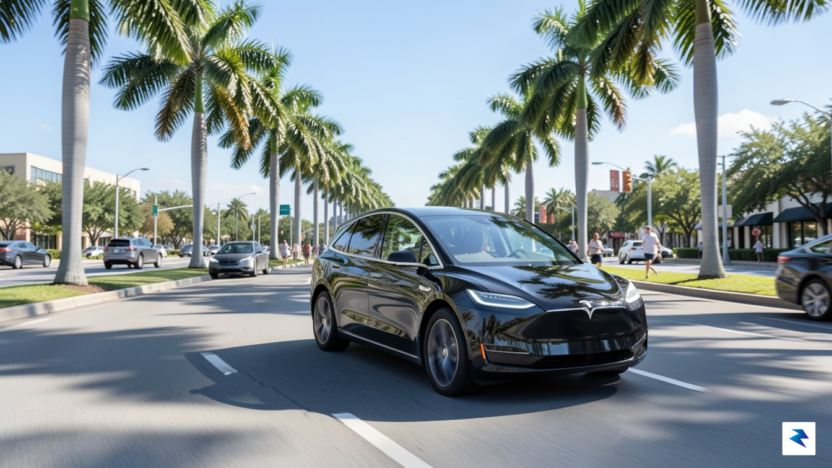
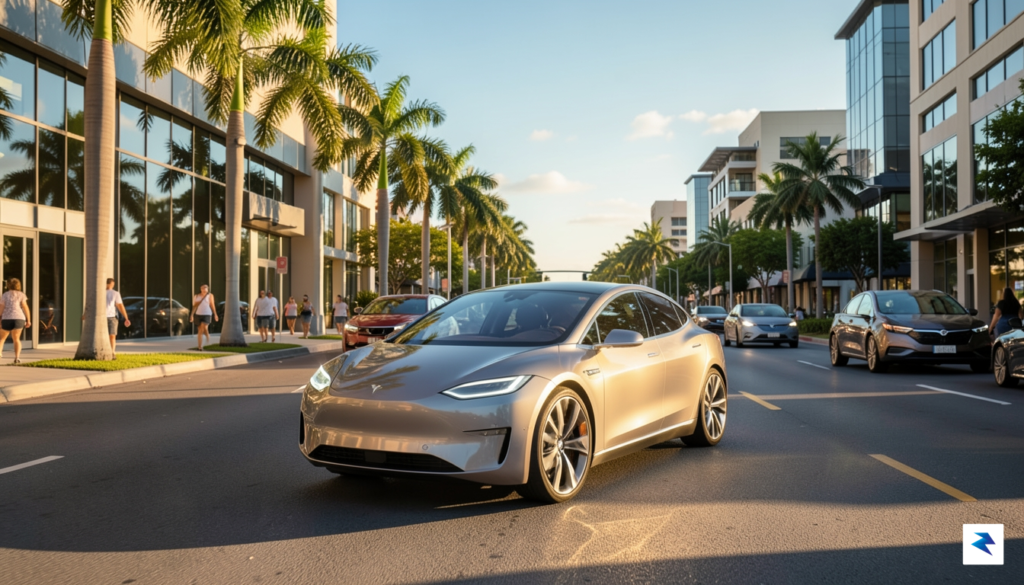
Tesla has officially extended its robotaxi pilot program to the bustling urban landscapes of Orlando and Tampa, a move that signals a calculated acceleration in the company’s pursuit of autonomous ride-hailing dominance. By deploying its vehicle fleet into the heart of Florida, Tesla is moving beyond the controlled environments of its initial testing zones and into regions defined by high-density tourism, unpredictable weather patterns, and complex highway interchanges. This expansion serves as a high-stakes proving ground for the latest iterations of the Full Self-Driving (FSD) stack, requiring the software to navigate environments that are fundamentally different from the familiar streets of California or Texas. By testing in these diverse climates, Tesla is gathering the essential edge-case data needed to refine its neural networks, which remain the backbone of its transition toward a fully autonomous future.
The choice of Florida as a testing hub is far from coincidental; it is a strategic maneuver that capitalizes on a favorable regulatory climate and a unique demographic profile. Florida’s infrastructure, characterized by both sprawling suburban corridors and intense, tourist-heavy urban centers, offers a comprehensive stress test for Level 4 and Level 5 autonomy. Unlike the grid-locked cities of the West Coast, Florida’s rapid transit expansion and year-round influx of visitors provide a constant, high-volume demand for ride-sharing services. This environment allows Tesla to evaluate how its autonomous algorithms handle the chaotic interplay between seasoned commuters and distracted vacationers, ensuring that the software remains robust enough to manage the unpredictable nature of human-centric traffic flow.
The transition into Florida represents a critical milestone in Tesla’s roadmap, proving that the company’s autonomous stack is capable of scaling across diverse geographical and regulatory landscapes.
Ultimately, this pilot program acts as a bridge between current driver-assist capabilities and the long-envisioned goal of a fully realized robotaxi network. By embedding itself into the fabric of daily Florida life, Tesla is not merely iterating on software; it is building the foundation for a business model that relies on the total removal of the human driver from the loop. Each mile driven in Orlando and Tampa is a step toward validating that its data-driven approach to AI can successfully navigate the complexities of public roads at scale. As the company approaches its upcoming quarterly earnings call, these real-world successes will likely be framed as evidence that the dream of an autonomous fleet is no longer a distant theoretical goal, but an operational reality currently under construction.
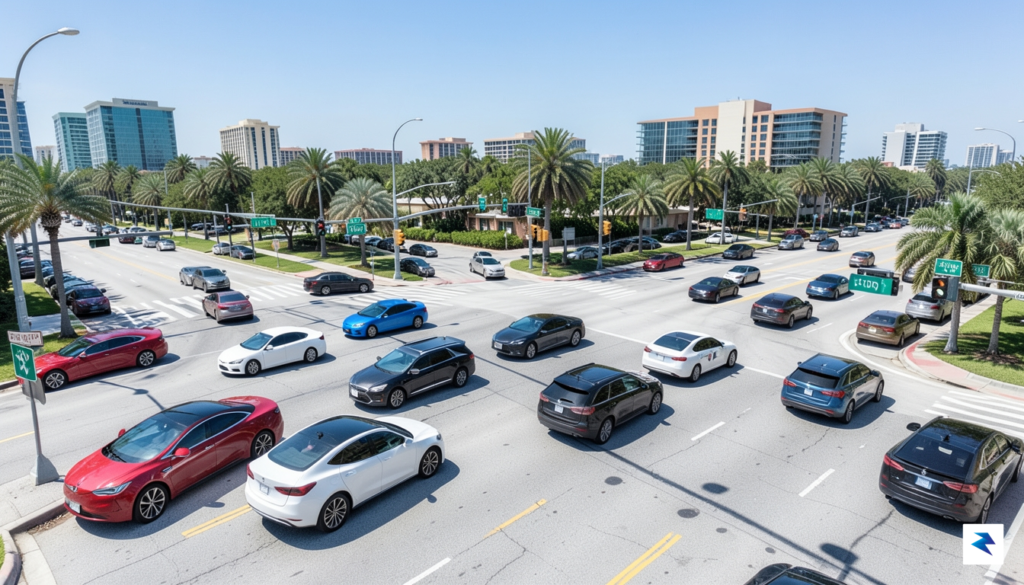
The strategic deployment of Tesla’s robotaxi fleet into Orlando and Tampa is far from a random decision; it represents a calculated move to stress-test autonomous neural networks in some of the most dynamic environments in the United States. Orlando, world-renowned as a epicenter of global tourism, provides an incredibly dense and unpredictable traffic environment. With millions of visitors navigating unfamiliar roads, often while distracted or driving rental vehicles with different handling characteristics, the city acts as a high-stakes classroom for Tesla’s artificial intelligence. The constant inflow of tourists creates a unique set of logistical challenges, such as frequent sudden braking, erratic lane changes, and complex, high-traffic intersections near theme parks that require the system to exercise a level of caution and predictive capability far beyond what is required on a standard suburban street.
Conversely, Tampa offers a different set of variables that are essential for refining the robustness of autonomous driving software. As a rapidly expanding tech hub with a sophisticated mix of coastal highway systems, bridge crossings, and dense urban corridors, Tampa forces the vehicle’s sensor suite to adapt to varying infrastructure types. The integration of high-speed transit routes with tight, grid-locked downtown streets ensures that Tesla’s algorithms are exposed to a wide spectrum of driving behaviors. Furthermore, the regional climate plays a significant role in this selection process. Florida’s volatile weather patterns, characterized by sudden, heavy afternoon thunderstorms and intense solar glare, provide the perfect conditions to evaluate how cameras and radar systems maintain perception when visibility is compromised. These environmental factors are critical for developers aiming to achieve true Level 5 autonomy, as the software must prove it can operate safely regardless of whether the sky is clear or obscured by a tropical downpour.
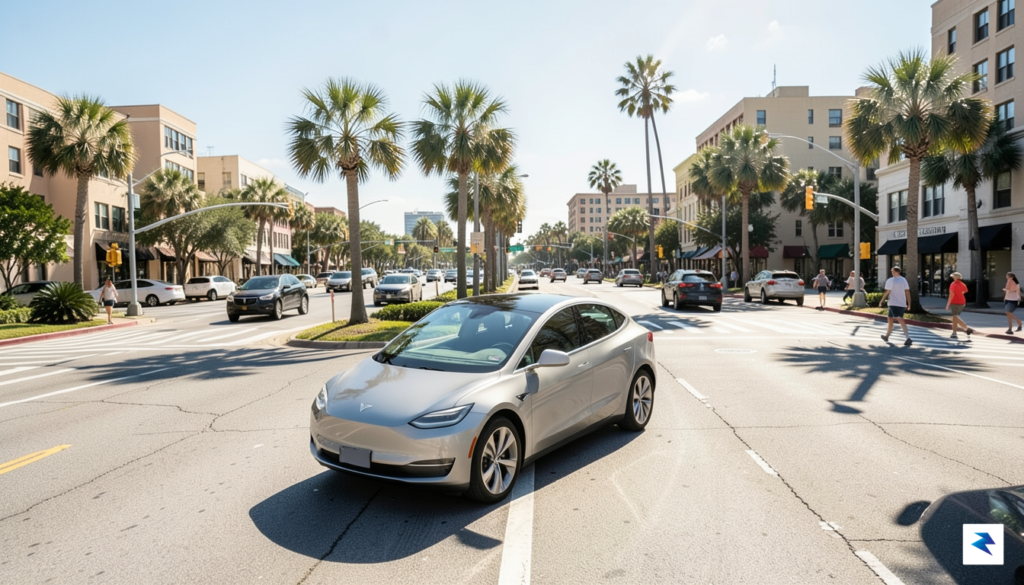
Testing in Florida allows Tesla to move beyond the relatively predictable, fair-weather environments of California and Texas, forcing the system to master the chaotic, high-density reality of modern American transit.
By operating in both Orlando and Tampa simultaneously, Tesla is effectively creating a diverse data set that captures the intersection of heavy pedestrian activity, aggressive commuter driving, and complex, multi-modal transportation networks. This dual-city pilot program is designed to accelerate the learning curve of their neural networks, particularly in handling the “edge cases” that often stump automated systems. While previous testing environments were often limited by more static or uniform conditions, the Florida landscape provides a multifaceted proving ground. Ultimately, this expansion serves as a rigorous final exam for the robotaxi platform, ensuring that when the service eventually scales to the national stage, it will be equipped to handle the diverse and often frantic pace of real-world driving with confidence and precision.
For years, Tesla’s leadership has captured headlines with ambitious, sometimes sweeping, projections regarding the arrival of a fully autonomous transportation network. These high-level promises often painted a picture of a rapid, near-instantaneous nationwide rollout, fueling intense speculation among investors and enthusiasts alike. However, the latest expansion of robotaxi pilots into Florida—specifically Orlando and Tampa—signals a distinct departure from those aggressive timelines. Instead of attempting to flip a switch on a massive, country-wide fleet, Tesla is moving toward a more disciplined, iterative operational strategy. This shift suggests that the company is finally reconciling its long-term vision with the complex, non-negotiable realities of urban infrastructure and local regulatory environments.
This transition toward a methodical deployment model is a hallmark of a maturing development lifecycle. By focusing on specific metropolitan areas, the engineering teams can gather high-fidelity data on traffic patterns, weather-related variables, and unique road conditions without the inherent risks of a premature, broad-scale launch. This cautious approach effectively prioritizes safety and regulatory compliance over the sheer velocity of deployment, acknowledging that trust—both from the public and from government oversight bodies—must be earned incrementally. While it may lack the immediate sensationalism of past announcements, this strategy offers a far more sustainable path toward achieving true Level 5 autonomy in the real world.
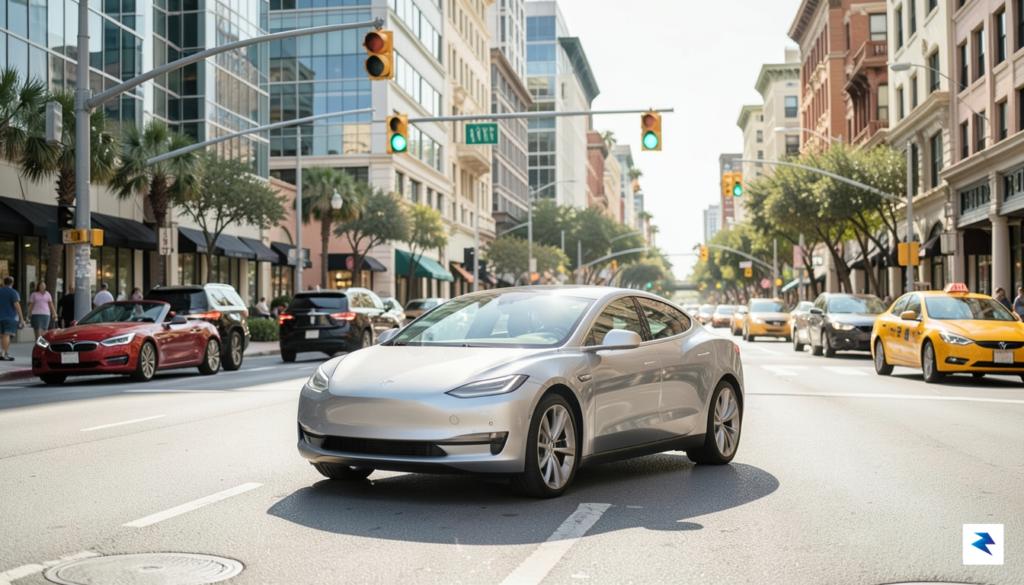
The shift from aggressive, theoretical timelines to a disciplined, region-specific pilot program marks a pivotal maturation point for Tesla’s autonomous ambitions. It is a clear move to favor long-term viability over short-term hype.
Furthermore, managing investor and consumer expectations has become an essential component of this new phase. By grounding the rollout in concrete, observable pilot projects, Tesla is providing stakeholders with tangible proof of progress rather than relying on future-dated promises. This pivot acknowledges that the road to full autonomy is paved with small, deliberate wins rather than grand, sweeping revolutions. As the company refines its software and sensor suites within these Florida testbeds, it is building the necessary foundation of safety data that will ultimately be required for wider adoption. Consequently, this measured strategy not only mitigates the risks associated with rapid deployment but also positions the company to scale with much greater confidence once these regional pilots prove successful and scalable.
Scaling an autonomous ride-hailing network from a collection of consumer-owned vehicles to a robust, commercial fleet introduces a paradigm shift in complexity. While Tesla’s Full Self-Driving (FSD) suite has logged billions of miles on public roads, the transition to a robotaxi model demands a level of reliability that far exceeds the requirements for a supervised driver-assist system. Achieving “five-nines” (99.999%) uptime in a commercial environment necessitates solving for a vast array of unpredictable edge cases—ranging from sudden construction detours and complex emergency vehicle interactions to the chaotic, often erratic behavior of human drivers in high-traffic urban centers like Orlando and Tampa.
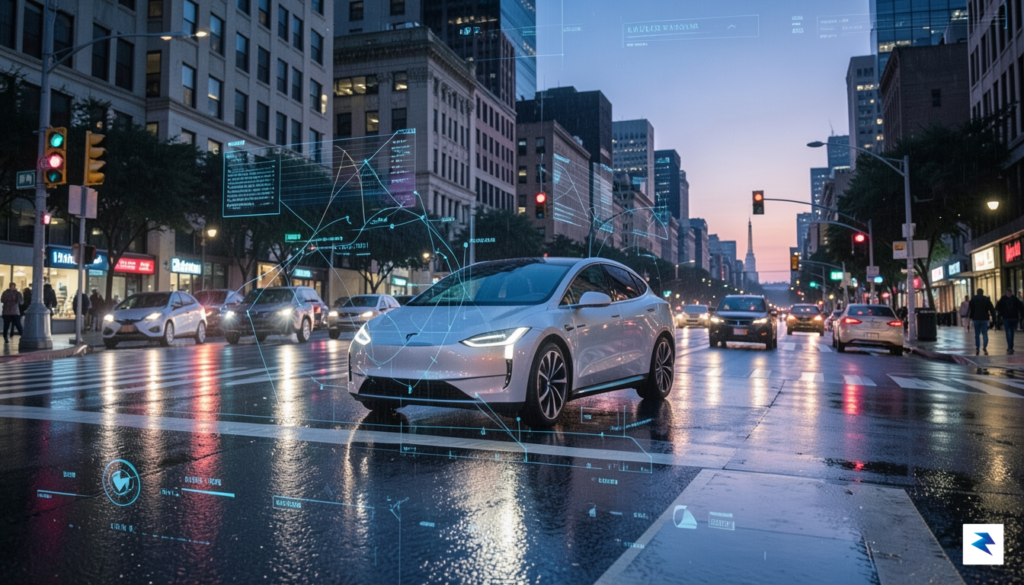
Beyond the software’s immediate decision-making capabilities, Tesla faces the monumental task of perfecting sensor fusion and redundancy. Unlike human drivers who rely on intuition and peripheral vision, an autonomous fleet must process data from multiple cameras and internal logic engines simultaneously to maintain a perfect spatial understanding of its surroundings. Furthermore, the company must establish a comprehensive remote operations support infrastructure. Even the most sophisticated artificial intelligence will inevitably encounter scenarios—such as a blocked road with a manual traffic controller—where the vehicle requires human intervention or guidance. Building a centralized command center capable of supervising, assisting, and troubleshooting a fleet in real-time is not merely a technical add-on; it is a fundamental requirement for safety and regulatory compliance.
The leap from “driver-assist” to “driver-out” is not just a software update; it is a complete reimagining of vehicle ownership, maintenance, and infrastructure integration that requires perfect synchronization between hardware and the cloud.
Operational logistics represent another critical hurdle that is often overlooked in the excitement surrounding software breakthroughs. A private vehicle spends the vast majority of its life parked, but a robotaxi fleet must be kept in constant motion to generate meaningful revenue. This necessitates a sophisticated, 24/7 infrastructure network dedicated to automated charging, routine maintenance, and interior sanitization. Tesla must optimize these processes to ensure that vehicles spend minimal time tethered to chargers and maximum time serving passengers. Furthermore, environmental factors in Florida—such as heavy seasonal downpours and intense heat—can degrade sensor accuracy and battery performance, forcing Tesla to innovate in hardware durability to ensure their fleet remains operational and safe, regardless of the forecast.
As Tesla prepares to unveil its second-quarter financial results, the expansion of robotaxi pilots into the Florida market serves as a critical bridge between long-term vision and immediate fiscal accountability. For years, investors have traded Tesla stock based largely on the promise of autonomous capability, often referred to as the “FSD premium.” However, as the automotive sector faces cooling EV demand and aggressive pricing wars, the narrative has shifted toward tangible execution. By operationalizing these pilot programs in diverse environments like Orlando and Tampa, Tesla is effectively signaling to Wall Street that its autonomous technology is maturing from a research-and-development project into a functional, scalable service model.
This pivot toward operational transparency is vital for maintaining investor confidence in a climate where competitors like Waymo and Cruise have already established a significant head start in urban ride-hailing. Market sentiment is no longer satisfied by promises of future software updates; stakeholders are now demanding proof that Tesla’s unique, camera-centric approach can achieve the safety milestones and reliability metrics required for commercial deployment. By providing concrete data from these Florida test beds, Tesla can articulate a clearer timeline for revenue generation tied to autonomous mobility-as-a-service (MaaS). This transition is essential to justify the company’s high valuation, as it moves the conversation away from declining vehicle margins and toward the high-margin potential of autonomous software licensing and fleet operations.
The success of these regional pilots acts as a litmus test for Tesla’s ability to scale FSD technology across varied traffic patterns and weather conditions, a prerequisite for broader regulatory approval and market dominance.
Furthermore, the pressure to perform is heightened by the intensifying competition in the autonomous vehicle space, where players are racing to solve the “edge cases” that prevent full, driverless deployment. Tesla’s strategy to utilize its existing massive fleet of customer vehicles to gather real-world data in Florida provides an advantage in scale that few rivals can match. During the Q2 earnings call, analysts will likely scrutinize these pilot programs for signs of improved disengagement rates and system performance. Should Tesla demonstrate that its Florida operations are running with increasing autonomy, it could serve as a powerful catalyst for stock performance, effectively silencing critics who argue that the company is falling behind. Ultimately, these pilots represent more than just a logistical expansion; they are the front line in Tesla’s battle to prove that its vision for an autonomous future is not just feasible, but imminent.
You must be logged in to post a comment.