
Building Resilience: How Asia’s Developing Nations Are Shielding Economies From Oil Crises
The New Reality: Why Developing Nations Are Building Oil Buffers For decades, many emerging economies operated under the efficiency-driven…


For decades, Nvidia was synonymous with the enthusiast gaming market, known primarily for its GeForce series graphics cards that powered high-fidelity visuals on desktop computers. While these chips were technically impressive, they were viewed as discrete components within a broader computing ecosystem. However, the rise of deep learning and generative AI fundamentally altered the company’s trajectory. Nvidia’s leadership recognized early that their parallel processing architecture—originally designed for rendering pixels—was uniquely suited for the mathematical heavy lifting required by neural networks. This realization catalyzed a metamorphosis, transitioning the company from a peripheral supplier to the central nervous system of the modern digital economy.

The evolution from the classic GeForce era to the current H100 and Blackwell generations represents more than just a leap in raw transistor counts; it marks a strategic pivot toward full-stack system architecture. Where Nvidia once sold individual GPUs to be slotted into third-party motherboards, they now design comprehensive, integrated infrastructure suites. By producing not just the processor, but also the networking hardware, interconnects, and proprietary software layers like CUDA, the company has effectively locked in enterprise clients. This vertical integration ensures that every component of the AI pipeline—from data ingestion to final inference—is optimized to run exclusively on Nvidia’s hardware stack, creating a moat that competitors find increasingly difficult to breach.
The shift from a component-based business model to a systems-based architecture is the defining maneuver of Nvidia’s modern history, effectively turning them into the primary architect of the AI-powered data center.
This dominance is bolstered by a market landscape that is desperate for speed and reliability. As companies race to deploy large language models, the complexity of scaling hardware has become a major bottleneck. Nvidia has stepped into this void by offering “turnkey” data center solutions that reduce the friction of assembly. By dictating the pace of hardware development, the company forces the entire tech industry to build their software around Nvidia’s roadmap. Consequently, the firm no longer just supplies chips; it sets the standards for how global data centers are constructed and managed. This total control over the compute stack allows Nvidia to maintain its pricing power while ensuring that even as the AI market evolves, the underlying foundation remains firmly under their influence.

At the core of Nvidia’s ambition to redefine the data center lies the Vera Rubin architecture, a radical departure from the modular, piecemeal approach that has defined computing for decades. While traditional server designs rely on discrete components—CPUs, GPUs, and network interface cards—communicating across standard interfaces like PCIe, Vera Rubin treats the entire rack as a single, cohesive processing unit. By tightly coupling these elements, Nvidia is effectively eliminating the bottlenecks that occur when data must travel across the motherboard. This holistic reimagining is specifically engineered to address the astronomical latency demands of large language model (LLM) training, where even millisecond delays in communication can lead to massive inefficiencies across thousands of interconnected chips.
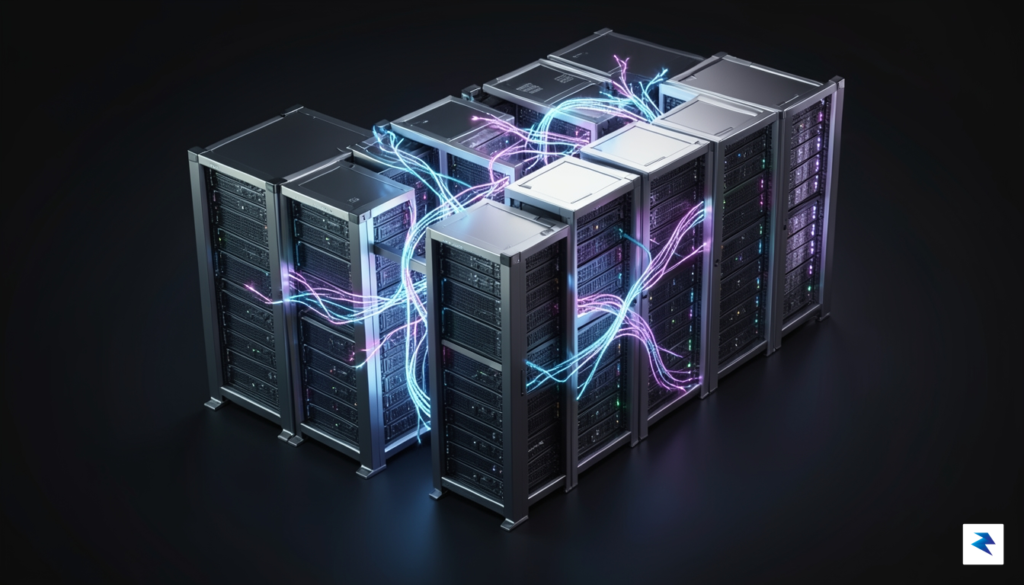
The technical brilliance of the Vera Rubin platform rests on its implementation of a unified memory architecture, which represents a fundamental shift away from legacy x86 systems. In older architectures, the CPU and GPU maintained separate memory pools, requiring constant, power-hungry data copying and synchronization. Vera Rubin shatters this divide, allowing processors to access the same high-bandwidth memory space simultaneously without redundant transit. This capability is not merely an incremental speed improvement; it is a structural necessity for modern AI workloads that require instantaneous access to vast datasets. By minimizing the physical distance data must travel, Nvidia significantly reduces the thermal load and energy consumption typically associated with moving bits between disparate hardware layers.
The true power of Vera Rubin isn’t in raw clock speed, but in the radical reduction of data transit times, transforming the server from a collection of parts into a singular, high-performance organism.
Furthermore, this architecture prioritizes low-latency interconnects that allow the system to scale fluidly. In traditional setups, the “PCIe tax”—the speed limit imposed by the interface between the CPU and external accelerators—often serves as the ultimate bottleneck during distributed training. Vera Rubin bypasses this constraint by integrating proprietary, high-speed fabrics directly into the platform’s foundation. This design ensures that as models grow to include trillions of parameters, the communication between processing clusters remains instantaneous. Consequently, engineers are no longer limited by the physical architecture of the server; instead, they are empowered to scale their models horizontally across an entire data center with near-zero overhead. By moving toward this unified, integrated design, Nvidia is setting a new standard that forces the rest of the industry to reconsider whether the modular server era has finally reached its technical expiration date.
For over a decade, Nvidia’s dominance was built on a symbiotic relationship with the traditional server infrastructure. While Nvidia manufactured the world’s most powerful graphics processing units, they remained tethered to the CPUs produced by Intel or AMD to act as the “brain” of the computer. However, as AI models ballooned in complexity, the limitations of this reliance became glaringly apparent. The traditional interface—the PCIe bus—acts as a persistent bottleneck, slowing down the transfer of massive datasets between the CPU and the GPU. By introducing the Grace CPU, Nvidia is no longer content to be a modular component in someone else’s machine; they are now building the entire foundation upon which the modern AI data center operates.
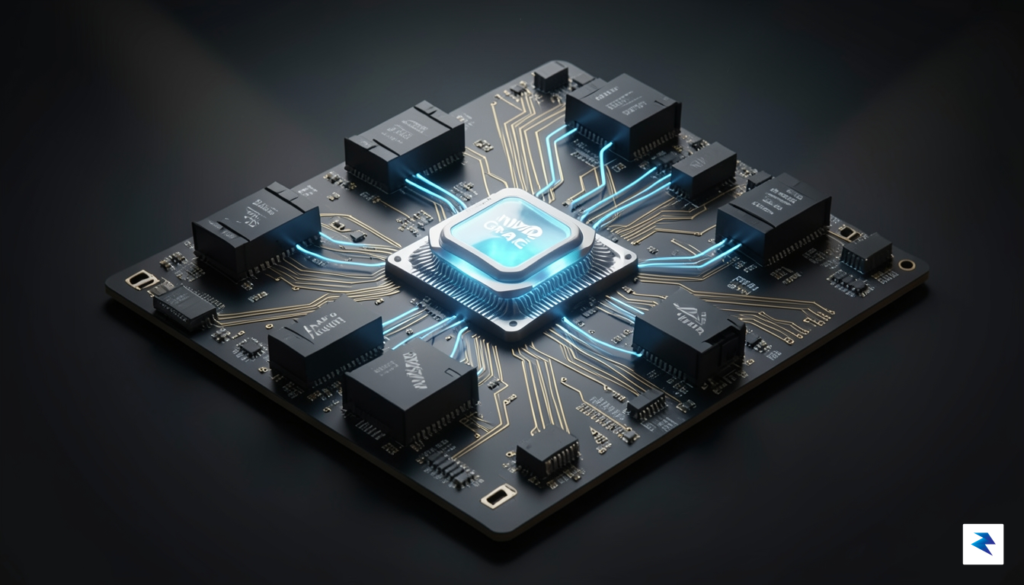
The strategic shift toward vertical integration solves a fundamental physics problem in computing: data latency. When a GPU has to wait for a third-party CPU to fetch and process instructions through a standard PCIe connection, efficiency drops significantly. By pairing the Grace CPU with their own proprietary interconnect technologies, such as NVLink, Nvidia has effectively eliminated these traffic jams. This creates a unified architecture where the CPU and GPU act as a single, cohesive engine, enabling lightning-fast memory access and unparalleled throughput. This is not merely a marginal improvement in speed; it is a fundamental architectural shift that allows AI models to train in days rather than months.
The integration of Grace CPUs allows Nvidia to dictate the rules of the entire data center stack, moving from a hardware supplier to a comprehensive infrastructure architect.
Beyond the immediate performance gains, this move serves a calculated purpose: the creation of a proprietary, “Nvidia-only” ecosystem. By controlling both the primary processor and the accelerator, Nvidia makes it exponentially more difficult for customers to mix and match hardware from different vendors. While this effectively forces a level of vendor lock-in, it also offers a compelling value proposition for enterprise clients. Data center operators prefer stability and seamless compatibility, and Nvidia’s end-to-end platform guarantees that every component is optimized to work in perfect harmony. Consequently, Nvidia is insulating its revenue streams against competition, ensuring that as long as the world demands more AI computing power, those dollars will flow exclusively into their own vertically integrated pipeline.

In the high-stakes world of artificial intelligence, the raw computational horsepower of a single GPU is effectively meaningless if that processor cannot communicate with its peers at lightning speed. Modern AI models, such as large language models with trillions of parameters, are far too massive to reside on a single piece of silicon; they must be distributed across thousands of chips working in perfect unison. Nvidia has recognized that the true performance ceiling of a data center is not the chip itself, but the “traffic jam” that occurs when data struggles to move between them. By prioritizing the development of high-bandwidth interconnects like NVLink and its acquisition of Mellanox for InfiniBand expertise, the company has fundamentally shifted the focus from isolated processing to total system orchestration.
NVLink serves as the connective tissue that allows GPUs to bypass the slow, traditional pathways of a standard motherboard. By creating a high-speed, direct memory access link, NVLink enables multiple GPUs to treat their collective VRAM as a single, massive pool of memory. This is critical for training complex models, as it prevents performance degradation that would otherwise occur if chips had to wait for data to traverse slower networks. When thousands of these chips are linked together through the Vera Rubin architecture, they stop functioning as distinct units and begin to act like one singular, gargantuan brain. This creates a level of efficiency that is virtually impossible to replicate with generic hardware components, which inevitably struggle with latency and throughput bottlenecks at this scale.
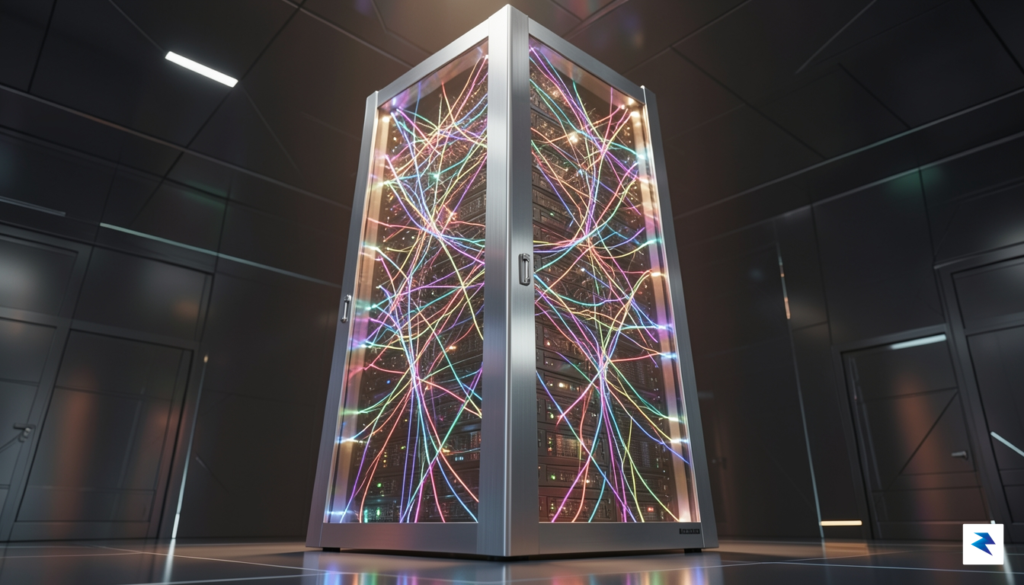
Beyond the internal chip-to-chip communication, the integration of InfiniBand networking hardware provides the necessary infrastructure to scale these clusters across entire data halls. While standard Ethernet can suffice for basic cloud computing, it lacks the deterministic, low-latency performance required for the synchronous operations of modern neural networks. Nvidia’s commitment to these proprietary standards creates a powerful “moat” around its ecosystem. Because the entire software stack is optimized to leverage these specific interconnects, competitors are effectively locked out from offering a simple plug-and-play alternative for high-end AI research. If a developer wants to achieve the peak performance required for cutting-edge generative AI, they are essentially forced to commit to the Nvidia ecosystem in its entirety.
The true competitive advantage of an AI data center isn’t just the speed of the processor; it is the speed at which that processor can share its knowledge with the rest of the cluster.
Ultimately, this strategic emphasis on proprietary interconnects ensures that Nvidia is not merely a component manufacturer, but the architect of the entire data center environment. By controlling both the computing engine and the high-speed transit lanes that feed it, the company ensures that its hardware remains the only viable choice for organizations pushing the boundaries of machine learning. This comprehensive control makes it remarkably difficult for rivals to compete, as they would need to replicate not just the GPU, but the entire, highly efficient communication fabric that makes modern AI possible.

Nvidia’s aggressive expansion from a specialized chip designer into a holistic provider of data center infrastructure is fundamentally altering the competitive landscape of the technology sector. By integrating networking hardware, proprietary interconnects, and the pervasive CUDA software platform, the company has effectively shifted from selling individual components to offering an indispensable, end-to-end ecosystem. This transition forces traditional server manufacturers—such as Dell, Hewlett Packard Enterprise, and Supermicro—into a delicate position. These companies, which once competed on their ability to offer modular, customizable hardware, are now increasingly forced to function as high-end integrators for Nvidia-certified systems, effectively ceding their own value-add to the chip giant’s overarching architecture.
For established silicon rivals like Intel and AMD, the pressure is mounting to move beyond mere hardware parity. While both competitors continue to advance their own AI-focused processors, they are fighting an uphill battle against Nvidia’s deep-seated software moat. Because so much of the modern AI developer community is natively trained on the CUDA platform, customers are facing significant friction when attempting to migrate their workloads to alternative hardware. This “vendor lock-in” creates a powerful economic barrier that shields Nvidia from market disruption, even if rivals occasionally offer superior price-to-performance ratios on raw silicon.

The long-term implications for the broader industry remain a subject of intense debate among market analysts and open-source advocates. While Nvidia’s unified approach guarantees seamless interoperability and industry-leading performance for massive AI training clusters, the concentration of power in a single vendor raises valid concerns regarding pricing leverage. When a single entity controls the hardware, the networking fabric, and the software development stack, they possess unparalleled ability to dictate market conditions and profit margins. This centralized dominance could stifle innovation in the open-source hardware ecosystem, as smaller competitors struggle to gain traction against a platform that is being optimized at every layer by one of the world’s most well-capitalized companies.
The true challenge for the AI industry is not just building faster chips, but breaking the gravitational pull of a closed ecosystem that dictates how every byte of data is processed from the silicon to the cloud.
Ultimately, the cloud providers and enterprise buyers who fuel this growth are reaping the immediate benefits of Nvidia’s streamlined performance. However, this convenience comes at the cost of long-term strategic flexibility. As these organizations deepen their reliance on Nvidia’s stack, the difficulty of pivoting to competing architectures increases exponentially. The industry now stands at a crossroads: either continue down the path of hyper-optimized, single-vendor dominance or foster a more diversified market that favors open standards and cross-platform compatibility. For now, Nvidia’s momentum suggests that the former will remain the dominant model for the foreseeable future, leaving competitors to scrap for the remaining market share in the shadows of an AI titan.

As Nvidia aggressively pushes toward an “everything-Nvidia” data center architecture, the company finds itself navigating a increasingly complex landscape of systemic risks. While its hardware-software ecosystem, anchored by the CUDA platform, has created a formidable moat, that very dominance is beginning to attract the intense gaze of global antitrust regulators. Governments in the United States, the European Union, and China are scrutinizing whether Nvidia’s bundling of networking gear, software, and GPUs unfairly locks customers into a proprietary silo. Should these legal pressures mount, Nvidia may be forced to open its ecosystem or face hefty fines, potentially fracturing the seamless integration that currently drives its competitive advantage.
Beyond the regulatory environment, the physical and economic constraints of AI infrastructure are beginning to shift the market’s center of gravity. The massive power consumption required to run clusters of thousands of high-end GPUs is pushing data center operators to reconsider the efficiency of general-purpose chips. Consequently, hyperscalers—including Amazon, Google, and Meta—are pouring billions of dollars into developing their own custom Application-Specific Integrated Circuits (ASICs). These bespoke chips are meticulously designed to handle specific AI workloads far more efficiently than general-purpose GPUs, allowing these tech giants to reduce their reliance on Nvidia while simultaneously lowering their electricity bills.

The true test of Nvidia’s longevity will not be the raw performance of its next generation of chips, but rather its ability to maintain the software lock-in that keeps developers tethered to its architecture even as cheaper, specialized alternatives emerge.
The race for AI supremacy is far from a foregone conclusion. While Nvidia’s current synergy is undeniably powerful, the market is historically prone to cycles of decentralization. As specialized silicon becomes more accessible and open-source software libraries mature, the “all-in-one” Nvidia stack may lose its status as the industry’s only viable option. We are likely entering a phase where the AI hardware market splits between high-performance, general-purpose training clusters—where Nvidia currently reigns supreme—and a vast array of specialized, low-power inference hardware. Ultimately, Nvidia’s ability to sustain its monopoly will depend on whether it can continue to innovate faster than the collective efforts of its customers-turned-competitors, who are now highly motivated to build a world where they are no longer dependent on a single supplier.
You must be logged in to post a comment.