
Beyond GPUs: Inside Nvidia’s Plan to Control the Entire AI Data Center
The Shift from GPU Specialist to Data Center Architect For decades, Nvidia was synonymous with the enthusiast gaming market, known primarily…
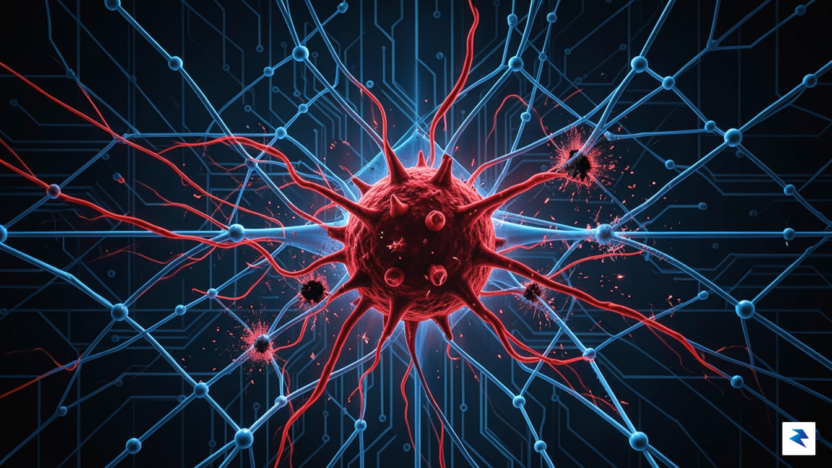

The rapid integration of artificial intelligence into the core of global business operations has fundamentally shifted the cybersecurity landscape. For years, cybercriminals primarily focused their efforts on exfiltrating sensitive customer records or encrypting databases for ransom. However, as organizations pivot toward AI-driven decision-making, the value proposition for attackers has migrated from static data to the intellectual property and logic embedded within AI models themselves. By targeting the development pipeline, hackers are gaining access to the “brains” of a company, effectively turning an organization’s most innovative tools into liabilities.
AI infrastructure presents a unique and lucrative attack surface because of the immense complexity inherent in machine learning operations. Unlike traditional software development, the AI lifecycle involves massive datasets, specialized hardware clusters, and complex model training environments that require high-level administrative privileges for engineers. This necessity for broad access creates a significant blind spot; when developers need to move freely across environments to refine algorithms or manage compute resources, security protocols are often relaxed to maintain velocity. Sophisticated threat actors are now exploiting these gaps, embedding themselves within the very infrastructure that builds the models, often remaining undetected for extended periods while they siphon off proprietary weights or manipulate training data.

This evolution is marked by a clear transition from generic, opportunistic malware to highly specialized, purpose-built tools. Modern cyber-adversaries are no longer relying on standard phishing kits or off-the-shelf ransomware; instead, they are deploying bespoke malicious code tailored specifically for popular AI frameworks like PyTorch and TensorFlow. These threats are designed to hook into the development lifecycle, silently monitoring model training runs or intercepting configuration files without triggering standard endpoint detection systems. Because these tools operate within the specialized, high-bandwidth pipelines used for model development, they often blend in with legitimate traffic, making them exceptionally difficult for security teams to identify.
The true risk to AI infrastructure lies not just in the potential for data theft, but in the subtle degradation of model integrity, which can lead to biased, insecure, or fundamentally compromised business outputs.
Ultimately, the gold rush toward AI has outpaced the security maturity of the environments housing these innovations. As companies scramble to gain a competitive edge, the rush to deploy often leaves security architecture as an afterthought. By treating the AI development pipeline as a traditional IT asset rather than a specialized, high-value environment, organizations are inadvertently rolling out a red carpet for threat actors. To defend against this new wave of AI-targeting malware, security leaders must recognize that their development environments are now the primary front lines in the battle for intellectual property protection.

This sophisticated malware represents a paradigm shift in cyber-attacks, moving away from traditional data exfiltration toward a parasitic existence within the AI development life cycle. Rather than attacking a finished model, it embeds itself directly into the integrated development environments (IDEs), container orchestration platforms, and version control systems that engineers use daily. By masquerading as legitimate developer tools or benign dependencies, the malware establishes a foothold deep within the infrastructure. It essentially hijacks the very pipelines responsible for building, testing, and deploying AI models, turning the developers’ own workflow into a vehicle for its operations.
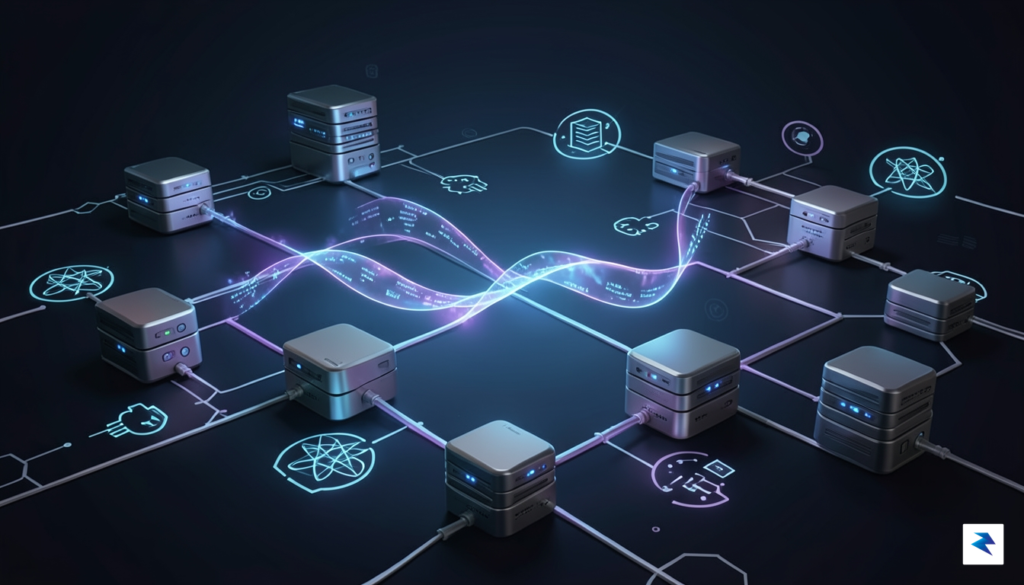
The persistence of this threat is rooted in its ability to exploit the “blind spots” of standard enterprise security monitoring. While traditional EDR (Endpoint Detection and Response) systems are adept at spotting unauthorized executable files, this malware operates primarily through legitimate process injection and the manipulation of configuration scripts. It avoids triggering alarms by mimicking the high-frequency, complex API calls typical of automated CI/CD (Continuous Integration/Continuous Deployment) pipelines. Because security analysts often prioritize monitoring production-facing databases or external web traffic, they frequently overlook the subtle anomalies occurring within internal development clusters, allowing the malware to persist for weeks or months without detection.
The true danger of this malware lies not in its ability to break into a system, but in its ability to live within the system’s own automation, effectively becoming part of the infrastructure it intends to subvert.
Once established, the malware deploys a tiered set of capabilities designed to compromise both the integrity and the confidentiality of AI projects:
By compromising the integrity of the training process itself, the attackers ensure that the resulting AI models are fundamentally flawed or vulnerable from inception. This makes the threat uniquely difficult to remediate, as simply wiping a server does not necessarily clean the poisoned code that has already been integrated into the repository. Organizations must now adopt a “zero-trust” approach to their internal development tools, treating their own CI/CD pipelines with the same level of scrutiny as their most sensitive public-facing assets.
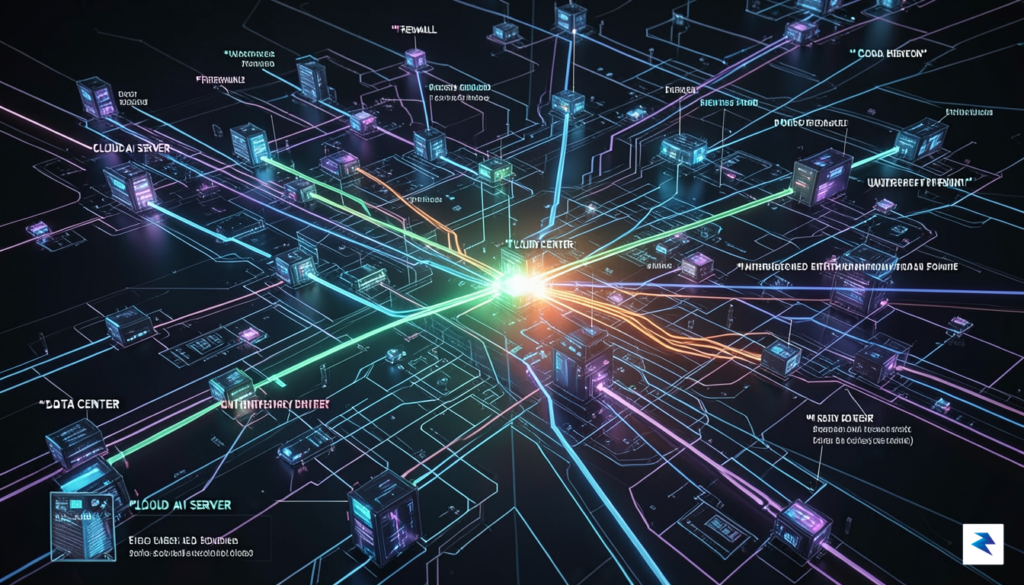
In the high-stakes world of AI development, infiltration rarely resembles a cinematic, high-speed digital siege. Instead, modern attackers rely on the quiet erosion of trust, exploiting the very tools and ecosystems that engineers depend on daily. By embedding malicious code into legitimate third-party libraries or compromised development plugins, threat actors can bypass traditional perimeter defenses entirely. Because these components are often treated as “trusted” by internal automated build pipelines, the malware is effectively granted a VIP pass into the heart of the infrastructure, allowing it to execute silently while the team remains focused on model performance rather than security verification.
The primary reason these threats remain undetected for so long is the existence of persistent “blind spots” within standard monitoring frameworks. Security tools designed for traditional web applications are often ill-equipped to inspect the complex, data-heavy workflows inherent in AI training. When a model training job pulls in massive datasets or invokes specialized compute resources, standard security agents may struggle to distinguish between legitimate resource-intensive processes and the background exfiltration of model weights or training parameters. This discrepancy creates a vast, unmonitored landscape where malicious activity can linger, shielded by the sheer volume of legitimate data traffic that infrastructure monitoring tools simply cannot parse in real-time.

The most dangerous vulnerabilities are not found in the code you write yourself, but in the layers of abstraction and third-party dependencies that sit beneath it.
To combat this, organizations must shift toward a model of rigorous environment isolation and granular least-privilege access. Simply trusting a dependency because it is popular or widely used is a strategy that no longer holds water in the age of supply chain poisoning. Engineers should implement strict containerization policies that deny all outgoing network connections by default, ensuring that even if a library is compromised, it cannot “phone home” to a command-and-control server. Furthermore, enforcing strict access controls—where training scripts only have the minimum necessary read/write permissions to specific data buckets—can drastically limit the blast radius of an initial breach.
Ultimately, the goal for security teams is to achieve visibility where it matters most: within the execution environment of the AI model itself. By integrating security checks directly into the CI/CD pipeline—such as automated binary scanning of dependencies and runtime monitoring of training containers—companies can stop relying on the hope that their tools are clean. Instead, they must assume that the environment is hostile and build defense-in-depth strategies that treat every line of third-party code as a potential threat vector, thereby closing the visibility gaps that attackers have spent years learning to exploit.
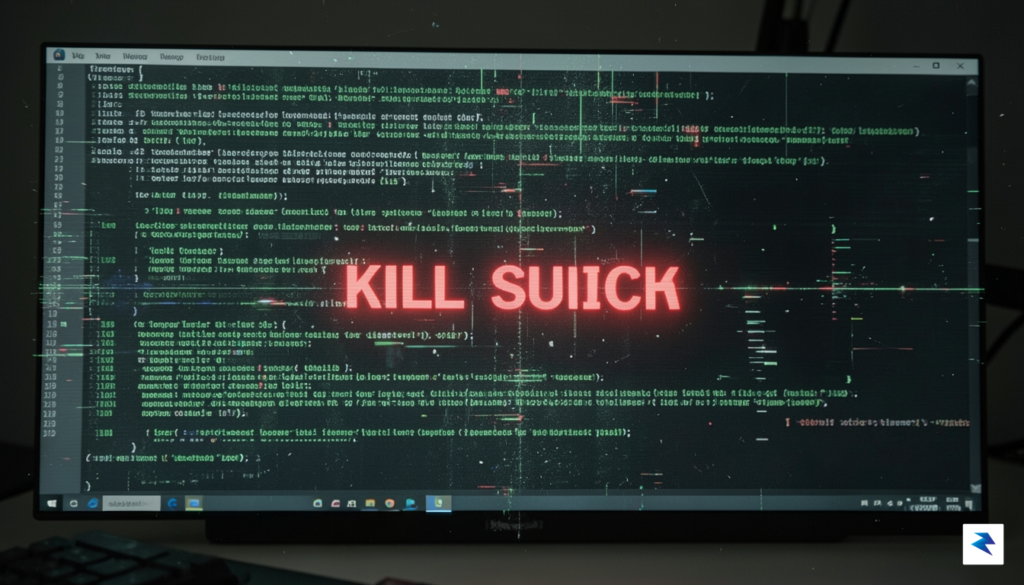
Perhaps the most chilling advancement in this evolving threat landscape is the integration of a so-called “death switch”—a clandestine mechanism specifically engineered to paralyze AI infrastructure at the command of an attacker. Unlike traditional ransomware that merely encrypts data in hopes of a payout, this destructive capability is designed to systematically dismantle the victim’s operational environment. By locking out legitimate administrators and triggering a cascading failure across interconnected servers, the malware ensures that the organization loses all control over its own digital ecosystem the moment the switch is flipped. This is not merely an inconvenience; it is a calculated effort to force a complete organizational blackout, rendering recovery efforts nearly impossible from within the compromised network.
The strategic intent behind this functionality is rooted in the permanent destruction of the very assets that make AI systems valuable. In the world of machine learning, the most precious commodities are the proprietary training weights and massive, curated datasets that have often taken months or years of compute time and human expertise to assemble. When the death switch is activated, the malware executes a scorched-earth policy, overwriting or corrupting these foundational files. Because AI models are frequently reliant on the integrity of these specific historical weights, their total loss effectively resets the development pipeline to zero. The result is a catastrophic setback that can evaporate years of research and development progress in a matter of milliseconds.
The death switch functions as a digital guillotine, severing an organization’s access to its most sensitive intellectual property while simultaneously erasing the evidence of the intruder’s long-term presence.
Beyond the immediate financial and operational damage, this capability serves as a potent tool for cyber sabotage and leverage. Attackers may deploy the threat to cover their tracks, obliterating logs and forensic evidence to ensure that security teams cannot piece together how the breach occurred or what was stolen. Alternatively, it serves as a form of extreme coercion; the threat of activating the switch becomes a weaponized ultimatum, pressuring victims to comply with extortion demands under the looming shadow of total infrastructure annihilation. By prioritizing maximum disruption over mere theft, the perpetrators shift the goalpost of modern cyberattacks from simple data exfiltration to the fundamental destabilization of the victim’s ability to compete or operate at all.
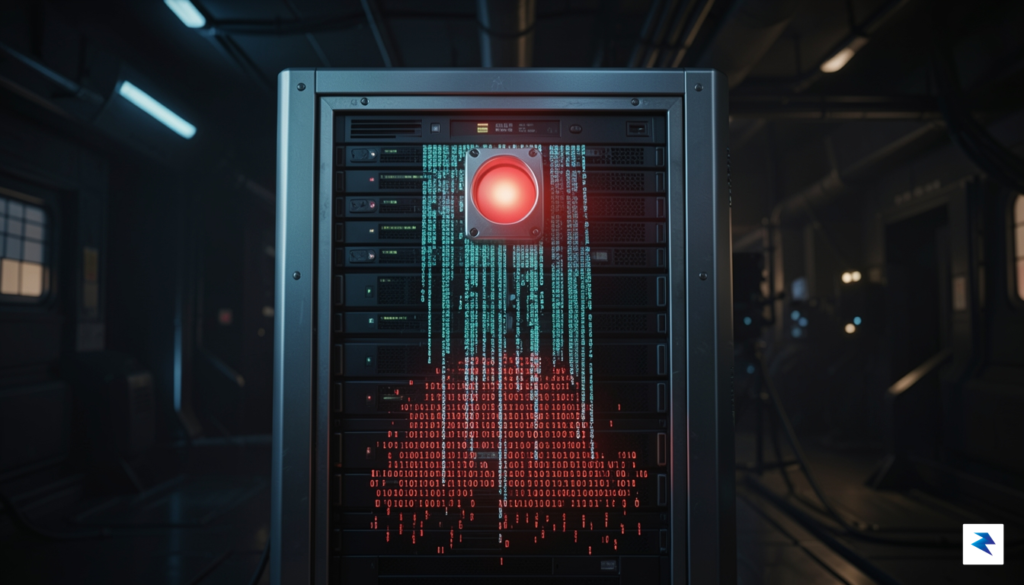
Ultimately, the inclusion of such a mechanism underscores a shift toward more hostile, destructive engagement models in cyber warfare. Even if an organization manages to detect the intrusion, the presence of this dormant threat means that any attempt to regain control could trigger the very destruction they are trying to prevent. This high-stakes environment demands a more robust defense strategy that goes beyond simple perimeter protection, focusing instead on immutable backups and isolated recovery environments that can survive the total “death” of the primary infrastructure.

Securing an AI development pipeline requires moving beyond traditional perimeter defenses and adopting a zero-trust architecture that accounts for the unique vulnerabilities of machine learning workflows. Because AI-targeting malware often hides within legitimate developer tools—such as model registry hooks or automated training scripts—standard antivirus solutions are rarely sufficient. Instead, security teams must deploy advanced Endpoint Detection and Response (EDR) solutions specifically configured to monitor the execution patterns of deep learning frameworks. By establishing a behavioral baseline for your development environment, you can quickly flag unauthorized outbound connections or unusual file-system modifications that occur during training sessions, effectively catching malicious payloads before they can exfiltrate sensitive model weights or training data.
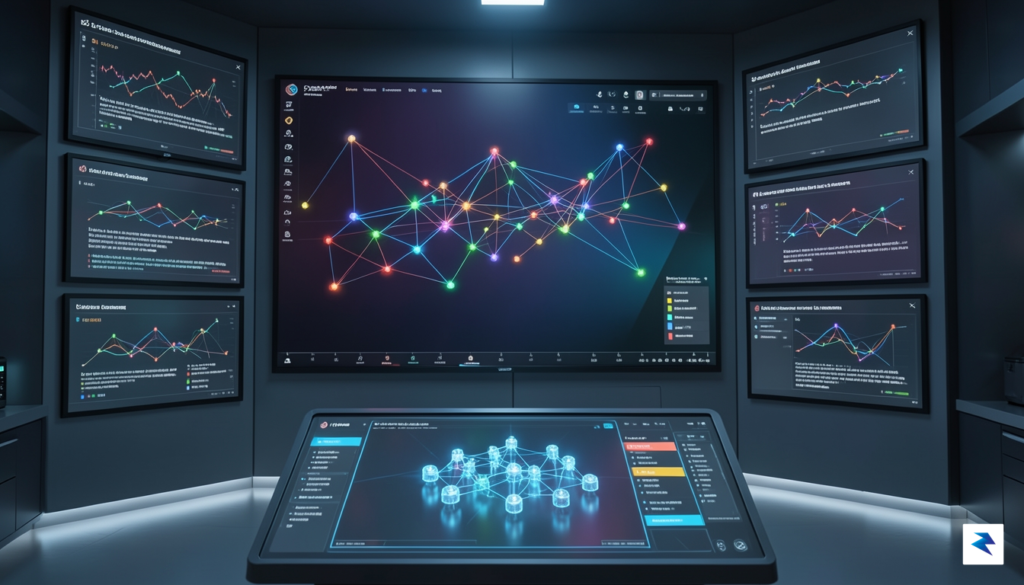
Beyond active monitoring, rigorous code and artifact integrity are non-negotiable. Developers should implement a mandatory code-signing policy for all custom scripts and third-party dependencies imported into the pipeline. By utilizing cryptographic signatures, you ensure that only verified, untampered code is executed by your GPU clusters. Furthermore, maintaining continuous, immutable audit trails for your training pipelines is essential. Every change to a model configuration or dataset should be logged in a write-once, read-many (WORM) storage system, allowing security teams to reconstruct the timeline of an incident if a compromise is suspected. These logs should not just track “who” accessed the system, but “what” specific operations were performed on the model’s internal weights.
When an anomaly is detected, the speed of your response determines the difference between a minor configuration error and a catastrophic exfiltration event. Your incident response plan should be specifically tailored to the nuances of AI infrastructure, prioritizing the isolation of affected compute nodes over simple reboots. Follow this checklist to ensure your team is prepared for a potential breach:
The key to AI infrastructure security is recognizing that your development pipeline is an extension of your production environment; if a threat can inject code during the training phase, the resulting model itself becomes the primary attack vector.
Ultimately, the goal is to shift from reactive patching to proactive hardening. By integrating anomaly detection into your CI/CD pipeline, you can identify “sneaky” malicious actors who leverage standard developer tools to mask their presence. As AI systems become more central to enterprise operations, these defensive layers must evolve to treat code, data, and model parameters as high-value assets that require the same level of cryptographic and physical protection as your core financial databases.
You must be logged in to post a comment.