How to Use Meta’s New Parental Controls on Threads
Understanding the New Parental Controls on Threads As Threads rapidly solidifies its position as a prominent social media destination,…
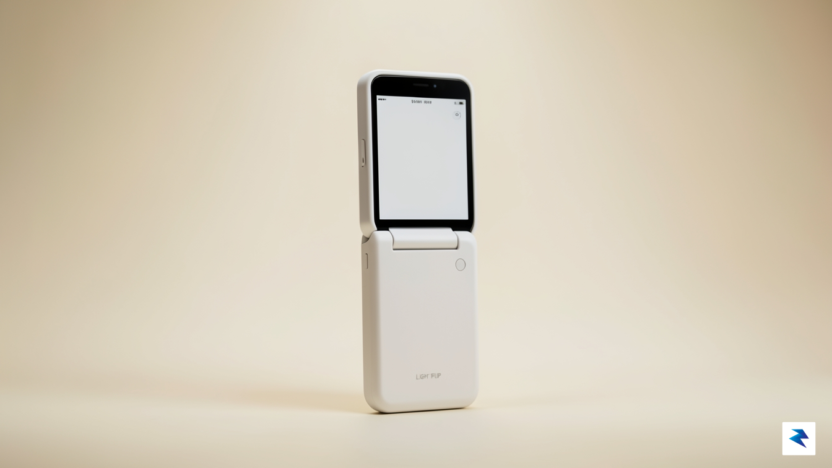

For years, the modern smartphone was marketed as a miracle of connectivity, promising to tether us to the entirety of human knowledge and our social circles simultaneously. Yet, for many, this constant accessibility has curdled into a relentless source of anxiety and fragmentation. We have become involuntary participants in an Attention Economy, where the primary currency is our focus and the primary product is our time. Algorithms designed to maximize engagement prioritize outrage, infinite scrolling, and addictive notifications, effectively hijacking our dopamine pathways and thinning our ability to engage in deep, uninterrupted thought. This environment has fostered a growing collective burnout, leaving users feeling like they are perpetually “on” yet emotionally drained, leading to a profound desire to sever the digital umbilical cord.

This widespread fatigue has given rise to the philosophy of digital intentionality. Rather than viewing the retreat from high-powered devices as a regression or a Luddite rejection of progress, proponents see it as a necessary reclamation of autonomy. The movement toward simpler hardware is not about abandoning technology altogether; it is about choosing tools that serve a specific, defined purpose rather than tools that demand our constant participation in a global feedback loop. By stripping away the cameras, social media integrations, and constant push alerts, users are finding that they can finally quiet the noise of the digital world, allowing for a return to presence, solitude, and the ability to focus on the immediate surroundings.
The true cost of a smartphone is not measured in dollars, but in the erosion of our capacity for sustained attention and the quiet moments of reflection that define a meaningful life.
This shift represents a fundamental philosophical recalibration of our relationship with the devices in our pockets. We are moving away from the era of “maximalist connectivity,” where more data and more access were inherently better, toward a more measured, minimalist approach. By opting for a device that restricts functionality to the essentials—calling, texting, and basic utility—we are effectively setting boundaries on how and when the digital world can intrude upon our physical reality. This transition is less about the hardware itself and more about the psychological relief that comes with knowing that when you leave your home, you are not carrying a portal to every global crisis and social obligation in your hand. Ultimately, opting for a simpler device is a proactive step toward regaining control over the most precious commodity we possess: our own conscious attention.
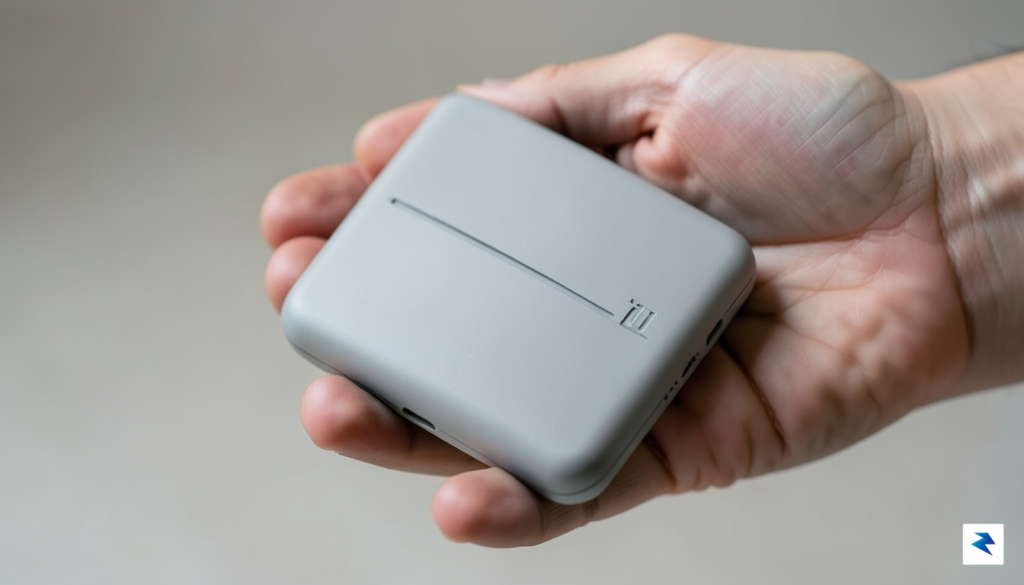
At first glance, the Light Flip feels like an artifact from a more deliberate era, yet it avoids the clunky, plastic aesthetic that characterizes most disposable feature phones on the market today. Its physical identity is defined by a commitment to essentialism, where every curve and button serves a specific, quiet purpose. Unlike the glass-sandwich smartphones that dominate our pockets, the Light Flip utilizes a high-quality matte finish that resists fingerprints and offers a reassuring, tactile grip. This is not a device designed to be invisible or cheap; it is an object crafted to be held, opened, and operated with a sense of ceremony that modern touchscreens have long since abandoned.
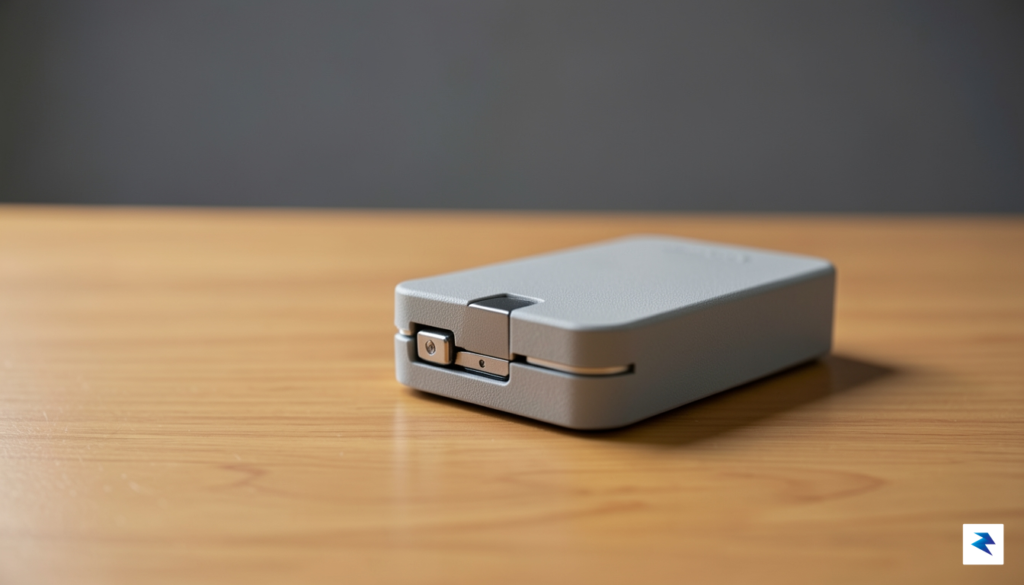
The core of the device’s appeal lies in its “intentional design” philosophy, a refreshing departure from the feature-bloat that plagues standard mobile technology. By stripping away the high-definition cameras, vibrant color displays, and infinite scroll feeds, Light has created a tool that demands focus rather than distraction. The monochrome E-ink display is the hallmark of this approach; it is gentle on the eyes and provides a crisp, static visual experience that feels more like reading a page in a book than interacting with a glowing portal. Because the screen doesn’t refresh at high frequencies, the entire user experience slows down, forcing the user to engage with the phone only when strictly necessary.
The true luxury of the Light Flip is not in what it adds, but in the peace of mind it provides by removing the digital noise we have collectively accepted as the norm.
Beyond the screen, the mechanical satisfaction of the flip mechanism cannot be overstated. The hinge is engineered to provide a robust, snappy action that acts as a physical boundary between your digital interactions and the rest of your life. When you snap the phone shut, the session is over—there is no lingering notification or soft glow to pull you back in. This creates a psychological “closing” of the digital loop, which is a rare commodity in an age of perpetual connectivity. The keyboard, while compact, offers a tactile click that provides honest feedback, ensuring that every message sent feels like a conscious choice rather than a frantic, mindless tap on a piece of glass.
Ultimately, the Light Flip distinguishes itself through the marriage of premium industrial design and a radical, minimalist utility. It is not merely a “dumb phone” in the pejorative sense; it is a sophisticated instrument for those who want to reclaim their attention span without sacrificing the reliability of a well-built tool. By choosing materials that age gracefully and a form factor that feels significant in the palm, Light has successfully elevated the flip phone from a relic of the past into a modern necessity for the mindful user.
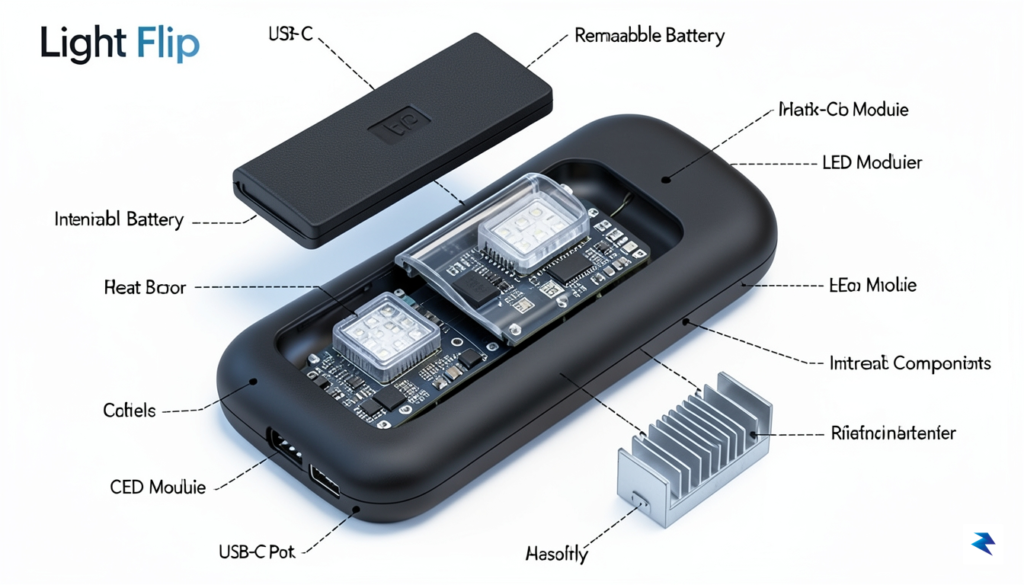
In an era where premium smartphones are increasingly designed as sealed, disposable monoliths, the Light Flip feels like a radical act of defiance. By prioritizing longevity and repairability, the device offers a refreshing return to the era when hardware was built to serve the user for years rather than months. The inclusion of a user-replaceable battery is perhaps the most significant nod to this philosophy. While most modern manufacturers glue components together to shave off a few millimeters of thickness, the Light Flip recognizes that the battery is the first component to degrade. By allowing owners to simply pop off the back cover and swap in a fresh power cell, the phone effectively doubles its natural lifespan, ensuring that a simple chemical decline doesn’t necessitate an expensive device upgrade.
Beyond the internal power management, the device embraces the modern necessity of the USB-C standard. This transition away from proprietary charging cables—which have long been a source of frustration for consumers—means that the Light Flip integrates seamlessly into a modern digital ecosystem. Whether you are at a coffee shop, in your car, or traveling abroad, you can rely on the same universal cable you use for your laptop or tablet to keep your flip phone powered. This commitment to interoperability underscores a design ethos that values convenience over the walled-garden approach that dominates the current tech landscape. It is a quiet, “boring” specification that quietly elevates the user experience by removing unnecessary friction from daily life.
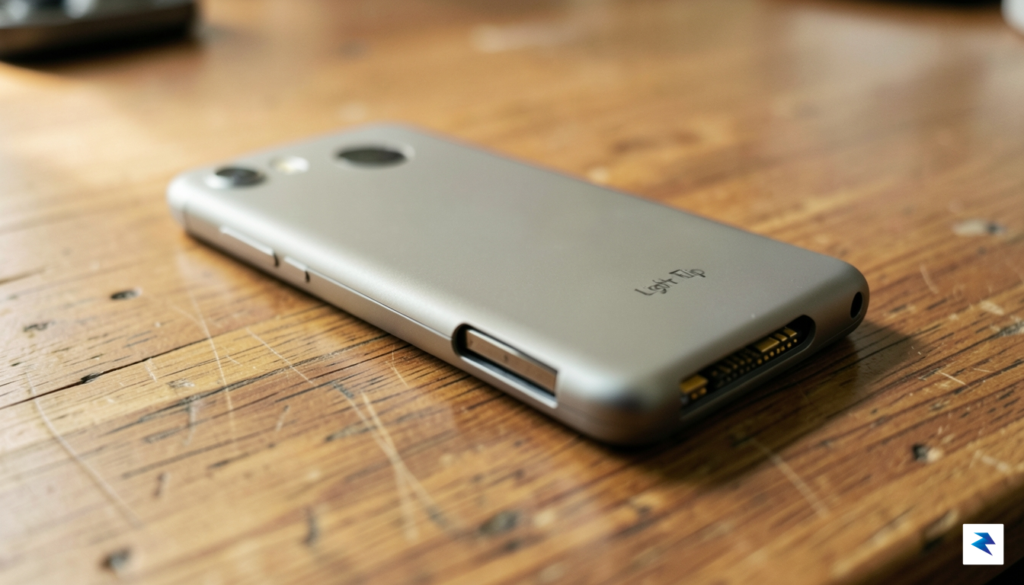
True high-end design is not about how many features you can pack into a chassis; it is about how much control you grant the user over their own property.
Furthermore, the integration of 5G connectivity ensures that this device remains a practical daily driver for years to come. Many “dumb” or minimalist phones have historically struggled with cellular compatibility as carriers sunset older 3G and 4G networks, turning otherwise functional hardware into electronic waste. By baking 5G capability into the Light Flip, the developers have future-proofed the device against the rapidly changing telecommunications infrastructure. This technical foresight allows users to enjoy the benefits of a distraction-free lifestyle without worrying about dropped calls or service gaps as mobile networks evolve. It is this combination of forward-thinking connectivity and retro-inspired repairability that makes the hardware feel less like a temporary toy and more like a permanent, reliable tool for the modern age.
In our current landscape of hyper-connectivity, the smartphone has evolved into a persistent tether, demanding our attention through a relentless stream of notifications, algorithmic feeds, and ephemeral digital rewards. This constant state of engagement creates a subtle but pervasive friction in our daily lives, where the boundary between being present and being distracted has all but vanished. By stripping away these infinite layers of software and social media integration, the Light Flip proposes a radical alternative: a device that prioritizes the user’s focus over the platform’s engagement metrics. When we remove the lure of infinite scrolling and the constant ping of social validation, we aren’t losing a tool; rather, we are reclaiming the mental bandwidth that was previously surrendered to a glowing glass rectangle.
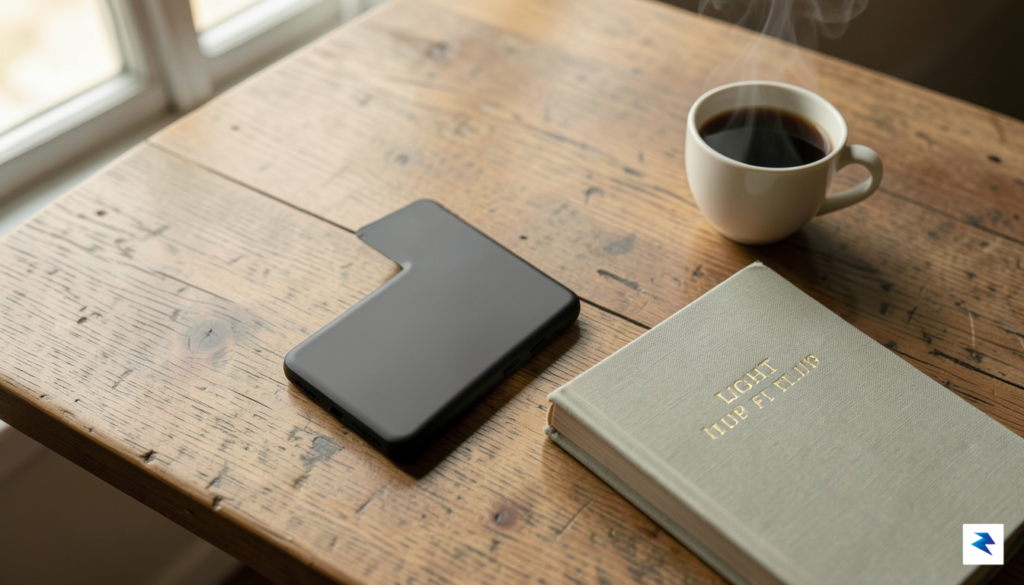
Admittedly, moving toward a device with such limited functionality requires navigating a significant shift in expectations. Users must confront the reality of life without integrated ride-sharing apps, streaming music platforms, or pocket-sized, turn-by-turn navigation systems. While these omissions might initially feel like a regression, they actually serve as catalysts for a return to more intentional, analog behaviors. Without the safety net of constant GPS, we are encouraged to learn our environments and interact with the physical world in ways that foster autonomy. When music isn’t available at the touch of a button, we might find ourselves listening to the ambient sounds of our surroundings or engaging in conversation with those sitting across from us. This transition forces a recalibration of habits that are often performed on autopilot.
The true value of minimalist technology lies not in what it can do, but in the space it creates for the user to exist without the pressure of a digital persona.
Ultimately, the argument for “dumb” technology is not one of technological inferiority, but one of intentional design. By simplifying our primary mode of communication, we effectively lower the barrier to real-world presence. When the device in your pocket ceases to be a portal for mass distraction, it transforms back into what it was always meant to be: a simple tool for communication. This shift inevitably enhances our ability to participate in the world around us, allowing us to witness moments without the reflexive urge to document, curate, or share them. In trading the hyper-connected “smart” lifestyle for the deliberate friction of a flip phone, we aren’t just changing our hardware—we are choosing to prioritize our own peace of mind over the convenience of a digital leash.

Transitioning from a high-powered smartphone to the Light Flip is not merely a hardware switch; it is a fundamental shift in how you interact with the digital world. During the first few days, you will likely experience the phantom vibration syndrome, where your hand instinctively reaches for a pocket that no longer holds a portal to infinite social media feeds or endless notifications. This initial period of “digital detox” can feel surprisingly jarring, as your brain adjusts to the silence of a device that doesn’t demand your attention every few minutes. However, as the novelty of the constant dopamine loop fades, you begin to notice the world around you with newfound clarity, finding that the absence of a hyper-connected screen actually creates more room for genuine engagement.
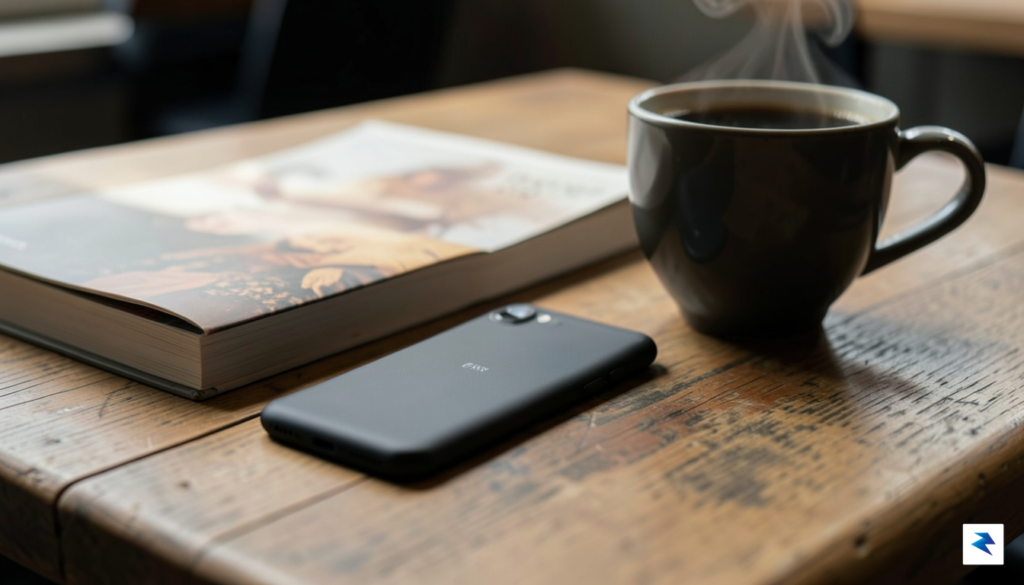
Navigating the world without the safety net of a smartphone presents its own set of unique challenges that require a bit of pre-planning. You may find yourself needing to look up directions before leaving the house, or perhaps you will have to rely on your memory or a physical map when you hit a snag in transit, rather than leaning on the ubiquitous GPS that once guided your every turn. While this might feel like an inconvenience at first, it fosters a deeper sense of autonomy and spatial awareness. You are no longer tethered to a blue dot on a map, but are instead an active participant in your journey, forced to pay attention to street signs and landmarks in a way that modern technology has made us largely forget.
The true value of the Light Flip isn’t found in what it can do for you, but in what it stops you from doing to yourself.
Socially, opting out of the “app-heavy” lifestyle can invite some curious, and sometimes skeptical, reactions from your peers. Friends might joke about your “retro” choice or express concern about how to reach you via group chats, but this friction is often the catalyst for more meaningful communication. Instead of exchanging fragmented memes or quick, shallow reactions, you may find that people start calling you more often or making more concerted efforts to meet in person. This shift doesn’t necessarily make you an outcast; rather, it sets a boundary that forces your social circle to engage with you on a more human level, free from the distraction of competing notifications.
Ultimately, the trade-off is almost universally worth the temporary discomfort. By stripping away the clutter of browser tabs, endless emails, and addictive algorithmic feeds, the Light Flip grants you something far more valuable than convenience: it grants you your focus back. You will likely find that your anxiety levels drop as the constant pressure to be “plugged in” evaporates, leaving you with a sense of mental space that feels almost luxurious in the modern age. It is a bold, deliberate choice to prioritize your own peace of mind over the relentless demands of the attention economy, proving that sometimes, less truly is more.
You must be logged in to post a comment.