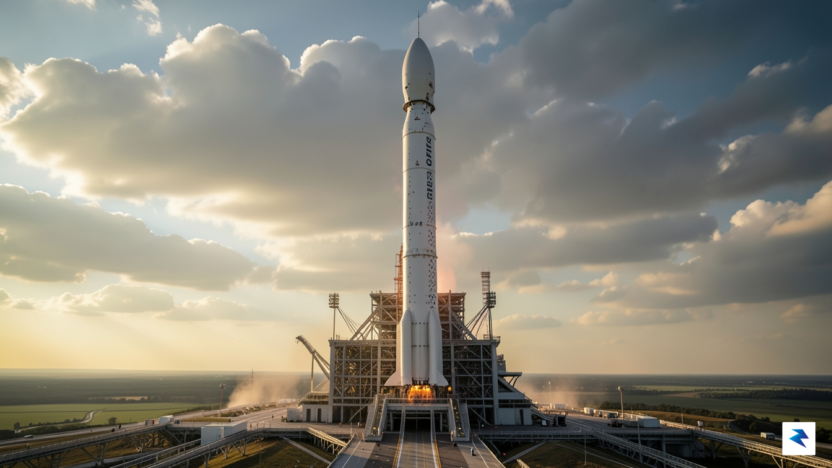
The New Glenn Ambition: A Strategic Pivot
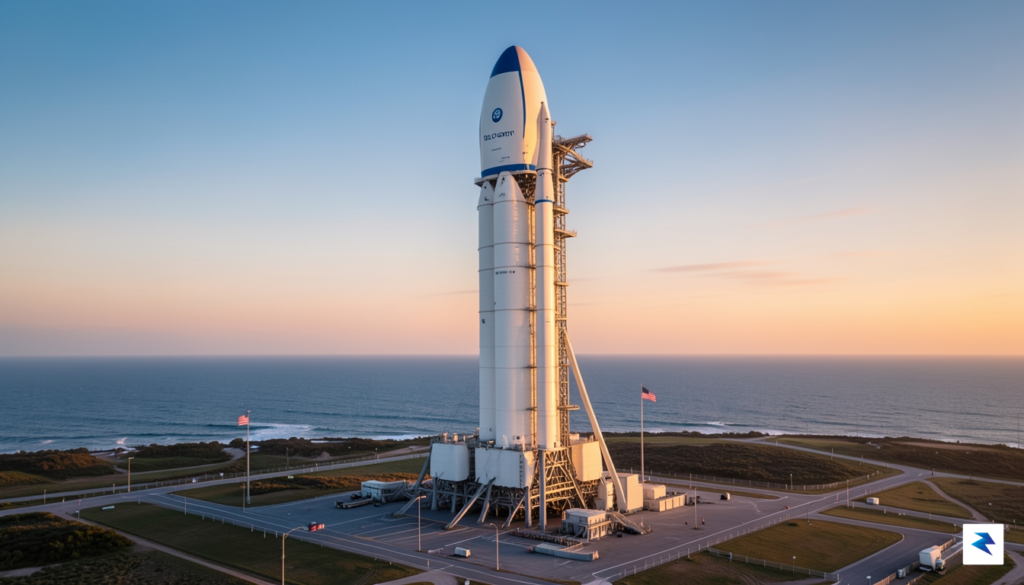
At the heart of Blue Origin’s long-term strategy lies the New Glenn, a heavy-lift orbital launch vehicle designed to fundamentally alter the economics of space access. Unlike the New Shepard, which serves as a suborbital vehicle for short-duration tourism and research flights, New Glenn is engineered for the rigors of orbital velocity and deep-space missions. With a massive 7-meter fairing and a first stage designed to be reused up to 25 times, the rocket is built to accommodate an expansive range of payloads, from massive telecommunications satellite constellations to scientific hardware destined for lunar exploration. This transition from the niche suborbital market to the highly competitive heavy-lift sector is not merely a product upgrade; it is the realization of Jeff Bezos’ core vision for establishing a permanent, industrial presence in space.
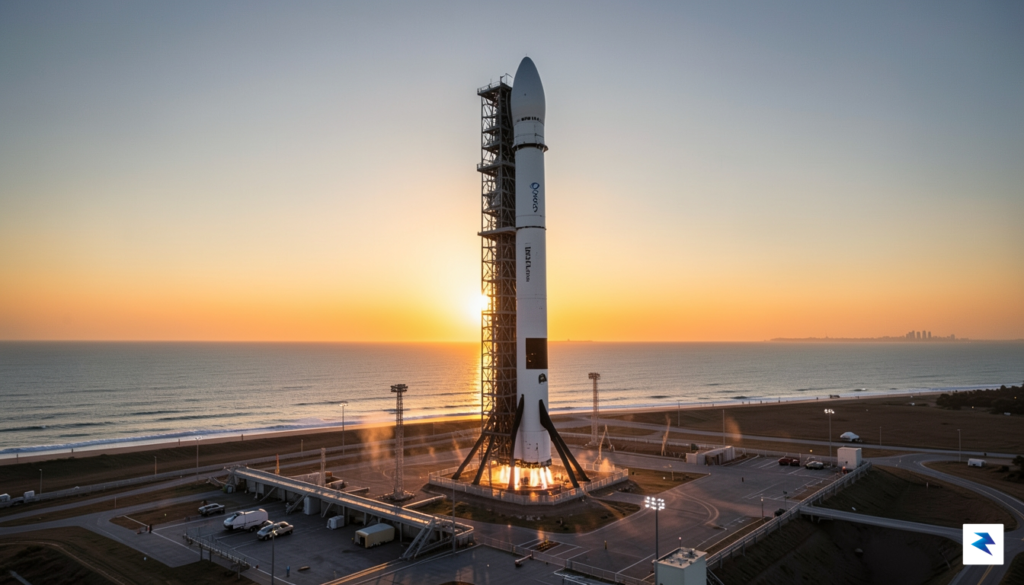
For Blue Origin, achieving heavy-lift capability is the “holy grail” of commercial viability. While the suborbital New Shepard has provided vital experience in vertical takeoff and landing technology, New Glenn represents the company’s entry into the multi-billion-dollar market for government and commercial heavy-lift launches. By prioritizing a massive payload capacity—capable of lofting more than 13 metric tons into geostationary transfer orbit and over 45 metric tons into low Earth orbit—the company is positioning itself as a primary contender against established industry titans. The ability to reliably deliver large-scale hardware into orbit is the foundational requirement for the company’s broader “Blue Moon” lunar initiatives, making the success of this rocket a critical prerequisite for their future deep-space ambitions.
The 2026 launch window serves as a definitive turning point, marking the moment Blue Origin pivots from a decade of intensive research and development toward becoming a reliable, active service provider in the orbital space economy.
The revised timeline for 2026 is far more than an operational target; it is a vital recalibration following recent setbacks at the Cape Canaveral launch site. By moving beyond the development phase and committing to this specific window, the company is signaling to stakeholders, government contractors, and the commercial satellite industry that New Glenn is ready to transition from a theoretical heavy-lift vehicle to a flight-ready machine. Successfully reaching the pad by 2026 will demonstrate that Blue Origin has overcome its early infrastructure hurdles and is prepared to sustain the high-cadence launch schedule necessary to dominate the orbital market. Ultimately, this timeline represents the company’s resolve to prove that its engineering philosophy—focused on reusability and scale—can deliver the consistent, cost-effective performance required to sustain the next generation of space exploration.
Anatomy of the Setback: Lessons from the Launchpad
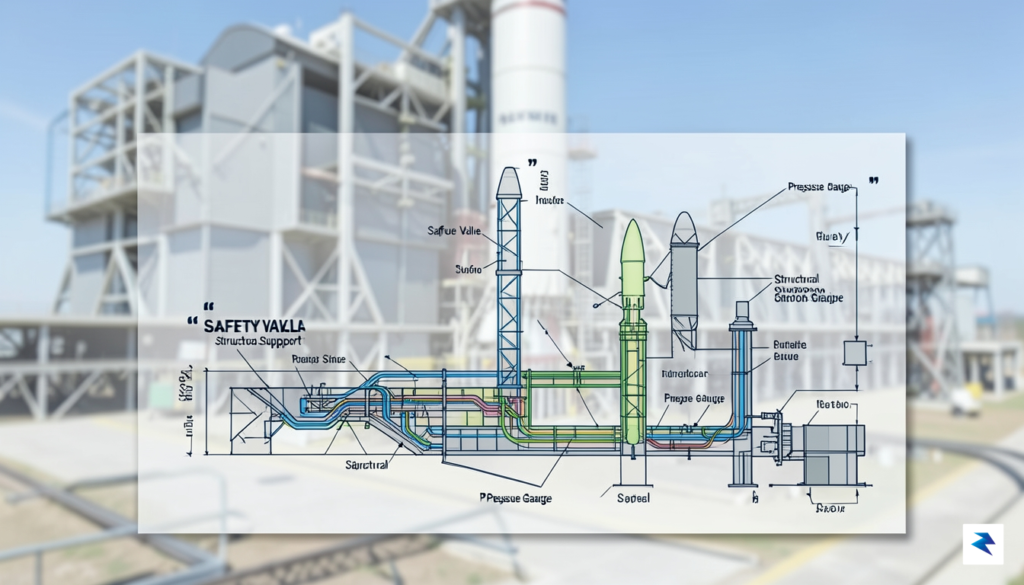
Spaceflight remains one of the most unforgiving engineering challenges in existence, where the margin for error is razor-thin and the consequences of mechanical failure are absolute. The recent incident at the Cape Canaveral launchpad, while disruptive, served as a sobering reminder of the immense pressures inherent in ground-based testing. Rather than viewing the event as a catastrophic setback, Blue Origin’s engineering teams have recalibrated their approach, framing the anomaly as a vital data-gathering exercise that has provided unprecedented insights into the structural integrity of their launch systems. This shift in perspective is essential for the aerospace industry, where the transition from theoretical models to real-world deployment often uncovers hidden variables that simulations simply cannot predict.
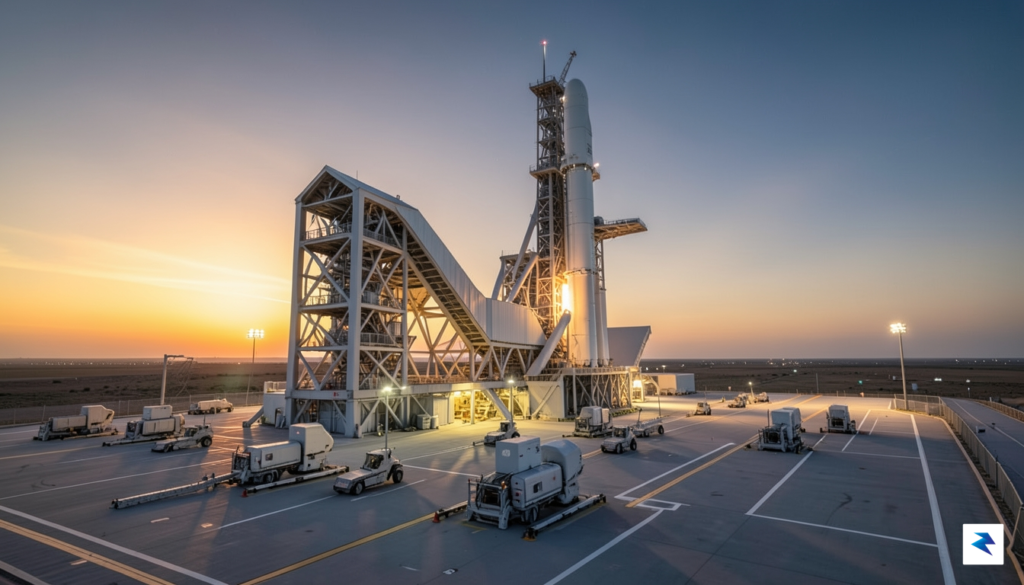
The incident has significantly accelerated the evolution of the company’s “fail fast, learn faster” philosophy, a methodology that prioritizes identifying structural weaknesses during the development phase rather than during active flight. By pushing the boundaries of hardware under controlled, high-stress conditions, the team has been able to pinpoint specific failure points that were previously obscured. This iterative development loop is now deeply integrated into the manufacturing process, ensuring that every piece of hardware undergoes more rigorous testing before it ever approaches a fuel tank. The goal is no longer just to reach the stars, but to build a foundation of reliability that can withstand the extreme thermal and mechanical loads of orbital flight.
Refining Safety and Procedural Oversight
In response to the data gathered from the Cape Canaveral event, the company has implemented sweeping procedural changes that fundamentally alter how they manage volatile propellant systems. Engineers have overhauled the fuel management protocols, introducing redundant sensor arrays and automated shut-off valves that provide an extra layer of protection during the critical loading phase. These systems are designed to detect micro-fluctuations in pressure or temperature that could indicate a potential rupture long before a catastrophic event occurs. By investing in these preemptive diagnostic tools, the team has successfully minimized the risks associated with rapid-turnaround rocket development.
The most valuable lessons in aerospace are rarely found in successful launches, but in the diagnostic data retrieved from the moments where the hardware reached its physical limits.
Furthermore, structural stress testing has become significantly more intensive, with new protocols requiring components to endure vibration and pressure cycles that exceed expected flight conditions by substantial margins. This “stress-to-failure” strategy ensures that the hardware is not merely sufficient for the mission, but resilient enough to handle unforeseen anomalies. These upgrades, ranging from improved metallurgy in engine components to enhanced software safeguards for fuel handling, reflect a mature approach to safety culture. By treating every setback as a catalyst for innovation, the team is building a more robust architecture for their 2026 launch window, demonstrating that true progress in space exploration is built upon the lessons learned on the ground.
The 2026 Roadmap: Technical Milestones and Challenges

The journey to a successful orbital launch by 2026 hinges on the maturation of the BE-4 engine, a powerhouse of liquid oxygen and liquefied natural gas technology. As the heart of the New Glenn vehicle, these engines must demonstrate unparalleled consistency during high-pressure combustion cycles. Engineers are currently focused on fine-tuning the turbomachinery and thermal management systems to ensure that the engines can withstand the immense stresses of liftoff while maintaining the precision required for deep-space insertion. Because the BE-4 is designed for reusability, every ground test is an exercise in proving that the hardware can endure multiple ignition cycles without performance degradation or material fatigue.
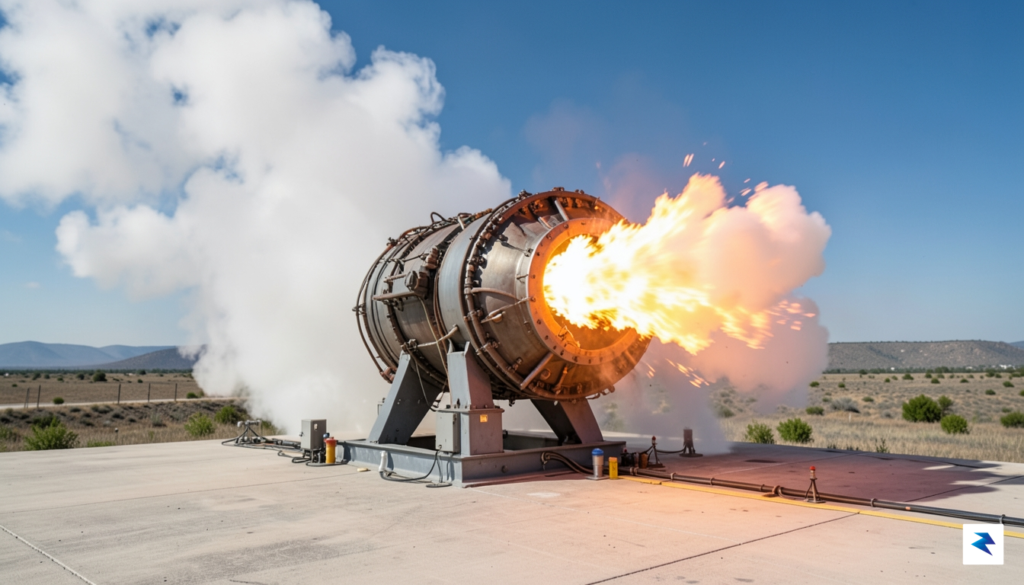
Beyond the propulsion systems, the integration of an autonomous flight termination system (AFTS) represents a critical safety milestone. Unlike traditional systems that rely on ground-based command links, an autonomous setup utilizes onboard sensors and logic to determine if a vehicle has deviated from its prescribed safety corridor. Implementing this technology requires rigorous software validation and fail-safe redundancy to ensure that the rocket remains under control during the most volatile stages of ascent. This transition from manual to automated oversight is essential for operating within the crowded airspace of the Florida coastline, where flight safety protocols are strictly enforced.
The path to the pad is also paved with the necessity of static fire testing, where the fully integrated vehicle is anchored to the launch stand to ignite its engines at full thrust. This process is the ultimate stress test for the rocket’s structural integrity and fluid systems, allowing engineers to verify that the plumbing, avionics, and thermal protection systems function in harmony before the vehicle ever clears the tower. These tests are not merely rehearsals; they are comprehensive data-gathering missions that identify potential vibration issues or software glitches that could compromise a mission. Successful static fires serve as the final gatekeeper, providing the empirical confidence needed to move toward a live countdown.
Success in 2026 will not be defined by a single breakthrough, but by the seamless orchestration of recovery and reliability; the vertical landing system must prove it can return the booster to the platform with the same surgical precision required for the initial ascent.
Finally, the vertical landing recovery system remains one of the most ambitious engineering hurdles for the program. Successfully returning the New Glenn booster to a landing ship or pad requires the flawless execution of atmospheric re-entry maneuvers, which involve complex aerodynamic steering and precision throttling. Engineers must perfect the guidance, navigation, and control algorithms to ensure the booster can execute a soft touchdown even in challenging maritime conditions. Mastering this recovery technology is essential for the economic viability of the project, as it directly impacts the cadence of future launches and the overall sustainability of the mission architecture.
The New Space Race: Blue Origin vs. SpaceX and the Heavy-Lift Market
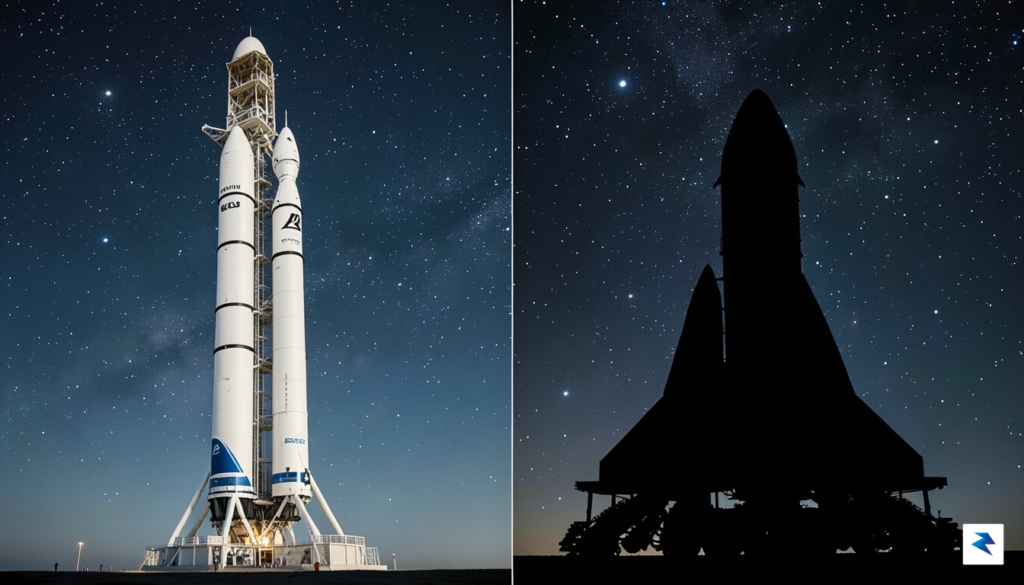
The landscape of commercial spaceflight has evolved far beyond the government-led monopolies of the 20th century, transforming into a high-stakes arena where private enterprise dictates the pace of innovation. For years, SpaceX has operated as the undisputed heavyweight champion, leveraging the workhorse reliability of the Falcon 9 and the sheer power of the Falcon Heavy to dominate launch frequencies. However, the industry is currently undergoing a massive structural shift. As NASA increasingly pivots toward commercial partnerships for lunar exploration and deep-space missions, the demand for reliable, high-capacity launch vehicles has reached a fever pitch. Blue Origin, long viewed as the methodical tortoise to SpaceX’s swift hare, is now under immense pressure to prove that its New Glenn rocket can provide a genuine, cost-effective alternative in a market that no longer accepts delays.

At the heart of this competition is the quest for heavy-lift dominance. New Glenn is designed to compete directly in the same class as the Falcon Heavy, boasting a massive seven-meter fairing that offers nearly double the payload volume of its competitors. While SpaceX is currently pushing the boundaries of physics with the gargantuan Starship—a fully reusable system designed for interplanetary transit—New Glenn targets the immediate, lucrative niche of heavy commercial satellite constellations and government payloads. By focusing on reusability, specifically aiming for a first-stage booster designed for 25 flights, Blue Origin is chasing the same economic “holy grail” that allowed SpaceX to slash the cost of accessing low Earth orbit. If New Glenn can achieve this target, it would fundamentally alter the cost-per-kilogram equation that currently keeps many satellite operators tethered to a single provider.
The true measure of the modern space race will not be who reaches orbit first, but who can sustain the highest flight cadence while maintaining the lowest cost structure for commercial clients.
The urgency for a successful 2026 launch is driven by the rapid expansion of global internet constellations, which require dozens of launches per year to maintain their orbital footprint. These mega-constellations cannot rely on a single launch provider without creating a critical bottleneck in their business models. Consequently, the industry is desperate for redundancy. By establishing New Glenn as a viable, heavy-lift contender, Blue Origin is not just aiming to win a technological contest against Elon Musk’s empire; it is positioning itself as a foundational pillar of a multi-provider space economy. The transition from experimental prototypes to a reliable, high-cadence launch service is the ultimate hurdle, and for Blue Origin, the 2026 mission represents the definitive moment to prove that they belong in the upper echelon of space exploration.
Strategic Implications for Amazon’s Project Kuiper
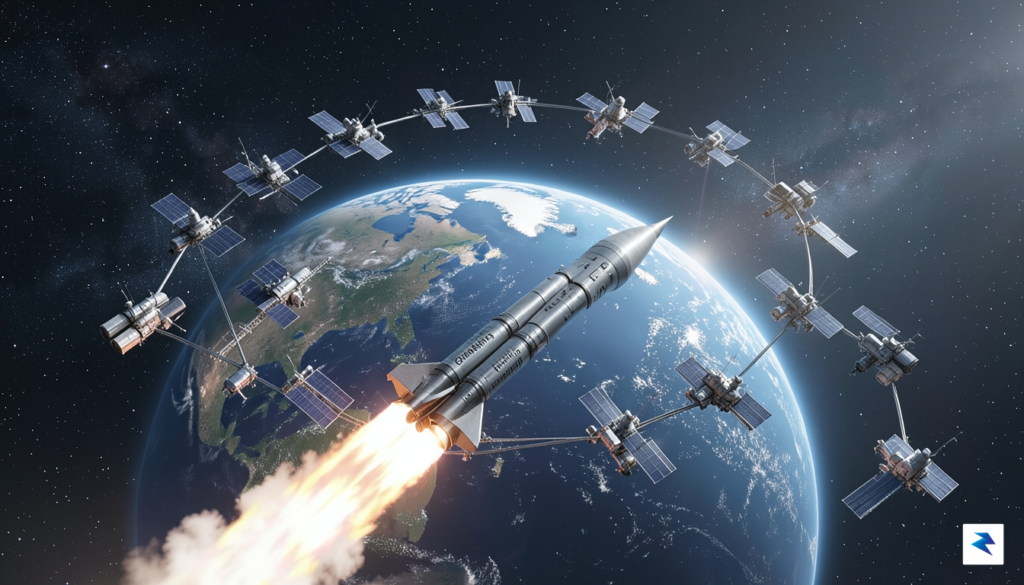
The development of the New Glenn rocket represents far more than a milestone for space tourism or commercial cargo; it is the essential infrastructure upon which the future of Amazon’s Project Kuiper rests. As Amazon seeks to compete directly with established satellite internet providers by deploying a constellation of over 3,000 satellites into low-earth orbit (LEO), the company faces a logistical challenge of unprecedented scale. Unlike smaller constellations, Kuiper requires a consistent, high-cadence launch schedule to maintain its orbital network, making the heavy-lift capabilities of New Glenn not just a strategic asset, but an existential requirement for the project’s long-term viability.
Reliance on third-party launch providers introduces a layer of vulnerability that Amazon is understandably eager to mitigate. By utilizing Blue Origin as its primary launch partner, the tech giant effectively insulates itself from the volatility of the external aerospace market. Currently, the industry is dominated by SpaceX, a direct competitor in the satellite internet space. Relying on a rival to deploy one’s own infrastructure creates a precarious dependency, where Amazon’s growth could be throttled by the scheduling priorities or pricing fluctuations of its biggest competitor. Vertical integration—owning both the satellite constellation and the rockets that carry them into orbit—is the only way for Amazon to guarantee that its deployment timelines remain under its own control.
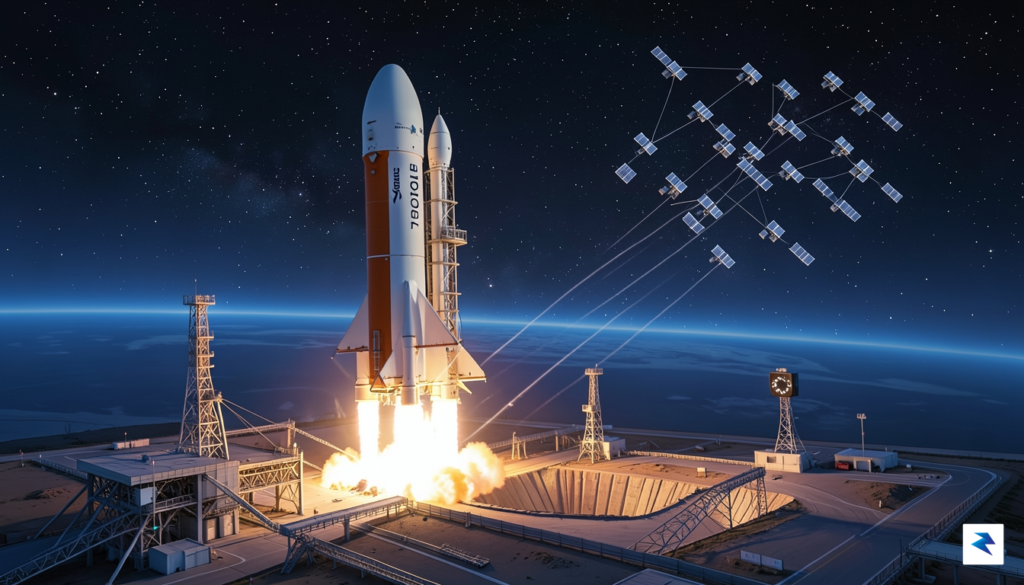
“The synergy between Amazon’s global connectivity goals and Blue Origin’s heavy-lift engineering is the cornerstone of a new era in corporate space dominance, where the ability to launch is just as important as the technology being launched.”
Furthermore, the economics of Project Kuiper depend heavily on the cost-per-kilogram of payload delivered to orbit. New Glenn is designed for reusability, a critical factor in driving down the massive expenses associated with launching thousands of satellites. If Blue Origin can successfully achieve its 2026 launch targets and ramp up production, the resulting economies of scale will provide Amazon with a significant cost advantage over competitors who must pay premium market rates for launch services. Without this internal pipeline, the financial burden of launching the Kuiper constellation could render the entire internet venture unsustainable. Consequently, the progress at the Cape Canaveral facility is not merely a technical concern for rocket scientists; it is the fundamental driver of Amazon’s ability to reshape the global telecommunications landscape.
The Future of Commercial Orbital Access
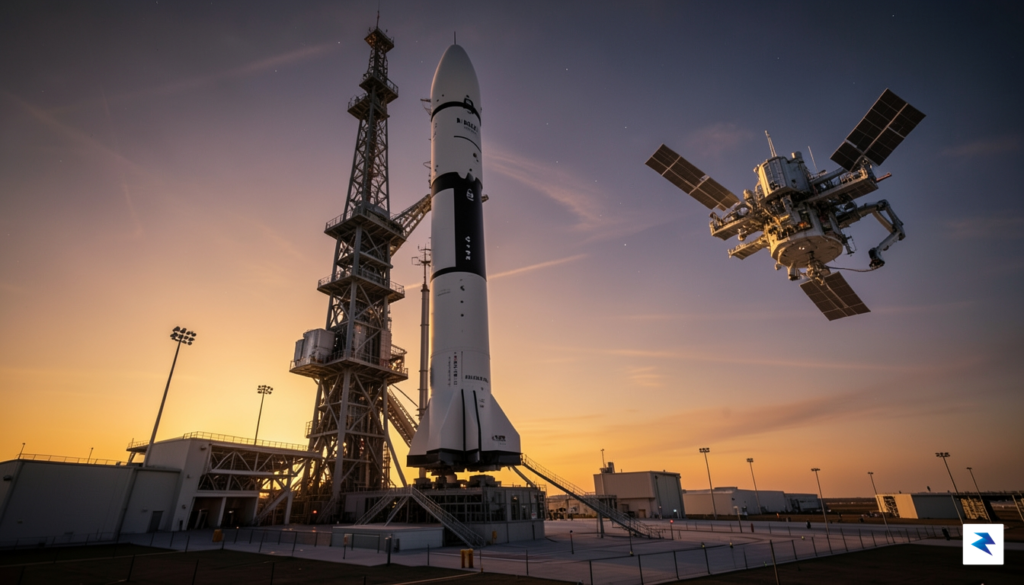
As we look toward the 2026 launch window, the success of the New Glenn program serves as far more than a corporate milestone; it acts as a critical bellwether for the entire commercial space sector. For decades, the high barrier to entry for orbital missions has kept space exploration confined to a handful of government agencies and ultra-exclusive projects. However, by aggressively pursuing the reusability of its heavy-lift vehicle, Blue Origin is fundamentally rewriting the economics of orbit. When the cost of delivering mass to space drops significantly, the industry moves closer to an era where space-based infrastructure is not just a scientific novelty, but a standard, reliable extension of our global economy.
The long-term potential of this shift is difficult to overstate, particularly as it pertains to the normalization of space manufacturing and advanced planetary exploration. With a vehicle capable of carrying substantial payloads, we can begin to envision a world where fiber optics, pharmaceuticals, and high-purity crystalline structures are manufactured in the unique conditions of microgravity. Furthermore, the infrastructure provided by such heavy-lift capabilities will be instrumental for the next generation of lunar outposts and deep-space missions. These endeavors require a steady, cost-effective supply chain that can only exist if we master the art of rapid, reusable orbital access.
“True progress in the orbital economy depends on the marriage of bold ambition and the quiet, often grueling patience of meticulous engineering.”
This transition also promises to unlock the long-discussed potential of space tourism, moving it from the realm of the ultra-wealthy toward a more accessible horizon. As launch systems become more reliable and flight cadences increase, the experience of space travel will undergo a maturation process similar to the early days of aviation. While the path to 2026 has been marked by technical hurdles and unforeseen setbacks, these challenges are the inevitable growing pains of a maturing industry. The patience invested in engineering today will pay massive dividends tomorrow, providing the structural foundation upon which humanity’s interplanetary future will be built. By prioritizing safety and performance over hasty timelines, the New Glenn program is ensuring that when the era of routine space commerce truly arrives, it will be built to last.