
The Science of Calm: How Slow Breathing Actually Rewires Your Brain
The Biological Connection: How Breath Shapes Brain Activity For millennia, across diverse cultures and contemplative traditions, the…


The United Kingdom government has embarked on a significant and contentious policy shift, integrating advanced facial age estimation technology into its asylum processing system. This move represents a marked departure towards automating a profoundly sensitive and critical aspect of asylum claims: the determination of age for individuals arriving without clear identity documents. Spearheaded by the Home Office, this controversial initiative aims to streamline what has historically been a complex and often protracted process, particularly concerning those who claim to be minors. The decision underscores a broader governmental push to leverage biometric tools in managing immigration flows, even amidst considerable scrutiny regarding the efficacy and ethical implications of such technologies.
The primary rationale articulated by the Home Office for deploying this technology is to address the persistent challenge of age disputes within the asylum system. Authorities contend that a proportion of asylum seekers claiming to be children are, in fact, adults, creating operational complexities and potentially diverting crucial resources from genuine minors. By introducing automated facial scanning, the government hopes to rapidly and objectively verify age, thereby reducing the number of protracted disputes and ensuring that vulnerable children receive appropriate care while simultaneously preventing adults from exploiting protections specifically designed for minors. This pursuit of administrative efficiency and the perceived need to curb potential misuse of the system are key drivers behind the policy’s implementation.
However, the legal framework surrounding unaccompanied asylum-seeking children is robust and internationally recognized, emphasizing the paramount “best interests of the child” principle, derived from conventions such as the UN Convention on the Rights of the Child. When an individual arrives in the UK claiming to be a minor, and their age is disputed, there is generally a presumption of minority if there is any doubt, placing the burden of proof on the authorities to demonstrate otherwise through comprehensive, human-led assessments. Children are afforded specific legal protections, including access to appropriate education, specialized social care, and distinct immigration procedures. Consequently, an incorrect age assessment can have profound, life-altering consequences, potentially exposing genuine children to adult detention facilities, criminal justice systems, or deportation to unsafe environments, fundamentally violating their rights and safety.
This stark contrast between the government’s drive for administrative expediency and the potential for severe human rights infringements forms the crux of the ongoing debate surrounding this policy. Despite the Home Office’s ambition to curb age disputes efficiently, a growing body of evidence, including expert reports, academic studies, and pilot program findings, highlights significant flaws and inaccuracies inherent in facial age estimation technologies. These systems often struggle with variations in ethnicity, nutrition, and environmental factors, leading to unreliable and biased results. Critics therefore argue that relying on such unproven and potentially flawed technology for such a high-stakes, life-altering decision risks unjustly categorizing genuine child asylum-seekers as adults, thereby exposing them to immense harm and violating their fundamental rights, all in the name of administrative convenience.

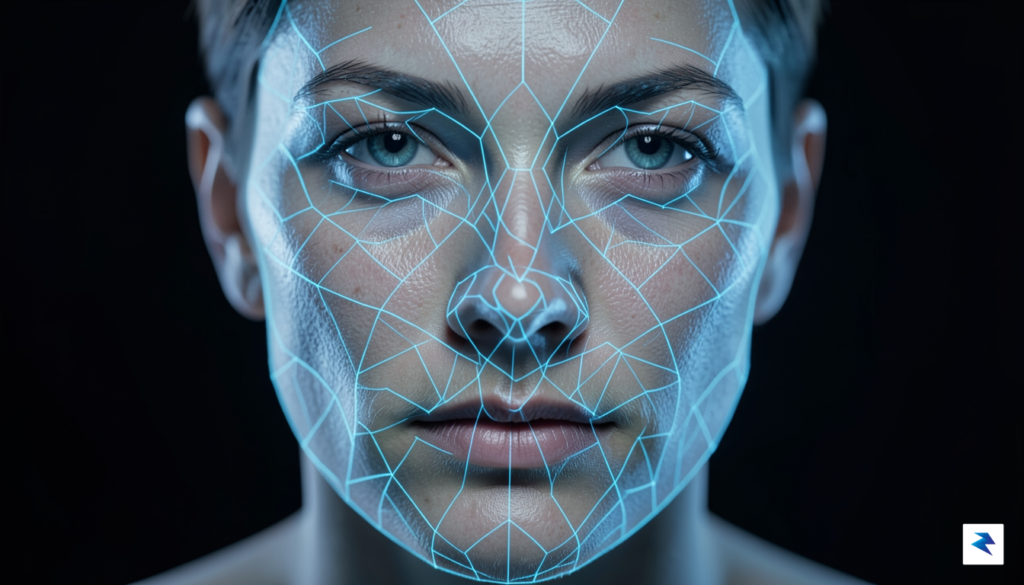
To understand how the UK government intends to assess the age of asylum-seekers, it is first necessary to distinguish between facial recognition and facial age estimation. While facial recognition is designed to identify a specific individual by matching their features against a database of known persons, facial age estimation is a form of demographic categorization. Instead of confirming identity, these machine learning models analyze the geometric structure of a face—such as the distance between the eyes, the contours of the jawline, and the texture of the skin—to predict where a person falls on a chronological spectrum. This process relies on probabilistic modeling, meaning the software assigns a statistical likelihood to a specific age range rather than providing an empirical, biological verification.
The underlying mechanics of this technology are heavily dependent on the composition of the training data. Developers feed these algorithms millions of images to teach them how “age” manifests visually, but if the training datasets lack diversity, the model’s performance becomes inherently skewed. When an algorithm is trained predominantly on specific demographics, it inevitably struggles to generalize those patterns to individuals from different ethnic or cultural backgrounds. For asylum-seekers, who often arrive from regions underrepresented in the proprietary datasets used by major tech firms, this leads to a dangerous “algorithmic mismatch.” The subtle facial markers that the software uses to determine age may be misinterpreted due to variations in bone structure, skin pigmentation, or even expressions influenced by environmental factors, leading to high error rates that have profound, real-world consequences.
“Facial age estimation is not a biological fact-checker; it is a mathematical guess calibrated by the biases of its creators and the limitations of its training data.”
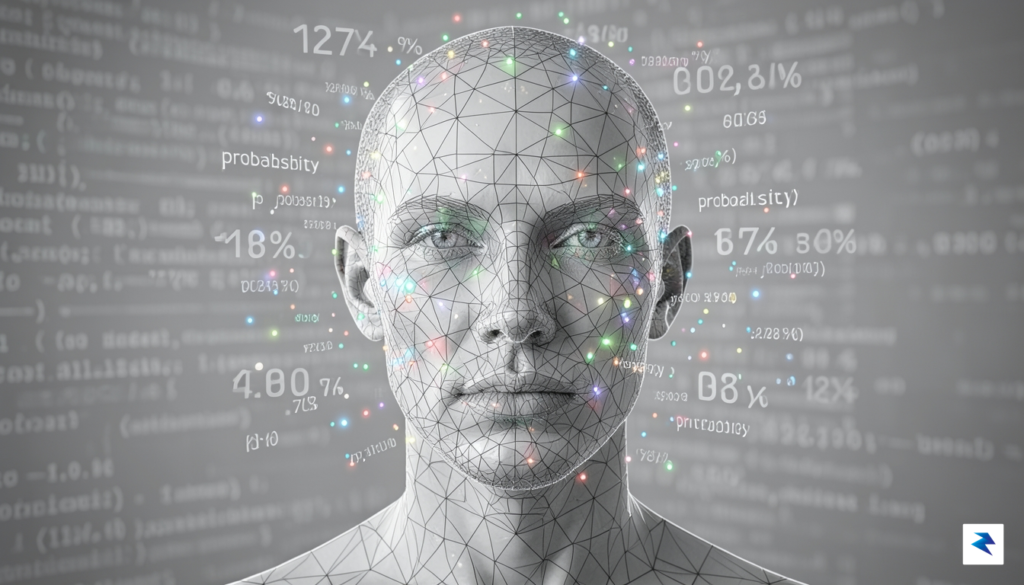
Furthermore, the marketing of such software often frames it as a “neutral” or “objective” tool, effectively masking the complexity of its failures. Because the technology functions as a black box, it is difficult for users to determine exactly why a certain age was predicted, or to account for the environmental stress and trauma that can alter a person’s perceived appearance. When this technology is deployed in high-stakes environments like immigration and border control, the margin for error is not merely a technical glitch—it is a potential violation of human rights. Relying on an algorithm that produces probabilistic estimations to make life-altering decisions regarding an individual’s legal status ignores the reality that human development is fluid, diverse, and resistant to the rigid categorizations of software.
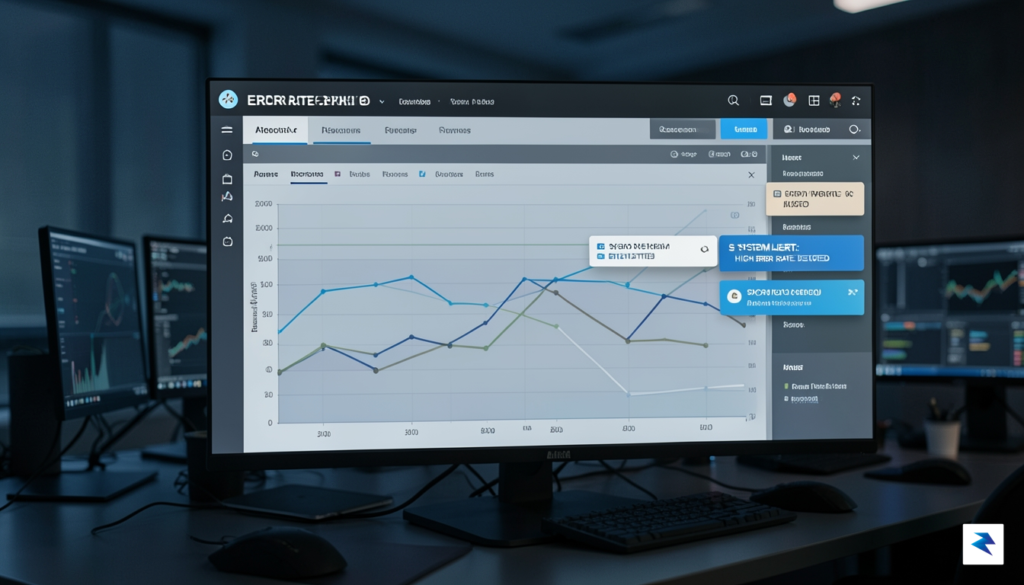
The reliance on facial recognition technology to determine the age of asylum seekers is underpinned by internal Home Office testing that paints a troubling picture of technical reliability. These assessments have revealed significant performance gaps, demonstrating that the software is far from the infallible tool that policymakers might hope for. Specifically, the data indicates that the algorithms are prone to both “false positives”—where a minor is incorrectly flagged as an adult—and “false negatives,” where an adult might be misidentified as a child. Given that the stakes involve the fundamental legal protections afforded to children under international law, these margins of error represent more than just technical glitches; they are potential catalysts for systemic human rights violations.
At the heart of the controversy is a documented “margin of uncertainty” that complicates the software’s output. When the technology analyzes facial geometry, it rarely provides a definitive binary answer; instead, it generates a probabilistic range that often falls into a nebulous grey area. For individuals whose age sits right on the cusp of legal maturity, this lack of precision is devastating. If the software’s confidence interval suggests an individual is an adult when they are, in fact, a child, that person may be erroneously placed in adult detention centers or denied the specialized educational and social support systems mandated for minors. The internal test results suggest that the software struggles to account for the natural biological variation found in human development, leading to inconsistent results across different demographic groups.
The reliance on algorithmic probability over verified documentation threatens to replace nuanced human judgment with a rigid, error-prone digital assessment that lacks the necessary safeguards for the most vulnerable.
Furthermore, the empirical evidence gathered during these internal trials suggests that the software’s error rates remain consistently higher than what would be considered acceptable in most high-stakes administrative contexts. Because the technology relies on data sets that may not adequately reflect the diverse backgrounds of asylum seekers, there is a legitimate concern regarding bias and skewed outcomes. These findings imply that the Home Office is moving forward with a tool that cannot guarantee the accuracy required to uphold its statutory duties. By prioritizing speed and technological automation over the precision required for human rights protection, the government risks creating a scenario where vulnerable youth are effectively stripped of their legal standing based on the flawed output of a machine. As the gap between the technology’s performance and the reality of human development remains wide, the potential for irreversible harm to those seeking refuge continues to grow.

The decision to deploy facial analysis technology for age assessments in immigration cases introduces a precarious intersection between high-stakes border policy and unproven algorithmic science. For unaccompanied minors seeking refuge, the stakes could not be higher; these children are often escaping conflict, persecution, or extreme poverty, arriving in a foreign country in a state of profound vulnerability. When an algorithm incorrectly categorizes a child as an adult, the error is not merely a technical glitch—it is a life-altering event. Suddenly, a child may be stripped of the specialized safeguarding protections they are legally entitled to, instead being placed in adult detention centers or hostels where they are exposed to environments that are entirely inappropriate and potentially dangerous for their developmental stage.

Beyond the immediate trauma of misplacement, there is a deep concern regarding systemic discrimination embedded within the software itself. Facial recognition and analysis technologies have historically demonstrated significant performance gaps when processing diverse ethnicities and backgrounds, often exhibiting higher error rates for people of color. When applied to asylum seekers from a wide array of global demographics, this technological bias risks codifying racial and ethnic discrimination into official state policy. If the machine is trained on data sets that do not accurately represent the global population, children from specific regions or ethnic groups are statistically more likely to be wrongly labeled as adults, effectively penalizing them for their biological traits before they even have the chance to be heard by a human official.
The reliance on flawed predictive tech in immigration creates a “black box” of decision-making where the burden of proof shifts unfairly onto the child, who lacks the resources or technical expertise to challenge the machine’s verdict.
Perhaps most troubling is the emergence of a dangerous accountability gap. When a software-driven assessment results in the denial of social services, psychological support, or safe housing, it becomes notoriously difficult for the individual to seek redress. If a human social worker makes an error, there is a clear chain of command and a process for appeal; however, when a state relies on an opaque algorithm, the error is often buried under the guise of “objective” data. This leaves vulnerable children in a state of legal limbo, forced to contest a cold, digitized conclusion while their formative years are spent in systems that were never designed to accommodate them. Ultimately, by offloading such critical moral decisions to error-prone machines, the state risks abandoning its humanitarian obligations in favor of administrative convenience, leaving the most vulnerable to pay the price for the machine’s fallibility.

As the UK government continues to integrate AI-driven tools into the complex machinery of border control and asylum processing, the controversy surrounding age-verification software serves as a pivotal case study for the risks of rapid technological deployment. The fundamental tension lies in the drive toward administrative efficiency—often framed as a necessity for managing high-volume immigration—clashing with the non-negotiable requirements of accuracy, fairness, and the protection of vulnerable individuals. When policy objectives are prioritized over the proven reliability of an algorithm, the result is not merely a bureaucratic error but a profound threat to the human rights of those seeking refuge. Moving forward, the conversation must shift from how quickly these systems can be implemented to whether they can truly meet the high evidentiary standards required in life-altering legal decisions.
A primary path toward rectifying these imbalances involves a rigorous commitment to transparency and independent, third-party oversight. Currently, the “black box” nature of proprietary AI models prevents public and legal scrutiny, leaving applicants with little recourse to challenge findings that may be based on faulty data or inherent demographic biases. To restore trust, the government should mandate full disclosure of the error rates associated with these tools across different ethnicities and age groups, ensuring that the technology is subjected to the same level of peer review expected in academic or scientific research. Without this level of radical transparency, the deployment of such invasive technology will continue to be viewed with skepticism, not only by human rights advocates but by the public at large.

Central to this debate is the implementation of a robust “human-in-the-loop” framework, which serves as a vital safeguard against the blind reliance on automated outputs. While AI can certainly assist in processing large volumes of data, it should never be the sole arbiter of an individual’s age or status. By ensuring that algorithmic assessments are treated as supplemental information rather than definitive proof, policymakers can foster a system where human judgment, empathy, and contextual understanding remain at the core of decision-making. This hybrid model protects against the dangers of machine-led errors while acknowledging that the complexities of human identity cannot be fully captured by a facial scanning algorithm.
The future of AI in governance must be built on a foundation of ethical development, where the dignity of the individual is never sacrificed for the convenience of the state.
Ultimately, the path forward requires a shift in philosophy: prioritizing ethical tech development over the urgency of deployment. If the UK is to lead in the field of digital governance, it must demonstrate that it values accuracy and human rights above the allure of automated speed. By investing in better training data, establishing clear legal frameworks for algorithmic accountability, and maintaining a human-centric approach to immigration, the government can move toward a system that is both modern and just. The stakes—the lives and safety of asylum seekers—are far too high to settle for anything less than a system that is demonstrably fair and transparent.
You must be logged in to post a comment.