The Evolutionary Mismatch of Modern News Consumption

Our brains, marvels of evolutionary engineering, are fundamentally wired for survival. This ancient imperative gave rise to what scientists call the “negativity bias” – an inherent tendency to register, process, and dwell on negative stimuli more readily and intensely than positive ones. From an evolutionary standpoint, this mechanism was incredibly effective; noticing the rustle in the bushes, remembering the poisonous berry, or recognizing the signs of an impending storm were all critical skills that kept our ancestors alive and ensured the continuation of our species. The brain that was hyper-vigilant to threats was the brain that survived, passing on its genes through countless generations.
However, the environment in which this negativity bias evolved bears almost no resemblance to our modern world. For our hunter-gatherer ancestors, “bad news” was typically local, immediate, and often actionable. A predator stalking nearby, a rival tribe encroaching, or a sudden illness within the community presented direct, tangible threats that demanded an immediate, often physical, response. The information flow was limited to their immediate surroundings and social group, allowing the brain to process and react within a manageable scope. This contrasted sharply with today’s digital landscape, where the concept of “local” has expanded to encompass the entire globe, delivering a constant torrent of abstract, distant, and largely un-actionable tragedies.
Consequently, this perpetual influx of global misfortune triggers our ancient threat detection systems in a way they were never designed to handle. Our brains register reports of distant wars, political upheavals, economic crises, and ecological disasters with the same alarm bells that once signaled a saber-toothed tiger at the cave entrance. Yet, unlike the immediate, solvable threats of the past, these modern “dangers” often lie far beyond our individual control or immediate sphere of influence. This creates a chronic state of unresolved stress, keeping our bodies and minds in a low-grade, persistent fight-or-flight mode without the possibility of resolution, leading to mental exhaustion and a deep sense of helplessness.
Furthermore, the digital age has effectively weaponized this inherent negativity bias. The 24/7 news cycle, coupled with algorithms on social media and news platforms, is designed to capture and retain our attention, often by prioritizing content that elicits strong emotional responses – and fear, anxiety, and outrage are potent motivators. Our neural hardware, exquisitely tuned for a world of limited, concrete threats, simply cannot keep pace with the sheer volume and relentless persistence of negative stimuli now flooding our senses. This constant cognitive overload strains our mental resources, leading to burnout, heightened anxiety, and an impaired ability to process information effectively, fundamentally compromising our well-being in an unprecedented manner.
How the Brain Processes Negative Information
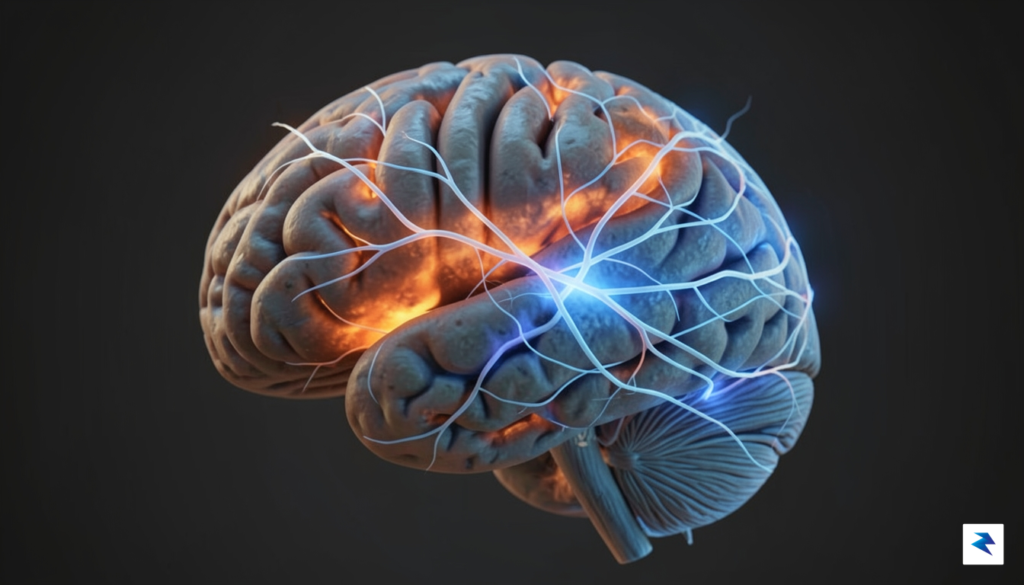
When we find ourselves glued to our screens, endlessly scrolling through a deluge of distressing headlines and alarming social media posts, there’s a specific neurological process at play that explains the profound sense of exhaustion that often follows. Our brains, marvels of evolution, are equipped with an ancient alarm system designed for survival in a very different world. This system, particularly a tiny, almond-shaped region called the amygdala, is exquisitely tuned to detect threats in our environment, triggering a rapid fight-or-flight response crucial for escaping predators or confronting immediate dangers.
The fundamental challenge arises because this primal threat detection system struggles to differentiate between an actual physical threat in our immediate surroundings and a remote, digital headline about a crisis unfolding thousands of miles away. To your amygdala, a flashing news alert about a global pandemic or a tweet detailing a local tragedy can activate the same stress pathways as if a large, growling animal were approaching you. It interprets the constant stream of negative information as a continuous series of immediate threats, even though intellectually, we understand these are not dangers we can physically fight or flee from. This sustained state of perceived threat keeps our internal alarm bells ringing incessantly, without the natural resolution that comes from either escaping or neutralizing an actual physical danger.
This perpetual state of alert has tangible physiological consequences. When the amygdala is activated, it signals to the hypothalamus, which then orchestrates a cascade of stress hormone release from our adrenal glands. These include adrenaline, which provides a burst of energy and heightened senses, preparing the body for immediate action, and cortisol, a steroid hormone that sustains this high-alert state by regulating metabolism and suppressing non-essential bodily functions. While these hormones are vital for short-term survival, chronic exposure to elevated levels of adrenaline and cortisol takes a significant toll. It can lead to increased heart rate, elevated blood pressure, digestive issues, suppressed immune function, and, crucially, a profound sense of mental and physical fatigue, leaving us feeling utterly drained and overwhelmed after extended periods of consuming bad news.
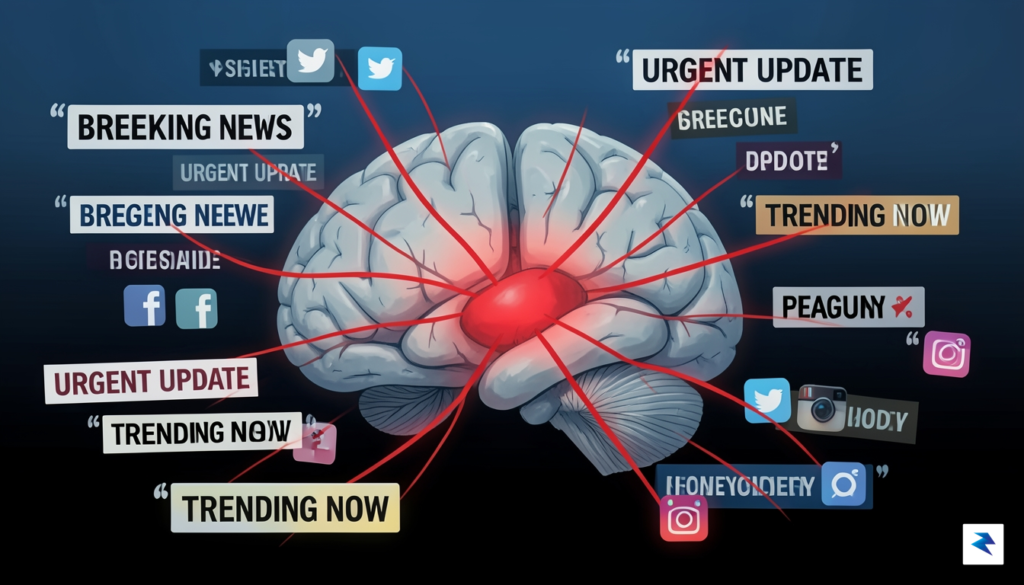
Unfortunately, this inherent biological vulnerability is precisely what the ‘attention economy’ of modern digital platforms has learned to exploit. Social media algorithms and news aggregators are not designed to protect our mental well-being; their primary objective is to maximize engagement and keep us scrolling. They achieve this by prioritizing content that elicits strong emotional responses, and few emotions are as potent and immediate as fear, anxiety, or outrage. By constantly feeding us a stream of alarming headlines, emotionally charged posts, and sensationalized stories, these platforms inadvertently keep our amygdala in a perpetual state of high alert. This creates a self-reinforcing feedback loop: the more our brain is triggered by negative content, the more we seek out information (even if it’s distressing) to assess the ‘threat,’ leading to further exposure and an exacerbation of our physiological stress response. Our ancient brains are simply not equipped to handle this relentless, manufactured state of digital danger.
The Psychological Toll of Chronic Doomscrolling

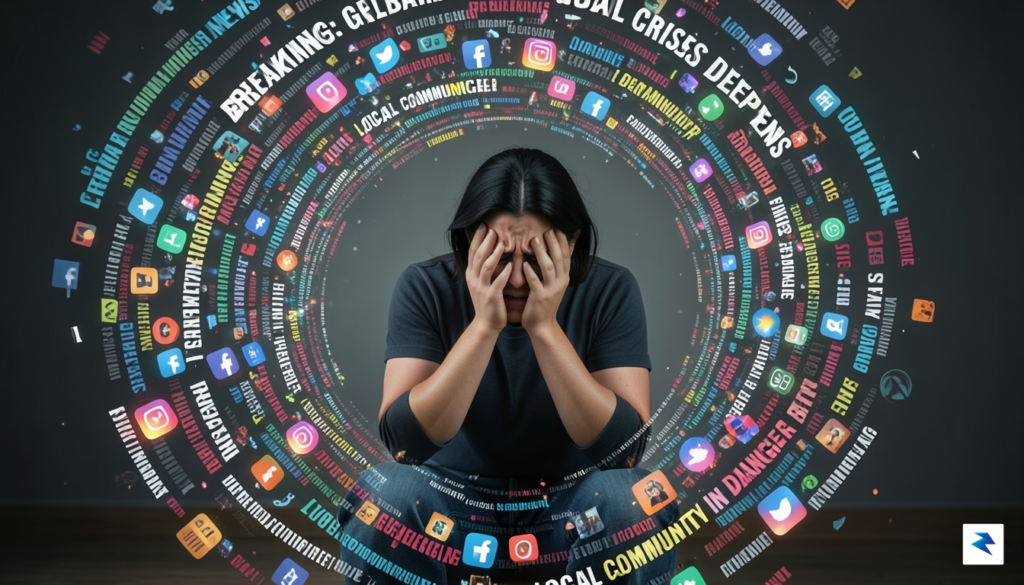
While the immediate jolt of a distressing headline can certainly cause temporary stress, the insidious nature of our always-on news cycle extends far beyond fleeting discomfort. Consistent, prolonged exposure to a barrage of negative information accumulates, slowly but surely, eroding our mental resilience and reshaping our psychological landscape. This constant immersion in crisis, often termed “doomscrolling,” isn’t just a bad habit; it’s a profound challenge to a brain not evolved to process a planet’s worth of misfortunes instantaneously and continuously.
One of the most direct and troubling consequences is the significant increase in generalized anxiety. Our brains are wired to identify and react to threats, a crucial survival mechanism. However, when we are perpetually presented with a stream of global catastrophes, social injustices, and personal tragedies, our threat detection system remains on high alert. This chronic state of vigilance, without a clear, resolvable threat to address, can manifest as persistent worry, restlessness, irritability, and even physical symptoms like muscle tension or fatigue. It transforms a natural protective instinct into a debilitating condition, leaving individuals feeling constantly on edge, unable to find peace even in safe environments.
Beyond pervasive anxiety, this relentless exposure can foster a state known as learned helplessness. When individuals are repeatedly confronted with problems that appear overwhelmingly vast and beyond their individual control – climate change, global pandemics, political instability – they can develop a profound sense of powerlessness. This isn’t merely feeling sad about a situation; it’s an ingrained belief that personal effort is futile, that no action can genuinely make a difference in the face of such monumental challenges. Consequently, motivation to engage with solutions, both personal and collective, can wane, leading to apathy, resignation, and a deeper sense of despair, trapping individuals in a cycle of perceived incapacitation.
The impact also extends into our most restorative states, significantly disrupting sleep patterns. The brain, stimulated by the day’s intake of alarming news, struggles to power down effectively. The constant processing of threats, even abstract ones, keeps the mind active and alert, making it difficult to fall asleep and stay asleep. This poor sleep hygiene isn’t just an inconvenience; it impairs cognitive function, exacerbates mood disturbances, and weakens the immune system, creating a vicious cycle where a tired, anxious brain is even less equipped to handle the next day’s onslaught of negative information. Quality sleep is foundational to mental health, and its erosion is a critical indicator of chronic stress.
Furthermore, the very structure of digital news delivery, with its endless feeds and constant notifications, actively undermines our capacity for sustained focus and deep work. Our brains are constantly pulled between tasks, interrupted by new headlines or updates, leading to a state of perpetual context-switching. This fragmented attention span has a high cognitive cost, making it challenging to engage in complex problem-solving, creative thinking, or any activity requiring prolonged concentration. The mental energy expended in these rapid shifts diminishes our ability to think critically, innovate, and even simply relax, leaving us feeling mentally exhausted and less capable of productive engagement with our lives and the world around us. In essence, the constant demand for our attention leaves us with less to give to anything truly meaningful.
Strategies for Cultivating a Balanced Information Diet

In an age of relentless digital noise and a seemingly endless stream of distressing headlines, taking control of your digital environment is no longer a luxury but a fundamental act of self-preservation. This isn’t about burying your head in the sand or becoming ignorant of global realities; it’s about intentionality – a conscious decision to protect your mental bandwidth and cognitive resources without disconnecting from the world. By implementing evidence-based strategies, we can reclaim agency over our attention spans and foster a more resilient mindset, ensuring our brains are not constantly overwhelmed by the sheer volume of negative information.
Implement Strategic News Buffers
One of the most effective ways to manage the influx of information is to create specific “news buffers” in your day. Rather than constantly refreshing feeds or reacting to every breaking notification, designate specific, limited times for news consumption. For instance, you might decide to check headlines for 15 minutes in the morning after your coffee, and then again for 20 minutes in the late afternoon. This structured approach prevents the continuous low-level stress of vigilance, reducing the likelihood of your brain being stuck in a perpetual fight-or-flight response. Scientific research suggests that predictable routines can lower cortisol levels, the primary stress hormone, thereby improving focus, emotional regulation, and overall well-being throughout the day.
Curate Your Information Landscape with Intention
Beyond simply limiting consumption, actively shaping the content you encounter is crucial. This involves not just filtering out overtly sensationalist or toxic sources, but also proactively seeking out constructive, solution-oriented, or in-depth journalism. Unfollow accounts that consistently trigger anxiety or anger without offering valuable insights. Instead, follow reputable investigative outlets, thought leaders who offer nuanced perspectives, or even organizations dedicated to positive change and progress. By consciously populating your digital space with content that informs, inspires, or challenges you constructively, you shift your brain’s focus from problem-identification to problem-solving and possibility, fostering a more balanced and hopeful worldview.

Practice Mindfulness to Recognize Physiological Stress Cues
Our bodies often signal distress long before our conscious minds fully process it. Developing mindfulness practices can help you recognize the physiological signs of stress triggered by digital consumption. Pay attention to how your body feels when you’re scrolling through a particularly heavy news cycle: Do your shoulders tense up? Is your breathing shallow? Does your heart rate increase? When you notice these physical manifestations of stress—whether it’s a knot in your stomach or a sudden rush of irritation—it’s a clear signal to step away. Taking even a few deep breaths, stretching, or shifting your focus to a non-digital activity can interrupt the stress response and prevent it from escalating, empowering you to respond proactively rather than react passively.
Prioritize Long-Form Analysis Over Clickbait
The internet’s architecture often rewards sensationalism and brevity, leading to an abundance of clickbait headlines designed to evoke strong emotions and capture fleeting attention. However, this constant diet of superficial, outrage-driven content fragments your attention span and hinders your ability to engage with complex issues meaningfully. Prioritize long-form articles, essays, and analyses from trusted sources. These pieces offer depth, context, and nuance, allowing your brain to process information more thoroughly and develop a more informed perspective. Engaging with comprehensive content not only strengthens your critical thinking skills but also reduces the emotional volatility often associated with rapidly consumed, decontextualized snippets of news, ultimately reclaiming your valuable cognitive real estate.
“Reclaiming agency over one’s attention span is not about escaping reality, but about choosing how we engage with it, empowering our minds to process information with clarity and purpose.”
Ultimately, these strategies are not about building an impenetrable wall against the world’s challenges, but about constructing a more resilient internal architecture. By intentionally structuring your information intake, curating your digital environment, listening to your body’s signals, and prioritizing depth, you equip your brain to navigate the complexities of modern life without succumbing to constant overwhelm. This conscious engagement fosters mental fortitude, allowing you to remain informed and engaged while safeguarding your invaluable mental well-being.