
The Role of the FCC in the Modern Media Landscape
While the Federal Communications Commission is often perceived by the public as a sleepy, bureaucratic entity responsible for little more than fining broadcasters for fleeting expletives, its true mandate reaches into the very architecture of modern democracy. The commission serves as the primary guardian of the digital and physical infrastructure that makes journalism possible in the 21st century. From the physical cables beneath our streets to the wireless spectrum that powers our mobile devices, the FCC determines who has access to the public square and under what terms that access is granted. When we discuss the future of the free press, we are inherently discussing the regulatory environment that governs these conduits of information.

The agency’s influence is most acutely felt in its oversight of media consolidation and net neutrality—two pillars that define the health of our information ecosystem. By setting rules that prevent a handful of massive conglomerates from dominating every corner of the media landscape, the FCC acts as a vital check against the monopolization of truth. Without robust regulatory oversight, the pressure to prioritize corporate bottom lines over diverse, independent reporting becomes insurmountable. When the commission enforces policies that favor an open internet, it ensures that a fledgling independent news outlet has the same digital reach as a multi-billion dollar legacy media corporation. Consequently, the independence of the commission is not just a procedural formality; it is a prerequisite for a vibrant, pluralistic society.
The health of a democracy is inextricably linked to the diversity of its media; when the FCC fails to protect the pathways of communication, it effectively silences the very voices that hold power to account.
Furthermore, the intersection of technological policy and civil liberties has never been more consequential. As we transition deeper into an era defined by algorithmic curation and platform-controlled content, the FCC’s role as an arbiter of accessibility becomes increasingly complex. Decisions made within the commission’s walls regarding broadband deployment and spectrum allocation directly impact whether rural and underserved communities can participate in the digital economy or access essential news services. Therefore, the fight for a free press is increasingly a fight for the integrity of these regulatory processes. Maintaining a commission that functions independently of political retribution is essential, as the moment this regulatory body becomes a tool for partisan influence, the fundamental democratic promise of a fair and open communication infrastructure begins to crumble.
Anna Gomez: A Portrait of Regulatory Resilience

Long before her tenure at the Federal Communications Commission, Anna Gomez cultivated a reputation as one of the most formidable telecommunications lawyers in the nation. Her career is not merely a collection of titles or institutional accolades; rather, it is a deeply rooted history of navigating the intricate, often opaque machinery of spectrum allocation, broadband access, and media regulation. Having served in various high-level advisory roles within the agency and the private sector, she brings a technical fluency that is rare even among seasoned policymakers. This background allows her to look past the superficial noise of partisan debates and focus on the fundamental, structural challenges that define how Americans connect, communicate, and stay informed in an increasingly digital world.
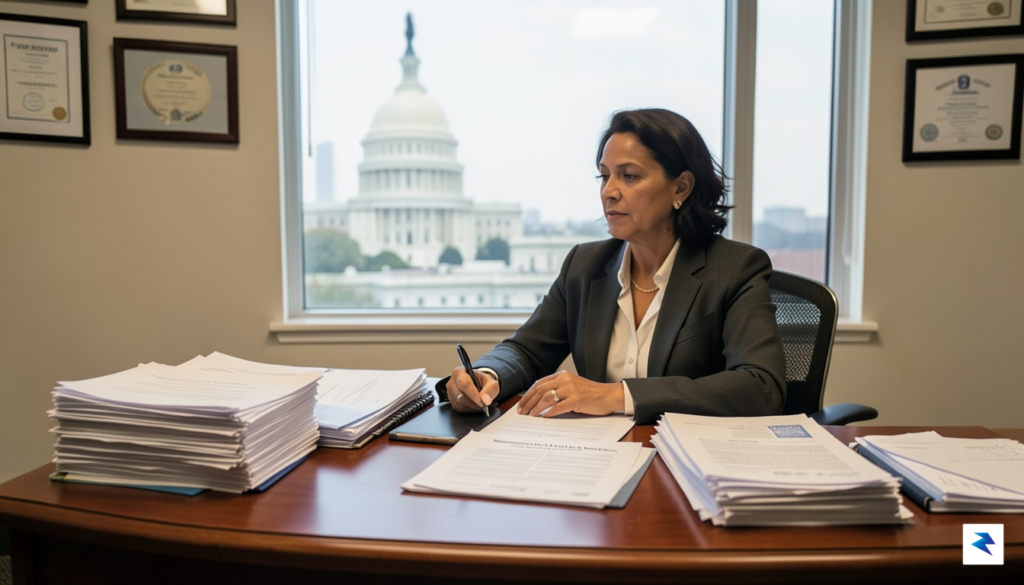
However, the modern reality of serving as a presidential appointee in a politically volatile climate imposes a unique kind of professional anxiety. For Gomez, this translates into what many insiders describe as the “everyday email check”—a symbolic, constant vigilance regarding the security of her position and the shifting tides of the executive branch. In a political environment where the threat of sudden termination or administrative overhaul is always looming, it would be easy for any official to retreat into a defensive, reactive posture. Yet, Gomez has consciously chosen a different path, prioritizing long-term structural policy goals over the immediate distractions of political survival. Her approach is defined by a stoic commitment to public service, viewing her term not as a guaranteed tenure, but as a window of opportunity to codify protections for a free and accessible media landscape.
“True regulatory resilience is not found in avoiding political conflict, but in the unwavering commitment to the public interest, regardless of who holds the keys to the agency.”
This perspective informs her day-to-day operations at the FCC, where she consistently advocates for policies that ensure the internet remains an open pipeline for diverse voices. By anchoring her agenda in the granular details of administrative law, she creates a legacy that is harder to dismantle through simple political fiat. She understands that while administrations may change, the technical and legal frameworks she helps build serve as the bedrock for future press freedom and digital equity. Consequently, her focus remains laser-sharp on the mechanics of connectivity, ensuring that even under the shadow of potential disruption, the mandate of the commission—to serve the people rather than the powerful—remains the guiding principle of her work.
Defending the First Amendment in an Era of Political Turbulence

The First Amendment is frequently romanticized as a self-executing shield, yet in the complex machinery of modern media, it requires constant, active reinforcement from those in positions of regulatory authority. For Commissioner Anna Gomez, the Federal Communications Commission (FCC) is far more than an administrative body tasked with managing spectrum or technical standards; it is a critical bulwark against the creeping erosion of journalistic integrity. In an era defined by extreme political polarization, the distinction between oversight and overreach has become increasingly blurred, placing the agency at the center of a high-stakes battle for the future of objective reporting. Gomez has consistently argued that when institutions fail to protect the independence of the press, the democratic process itself begins to fray.
The tension between political pressure and the FCC’s institutional mandate is perhaps the most significant challenge facing the agency today. Political actors often view broadcast licenses and regulatory approvals as levers of power, threatening retaliation against outlets that offer critical coverage or challenge dominant narratives. Gomez has been vocal about the necessity of maintaining a firewall between the Commission’s regulatory functions and the partisan agendas of the executive branch. By advocating for greater transparency in how licenses are granted and renewed, she aims to strip away the ambiguity that allows political retaliation to masquerade as bureaucratic decision-making. Her approach emphasizes that the FCC’s primary responsibility is to the public interest—a standard that necessitates shielding news organizations from the whims of current officeholders.
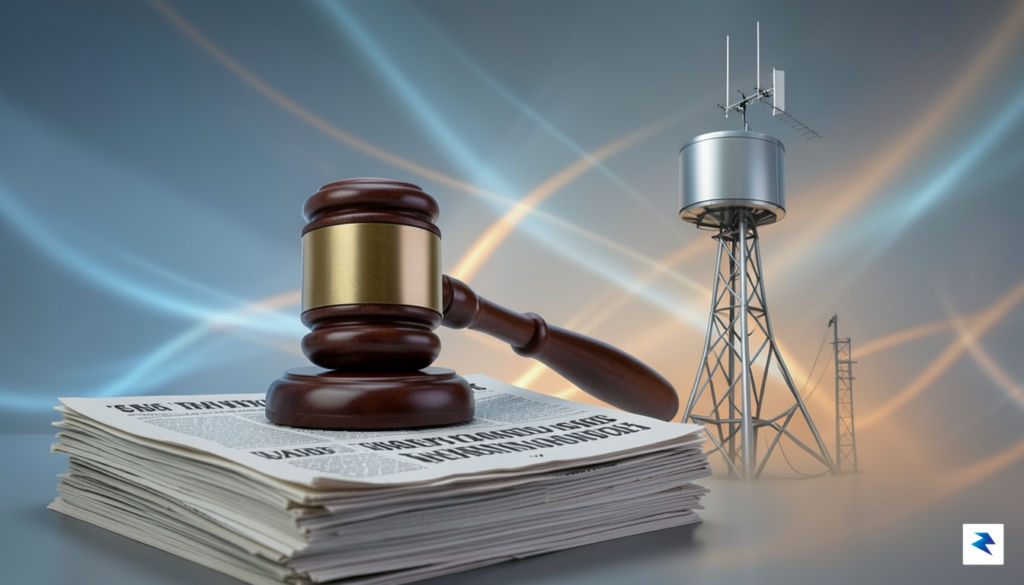
“The independence of our media ecosystem is not just a regulatory goal; it is a fundamental pillar of our democracy that must be defended against any form of intimidation or partisan coercion,” Gomez has indicated through her policy priorities.
Beyond the immediate threats of retaliation, Gomez has championed a vision of public interest that demands accountability from media conglomerates. She contends that in an age of misinformation, the FCC must play a more active role in ensuring that the airwaves serve the citizenry rather than merely corporate or political interests. This involves pushing for clear guidelines that protect the ability of local stations to report without fear, while simultaneously ensuring that the diversity of voices in the media landscape is not silenced by consolidation. Ultimately, Gomez’s tenure represents a pivot toward a more protective posture, where the Commission acts as a steward of the public trust, ensuring that the First Amendment remains a functional reality rather than an abstract ideal in the face of mounting political turbulence.
Navigating the Regulatory Tightrope: The Future of Press Freedom

The landscape of media oversight is undergoing a profound transformation, presenting an unprecedented challenge to regulatory bodies like the Federal Communications Commission. As information dissemination increasingly decentralizes from traditional broadcast towers to a vast, intricate web of digital platforms, the FCC finds itself navigating an uphill battle, attempting to apply foundational principles to an ever-evolving technological frontier. The legacy of leaders within these institutions, much like that of Commissioner Anna Gomez, will ultimately be defined by their ability to strike a delicate balance: upholding the necessary framework for public good while fiercely safeguarding the fundamental freedom of the press in an era of rapid change. This critical juncture demands not just regulatory acumen, but also foresight and an unwavering commitment to democratic ideals.
The challenges ahead are formidable and multifaceted. We are witnessing a dramatic shift towards content curated and amplified by opaque algorithms, which can inadvertently create echo chambers, spread polarizing narratives, and bypass traditional editorial gatekeepers entirely. Compounding this complexity is the burgeoning threat of AI-driven misinformation, capable of generating hyper-realistic fake content at scale, making it increasingly difficult for the average citizen to discern truth from fabrication. These technological advancements not only test the limits of existing regulatory frameworks but also demand innovative approaches that can address global, instantaneous content flows without stifling legitimate expression. The sheer volume and speed of digital information make the FCC’s traditional oversight mechanisms seem almost quaint, necessitating a re-evaluation of how public interest is served and protected in this new paradigm.
In this turbulent environment, the importance of institutional resilience cannot be overstated. Regulatory bodies must evolve, adapting their strategies and interpretations to remain relevant and effective. This means fostering internal expertise in digital technologies, collaborating internationally to address cross-border information flows, and continuously reviewing the legal and ethical implications of emerging media. The ability of institutions like the FCC to maintain their core mission – promoting a diverse, competitive, and informed media environment – will depend on their capacity for innovation and their steadfast adherence to non-partisan principles, even when political winds shift dramatically. A strong, adaptable institutional framework is the bulwark against the erosion of media standards and the fragmentation of public discourse.
Ultimately, however, the most potent defense for democratic media standards may not lie solely in policy or technological solutions, but in the unwavering individual commitment to public service. While robust institutions provide the necessary structure, it is the integrity, courage, and dedication of the people within them that truly make the difference. Leaders who are willing to champion press freedom, to challenge powerful interests, and to uphold ethical standards even in the face of intense political pressure, embody the best hope for a vibrant and free media. Their personal resolve to prioritize the public interest above all else becomes the bedrock upon which a truly informed and democratic society can continue to thrive, regardless of the technological or political storms on the horizon.