
The New Face of British Harvests: Why Central Asian Workers Now Lead the Field
The New Face of British Harvests For decades, the rhythm of the British countryside was dictated by a reliable flow of labor from within the…
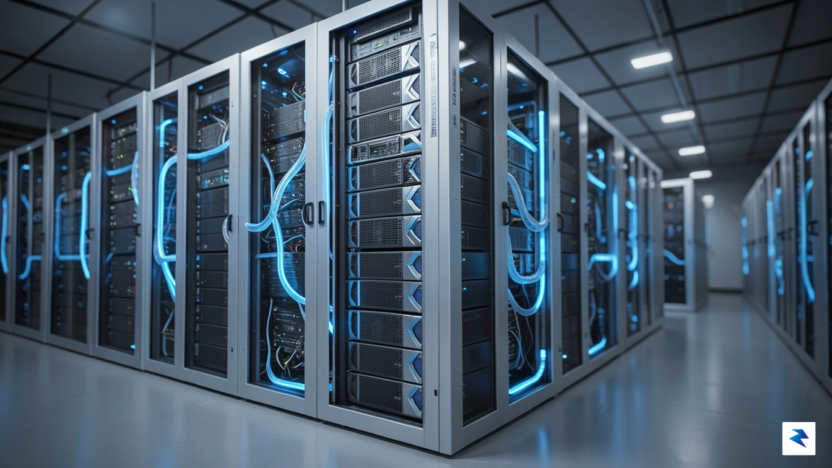

The rapid ascent of generative artificial intelligence has brought with it a paradox: while these models promise to revolutionize efficiency across countless industries, their physical footprint is increasingly difficult to ignore. Modern AI models require massive clusters of high-performance graphics processing units (GPUs) that generate intense heat as they crunch through trillions of parameters. To keep these silicon brains from overheating, data centers have historically relied on evaporative cooling systems, a process that effectively consumes millions of gallons of water every day. As these facilities proliferate to meet the insatiable demand for compute, they are beginning to strain municipal water supplies, sparking tension with local communities already grappling with climate-induced droughts and dwindling reservoirs.
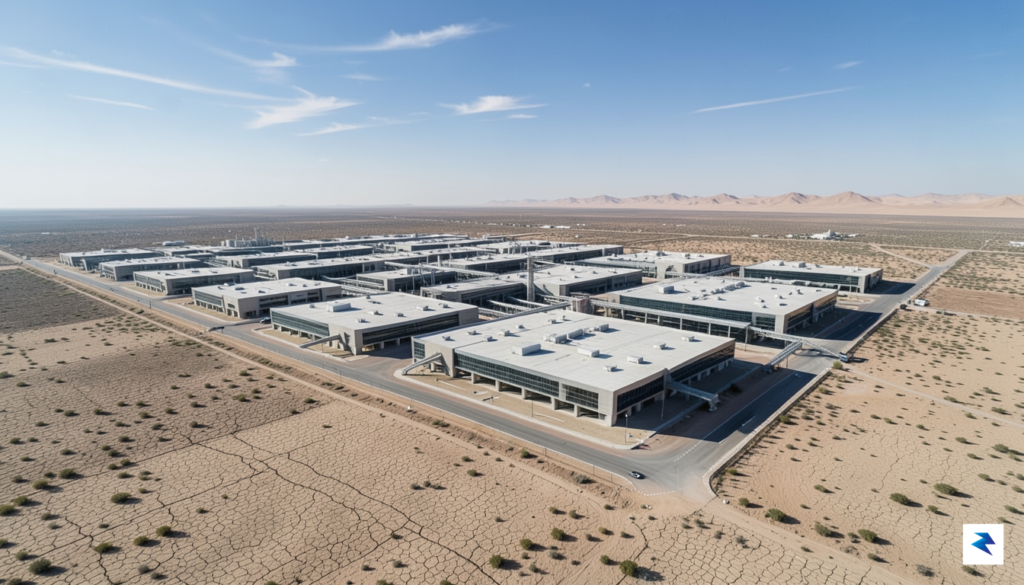
This reliance on water is at the heart of the “water-energy nexus,” a critical sustainability challenge that tech giants can no longer brush aside. Because electricity generation itself often requires water for cooling power plants, every watt consumed by an AI server carries a double environmental cost. Public scrutiny has intensified as citizens and environmental advocates demand transparency regarding the true resource intensity of the digital economy. For many municipalities, the prospect of massive data centers competing with residents and agriculture for water rights has become a flashpoint for political and ethical debate. Consequently, the industry is finding that the long-term viability of massive AI deployments is not just a question of technological capability, but of social license and environmental stewardship.
If the AI revolution is to be sustainable, the industry must decouple its growth from the rapid consumption of precious natural resources like water.
The pressure is mounting for data center operators to transition away from traditional, water-heavy cooling methods toward more circular and efficient designs. Without a fundamental shift in how we manage the thermal output of AI infrastructure, the environmental cost of training the next generation of models may soon become prohibitive. Regulatory bodies are beginning to take note, considering stricter oversight of water usage rights for high-demand facilities. Ultimately, innovation in hardware architecture—such as the move toward running systems hotter to eliminate the need for water-based cooling—is not merely an engineering milestone; it is an essential evolution to ensure that the promise of artificial intelligence does not come at the expense of our most fundamental natural resources.
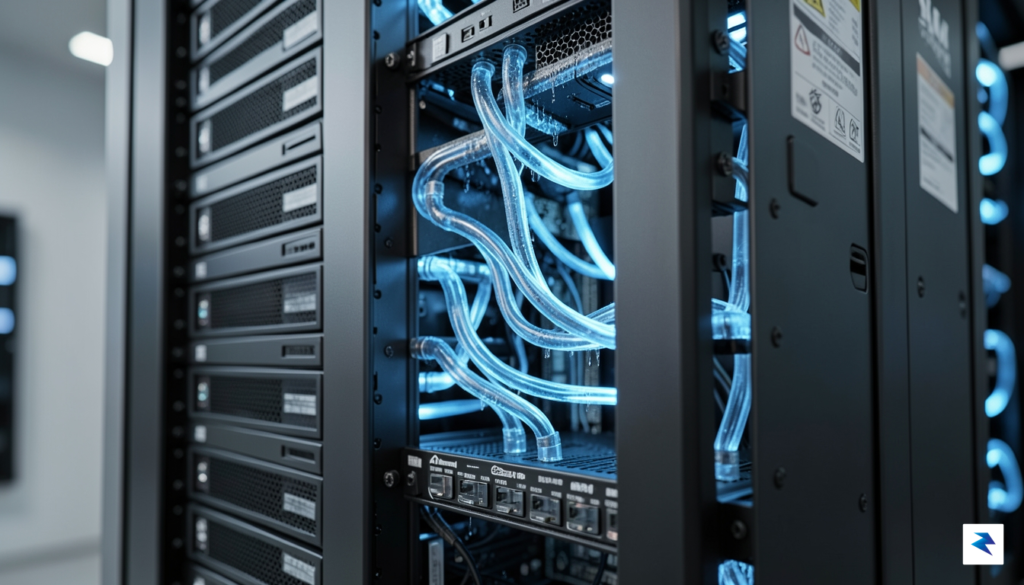
The transition to Nvidia’s Rubin architecture represents a pivotal departure from the convection-based cooling strategies that have dominated data centers for decades. Historically, massive server farms have relied on forced-air cooling, where powerful fans push chilled air through server racks to dissipate the thermal energy generated by processors. While this method was sufficient for the lower-density workloads of the past, the skyrocketing power requirements of modern AI chips—often referred to as Thermal Design Power (TDP)—have pushed air cooling to its physical limit. Air simply lacks the thermal density required to whisk away the intense heat generated by chips that now operate at levels once thought impossible for commercial hardware.
To address these constraints, the Rubin design pivots toward direct-to-chip liquid cooling, a vastly more efficient method for thermal management. Instead of relying on ambient air to absorb heat, liquid cooling systems circulate a specialized coolant directly through a cold plate mounted atop the processor. Because liquids like water or dielectric fluids have a significantly higher thermal conductivity than air, they can absorb and transport heat away from the silicon hundreds of times more effectively. This shift allows the architecture to maintain stable operating temperatures even as chip density increases, effectively eliminating the need for the energy-intensive “wind tunnel” environments that characterized legacy data centers.
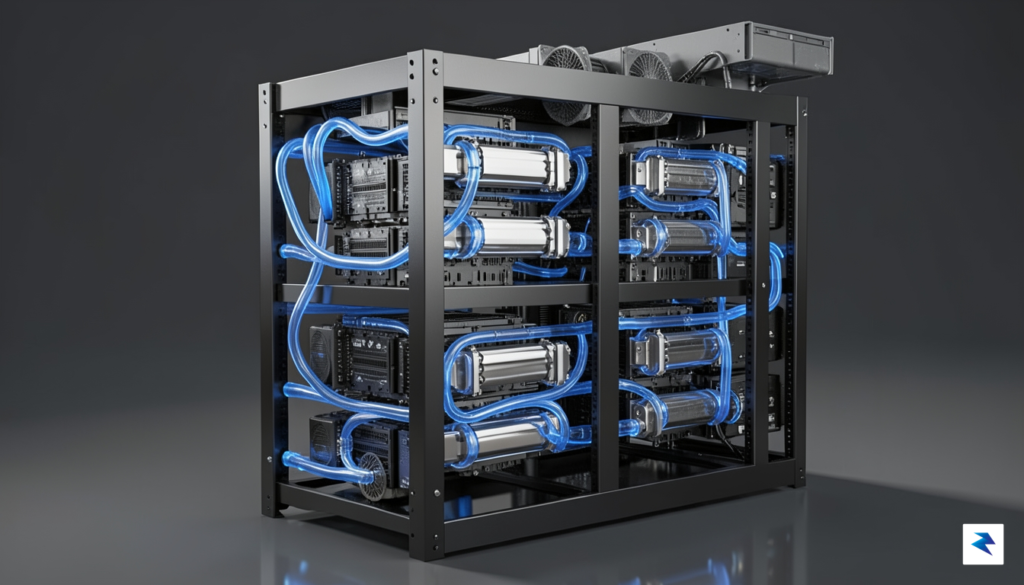
The thermodynamic superiority of liquid cooling is the primary driver behind this evolution, particularly when considering the physics of heat transfer. When air is used as the primary coolant, large portions of the data center’s energy budget are consumed simply by powering the thousands of fans required to move air across the racks. In contrast, a liquid-cooled Rubin system creates a closed-loop environment where heat is captured at the source and carried to a heat exchanger. This process is not only more efficient but also remarkably quieter and more space-efficient, allowing engineers to pack more computational power into a smaller physical footprint without the risk of thermal throttling.
The integration of direct-to-chip cooling is not merely an optional upgrade; it is a fundamental requirement for the next generation of AI scaling, where performance gains are no longer limited by compute capacity, but by the ability to keep the system cool.
By moving away from air-reliant cooling, Nvidia is also addressing the indirect environmental cost of these systems. Traditional air-cooled data centers often rely on evaporative cooling towers, which consume massive quantities of water to keep the ambient air cool. By utilizing liquid-to-chip cooling, the Rubin architecture keeps the coolant within a contained loop, drastically reducing the need for massive water evaporation. This technical shift ensures that the most powerful AI systems in the world can operate at peak performance while simultaneously minimizing their dependency on local water supplies, marking a sustainable path forward for the high-performance computing industry.
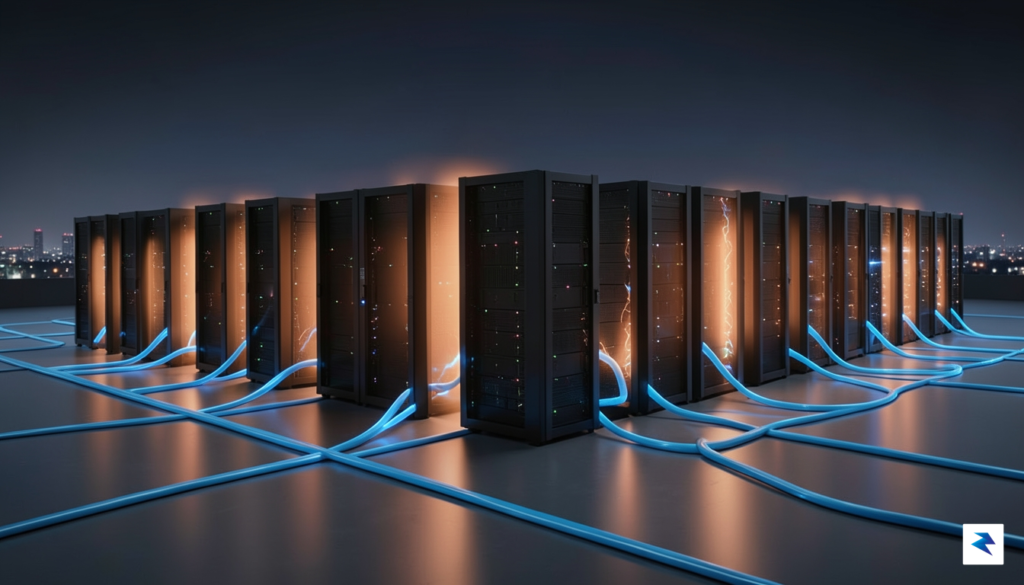
At first glance, the idea of intentionally running advanced computing hardware at higher temperatures seems to defy the conventional wisdom of data center management. For decades, the industry standard has been to keep server environments as cold as possible to prevent thermal throttling and hardware degradation. However, Nvidia’s latest approach flips this script by leveraging high-temperature cooling loops, a strategy that acknowledges the physics of heat transfer rather than fighting against it. By allowing the coolant—in this case, water—to enter the system at a significantly higher temperature than traditional setups, the design effectively closes the gap between the server’s output and the ambient environment.
The primary advantage of this shift lies in the elimination of energy-intensive mechanical cooling. In traditional data centers, massive chillers and refrigeration cycles are required to drop water temperatures to near-freezing levels, a process that consumes an enormous amount of electricity. When the system is designed to operate efficiently at higher temperatures, those heavy-duty chillers are no longer strictly necessary. Instead, the facility can rely on “dry cooling,” where heat is rejected directly into the outside air. Because the return water is already warm, it is much easier for the system to shed that heat into the environment without needing to force the temperature down further through power-hungry compressor units.
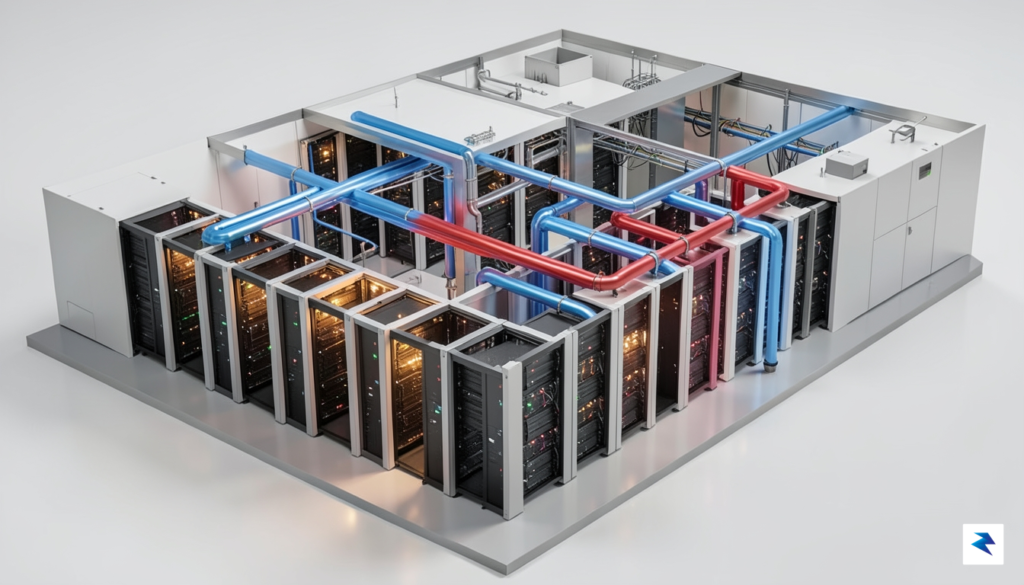
This reduction in mechanical cooling has a cascading positive effect on water conservation, a factor that is often overlooked in discussions regarding data center sustainability. Most large-scale cooling systems utilize evaporative cooling towers, which dissipate heat by evaporating massive volumes of water into the atmosphere. When a system runs at a higher temperature, the reliance on these evaporation-heavy processes drops precipitously. By minimizing the delta between the operating temperature and the ambient air, the facility avoids the need to “boil off” water to maintain safe operating conditions. In essence, by allowing the hardware to run hotter, Nvidia is trading high-energy electrical consumption and high-volume water loss for a more streamlined, thermodynamically efficient heat transfer process.
The transition to high-temperature cooling is not merely a hardware adjustment; it is a fundamental architectural shift that aligns the needs of high-performance AI chips with the environmental constraints of modern infrastructure.
Ultimately, this approach turns what was once considered a liability—the intense heat generated by artificial intelligence workloads—into a metric for optimization. By embracing the heat, engineers can design systems that are not only more compact and powerful but also significantly lighter on the local power grid and water supply. This strategic pivot ensures that as AI workloads continue to expand in scale and complexity, the physical infrastructure supporting them can grow in a manner that is both sustainable and operationally resilient.
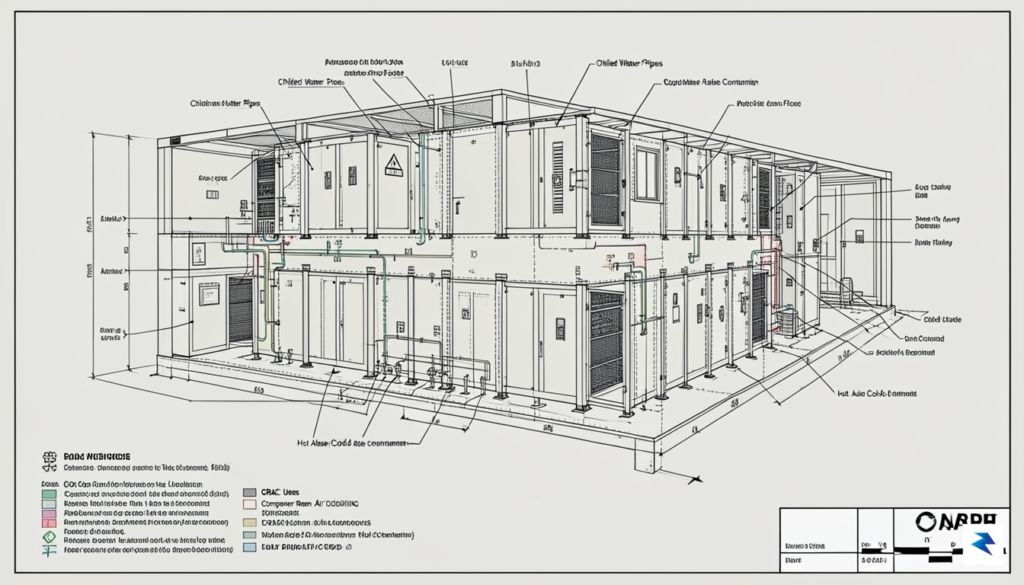
Transitioning to the high-density, liquid-cooled architecture required by the Rubin design presents a formidable engineering challenge for the industry at large. Many existing data centers were built during an era defined by air-cooling, where raised floors and massive computer room air conditioning (CRAC) units were the gold standard. Retrofitting these legacy facilities to support direct-to-chip liquid cooling is not merely a matter of installing new hardware; it requires a fundamental redesign of the floor space, weight distribution, and piping infrastructure. Operators must navigate the logistical nightmare of tearing out aging ventilation systems while simultaneously upgrading power delivery systems to handle the increased thermal density, all without disrupting the critical operations of the servers currently running inside.
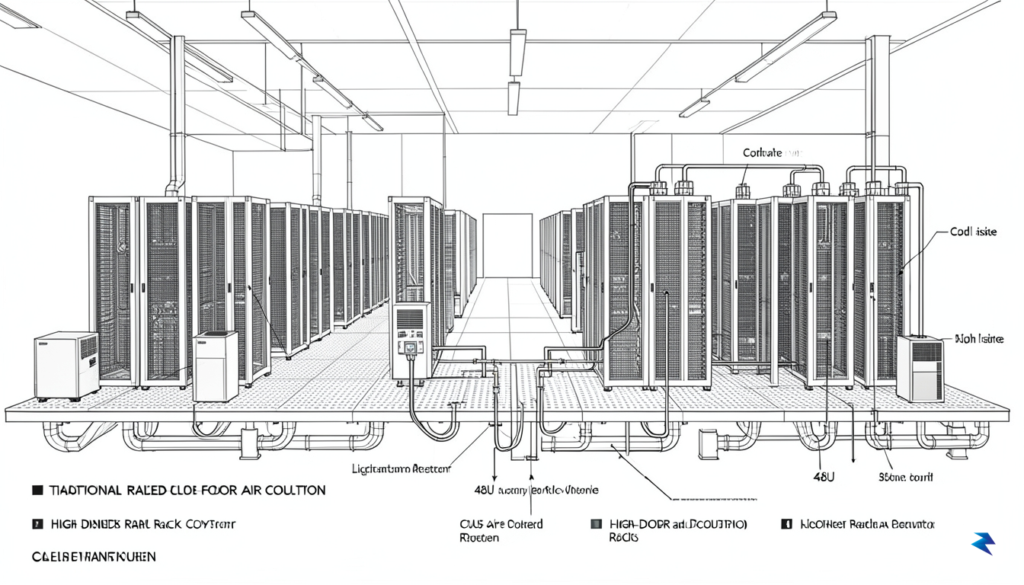
Beyond the physical structural upgrades, the shift introduces significant operational risks that facility managers have historically sought to avoid. Introducing liquid coolant—often water or specialized dielectric fluids—directly into the vicinity of high-performance electronics creates a constant, underlying anxiety regarding potential leaks and catastrophic hardware failure. This shift demands a new, specialized skill set for maintenance staff who must move from managing fans and filters to overseeing sophisticated pumps, heat exchangers, and leak detection sensors. The margin for human error becomes razor-thin, as a single faulty connection or a failure in the circulation loop could jeopardize millions of dollars’ worth of AI-accelerated hardware. Consequently, data center operators are forced to invest heavily in advanced monitoring systems and redundant cooling loops to mitigate these risks.
While liquid cooling is inherently more efficient at heat transfer than air, the capital expenditure required to overhaul a facility often dwarfs the short-term utility savings.
The ultimate question for stakeholders remains whether the long-term sustainability benefits of reduced water consumption can justify the massive upfront capital investment. While the design promises lower operational costs through diminished electricity consumption and reduced water usage, the “payback period” for these upgrades can be extensive. Operators must carefully weigh the balance between future-proofing their infrastructure for the next generation of AI workloads and the immediate financial strain of decommissioning obsolete cooling arrays. Ultimately, the transition to these hotter, more efficient designs is less about immediate cost savings and more about architectural survival in an era where AI demand is outpacing the physical cooling capabilities of the traditional data center.
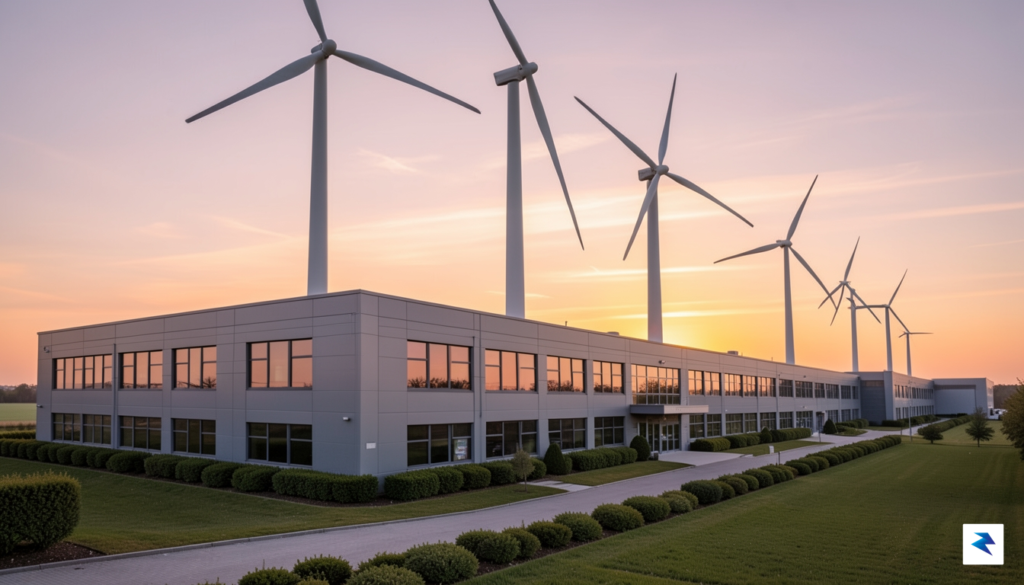
While the architectural shift toward liquid-cooled systems like the Rubin platform marks a significant milestone in mitigating the industry’s reliance on precious water resources, it is essential to recognize that water efficiency is only one piece of a much larger, more complex environmental puzzle. The rapid proliferation of generative AI has created an unprecedented demand for computational power, which inevitably translates into a massive appetite for electricity. Even if a data center operates with a closed-loop cooling system that consumes nearly zero water, the environmental impact remains tethered to the source of the power grid. If that electricity is derived from fossil fuels, the carbon footprint of training a single large language model can still rival the annual emissions of entire communities, regardless of how efficiently the hardware is kept cool.
The true sustainability challenge, therefore, rests on the transition to carbon-free energy. As data centers evolve to support increasingly dense racks of GPUs, the sheer volume of power required is pushing infrastructure to its absolute limit. Nvidia’s hardware innovations facilitate more efficient processing per watt, but this efficiency gain is often outpaced by the industry’s hunger for scale. To achieve a truly sustainable future, the tech sector must move beyond mere conservation and actively invest in grid-level renewable energy projects. This involves not only purchasing offsets but also championing the development of advanced energy storage solutions, such as long-duration batteries and small modular nuclear reactors, which can provide the constant, reliable baseload power that AI clusters demand without the carbon penalty.
The path to sustainable AI requires a decoupling of computational growth from carbon emissions, shifting the focus from simply doing more with less to doing more with cleaner, renewable energy sources.
Beyond the operational energy usage, we must also confront the “embodied carbon” inherent in the manufacturing of next-generation silicon. The production of advanced semiconductors is a resource-intensive process that involves rare earth mineral extraction, specialized chemical fabrication, and high-energy manufacturing cycles. As we accelerate the turnover of hardware to keep pace with Moore’s Law and the rapid evolution of AI architectures, we risk creating a significant e-waste crisis. Future infrastructure development must prioritize circular economy principles, focusing on the longevity of components, the recyclability of high-end materials, and the development of more energy-efficient manufacturing techniques that do not rely so heavily on carbon-intensive supply chains.
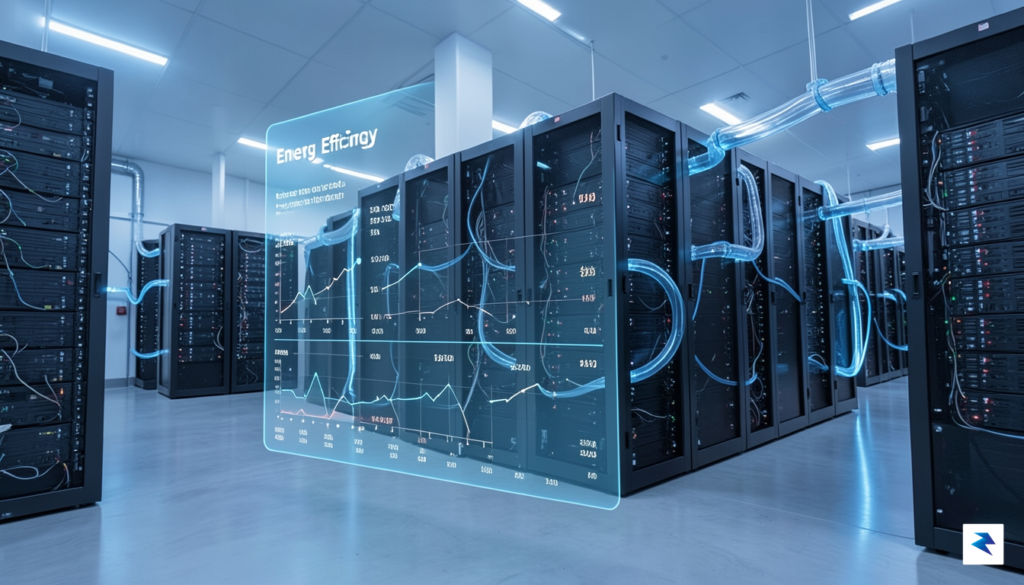
Ultimately, the objective of modern infrastructure design is to reach a state of environmental equilibrium where technological advancement does not come at the cost of ecological stability. Innovations like those featured in the Rubin design prove that hardware engineers are increasingly cognizant of their environmental responsibility, yet technology alone cannot solve a systemic resource problem. The next decade will require a collaborative effort between tech giants, energy providers, and policymakers to align AI growth with global climate goals. By addressing water consumption, energy sourcing, and hardware lifecycle management simultaneously, the industry can transition from an era of unchecked consumption toward a model of sustainable, responsible intelligence.
You must be logged in to post a comment.