The Rise of Algorithmic Screening in Modern Recruitment

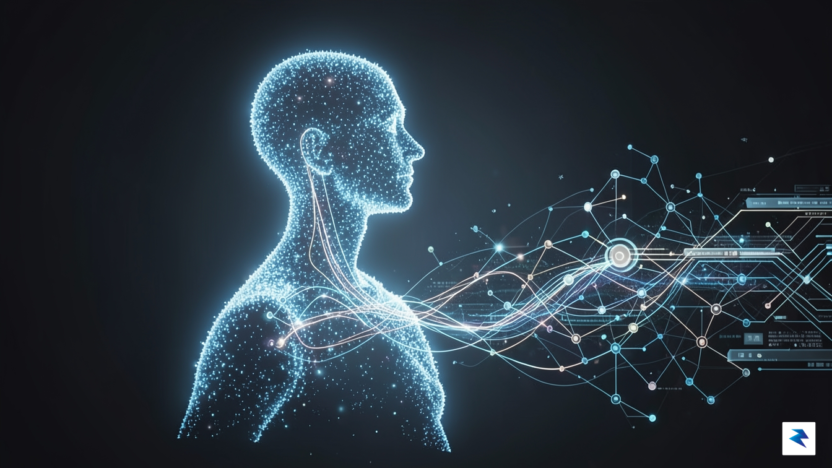
In the contemporary job market, the sheer volume of applications has transformed recruitment from a human-centric endeavor into a high-stakes data processing challenge. As digital job boards and “one-click” application features have lowered the barrier to entry, recruiters are frequently inundated with hundreds, if not thousands, of resumes for a single open role. To manage this influx, organizations have largely abandoned the manual labor of human screening in favor of sophisticated AI-driven tools. These systems promise a seamless, instantaneous filtration process, leveraging Natural Language Processing (NLP) and predictive modeling to categorize, rank, and discard candidates long before a human eye ever encounters their credentials.

The transition toward these automated gatekeepers is primarily driven by an urgent corporate mandate for cost-reduction and operational efficiency. By outsourcing the initial vetting process to algorithms, firms aim to minimize the time-to-hire while theoretically removing the subjective biases often associated with human decision-making. However, this reliance on standardized software has birthed a phenomenon known as an “algorithmic monoculture.” In this environment, hiring benchmarks become increasingly uniform across industries; because many companies utilize the same subset of screening vendors and machine learning models, they inadvertently train their systems to favor the exact same linguistic markers, educational backgrounds, and career trajectories.
The irony of modern recruitment lies in the fact that, while companies claim to seek “innovative thinkers” and “diverse perspectives,” their digital filters are designed to reward the most conventional, standardized candidates.
This shift represents a fundamental trade-off between administrative convenience and the qualitative nuance of talent acquisition. While an algorithm can efficiently scan for specific keywords or years of experience, it remains fundamentally incapable of perceiving the “soft” indicators of potential—such as adaptability, cultural add, or the unconventional problem-solving abilities that often define top-tier performers. Consequently, the pursuit of efficiency has created a silent, structural barrier where the most unique talent is often filtered out simply because their resume does not fit the statistical “norm” established by the algorithm. As these tools become more deeply entrenched in the hiring lifecycle, the danger is that corporate workforces will become increasingly homogeneous, not by explicit design, but by the mathematical exclusion of anyone who fails to conform to the machine-learned archetype of the “ideal” employee.
How Algorithmic Monocultures Create Systemic Bias

The core of the algorithmic hiring dilemma lies in the “training data trap,” where machine learning models are tasked with identifying the “ideal” employee based on decades of historical human decisions. Because these datasets are fundamentally reflections of past hiring practices—which were often influenced by conscious or unconscious biases—the AI does not merely learn to identify talent; it learns to replicate the social and demographic status quo. When a model is fed patterns of who was hired, promoted, or retained in the past, it inadvertently treats demographic markers as indicators of merit. Consequently, the software begins to favor candidates who resemble previous successful hires, effectively calcifying historical exclusions into a rigid, automated standard that is difficult to challenge or audit.

Beyond the raw data, these algorithms often rely on “proxy variables” to make their selections, which serve as subtle, yet discriminatory, stand-ins for protected characteristics like race, gender, or socioeconomic background. While an algorithm might be explicitly programmed to ignore a candidate’s gender or ethnicity, it may still penalize a person based on their zip code, the specific sports they played in college, or even the frequency of gaps in their employment history. These data points act as statistical mirrors for protected traits, allowing the AI to effectively discriminate by proxy. By prioritizing these superficial patterns, the system inadvertently narrows the talent pool to include only those who fit a specific, homogenized life trajectory, while systematically filtering out high-potential candidates who come from different socioeconomic realities.
The danger of algorithmic hiring is that it gives the veneer of objective, mathematical precision to human prejudices that were never objective to begin with.
This narrowing of the candidate pool is further exacerbated by the notorious “black box” problem, which prevents recruiters and candidates alike from understanding the logic behind a rejection. When an AI system operates using complex deep learning architectures, it often produces results that are mathematically sound but logically opaque, making it nearly impossible for human stakeholders to determine why a particular candidate was deemed unsuitable. Without transparency, there is no mechanism for accountability; hiring managers cannot verify if a rejection was based on genuine professional deficiencies or an algorithmic glitch that penalized a candidate for irrelevant factors. As these systems become more prevalent, the lack of interpretability ensures that systemic biases remain hidden beneath a layer of technical complexity, effectively shielding the hiring process from the very scrutiny needed to ensure fairness.
The Feedback Loop: Data Homogenization and Candidate Homogeneity
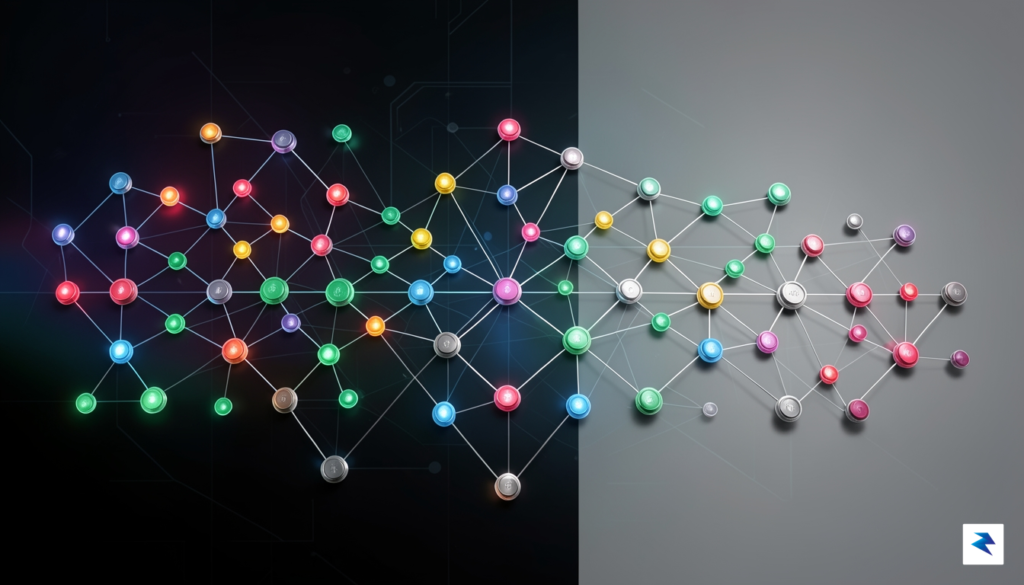
When organizations deploy artificial intelligence to filter through hundreds of resumes, they often unwittingly invite a dangerous feedback loop into their recruitment process. By training these systems on the historical data of current “high-performers,” companies are effectively programming their algorithms to identify candidates who mirror the existing workforce. This approach treats corporate culture as a static blueprint rather than a living, evolving entity. Consequently, the AI learns to prioritize specific educational backgrounds, extracurricular interests, and career trajectories that align with the status quo, systematically filtering out candidates who might possess unconventional skills or different perspectives.

The trap of reinforcement learning in hiring is that the model is only as objective as the data it consumes. If a company has historically favored a particular demographic or professional pedigree, the algorithm perceives these traits as the primary indicators of success. This creates a self-fulfilling prophecy: the AI selects candidates who “fit” the current culture, the new hires behave in ways that confirm the model’s biases, and the system is further reinforced to seek out even more of the same. Over time, this process erodes cognitive diversity, replacing the vibrant friction of differing viewpoints with a sterile, homogenized workforce that is increasingly resistant to change.
The true cost of algorithmic efficiency is the invisible erosion of the very intellectual friction that drives breakthrough innovation.
This reliance on data-driven homogeneity carries significant long-term risks for a firm’s capacity to innovate. Innovation rarely emerges from groups where every member processes information through the same cognitive lens; rather, it thrives in environments where diverse backgrounds collide to produce novel solutions. When an algorithmic monoculture takes hold, the organization loses the “intellectual diversity” required to challenge entrenched assumptions or identify blind spots in R&D and strategic planning. As problem-solving capabilities stagnate, the company becomes vulnerable to market shifts that require agility and creative thinking—qualities that are systematically scrubbed away by a system designed to replicate the past rather than architect the future.
Ultimately, the economic impact of this stagnation is profound. Companies that optimize for candidate homogeneity may see short-term gains in hiring speed or “culture fit” metrics, but they pay for these gains by narrowing their collective intelligence. By pruning the talent pool of outliers, non-traditional thinkers, and unconventional problem solvers, organizations inadvertently build an echo chamber. In a rapidly changing global economy, the ability to synthesize different ideas is a competitive necessity, not an optional luxury. If the tools we use to build our teams are fundamentally designed to eliminate the unique and the unexpected, we are not just hiring for the present; we are effectively insuring our own future obsolescence.
The Ethical and Legal Implications of Automated Rejection

The transition toward automated recruitment has created a profound accountability gap, where the binary decision to move a candidate forward or relegate them to a rejection pile is increasingly made by opaque software rather than human judgment. While traditional employment laws were designed to protect against overt, human-led discrimination, they struggle to address the subtle, systemic biases woven into machine-learning models. When an algorithm rejects thousands of applicants in seconds, it often does so based on patterns that may inadvertently mirror historical inequities, leading to a “disparate impact” that is notoriously difficult to audit. Because these systems are often protected as proprietary “black boxes,” companies frequently struggle to explain exactly why a qualified individual was filtered out, leaving candidates with little recourse and organizations vulnerable to legal challenges.
To mitigate these risks, many organizations have implemented a “human-in-the-loop” requirement, intended to ensure that a person reviews the machine’s output before a final decision is rendered. In practice, however, this safeguard often fails due to automation bias—the psychological tendency for humans to trust computer-generated results over their own intuition. When a recruiter is faced with hundreds of filtered resumes, they are unlikely to challenge the machine’s efficiency, effectively turning the human supervisor into a rubber stamp. This erosion of oversight means that the ethical obligation of transparency is being sidelined in favor of speed and cost reduction, despite the clear legal necessity for companies to prove that their selection criteria are job-related and consistent with business necessity.

The shift toward automated hiring requires a fundamental rethink of what constitutes “fairness” in the workplace; if we cannot explain the logic behind a rejection, we cannot ensure the process is free from systemic bias.
Consequently, the regulatory landscape is rapidly evolving to catch up with these technological advancements. Legislators in jurisdictions like New York City and the European Union are already introducing mandates that require employers to conduct independent bias audits of their AI hiring tools and provide clear notifications to candidates when automated systems are involved in the process. These emerging regulations signal a growing consensus: the convenience of algorithmic screening does not exempt companies from the core tenets of equal opportunity employment. Moving forward, the burden of proof will increasingly rest on employers to demonstrate that their software is not merely efficient, but fundamentally equitable, ushering in an era where transparency is not just an ethical preference, but a strictly enforced legal requirement.
Restoring Human-Centric Judgment in Talent Acquisition

To move beyond the limitations of algorithmic monocultures, organizations must pivot from an “AI-led” model—where software functions as the final gatekeeper—to an “AI-assisted” framework. In this paradigm, technology serves as an initial diagnostic tool rather than a definitive judge, processing high-volume data to surface potential matches while leaving the nuanced evaluation of culture, problem-solving, and potential to human recruiters. By framing AI as a sophisticated research assistant, HR leaders can retain the speed of automation without sacrificing the irreplaceable intuition that identifies exceptional, non-traditional talent.

Before any tool is deployed, organizations must implement a rigorous audit framework to ensure algorithmic transparency and fairness. This process should begin by scrutinizing the training data for historical biases that might inadvertently favor specific academic backgrounds, zip codes, or linguistic patterns. We recommend a three-pillar audit strategy:
- Data Provenance Review: Investigate the origins of the dataset to identify potential skew toward specific demographic groups or existing employee archetypes.
- Disparate Impact Testing: Conduct regular statistical analyses to determine if the tool disproportionately screens out protected classes or candidates from non-traditional paths.
- Explainability Requirements: Mandate that software vendors provide clear, human-readable logic for why a specific candidate was ranked highly or rejected, ensuring the “black box” of AI is always subject to human critique.
Central to this transition is a shift away from rigid, credential-based screening—where AI is often trained to hunt for specific degree titles or companies—toward a model of skill-based hiring. When we prioritize demonstrable competencies over static credentials, we broaden the aperture of our search, allowing the software to surface candidates who possess the necessary capabilities despite lacking a conventional resume profile. This approach effectively breaks the cycle of cloning past hires, as the algorithm is tasked with identifying mastery rather than mimicking pedigree.
The goal of responsible AI integration is not to maximize efficiency at the cost of diversity, but to maximize the quality of human connection by removing the friction of administrative burden.
Finally, maintaining human oversight throughout the candidate lifecycle is the ultimate safeguard against algorithmic drift. This means that recruiters should not only review final selections but also periodically audit a random sample of rejected applications to ensure that high-potential individuals are not being incorrectly discarded by the software. By keeping human judgment as the final arbiter, organizations can ensure that their hiring process remains an empathetic, thoughtful experience that recognizes the complexity of human potential, rather than reducing it to a set of predictable data points.