
LastPass Reports Data Breach: What Users Need to Know Now
Understanding the Latest LastPass Security Incident The security landscape for digital vault services has become increasingly complex, a…

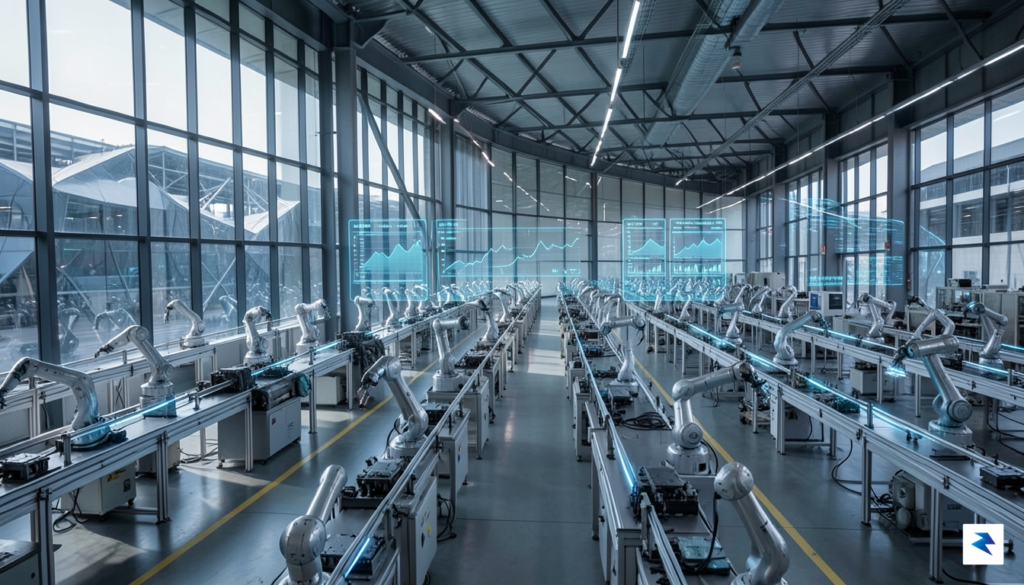
For decades, the global narrative characterized China primarily as the world’s assembly line—a place where labor-intensive tasks turned raw materials into mass-produced consumer goods. However, that perception has become dangerously outdated. Today, China has evolved into a sophisticated innovation powerhouse, leveraging a unique “megafactory” model that combines unparalleled physical scale with cutting-edge technological integration. By weaving artificial intelligence directly into the fabric of their manufacturing processes, Chinese firms are achieving levels of precision and efficiency that were once the exclusive domain of Western high-tech giants. This digital transformation of the factory floor allows for real-time optimization of supply chains and rapid prototyping, effectively shortening the distance between a product’s conceptual design and its global rollout.
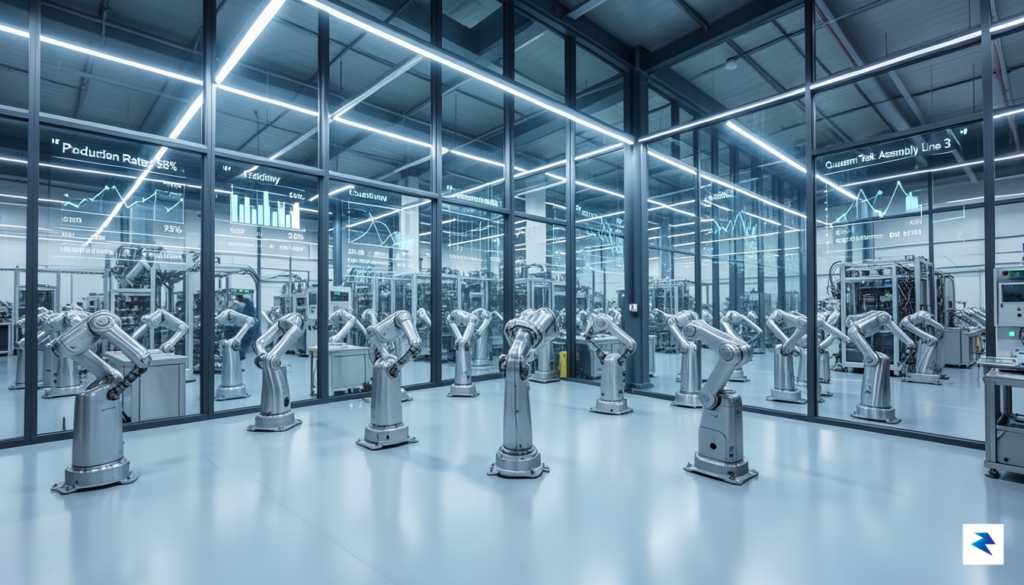
The speed of this transition is underpinned by a symbiotic, albeit complex, relationship between state-backed industrial policy and private sector agility. While government subsidies have provided the necessary capital to de-risk massive investments in infrastructure—such as the massive deployment of 5G networks and nationwide renewable energy grids—China’s private sector has injected the entrepreneurial drive needed to scale these technologies for the mass market. This duality is most visible in the green energy sector, where Chinese firms now dominate the production of solar panels, wind turbines, and lithium-ion battery technology. By controlling the entire value chain, from raw material processing to the final assembly of finished products, these companies have effectively dictated the global price points and technological standards for the energy transition.
“The competitive advantage China holds today is not just about cheaper labor; it is about the mastery of industrial velocity—the ability to innovate, scale, and iterate at a pace that legacy manufacturing hubs struggle to replicate.”
Beyond the factory floor, this technological dominance is increasingly felt in consumer electronics, telecommunications, and electric vehicles. Companies like BYD, Huawei, and CATL are no longer merely “followers” of Western innovations; they are setting the pace, often filing more international patents than their American counterparts in critical fields such as battery chemistry and telecommunications infrastructure. This shift has created a profound ripple effect in the global economy. As Chinese firms secure their foothold in these high-value sectors, the U.S. and its allies are forced to grapple with a new reality: a market where the “Made in China” label increasingly signifies not just affordability, but the cutting edge of global industrial and digital capability.

For decades, the global economy operated under the assumption that deep integration was the ultimate safeguard against conflict. However, the modern geopolitical landscape has forced a radical reassessment of this model, leading U.S. policymakers to prioritize the concept of technological sovereignty. This shift represents a departure from purely market-driven efficiency toward a strategy where the ability to control, secure, and innovate within one’s own borders is viewed as a fundamental requirement for national security. When critical infrastructure—ranging from telecommunications networks to the electrical grid—is tethered to foreign-made hardware, the line between economic cooperation and strategic vulnerability begins to blur.

The primary alarm bells are ringing loudest in sectors where hardware and software are deeply intertwined. In the realm of telecommunications and the burgeoning ecosystem of electric vehicles (EVs), the concern is not merely about the quality of the product, but the hidden potential for systemic control. U.S. officials worry that foreign-manufactured components could serve as conduits for “backdoor” access, allowing state-sponsored actors to monitor data, disrupt services, or even remotely disable critical systems during a period of heightened tension. Because modern chips and software updates are often pushed globally, a single vulnerability could theoretically be exploited across thousands of miles, effectively holding essential utilities hostage.
“True security in the digital age is not just about defending against a breach; it is about ensuring that the very foundations of our critical infrastructure remain under domestic oversight and control.”
Beyond the immediate risk of digital espionage, there is the broader, more systemic threat of supply chain disruption. China’s current dominance in manufacturing—particularly in the rare earth minerals and advanced semiconductors required for green energy—grants it immense geopolitical leverage. If the U.S. remains overly reliant on these foreign supply chains, it risks being unable to scale its own technological advancements or maintain existing infrastructure should trade relations sour. This dependence creates a strategic bottleneck where the ability to innovate or even perform routine repairs becomes contingent on the cooperation of a rival power. Consequently, the push for “de-risking” or “decoupling” is as much about insulating the domestic economy from sudden supply shocks as it is about mitigating the potential for state-directed technological sabotage.
Ultimately, the fear is that unchecked reliance on foreign innovation will lead to a gradual erosion of U.S. competitive advantage. As these technologies become deeply embedded in the American way of life, from the data stored in cloud servers to the sensors embedded in the power grid, the cost of replacing them grows exponentially. By sounding the alarm now, officials are attempting to steer the nation toward a more resilient architecture, one that balances the undeniable benefits of global innovation with the cold, hard reality that in the 21st century, technology is the new frontier of national power.

In response to the rapid ascent of Chinese technological capabilities, the United States has pivoted toward a deliberate strategy of “de-risking” its economy. Rather than pursuing an abrupt and potentially catastrophic decoupling, policymakers are focusing on insulating critical sectors from geopolitical volatility. Central to this effort is the CHIPS and Science Act, a landmark piece of industrial policy designed to revitalize domestic semiconductor manufacturing. By pouring billions of dollars into research, development, and the construction of state-of-the-art fabrication facilities, the U.S. government aims to ensure that the foundational components of modern computing are no longer exclusively sourced from vulnerable overseas clusters.

Beyond domestic manufacturing, the U.S. is aggressively pursuing a policy of “friend-shoring.” This involves realigning global supply chains to favor reliable, democratic allies rather than relying on a single, centralized manufacturing hub. By incentivizing companies to diversify their operations across regions like Southeast Asia, Latin America, and Europe, the U.S. seeks to reduce the systemic shock that would follow any trade disruption or regional conflict. This diversification is not merely a defensive measure; it is an attempt to build a more resilient global network that can withstand geopolitical friction while maintaining the flow of essential goods and innovation.
The goal is not to isolate the American market but to create a secure, redundant architecture where innovation can thrive without being held hostage by the vulnerabilities of a single-source supply chain.
However, these initiatives face a delicate balancing act. While government subsidies and tax incentives are crucial for jump-starting homegrown industries, they must be carefully calibrated to avoid inflating costs to a point where American goods become uncompetitive globally. Maintaining a cutting-edge technological ecosystem requires more than just capital; it necessitates a robust pipeline of skilled labor and a commitment to sustained private-sector innovation. As the U.S. leans into this new era of industrial policy, the challenge remains whether these interventions can effectively bridge the gap between current dependencies and a future defined by sovereign technological strength. Success will ultimately depend on the ability of the private sector to leverage these government-backed foundations to outpace, rather than just outspend, international rivals.

The core dilemma facing policymakers today is the uncomfortable friction between the efficiency of globalized supply chains and the imperative of sovereign security. For decades, the primary goal of the global tech market was to drive down costs, ensuring that high-performance hardware and sophisticated software were accessible to the average consumer at ever-lower price points. This integration allowed innovation to flourish on a massive scale, yet it simultaneously created a dangerous vulnerability: a deep, structural reliance on Chinese manufacturing and research capabilities. As the U.S. now attempts to untangle these dependencies, it must grapple with the fact that prioritizing national security will inevitably lead to higher costs for consumers and a slower pace of integration for certain technological sectors.
This shift signals a broader trend toward the fragmentation of global trade, moving away from a singular, open marketplace toward a bifurcated system of competing technological ecosystems. We are likely entering an era where “made in” labels carry significant geopolitical weight, and companies will be forced to choose between competing standards rather than operating in a universal sandbox. For the everyday user, this means that the seamless experience of global digital connectivity may soon be interrupted by firewalls, localized data regulations, and hardware incompatibilities. The trade-off for this newfound security, however, is a loss of the frictionless efficiency that characterized the previous generation of technological growth.

Ultimately, the path forward requires a pragmatic, forward-looking policy that avoids the extremes of total isolationism on one end and blind reliance on the other. A balanced approach necessitates strategic investment in domestic capacity, not necessarily to replicate every single component of the supply chain, but to ensure that the U.S. maintains a “security floor”—a baseline of critical infrastructure that cannot be compromised by external diplomatic or economic pressures. This is not a call to abandon global trade, but rather to recognize that the rules of engagement have fundamentally changed.
True long-term security is found not in the total elimination of international cooperation, but in the deliberate cultivation of domestic resilience alongside diversified, trustworthy global partnerships.
As we navigate this complex tug-of-war, the goal must be to foster an environment where innovation can still thrive without compromising the integrity of national interests. By acknowledging that technological autonomy comes with a price tag, the U.S. can better prepare its citizens for the reality of a more expensive, yet more secure, future. Moving forward, the most successful nations will be those that manage to maintain enough open-market connectivity to keep pace with global progress while simultaneously fortifying their most vital digital arteries against the tides of geopolitical instability.
You must be logged in to post a comment.