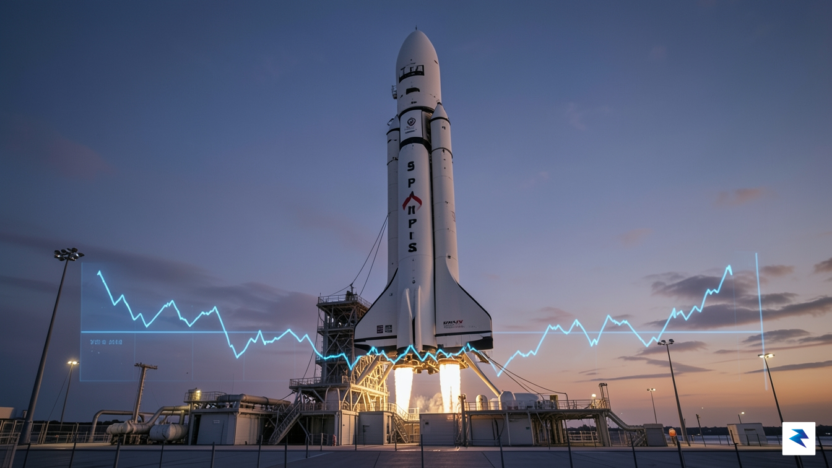
The Gravity of the Market: Inside the SpaceX IPO Slump

The anticipation surrounding SpaceX’s arrival on the public markets was nothing short of historic, drawing parallels to the most iconic tech listings of the last two decades. Investors and space enthusiasts alike spent months speculating on a valuation that seemed destined to defy gravity, fueled by the company’s unparalleled dominance in aerospace innovation and satellite communications. However, the immediate aftermath of the IPO served as a jarring wake-up call for those who expected a linear trajectory toward infinite growth. Shortly after the opening bell, the stock experienced a sudden, palpable retreat, slipping below its highly touted initial trading price of $150. This moment of contraction was not merely a technical adjustment; it represented a fundamental friction between the visionary narrative Elon Musk has cultivated for years and the cold, unforgiving metrics favored by institutional investors.
Wall Street’s reaction to this price dip highlights the intense, often brutal scrutiny that accompanies the transition of a private titan into the public sphere. When a company operates behind the curtain of private funding, it is judged primarily on its long-term milestones and technical breakthroughs. Once that barrier is removed, the shift toward quarterly earnings reports, margin pressures, and macroeconomic sensitivity becomes immediate. The dip below $150 suggests that while the market is undeniably enamored with the promise of multi-planetary travel and Starlink’s global connectivity, it is simultaneously wary of the massive capital expenditures required to maintain such an ambitious pace. Consequently, the stock is currently caught in a tug-of-war between speculative enthusiasm and the reality of a capital-intensive business model that requires years of sustained, heavy investment before reaching consistent, large-scale profitability.
“The transition from a private visionary project to a public equity requires a maturity that the market is currently testing in real-time, forcing a recalibration of expectations for both the company and its shareholders.”
Ultimately, this volatility is a hallmark of high-profile IPOs that arrive with massive hype cycles. Investors are now forced to reconcile the company’s gargantuan potential with the broader market’s current appetite for risk, which remains cautious in the face of fluctuating interest rates and global economic uncertainty. While the sub-$150 price point has undoubtedly rattled some short-term traders, it provides a crucial stress test for the firm’s long-term valuation. As the initial excitement fades into a more disciplined analysis of the company’s financial fundamentals, the market will likely continue to search for a stable floor, balancing the sheer audacity of SpaceX’s mission against the pragmatic constraints of the public financial system.
Why High-Profile IPOs Often Cool Down Quickly

It is a familiar script on Wall Street: a mega-cap company goes public amid immense fanfare, only for its stock price to retreat once the initial excitement cools. This phenomenon, often referred to as a post-IPO “hangover,” is rarely a reflection of a company’s underlying fundamentals or long-term potential. Instead, it is a predictable byproduct of market mechanics. When a firm as high-profile as SpaceX enters the public markets, the initial surge in valuation is often driven by speculative demand and limited liquidity. As the market reaches an equilibrium, the stock naturally undergoes a period of price discovery, where the enthusiasm of retail day traders meets the sober calculations of institutional investors.
One of the primary drivers of this volatility is the wave of early investor profit-taking that typically follows a debut. Venture capitalists, early employees, and angel investors often hold restricted shares that become liquid as lock-up periods expire. When these stakeholders decide to capitalize on the initial “pop,” a sudden influx of supply hits the market. If that supply exceeds the immediate demand, the share price will inevitably retreat. This is not necessarily a sign of a lack of confidence in the company’s future; rather, it is a routine financial rebalancing where early backers harvest the returns on their long-term bets, allowing new, long-term institutional shareholders to establish positions at a more sustainable valuation.
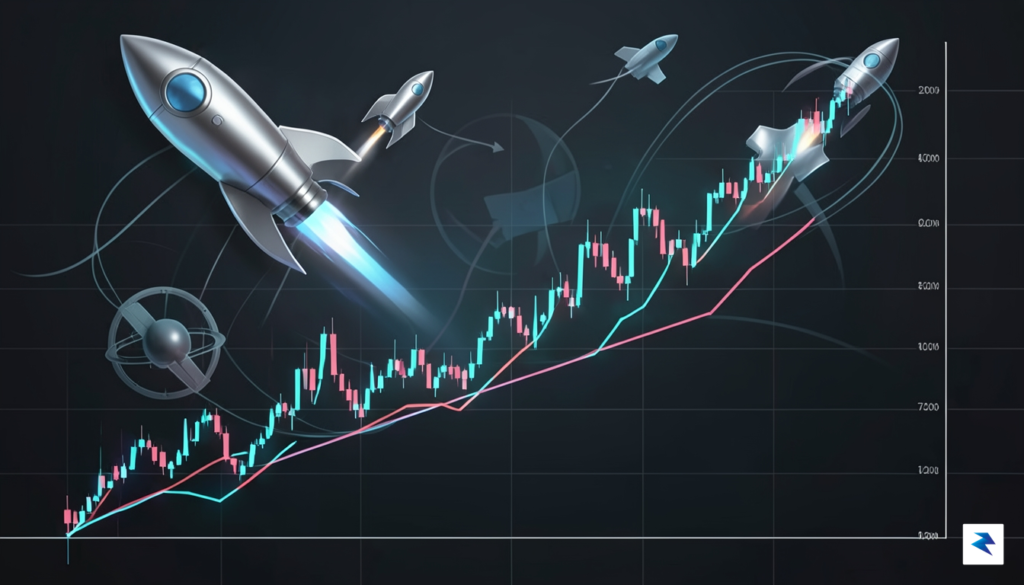
Furthermore, the stabilization mechanisms employed by underwriting banks play a critical role in managing these early days. During the immediate post-IPO period, lead underwriters often use “greenshoe” options to stabilize the stock if the price dips below the offering price. However, these mechanisms are temporary and are designed only to prevent extreme, disorderly volatility rather than to prop up the stock at an inflated artificial level. Once these stabilization efforts conclude, the stock must stand on its own merits. Consequently, the transition from a highly hyped “glamour stock” to a stable, publicly traded asset involves a necessary cooling-off phase where the market sheds the short-term traders looking for a quick profit and replaces them with investors focused on multi-year growth trajectories.
The dip in share price following a major public debut is often less about the company’s internal operations and more about the market’s transition from high-velocity trading to long-term valuation alignment.
Ultimately, SpaceX is navigating these exact market dynamics as the excitement of the initial public offering gives way to the reality of quarterly reporting and public market scrutiny. For investors, understanding this cycle is essential for maintaining perspective. Market liquidity is not infinite, and when the initial wave of hype-driven capital exits, a period of consolidation is virtually inevitable. Investors who look beyond the short-term noise will find that this cooling-off period often creates a clearer picture of the company’s true market value, detached from the emotional fervor that characterizes the first few weeks of trading.
Evaluating SpaceX's Core Valuation Drivers: Starlink and Starship
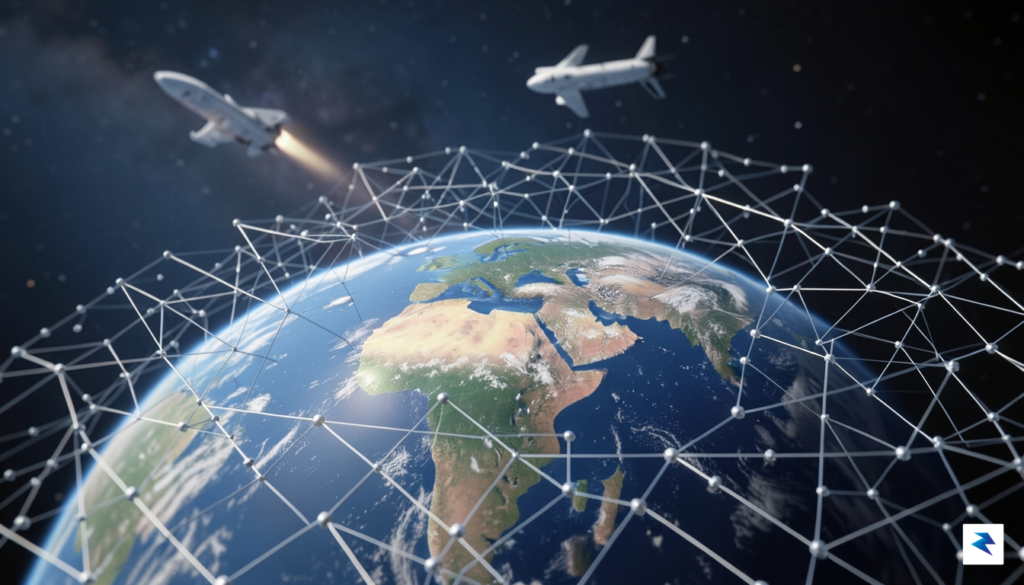
To determine whether the recent downward pressure on SpaceX’s valuation reflects a genuine structural weakness or merely a temporary market correction, investors must look past the volatility and scrutinize the company’s two primary engines of growth: Starlink and Starship. These aren’t just secondary projects; they represent a fundamental departure from the traditional aerospace business model. By transitioning from a service-based contract model—where SpaceX carries payloads for others—to a product-based platform model, the company aims to capture the vast, recurring revenue streams associated with global telecommunications and deep-space logistics.
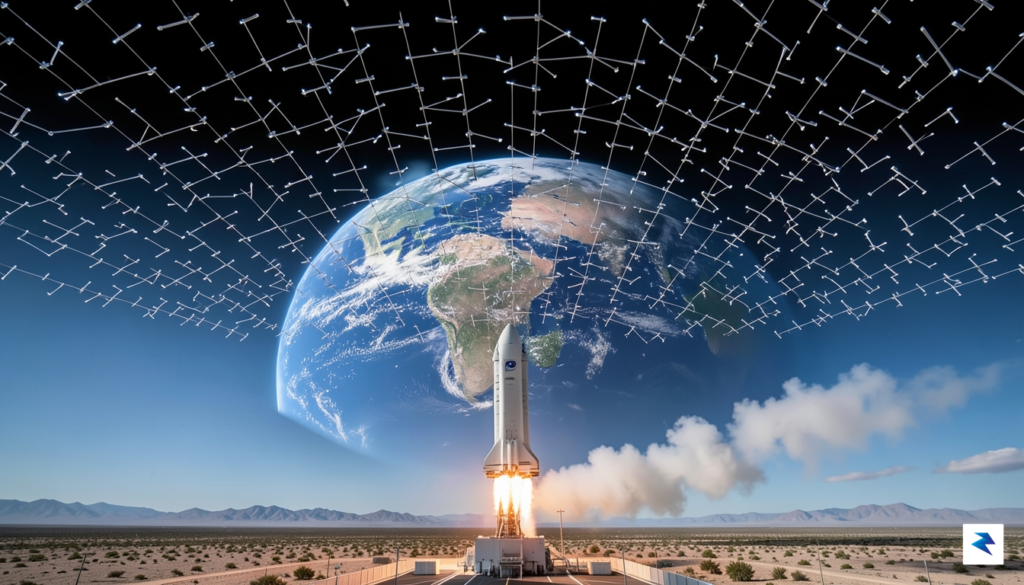
Starlink acts as the company’s most immediate and predictable financial anchor. By deploying a massive constellation of low-Earth orbit satellites, SpaceX is effectively bypassing the limitations of terrestrial fiber-optic infrastructure to provide high-speed, low-latency internet to the most remote corners of the globe. The scalability of this enterprise is unprecedented; once the initial capital-heavy deployment phase concludes, the marginal cost of adding new subscribers remains relatively low. If the company can maintain its current trajectory of subscriber growth while minimizing operational overhead, Starlink could generate billions in annual free cash flow, serving as the financial bedrock that stabilizes the company against the inherent risks of space exploration.
The Starship Multiplier Effect
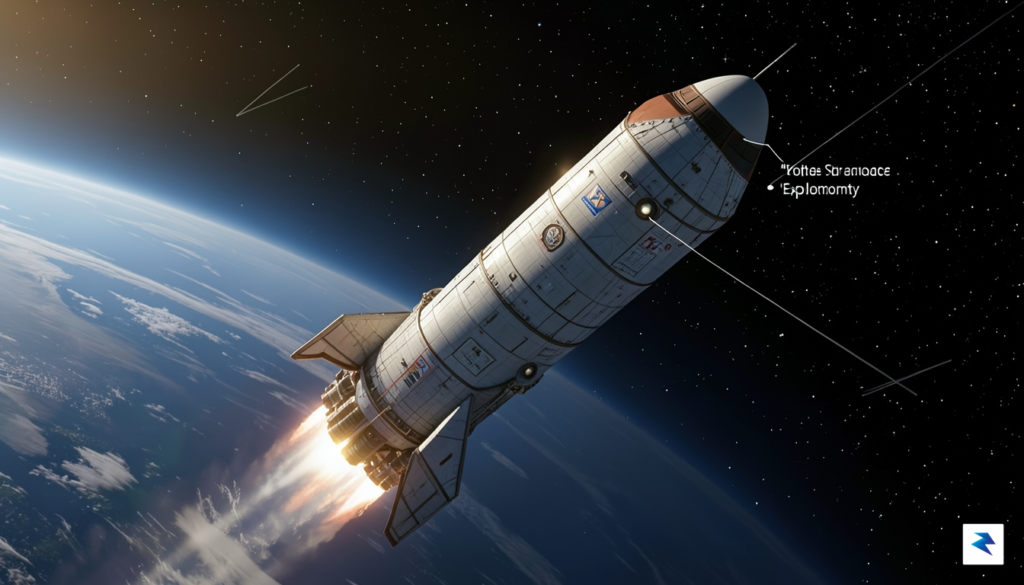
While Starlink provides the cash, Starship provides the leverage. As the most powerful launch vehicle ever designed, Starship is intended to be fully and rapidly reusable, which would theoretically collapse the cost per kilogram of payload to orbit by orders of magnitude compared to legacy systems. This is not merely an engineering feat; it is an economic disruptor. If Starship achieves its operational goals, it will drastically reduce the cost of deploying future Starlink satellites, effectively creating a virtuous cycle that widens the company’s competitive moat. Furthermore, Starship opens entirely new market verticals, such as point-to-point Earth transit and the transport of massive industrial infrastructure to lunar or Martian surfaces.
The long-term value of SpaceX is not tethered to its current launch manifest, but rather its ability to commoditize space travel through reusable, heavy-lift capacity that renders traditional rocket technology obsolete.
Ultimately, assessing the current stock slump requires a sober look at the “burn rate” versus the “value capture” of these initiatives. Investors who view SpaceX as a traditional aerospace manufacturer may be miscalculating the company’s potential. If Starship proves its reliability and Starlink successfully captures a significant share of the global broadband market, the current price dip may be viewed in hindsight as a significant entry opportunity. Conversely, any technical delays or regulatory hurdles that impede these two projects will inevitably force a re-evaluation of the company’s ambitious growth projections and, by extension, its market capitalization.
Investor Outlook: Risk vs. Reward in the Space Economy

Investing in the burgeoning space economy is inherently not for the faint of heart, as it requires a tolerance for the extreme volatility typically found in high-tech development coupled with the grueling, long-term capital horizons of aerospace engineering. For retail investors currently observing the company’s market performance, the recent retreat below the $150 threshold may appear unnerving, particularly for those accustomed to the rapid-fire gains of more traditional software sectors. However, it is essential to look past the immediate price action and recognize that SpaceX operates on a timeline measured in decades rather than quarters. For the long-term believer in the multi-planetary future envisioned by Elon Musk, this cooling period could represent a strategic entry point, provided one acknowledges that the path to profitability in orbital logistics and satellite internet is paved with significant technical hurdles.
When weighing the risk-versus-reward profile of this asset, investors must conduct a rigorous assessment of the company’s unique standing in the global market. On one side of the ledger, SpaceX holds an unprecedented monopoly on heavy-lift launch capabilities and maintains a dominant first-mover advantage with its Starlink constellation. This competitive moat is incredibly deep, acting as a defensive bulwark against newer entrants who lack the company’s vertical integration and flight-proven hardware. Conversely, the operational and regulatory risks remain substantial; any failure in launch cadence or shifts in government procurement policy could exert downward pressure on valuations. Furthermore, the capital-intensive nature of sustaining a fleet of thousands of satellites means that liquidity and cash flow management will remain the primary metrics by which institutional investors judge the firm’s long-term viability.
The true value of an investment in space exploration lies not in the quarterly volatility of a ticker symbol, but in the potential for the company to fundamentally redefine the economics of orbital access and global connectivity.
Ultimately, a balanced approach is the most prudent strategy for those considering an allocation to this sector. Investors should refrain from viewing the current price slump as a binary outcome—either a total failure or a guaranteed success—and instead treat it as a reflection of the inherent difficulty of building infrastructure in an unforgiving environment. Before committing capital, it is crucial to determine whether your financial goals align with the multi-year maturation cycle required for deep-space projects to yield consistent returns. By focusing on the company’s ability to execute its ambitious flight manifest while maintaining regulatory compliance, informed investors can better navigate the turbulence and determine if the current valuation offers a fair price for a stake in the future of human spaceflight.