
Understanding the $60,000 Bitcoin Threshold

For months, the $60,000 price point served as the bedrock of market confidence, acting as a critical technical support level that validated the broader bull market thesis. When Bitcoin slips below this threshold, it does far more than just erase unrealized gains; it invalidates a key structural floor that many analysts and algorithmic traders rely upon to gauge trend momentum. Technically, this breach forces a cascade of stop-loss orders to trigger, effectively creating a feedback loop of selling pressure that can drag the asset toward lower liquidity zones. By sliding through this pivot, Bitcoin has effectively shifted from a bullish consolidation phase into a more volatile period of price discovery, forcing market participants to re-evaluate their risk appetite in a cooling macroeconomic environment.
Beyond the raw data points on a chart, the $60,000 level represents a profound psychological demarcation line for both retail and institutional investors. For the average retail trader, this figure serves as a “mental anchor”—a round number that dictates whether they feel the market is in a healthy growth cycle or a period of dangerous decline. When this barrier is breached, the emotional shift is palpable, often leading to panic-driven liquidations that can detach the price from its fundamental valuation. Conversely, institutional entities view this level through the lens of long-term risk management. For these larger players, a sustained break below $60,000 necessitates a systematic hedging strategy, which often involves offloading positions to protect capital, thereby reinforcing the downward trend and stripping the market of the optimism that characterized earlier months.

The $60,000 mark has transitioned from being a stable foundation for the current cycle into a significant point of resistance, signaling that market participants are no longer willing to buy the dip with the same unbridled enthusiasm seen during the start of the year.
To understand the current sentiment, one must look at how this cycle compares to the historical volatility patterns of previous bull runs. While past cycles were frequently defined by rapid, parabolic movements, the current environment is heavily influenced by external pressures ranging from Federal Reserve interest rate policies to the cooling demand for spot ETFs. Unlike the retail-driven rallies of the past, today’s market is inextricably linked to global liquidity and institutional capital flows. Consequently, when Bitcoin fails to hold this technical support, it signals that the broader macroeconomic headwinds—such as the high-interest-rate environment and the shift in AI-driven speculative capital—are finally outweighing the supply-side scarcity narrative that Bitcoin investors have relied upon for so long. This shift marks a challenging transition period, testing the resilience of those who entered the market at the height of the recent hype cycle.
The Federal Reserve's Hawkish Stance and Liquidity

At the heart of Bitcoin’s recent price volatility lies a fundamental shift in the global macroeconomic landscape, primarily driven by the Federal Reserve’s stubborn commitment to a “higher-for-longer” interest rate environment. When borrowing costs remain elevated, the fundamental mechanics of market liquidity undergo a significant contraction. Investors, who previously enjoyed access to cheap capital during periods of near-zero interest rates, are now faced with the reality that holding high-risk, speculative assets like cryptocurrency is increasingly expensive compared to the guaranteed yields found in traditional government bonds or high-yield savings accounts.
This “risk-off” sentiment is not merely a psychological reaction; it is a direct consequence of the Federal Reserve’s quantitative tightening (QT) program. By reducing the size of its balance sheet and keeping the federal funds rate at restrictive levels, the central bank is effectively draining the excess liquidity that historically fueled speculative bubbles. As the supply of “easy money” dries up, the capital that once flowed freely into Bitcoin and other digital assets is being redirected toward safer harbors. This process creates a structural headwind for Bitcoin, as the asset relies heavily on surplus market liquidity to sustain its parabolic growth cycles.
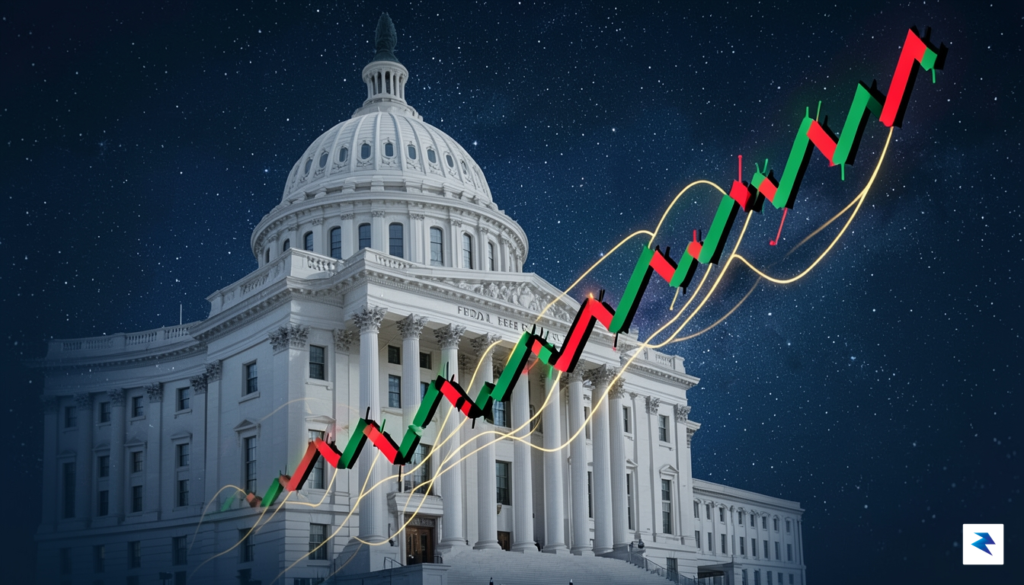
The persistence of high interest rates acts as a gravitational force, pulling capital away from volatile speculative instruments and back toward the stability of traditional fixed-income markets.
Furthermore, the market’s response to Federal Reserve communications has become increasingly sensitive. Investors are now hyper-focused on every word uttered by Fed officials, parsing economic data and speeches for any hint of a pivot toward monetary easing. When expectations of near-term rate cuts are pushed back, market participants often preemptively sell off risk-on positions to lock in profits or mitigate potential losses, leading to the kind of sharp, cascading drops seen when Bitcoin fell below the $60,000 threshold. The current environment essentially forces Bitcoin to compete for capital in a landscape where the cost of risk is at its highest point in years, ensuring that any volatility in policy messaging triggers immediate and significant reallocations across the digital asset sector.
Ultimately, until there is a clear, definitive signal that the Federal Reserve is ready to loosen its grip on the economy, Bitcoin is likely to remain tethered to the ebb and flow of central bank policy. The narrative of “digital gold” as an inflation hedge is currently being tested against the harsh reality of liquidity constraints. As long as the Fed prioritizes the cooling of inflation over the stimulation of risk assets, market participants should anticipate that Bitcoin will remain highly reactive to any updates regarding the trajectory of interest rates and the broader health of the liquidity cycle.
ETF Outflows: Shifting Institutional Sentiment

For much of the early year, spot Bitcoin ETFs were hailed as the primary engine of the digital asset’s explosive growth, acting as a massive vacuum that pulled liquidity into the market. These financial vehicles provided a seamless bridge for traditional institutional investors to gain exposure to Bitcoin without the complexities of self-custody or unregulated exchanges. However, the narrative has shifted dramatically in recent weeks. Data now indicates a sustained period of net outflows, marking a stark reversal from the record-breaking inflow streaks that characterized the post-launch phase. This cooling in demand suggests that the initial “gold rush” excitement has been replaced by a more cautious, risk-averse posture among large-scale asset managers.
The current trend reflects a fundamental change in how institutional players are navigating the broader macroeconomic landscape. When Bitcoin was surging, these ETFs served as vehicles for aggressive portfolio expansion; now, they are being utilized as tools for tactical de-risking. As market volatility increases and uncertainty regarding interest rate trajectories persists, many institutional investors are opting to trim their positions to lock in gains or mitigate potential downside exposure. This behavior is indicative of a “flight to safety” mentality, where capital is being reallocated toward traditional fixed-income assets or cash equivalents that offer more stability in a cooling market environment.
The pivot from aggressive accumulation to net outflows underscores a maturing, yet increasingly sensitive, institutional participation in the crypto market.
To understand this shift, one must contrast the current environment with the hysteria surrounding the ETF approvals earlier this year. During the launch phase, the market was driven by anticipation and the promise of unprecedented institutional legitimacy, leading to a relentless buying pressure that pushed prices toward new highs. Today, that novelty has worn off, and the focus has shifted toward fundamental macroeconomic data—specifically how Bitcoin reacts to Fed policy and inflationary pressures. Because these institutional investors are inherently sensitive to risk-adjusted returns, any signal of a “higher-for-longer” interest rate environment tends to prompt an immediate reassessment of speculative assets. Consequently, these outflows are not merely a random fluctuation but a clear signal that the institutional “smart money” is currently waiting for a more definitive catalyst before re-entering the market with conviction.
The AI Boom: Is Capital Migrating from Crypto?

Perhaps the most compelling narrative shifting the landscape of digital asset investment is the relentless ascent of the artificial intelligence sector. While Bitcoin has long been touted as “digital gold” and a hedge against traditional financial instability, the current market climate suggests that speculative capital is increasingly gravitating toward the tangible, high-growth promises of AI-driven technology. As tech giants and semiconductor manufacturers report record-breaking earnings fueled by infrastructure demand, investors are recalibrating their portfolios, often prioritizing the immediate, productivity-enhancing potential of AI over the long-term, decentralized thesis of cryptocurrency.
This phenomenon, often described as capital rotation, illustrates a broader shift in risk appetite among institutional and retail participants alike. In modern financial markets, liquidity is finite; when a sector as explosive as AI captures the collective imagination of Wall Street, other speculative assets often find themselves sidelined. The correlation between AI stock rallies and crypto stagnation has become increasingly visible, as traders harvest gains from volatile digital assets to secure positions in established tech leaders that are currently delivering more predictable, fundamental growth. Consequently, Bitcoin’s recent struggles to hold the $60,000 threshold may not just be a matter of macroeconomic headwinds, but a reflection of a fundamental reallocation of global capital.

Investors are arguably perceiving AI as a more tangible growth story because it offers immediate, observable impacts on corporate efficiency and global infrastructure. Unlike the abstract value proposition of blockchain technology, which often requires a leap of faith regarding future adoption, the AI trade is backed by massive capital expenditures from hyperscalers like Microsoft, Google, and Nvidia. This clarity creates a sense of safety and “real-world” utility that resonates deeply in a high-interest-rate environment where investors are inherently more risk-averse. When capital is expensive, it tends to flow toward what is perceived as the most concrete innovation, and currently, AI stands as the undisputed champion of that narrative.
The migration of capital from crypto to AI highlights a shift toward assets that demonstrate immediate, enterprise-level utility, leaving speculative digital assets to compete harder for investor attention in a crowded marketplace.
Ultimately, the challenge for the crypto market is to demonstrate that it can coexist with the AI revolution rather than be cannibalized by it. If developers can successfully integrate decentralized protocols with AI—creating “AI agents” that use crypto for autonomous payments or data verification—the two sectors could become symbiotic rather than competitive. However, until such integration becomes mainstream, Bitcoin must continue to fight for liquidity against an AI sector that currently commands the undivided attention of the world’s most influential institutional investors.
Navigating Market Volatility in a Macro Environment

The recent retreat of Bitcoin toward the sub-$60,000 threshold serves as a vivid reminder that the digital asset market does not exist in a vacuum. Rather than viewing this decline as an isolated event, investors should interpret it as the convergence of three potent macroeconomic forces: the tightening stance of the Federal Reserve, the shifting sentiment within spot Bitcoin ETF flows, and the broader rotation of capital toward the burgeoning artificial intelligence sector. When interest rates remain higher for longer, the opportunity cost of holding non-yielding assets like Bitcoin increases, compelling institutional investors to re-evaluate their portfolios. Simultaneously, the cooling momentum in ETF inflows has reduced the aggressive buying pressure that fueled the earlier stages of the year, leading to a temporary liquidity vacuum that leaves the price more susceptible to downward swings.

For the average investor, this environment demands a shift from reactive trading to strategic resilience. The key to weathering this storm lies in acknowledging that Bitcoin’s price discovery remains a volatile process driven by global liquidity cycles. Rather than panicking during periods of heightened volatility, it is essential to maintain a long-term perspective. If your investment thesis is rooted in Bitcoin’s role as a digital store of value or a hedge against fiat debasement, short-term price fluctuations—even those that break through psychological support levels—are merely noise. Implementing disciplined risk management strategies, such as dollar-cost averaging, can help smooth out the impact of these macro-driven dips while ensuring that you remain positioned for the eventual return of favorable market conditions.
To thrive in a volatile market, investors must distinguish between temporary liquidity constraints and fundamental shifts in the asset’s long-term value proposition.
Looking ahead to the coming quarter, market participants should remain vigilant regarding three critical developments. First, closely monitor Federal Reserve rhetoric for any signals regarding potential shifts in interest rate policy, as any hint of a pivot could serve as a major catalyst for risk-on assets. Second, track the net flows of spot Bitcoin ETFs; consistent accumulation by these institutional vehicles often acts as a foundational floor for the price, whereas sustained outflows signal a need for caution. Finally, keep an eye on the tech sector’s AI-led growth, as capital rotation back into digital assets often occurs when investors begin to rebalance gains from high-performing tech stocks. By keeping a watchful eye on these interconnected variables, you can transform periods of uncertainty into opportunities for informed decision-making rather than emotional reaction.