
Cerebras Systems: The First Earnings Reality Check
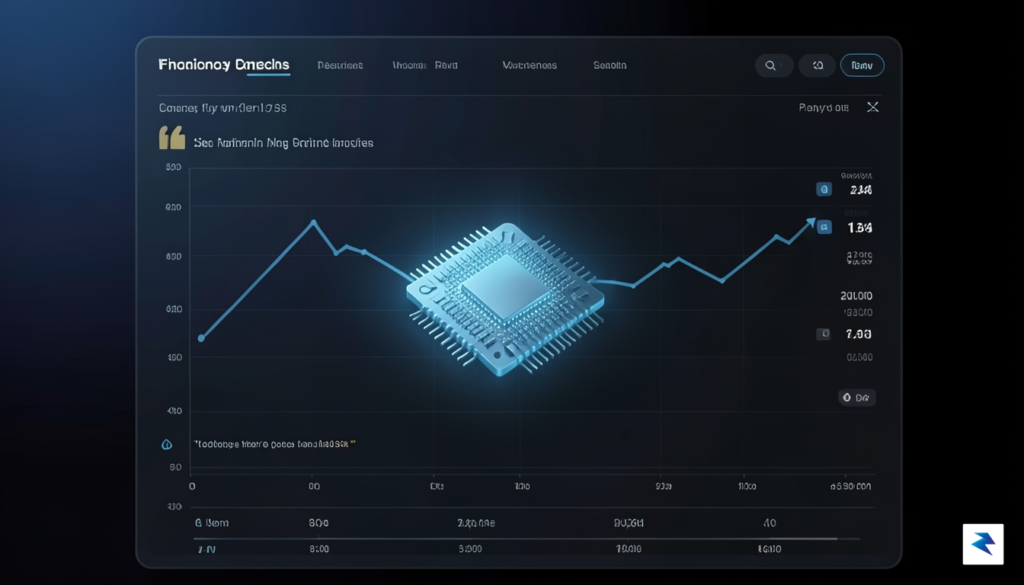
For months, Silicon Valley has watched Cerebras Systems with bated breath, viewing the company as a potential “Nvidia killer” capable of disrupting the status quo with its massive, wafer-scale engine architecture. Transitioning from a private tech darling to a publicly traded entity is never a seamless endeavor, but for Cerebras, the shift carries the heavy burden of justifying a sky-high valuation in an increasingly competitive AI hardware landscape. The company’s unique approach—placing entire neural networks onto a single, dinner-plate-sized silicon wafer—has long promised to solve the memory bandwidth bottlenecks that plague traditional GPU clusters. However, transitioning from the conceptual excitement of a venture-backed startup to the cold, hard scrutiny of quarterly earnings reports forces a company to pivot from promising “what could be” to proving “what is” in terms of sustainable revenue and operational efficiency.
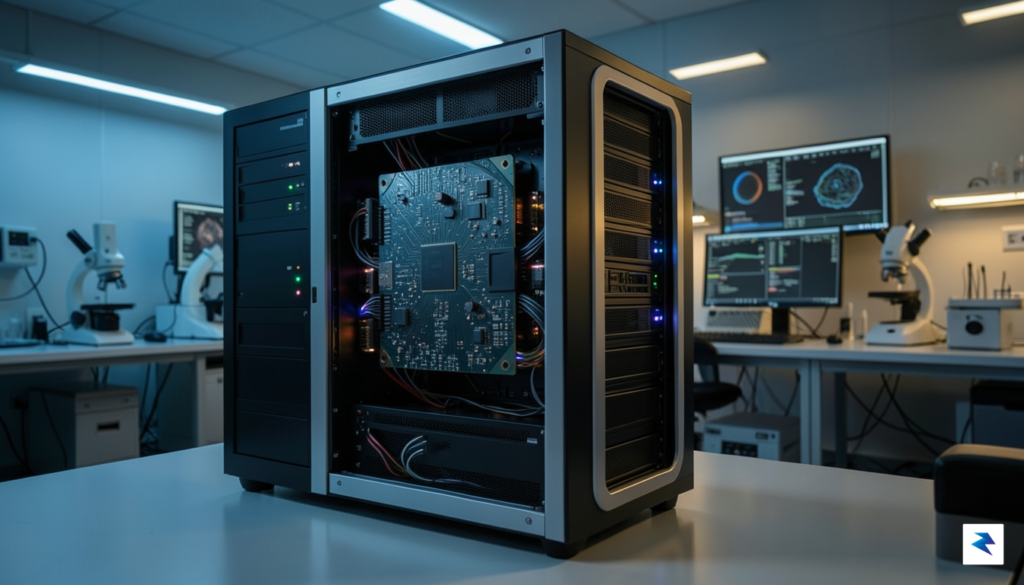
The recent market reaction, marked by an 11% slide in share price, serves as a sobering reminder that public investors prioritize consistency and scalability over technological novelty. While the company touted an impressive 92% year-over-year revenue growth, the market’s caution suggests that the financial narrative is far more complex than a simple growth chart might imply. Investors are clearly weighing the high cost of manufacturing these massive chips against the company’s ability to lock in long-term enterprise contracts. This initial earnings report serves as a critical litmus test, signaling that the “AI hype” phase is slowly giving way to a more pragmatic evaluation of balance sheets, capital expenditure requirements, and the long-term feasibility of maintaining such a specialized product line against incumbent giants.
The core tension facing Cerebras is no longer about whether their wafer-scale engineering works, but whether it can achieve the economies of scale necessary to challenge the entrenched dominance of existing GPU architectures.
Ultimately, this earnings report acts as a broader proxy for the current state of the AI infrastructure sector. As the industry moves past the initial gold rush, the market is becoming increasingly sensitive to the “burn rate” associated with high-performance computing. For Cerebras, the path forward requires moving beyond early-adopter enthusiasm and demonstrating that their chips can offer a clear, repeatable return on investment for major cloud providers and large-scale AI research labs. By stripping away the private-market mystique, this financial disclosure has forced a long-overdue conversation about the viability of specialized AI hardware, leaving stakeholders to decide whether the company’s technological edge is a sustainable moat or merely an expensive experiment in a market that demands immediate, predictable results.
Decoding the 92% Revenue Surge

The astronomical 92% year-over-year revenue increase reported by Cerebras serves as a powerful indicator that the market is hungry for alternatives to the traditional GPU-centric architecture that has dominated the AI landscape for years. This surge is not merely a result of broader industry hype, but rather a direct consequence of the company successfully positioning its proprietary Wafer-Scale Engine (WSE) as a high-performance solution for the most demanding computational tasks. By focusing on massive, single-chip designs rather than traditional multi-GPU clusters, Cerebras has managed to attract enterprise clients who are struggling with the latency and communication overhead inherent in standard data center deployments.
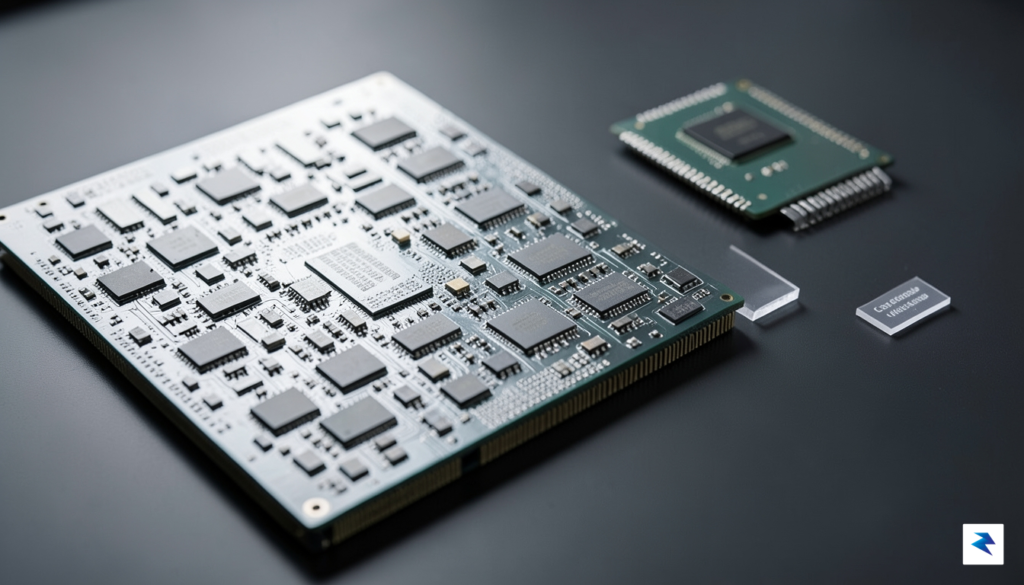
A primary driver of this rapid expansion is the company’s pivot toward robust cloud-based services, which allows organizations to access massive AI compute power without the prohibitive capital expenditure of building their own hardware infrastructure. As businesses scramble to train increasingly complex large language models (LLMs), the efficiency of the WSE becomes a critical competitive advantage. Unlike standard hardware, which often requires complex orchestration of thousands of individual chips, the Cerebras architecture allows for a more streamlined, “memory-first” approach to processing. This enables researchers and developers to reduce training times for massive models from months to mere days, directly translating into tangible value for enterprise customers who are racing to bring generative AI applications to market.
The move toward wafer-scale computing represents a fundamental shift in how we approach the “memory wall”—the bottleneck where data movement, rather than raw computation, limits the speed of AI model training.
Furthermore, the adoption of Cerebras technology is being bolstered by a growing awareness that energy efficiency and physical space constraints are becoming the next major hurdles for data centers. As LLMs grow in parameter count, the power required to cool and operate massive GPU farms is becoming unsustainable for many organizations. By consolidating thousands of cores onto a single, massive silicon wafer, Cerebras offers a footprint that is significantly more compact and energy-efficient than traditional rack-mounted solutions. Consequently, this unique value proposition has allowed the company to sign lucrative contracts with major research institutions and commercial enterprises that prioritize both raw performance and operational sustainability. As these partnerships continue to scale, the company is effectively carving out a defensible moat in a market that remains desperate for scalable, high-performance AI infrastructure.
The Margin Squeeze: Why Investors Are Concerned

While Cerebras Systems has captured significant market attention with its staggering 92% year-over-year revenue growth, the company’s first public earnings report introduced a sobering reality for Wall Street: the margin squeeze. Despite the technical prowess of its wafer-scale engines, management’s forward-looking guidance suggested that core gross margins will face downward pressure in the upcoming quarter. In the capital-intensive semiconductor industry, gross margins serve as the ultimate litmus test for operational efficiency and long-term scalability. Investors, who had been riding a wave of optimism regarding the company’s ability to challenge incumbents, suddenly found themselves questioning whether the current cost structure is truly sustainable as the company attempts to transition from a high-growth startup to a profitable manufacturing titan.
The manufacturing process for Cerebras’s hardware is fundamentally different from traditional chipmaking, involving massive, wafer-scale processors that require highly specialized fabrication techniques. These chips are not merely larger; they are complex monoliths that demand rigorous testing and high precision, leading to significant overhead in the production lifecycle. Because these chips are so unique, the company cannot leverage the economies of scale that more established semiconductor giants enjoy. Consequently, every unit produced carries a heavy burden of fixed costs, and supply chain complexities—ranging from specialized materials to advanced packaging—keep production costs elevated. When management indicates that these margins will compress, it signals that the cost of delivering each unit is rising faster than the company’s ability to optimize its manufacturing yield or pass those costs onto customers.
“Gross margins are the primary indicator of long-term health and scalability in the semiconductor space; a contraction here signals that the road to profitability may be steeper than initially projected.”
Furthermore, analysts are keeping a close eye on the interplay between heavy Research and Development (R&D) spending and actual output. To maintain its competitive edge in the AI hardware race, Cerebras must consistently invest in next-generation architecture, which drains liquidity and impacts bottom-line performance. The challenge lies in balancing these necessary R&D outflows with the immediate requirement to scale revenue. If gross margins continue to shrink, the company will have to generate an exponentially larger volume of sales just to break even, let alone achieve the profitability that public shareholders expect. For an investor base that values long-term stability, this margin compression creates a significant hurdle, as it suggests that even as the company captures more market share, the underlying economics of its business model remain precariously balanced under the weight of its own manufacturing ambition.
Cerebras vs. The GPU Giants: Strategic Positioning

To understand the current market skepticism surrounding Cerebras, one must look past the quarterly revenue figures and examine the fundamental divergence in hardware philosophy. While NVIDIA has effectively conquered the AI era by perfecting the art of the GPU cluster—linking thousands of independent processors through sophisticated high-speed interconnects—Cerebras has opted for a radically different “monolithic” approach. Instead of forcing data to travel across miles of copper wire between separate chips, Cerebras utilizes its proprietary Wafer-Scale Engine (WSE). This massive, dinner-plate-sized processor houses an entire neural network on a single piece of silicon, theoretically eliminating the communication bottlenecks that plague traditional data centers.
The trade-offs between these two architectures are profound. In a traditional GPU environment, performance is often constrained by the “memory wall” and the latency inherent in moving data between distributed nodes; even with the fastest interconnects available, the physical distance between chips creates a tax on speed and energy. By contrast, Cerebras’s monolithic design offers unprecedented on-chip memory bandwidth and near-zero latency, allowing for a level of data throughput that standard clusters simply cannot replicate. However, this architectural triumph comes with significant engineering hurdles, particularly regarding yields and thermal management, which remain the primary points of contention for investors wary of the company’s ability to scale production reliably.
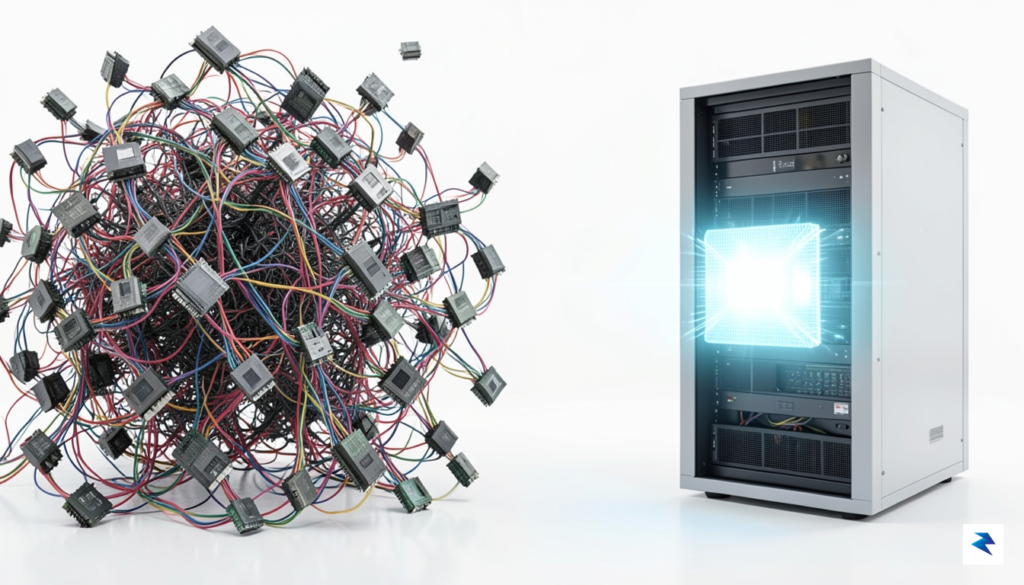
In terms of competitive positioning, Cerebras is not merely trying to build a faster chip; it is attempting to redefine the board upon which the AI game is played. NVIDIA’s dominance is built on a massive, entrenched ecosystem of software (CUDA) and hardware compatibility that makes it the industry standard. Cerebras, conversely, is carving out a niche for enterprises and research institutions that require extreme performance for massive model training where traditional clusters hit a plateau. By focusing on the “wafer-scale” advantage, they are essentially betting that the future of large-scale AI will demand a more integrated, efficient hardware solution than what can be achieved through the incremental optimization of conventional GPU clusters.
The core of the Cerebras value proposition lies in the reduction of “communication overhead”—the invisible, energy-consuming tax paid by every data packet that hops between standard GPUs.
Ultimately, the company’s moat is built on the sheer complexity of its manufacturing process. While NVIDIA’s strength lies in its ability to iterate rapidly on existing, proven silicon designs, Cerebras is counting on the fact that its architectural leap—moving from distributed systems to a single-processor model—will become an unavoidable necessity as AI models grow in size and complexity. Whether this bet pays off depends on their ability to prove that their monolithic design is not just a technological marvel, but a commercially viable engine that can outpace the massive R&D budgets of the legacy incumbents.
The Road Ahead: Scaling for Sustainable Growth

The recent 11% dip in Cerebras’s stock following its inaugural public earnings report serves as a sobering reality check for a company that has long thrived on the excitement of its architectural breakthroughs. While a 92% revenue surge highlights the massive demand for its wafer-scale engines, Wall Street’s reaction underscores a fundamental shift in expectations. Investors are no longer merely looking for technical wizardry; they are demanding a transition from a high-growth startup model to a predictable, mature operational entity. For Cerebras, the path forward necessitates a delicate balancing act: maintaining the rapid pace of innovation that defines its brand while simultaneously proving that it can scale its infrastructure and client base with the discipline required to sustain long-term profitability.

Management’s long-term guidance suggests a clear pivot toward deepening existing partnerships rather than just acquiring new, one-off project clients. The company’s ability to secure recurring revenue streams will be the ultimate litmus test for its market resilience. By moving beyond hardware sales and leaning into its Cerebras Inference and training-as-a-service models, the firm can better insulate itself from the volatility of individual capital expenditure cycles. This transition toward a software-enabled ecosystem is crucial; it converts a high-friction hardware sale into a sticky, subscription-based relationship that provides the predictable cash flow necessary to appease institutional investors who prioritize margins over raw, unrefined growth.
The true measure of Cerebras’s future success will not be found in the peak performance of a single chip, but in the company’s ability to create a repeatable, scalable business model that keeps enterprise clients committed for the long haul.
Ultimately, the competitive landscape in AI hardware remains brutal, with entrenched incumbents like NVIDIA setting the standard for market dominance. To succeed, Cerebras must prove that its wafer-scale technology is not just a niche solution for specialized research, but a foundational pillar for the broader AI infrastructure market. If the company can demonstrate a consistent reduction in total cost of ownership for its customers and maintain a steady pipeline of enterprise deployments, the current market skepticism may prove to be a temporary hurdle rather than a structural failure. The road ahead requires patience, but for those betting on the evolution of compute, Cerebras remains one of the most compelling, albeit volatile, stories in the current technology cycle.