
The Performance Bottleneck in SQL Parsing

In the ecosystem of modern data platforms, SQL acts as the universal language of communication between the user and the underlying database. Every time a user interacts with a dashboard, runs a custom report, or triggers a real-time alert, their intent is expressed as a string of raw SQL text. However, computers do not inherently understand these strings; they require a dedicated intermediary known as a parser to translate that human-readable text into a structured, machine-executable tree—often called an Abstract Syntax Tree (AST). While this translation process might seem trivial for a single query, it becomes a monumental computational burden when thousands of users are firing requests simultaneously, transforming what should be a seamless experience into a significant performance bottleneck.

The core challenge lies in the inherent trade-off between the flexibility required for complex data analysis and the raw speed needed for real-time responsiveness. As data platforms like ours scale, we often introduce increasingly sophisticated features, such as advanced filtering, nested subqueries, and dynamic transformations. Each of these additions forces the SQL parser to perform more complex pattern matching and validation, effectively increasing the “tax” paid on every single interaction. When the parsing phase consumes a disproportionate amount of the total request lifecycle, the system begins to stutter, leading to increased latency that users feel as sluggish load times. This is precisely why optimizing the parsing layer is not merely a technical housekeeping task—it is a critical lever for maintaining a competitive user experience.
To achieve true real-time analytics, we must ensure that the gatekeeper of our data—the SQL parser—is as lean and efficient as the database engine itself.
When we talk about a 70x performance jump, we aren’t just discussing an abstract engineering benchmark; we are discussing the difference between a system that waits for the user and a system that feels instantaneous. In high-concurrency environments, a slow parser creates a queue, stalling the execution pipeline and forcing the CPU to waste cycles on repetitive text processing rather than data retrieval. By dramatically shrinking the time it takes to digest and interpret these queries, we effectively free up massive amounts of headroom. This efficiency allows us to handle larger workloads, support more concurrent users, and ultimately build features that were previously deemed too computationally expensive to implement. Simplifying this fundamental step in the data pipeline is the foundation upon which we build the next generation of fast, scalable, and reliable analytics tools.
Rethinking the Approach: Why Traditional Parsers Fail

At the heart of many legacy SQL parsing libraries lies a fundamental design philosophy that prioritizes total grammar completeness over raw execution speed. These traditional parsers are built to handle the entire SQL specification—every obscure edge case, every dialect variation, and every possible syntactic permutation—regardless of whether a specific application actually requires that breadth. While this “do-it-all” approach ensures compatibility, it imposes a significant performance penalty. By attempting to account for every theoretical possibility, these engines inevitably carry massive memory overhead and execute thousands of redundant recursive calls, which become debilitating bottlenecks when processing thousands of incoming queries per second.
This technical debt is further compounded by the reliance on generalized parsing generators. These tools often produce bloated state machines that are difficult to optimize because they are divorced from the specific, practical needs of the host application. When a system is burdened by a library designed for broad, general-purpose utility, it wastes precious CPU cycles on parsing syntax that the system will never actually encounter or support. Consequently, the overhead of the parser itself begins to consume a disproportionate share of the total request latency, turning a simple data extraction task into a heavy computational chore.

Furthermore, developers often fall into the trap of treating existing, inefficient code as the definitive blueprint for how a parser must look. When we approach a performance bottleneck, the instinct is often to refactor the existing logic rather than questioning the underlying architectural assumptions. By studying the legacy code too closely, we inadvertently inherit the same inefficient design patterns, such as deep object hierarchies and excessive memory allocations, that caused the original slowdown. This mimetic tendency creates a cycle of incremental, low-impact changes that fail to address the core problem: the parser is solving for the wrong constraints.
True performance gains in high-scale systems rarely come from micro-optimizing existing logic; they come from stripping away the abstraction layers that were never needed in the first place.
To break this cycle, we must move away from generic, “catch-all” libraries and toward purpose-built engines that reflect the actual data environments in which they operate. A specialized parser only needs to understand the subset of SQL that the application uses, allowing it to bypass the complexity of a full-scale grammar implementation. By focusing strictly on the required syntax, we can replace heavy, generic state machines with lean, specialized logic that minimizes memory footprint and drastically reduces the number of operations per query. This shift in perspective transforms the parser from a generic tool into a specialized performance engine, uniquely optimized for the specific, high-velocity demands of modern data infrastructure.
The Engineering Strategy for a 70x Speed Boost

Achieving a 70x performance gain is rarely the result of minor optimizations or clever refactoring; instead, it requires a fundamental shift in how one approaches the problem of computation. The most significant bottleneck in our original SQL parser wasn’t a specific algorithm or an inefficient loop, but rather an over-commitment to total SQL standard compliance. We were spending massive amounts of CPU cycles validating syntax and handling edge cases that our platform would never actually encounter. By narrowing our scope to only the specific SQL subset required by our application, we effectively stripped away the “dead weight” that had been slowing down our execution pipeline since day one.
This tactical pivot relied on a philosophy of “pragmatic ignorance.” We didn’t need to understand every nuance of the SQL specification; we only needed to understand the constraints of the queries our users were actually running. By treating the parser as a specialized tool for a defined domain rather than a general-purpose engine, we could bypass complex abstraction layers that were previously adding unnecessary overhead. This wasn’t about writing “better” code in the traditional sense, but about writing less code that did exactly what was required and nothing more. When you stop trying to solve every possible problem, you find that the solution to your specific problem becomes remarkably lightweight.

Stripping Away Abstraction for Hardware Efficiency
A major contributor to the performance leap was the intentional removal of thick abstraction layers that had accumulated over time. While abstractions are helpful for maintainability in many software contexts, they often create a disconnect between the logical intent of the code and the physical execution on the hardware. By bypassing these layers, we allowed the parser to interact more directly with the memory and processing cycles, essentially bringing the logic closer to the metal. This approach required a deep understanding of our constraints—knowing exactly where we could cut corners without sacrificing correctness for our specific use case.
The most efficient way to process a query is to build a parser that is only as complex as the language it is tasked to understand.
Ultimately, this process proved that speed is a byproduct of clarity. By refusing to let the parser be bogged down by the “what ifs” of the SQL standard, we created a streamlined path that prioritized the user’s immediate needs. We didn’t have to spend weeks meticulously analyzing every line of the legacy codebase; we simply looked at the patterns of usage and decided that 90% of the existing parser’s logic was irrelevant to our success. This realization transformed the project from a tedious maintenance task into an exercise in high-performance engineering, proving that sometimes the best way to improve code is to stop asking it to do things it was never meant to handle.
Implementation Details: From Regex to State Machines
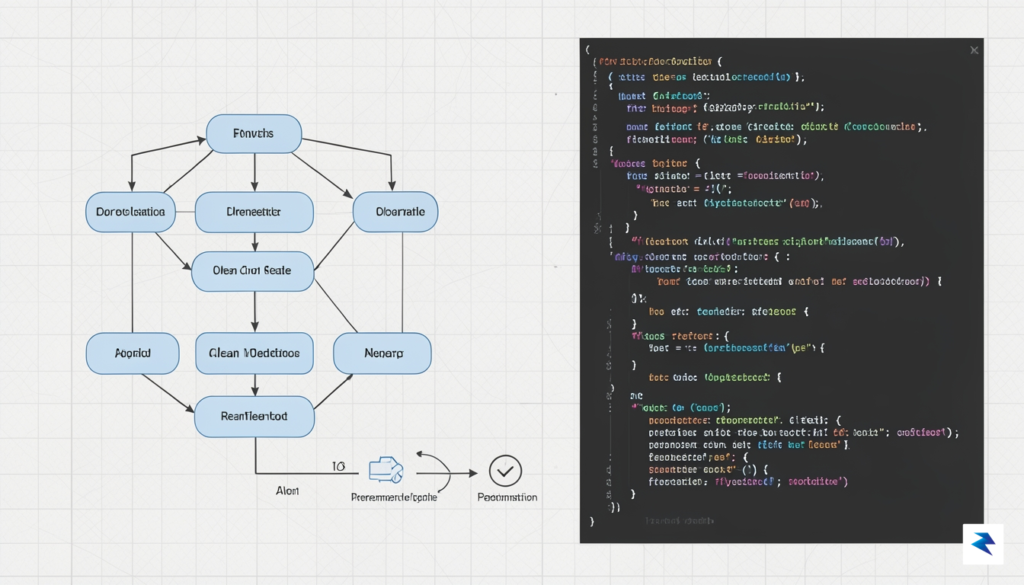
The original parsing architecture relied heavily on complex regular expressions to identify and categorize SQL tokens. While regex is convenient for prototyping, it is notoriously inefficient for high-throughput string analysis because it often involves extensive backtracking and repeated scanning of the same input buffers. Every time the engine encountered a new query, the regex engine had to evaluate multiple patterns against the text, leading to a significant amount of redundant work. By transitioning to a custom-built, deterministic finite automaton (DFA)—or a state machine—we replaced this chaotic evaluation process with a rigid, predictable set of transitions. Instead of asking the processor to guess the token type, the state machine moves through a single path, consuming each character exactly once and deciding the next state based on the current context.
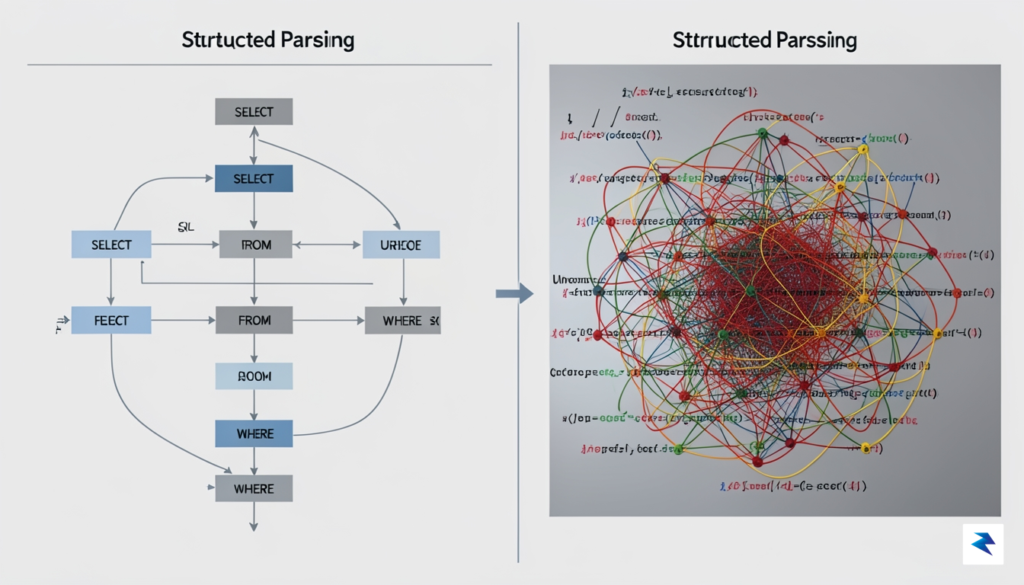
This shift to a state machine approach significantly minimizes memory allocation, which is a hidden performance killer in many high-level languages. In the previous implementation, the reliance on regex often forced the creation of numerous intermediate string objects and temporary arrays during the tokenization phase. These allocations trigger frequent garbage collection cycles, which pause execution and consume precious CPU cycles. By contrast, our new parser operates directly on byte slices, maintaining a pointer to the current position in the input string rather than duplicating data. Because the parser now reuses the same memory space to track its internal state, the pressure on the memory allocator is practically eliminated, allowing the application to stay within the CPU’s L1 and L2 cache lines more effectively.
The leap from O(n * m) regex complexity to O(n) linear scanning is what fundamentally unlocked the 70x performance gain.
From a computational complexity standpoint, the difference is stark. The old regex-based model had a complexity that scaled poorly as queries grew in length or complexity, as the engine had to constantly backtrack when a pattern match failed midway. The new state machine operates in linear time, meaning the time taken to parse a query is directly proportional to its length, regardless of the complexity of the SQL syntax. This predictability is vital for our infrastructure, as it ensures that even our most complex analytical queries do not cause a bottleneck in the ingestion pipeline. By stripping away the overhead of complex pattern matching and focusing on a lean, single-pass traversal, we have transformed a once-expensive parsing step into a near-instantaneous operation that barely registers on our performance monitoring dashboards.
Architectural Lessons for High-Performance Software

The most profound lesson from rebuilding this parser is that performance optimization is rarely about writing cleverer code; it is almost always about radical simplification. In many software projects, we tend to build for a hypothetical future where the system must handle every edge case or support every obscure feature, even if those features are never used in practice. By stripping away the architectural overhead of a generic, all-encompassing parser and focusing strictly on the specific SQL dialect required by our platform, we were able to shed the weight that was dragging down our performance. This “less is more” philosophy serves as a reminder that the fastest code is often the code you decide you don’t actually need to execute.

For developers facing their own performance bottlenecks, the first step should be to audit the requirements rather than the implementation. Before reaching for low-level optimizations or complex caching layers, ask yourself: what is the minimal set of constraints this system must satisfy to deliver the intended value? Often, systems become sluggish because they are burdened by legacy requirements that no longer serve a purpose. By ruthlessly pruning the scope and focusing on the “happy path,” you can often unlock performance gains that would be impossible to achieve through micro-optimizations alone. It is far more effective to simplify your mental model of the problem than it is to force a complex tool to run faster through sheer engineering willpower.
Performance is a byproduct of clarity. When you define exactly what a system needs to do—and nothing more—the path to efficiency becomes clear and inevitable.
Ultimately, these architectural choices directly translate into a superior end-user experience. In the world of data analytics, speed is not just a vanity metric; it is the difference between a tool that feels like a fluid extension of your workflow and one that forces you to context-switch while waiting for a query to return. By reducing our parsing time by 70x, we transitioned from a system that felt sluggish to one that provides near-instantaneous feedback. This immediacy allows users to iterate on their queries in real-time, fostering a deeper, more exploratory relationship with their data. When the barrier between asking a question and receiving an answer is virtually removed, the utility of the entire software platform increases exponentially.
Applying Constraints as a Feature
When you encounter a performance wall, consider treating constraints as features rather than limitations. By intentionally limiting the scope of what your system supports, you create a specialized tool that outperforms general-purpose alternatives within its narrow domain. This approach requires the courage to say “no” to features that complicate the core execution path, but the payoff is a leaner, faster, and more maintainable codebase. Whether you are building a parser, a data pipeline, or a user interface, remember that the most successful systems are those that do one thing exceptionally well, rather than trying to do everything passably.