
From Tokenmaxxing to Token Rationing: Managing Enterprise AI Costs
The End of the AI 'Wild West' Era For the past eighteen months, the corporate world has existed in an unprecedented state of…

Currency is far more than a mere medium of exchange; it is a profound canvas upon which a nation projects its identity, historical legacy, and collective aspirations. When a government selects a figure to grace its banknotes, it is not merely choosing a recognizable face for commerce, but rather canonizing an individual within the pantheon of national memory. This semiotic function transforms every mundane financial transaction into an implicit acknowledgment of the state’s authority. By circulating these images through every pocket and cash register in the country, a government reinforces the power structures and political priorities of the era, effectively turning legal tender into a silent, persistent vehicle for soft power and nation-building.
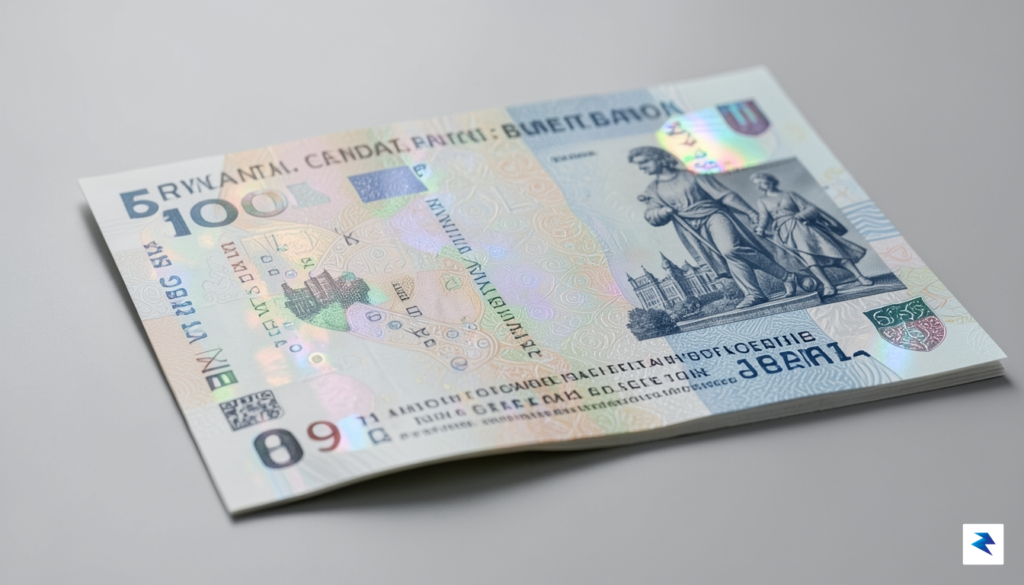
The psychological impact of seeing a leader’s likeness on legal tender cannot be overstated. Throughout history, the placement of portraits on coinage and paper money has served as a tangible manifestation of sovereignty, signaling the permanence of a regime. In the American tradition, however, there has been a longstanding, albeit unwritten, convention that currency should honor foundational figures—Founding Fathers and presidents whose legacies have been solidified by the passage of time and the objective lens of history. This tradition creates a sense of continuity and stability, suggesting that the nation stands on the shoulders of the departed rather than the whims of the current occupant of the White House.
To place a living leader’s portrait on currency is to shift the focus from the enduring institutions of the republic to the personality of the individual, effectively blurring the lines between statehood and personal brand.
By proposing a $250 bill featuring his own image, the suggestion represents a sharp departure from these modern American numismatic norms. While other nations have historically used currency to solidify the cult of personality surrounding authoritarian figures, the United States has largely avoided such overt displays of self-aggrandizement on its currency. Integrating a contemporary political figure into this space disrupts the established semiotics of American money, moving it away from a collective memorial to historical greatness and toward a more volatile, partisan statement of power. Consequently, this proposal challenges the public to consider whether money should serve as a neutral tool of trade or a mirror for the individual holding the reins of government at any given moment.
[IMAGE: A collage depicting the evolution of United States currency, showing early allegorical designs, coins with figures like Lady Liberty, and later banknotes featuring deceased presidents like Washington and Lincoln.]
The design of United States currency has always been steeped in symbolism, a tangible representation of the nation’s values and ideals. From the earliest days of the republic, there was a clear preference for featuring allegorical figures like Lady Liberty, national emblems such as the eagle, or significant historical events on coins and paper money. It wasn’t until well into the 19th century that presidential portraits began to dominate our circulating currency, with Abraham Lincoln appearing on the penny in 1909 and George Washington on the quarter in 1932. This gradual shift cemented a powerful, albeit informal, tradition: reserving the honor of appearing on standard issue coinage and banknotes for deceased historical figures, particularly those revered for their contributions to American democracy and independence.
This unwritten rule, deeply ingrained in American monetary policy, stands as a quiet but firm testament to the nation’s republican principles. The rationale behind it is multi-faceted, rooted in a desire to prevent any hint of monarchical glorification or the cult of personality often associated with authoritarian regimes. By waiting until a leader has passed into history, their legacy can be viewed with greater perspective and less political bias, allowing for a more bipartisan consensus on their enduring significance. It ensures that the faces on our money represent figures whose place in the national pantheon is secure, rather than current political figures whose reputations are still subject to the ebb and flow of contemporary debate.
This cautious approach sharply distinguishes the United States from many other nations across the globe, where the practice of featuring living heads of state on currency is commonplace. In numerous monarchies, the reigning king or queen frequently graces banknotes and coins, a direct assertion of sovereign power and continuity. Similarly, in various authoritarian and even some democratic states, the image of a sitting president or prime minister serves as a potent tool for propaganda, projecting leadership, stability, and national identity, often aimed at solidifying their hold on power. These currencies become direct extensions of the leader’s persona, constantly reminding citizens of their authority and presence.
Considering this rich history and the deliberate choices made over centuries, any proposal to place a living president on United States currency represents a profound departure from established norms and introduces a significant shift in tone. Such a move would not only shatter a long-standing tradition but also carry potent symbolic weight, potentially signaling a move away from the veneration of historical figures and towards the celebration of contemporary political power. It challenges the very ethos that has guided our monetary iconography for generations, raising questions about the motivations behind such a break and its implications for how America views
The introduction of a $250 denomination represents a radical departure from the established hierarchy of American currency, which has remained largely stagnant in its denominational structure for decades. From a purely economic standpoint, the utility of such a bill is highly debatable in a modern financial landscape increasingly dominated by digital transactions, contactless payments, and credit-based commerce. By inserting a non-standard value into the mix, the proposal effectively disrupts the traditional decimal system that governs the movement of capital. Rather than serving a clear logistical need, the design philosophy appears rooted in a desire for visual dominance; the bill is crafted not for the efficiency of the cash register, but for the psychological impact of its bearer.
“Currency acts as a mirror for a nation’s values, and by choosing to disrupt that mirror, the proposal forces a confrontation between historical tradition and the modern cult of personality.”
Whether this move constitutes a populist branding exercise or a genuine attempt to reshape the national narrative depends largely on how one interprets the intersection of finance and political legacy. Critics argue that placing a living president on currency is an act of unprecedented narcissism, one that violates the longstanding American tradition of memorializing only deceased statesmen to ensure a sense of historical distance and objectivity. Conversely, supporters might view this as the ultimate expression of the “Trump brand”—a deliberate, high-visibility disruption that mirrors the unconventional nature of his political ascent. By tying his image to the very medium of exchange, the proposal aims to normalize his influence, making it a tangible, everyday component of the American experience.
This strategic branding extends to the aesthetic choices inherent in the note’s design, which moves away from the somber, monochromatic tones of the Federal Reserve toward something far more assertive. The design philosophy favors high-contrast imagery and bold typography, ensuring that the bill functions as a statement piece that commands attention in any wallet. By weaving his likeness into the fabric of American money, the proposal seeks to cement his place in the historical record, effectively transforming a tool of trade into an instrument of legacy-building. Ultimately, the $250 bill serves as a physical manifestation of a political philosophy that prioritizes brand recognition and disruptive strength over the traditional, understated norms of administrative government.

As the global financial landscape undergoes a radical transformation, the traditional role of physical currency is increasingly being called into question. While the United States remains a bedrock of the global economy, domestic consumer behavior has shifted dramatically toward digital wallets, peer-to-peer payment applications, and contactless card transactions. In this environment, the proposal to issue a new, high-value $250 banknote feels distinctly anachronistic. Introducing a large-denomination bill in a society that is rapidly moving toward a cashless paradigm creates a jarring paradox, forcing us to ask whether the government is focusing on the future of economic efficiency or merely the symbolism of the past.

The production and distribution of physical cash are not merely symbolic gestures; they are significant logistical undertakings that come with tangible costs. Maintaining the infrastructure required to print, transport, secure, and exchange paper money requires vast resources from the Bureau of Engraving and Printing and the Federal Reserve. As digital transaction volumes soar, the marginal utility of adding a new, rarely used denomination like a $250 bill diminishes significantly. Critics argue that investing capital into designing and circulating a niche banknote is an inefficient use of public funds, particularly when the primary utility of such a bill—often associated with large-scale cash hoarding or illicit transactions—conflicts with modern efforts to increase transparency and trackability in the financial system.
The push for a new high-value denomination highlights a tension between the traditional prestige of the U.S. dollar and the practical reality of a society that increasingly views physical cash as a relic of a bygone era.
Furthermore, the introduction of such a bill could inadvertently influence how the U.S. dollar is perceived on the international stage. Historically, the dollar’s strength has been tied to its stability and its role as the world’s primary reserve currency. By prioritizing the aesthetic branding of physical money—specifically through the personalized imagery of a political figure—the move risks politicizing the currency in a way that could unsettle international markets. When a nation’s monetary system appears to prioritize political messaging over technological modernization, it may signal to global investors that the country is drifting away from the pragmatic, data-driven fiscal policies that have historically underpinned the dollar’s dominance. Ultimately, the proposal for a $250 bill serves as a stark reminder that while the government continues to focus on the tangible artifacts of wealth, the real economic future is being written in code, not on cotton-paper blends.

The announcement of a proposed $250 bill featuring Donald Trump’s likeness has acted as a lightning rod for the nation’s deeply entrenched political divisions, transforming a matter of fiscal design into a fierce debate over the character of American governance. For his staunch supporters, the proposal is framed as a defiant and patriotic assertion of national pride, a way to permanently honor a leader they believe successfully disrupted the status quo and returned power to the people. To this contingent, placing a living or recent president on currency is not a radical break from tradition, but rather a fitting tribute to a transformative figure who deserves a place among the titans of the American story.
Conversely, critics view the move as a troubling departure from the democratic norms that have long stabilized the American republic. To those on the other side of the aisle, the proposal signals an alarming pivot toward the aesthetics of authoritarianism, where the lines between the state, the nation, and the individual are deliberately blurred. Detractors argue that currency should serve as a neutral symbol of collective identity—representing historical figures who have been vetted by the passage of time—rather than a tool for modern political branding. This reaction is compounded by a growing anxiety that the Bureau of Engraving and Printing, once viewed as a non-partisan institution committed to the integrity of the dollar, is being dragged into the partisan fray.
“When a leader seeks to immortalize themselves on the very medium of exchange, they move beyond the role of a temporary servant of the people and toward the role of an iconic fixture, shifting the perception of our national institutions in the process.”
Ultimately, the intensity of this reaction highlights how party loyalty now dictates the interpretation of even the most mundane state symbols. Public perception of the bill rarely hinges on aesthetics or economic necessity; instead, it serves as a litmus test for one’s views on presidential power and institutional legacy. If such a proposal were to gain real-world traction, it would likely set a precedent that fundamentally alters the neutral perception of national currency. By forcing a choice between “pro-Trump” and “anti-Trump” iconography, the proposal ensures that the dollar itself—the one thing meant to unite all Americans in commerce—becomes yet another battlefield in the ongoing culture war.
You must be logged in to post a comment.