The $250 Question: Why Trump Wants His Face on American Currency
The Symbolism of Currency: Beyond Simple Exchange Currency is far more than a mere medium of exchange; it is a profound canvas upon which a…


The financial landscape recently lost a true titan with the passing of Norma Yaeger at the age of 96. While the world of high finance is often characterized by its rigid traditions and historical exclusivity, Yaeger stood as a formidable force who fundamentally reshaped the narrative of who belonged on the trading floor. Her life was not merely a series of professional milestones, but a testament to the power of persistence in the face of systemic adversity. By breaking through the entrenched glass ceilings of Wall Street during an era when women were largely relegated to the sidelines of the economy, she secured a legacy that continues to resonate with every investor who values equity and access.
Yaeger’s trajectory from a dedicated homemaker to a powerhouse in the brokerage industry remains one of the most compelling stories of 20th-century American finance. At a time when societal expectations strictly limited the professional horizons for women, she boldly stepped into the male-dominated arena of stock trading, armed with little more than sharp intellect and an unwavering resolve. Her transition was not an overnight success story, but rather a calculated, grueling climb through a corporate culture that was often openly hostile to her presence. Despite these obstacles, she managed to navigate the complexities of the market with a deft hand, proving that financial acumen is defined by talent and strategy rather than gender.
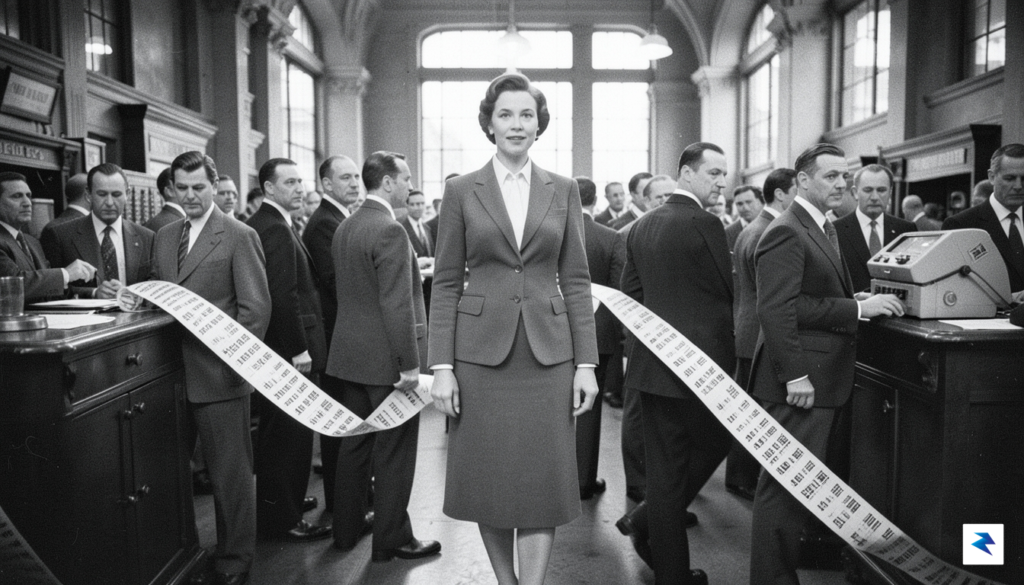
Beyond her personal accolades, Yaeger’s career was defined by her commitment to the democratization of the stock market. She recognized early on that the tools of wealth creation should be available to a broader segment of the population, and she worked tirelessly to bridge the gap between complex financial institutions and the everyday investor. Her contributions laid the essential groundwork for the inclusive financial environment that many modern professionals now take for granted. By refusing to conform to the limitations imposed upon her, she opened doors that had been bolted shut for generations, effectively shifting the gears of progress in an industry historically resistant to change.
Her career serves as a lasting reminder that the most significant institutional transformations are often initiated by individuals who possess the courage to challenge the status quo, even when the odds are overwhelmingly against them.
Ultimately, remembering Norma Yaeger is about more than celebrating a successful career; it is about honoring a pioneer whose life serves as a blueprint for resilience. As we reflect on her 96 years, it becomes clear that her influence extends far beyond the ticker symbols and quarterly reports of her time. She leaves behind a transformed financial world, one that is slowly but surely reflecting the diversity of the society it serves. Her passing marks the end of an era, yet the path she cleared remains open, inviting new generations of leaders to continue the vital work of dismantling barriers in the pursuit of a more equitable financial future.
When Norma Yaeger first set her sights on the trading floors of Wall Street in the 1960s, she wasn’t just pursuing a profession; she was stepping into a fortress of institutionalized exclusion. At the time, the financial sector functioned as a quintessential boys’ club, where the presence of a woman was not only discouraged but often viewed as an active disruption to the natural order of business. The environment was characterized by smoke-filled rooms, aggressive posturing, and an unspoken assumption that financial acumen was a trait exclusive to the male gender. For a woman to infiltrate this space, she had to possess a level of resilience that went far beyond mere professional ambition.

Yaeger’s decision to obtain her stockbroker license was met with immediate and intense friction, most notably within the sanctity of her own home. Her husband was among the most vocal critics, explicitly objecting to her career aspirations and viewing her professional drive as a direct threat to their domestic equilibrium. This personal opposition mirrored the broader societal expectations of the era, which dictated that a woman’s place was firmly rooted in the household rather than the volatile, high-stakes world of finance. Yet, rather than allowing these societal and personal pressures to stifle her ambitions, Yaeger treated the resistance as a catalyst for her resolve.
“I knew what I wanted, and I wasn’t going to let anyone—no matter how close to me—tell me I couldn’t reach it.”
Securing her license required navigating a labyrinth of systemic barriers, including informal gatekeeping and blatant skepticism from examiners and firm managers alike. Even after she officially earned the right to trade, the struggle was far from over; she had to contend with a culture that frequently refused to take her advice or acknowledge her authority. To survive in such a hostile environment, Yaeger had to work twice as hard to build credibility, relying on her sharp intellect and an unwavering commitment to her clients. By consistently outperforming expectations and refusing to be marginalized by her peers, she didn’t just survive in the industry—she forced the industry to evolve, proving that talent and tenacity are not constrained by gender.

For Norma Yaeger, the decision to leave the established confines of traditional brokerage houses was not merely a career move; it was a fundamental act of defiance against a system designed to keep her on the periphery. After years of navigating a male-dominated environment that frequently treated her presence as a temporary curiosity rather than a professional standard, Yaeger realized that true autonomy could only be achieved by building her own infrastructure. By founding two of her own securities firms, she effectively dismantled the limitations imposed by institutional gatekeepers, shifting her role from a participant in a restrictive industry to an architect of her own professional destiny.

The strategic transition into entrepreneurship required a unique blend of audacity and technical precision. Yaeger understood that to compete with the giants of Wall Street, she could not simply replicate their service models; she had to innovate in ways that prioritized client relationships and transparency over the rigid, often impersonal tactics of the era. By launching her own firms, she was able to dictate the terms of her business, fostering a culture that valued meritocracy and individual expertise. This bold move transformed her from a lone anomaly struggling to be heard into a commanding leader who set the standard for how securities trading could be executed with integrity and independence.
“True leadership in finance is not found by climbing the ladder someone else built for you, but by constructing a firm foundation upon which others can eventually stand.”
Beyond the logistical challenges of regulatory compliance and capital management, Yaeger’s entrepreneurial journey was defined by her commitment to a service-oriented model. She integrated personalized advisory strategies that were far ahead of their time, focusing on the specific needs of her clients rather than the volume-based incentives that dominated the mainstream brokerage world. This approach allowed her to build deep, long-term trust, effectively turning her boutique firms into hallmarks of reliability. Her legacy, therefore, is not merely that she survived in a hostile environment, but that she successfully redefined the landscape of the financial sector, proving that a firm’s strength lies in the vision of its founder rather than the weight of its institutional history.


The trajectory of gender equality within the high-stakes world of finance was not a sudden revolution, but a slow, arduous erosion of institutionalized exclusion. When Norma Yaeger first stepped onto the trading floor, she entered an environment that was not merely indifferent to women, but fundamentally designed to keep them out. By successfully navigating this hostile landscape, Yaeger provided a necessary proof-of-concept that dismantled the era’s pervasive belief that finance was an inherently masculine domain. Her career acted as a mirror to a society in transition, forcing male-dominated boardrooms and brokerage firms to confront the reality that professional competence is entirely detached from gender.
Her influence extended far beyond her personal portfolio performance; she became a vital archetype for the generation of women who followed. In an age where professional advancement for women was often limited to clerical or support roles, Yaeger’s presence served as a tangible defiance of the status quo. She operated as a living refutation of the archaic prejudices that argued women lacked the emotional temperament or the analytical grit required for market volatility. By carving out a seat at the table, she transformed the abstract goal of workplace equality into a concrete, achievable reality, turning the “glass ceiling” from a mythic barrier into a challenge that could be physically breached.
“The true measure of a pioneer is not just in the doors they open for themselves, but in the path they pave for those who are told they do not belong.”
The evolution of the financial sector from the 1960s to the present day owes a significant debt to these early trailblazers. Following the era in which Yaeger established her reputation, the industry began a gradual, albeit imperfect, shift toward meritocracy. This transformation was fueled by the persistent efforts of women who refused to be relegated to the margins of economic power. As firms slowly adapted to the presence of female brokers, analysts, and executives, the cultural perception of the “Wall Street professional” underwent a fundamental expansion. While the industry still contends with ongoing disparities, the foundational work of individuals like Yaeger ensured that the narrative of women in finance shifted from one of exclusion to one of inevitable, and essential, inclusion.

The trajectory of a career is rarely a linear path, and for those who dare to challenge entrenched institutional norms, the journey is often fraught with skepticism and resistance. Norma Yaeger’s legacy serves as a powerful blueprint for modern professionals who find themselves in environments where they are underestimated or excluded. Her experience underscores the fundamental truth that resilience is not merely about enduring hardship, but about actively cultivating the internal fortitude required to persist when the external validation is nonexistent. By refusing to accept the limitations imposed by a male-dominated industry, she demonstrated that professional growth is often a matter of self-authorization; you must be willing to provide your own permission to succeed before the gatekeepers ever will.

Financial independence is perhaps the most critical takeaway from her life’s work, serving as both a strategic tool and a form of personal liberation. Yaeger understood that true autonomy in the workplace—and in life—requires a firm grasp on one’s economic destiny. When you are in control of your own financial narrative, you gain the leverage necessary to walk away from toxic environments, negotiate from a position of strength, and make career pivots that prioritize long-term growth over short-term stability. This financial fluency is not just for stockbrokers; it is a vital skill for anyone seeking to cultivate a career defined by choice rather than necessity.
True professional integrity is found when your commitment to your own potential outweighs your desire for the comfort of conformity.
To apply these principles to your own professional development, consider the following actionable strategies for building a sustainable and impactful career:
Ultimately, the story of this pioneering broker is a reminder that the glass ceilings of yesterday are often dismantled by the quiet, persistent, and unyielding efforts of those who refuse to be ignored. By navigating her career with both tactical intelligence and unwavering personal integrity, she provided a roadmap for modern workers to follow. Whether you are navigating a corporate hierarchy or building your own path, remember that your career is a series of choices—and the most important one is to persist in the face of doubt, securing your own seat at the table by proving that your presence is essential.
You must be logged in to post a comment.