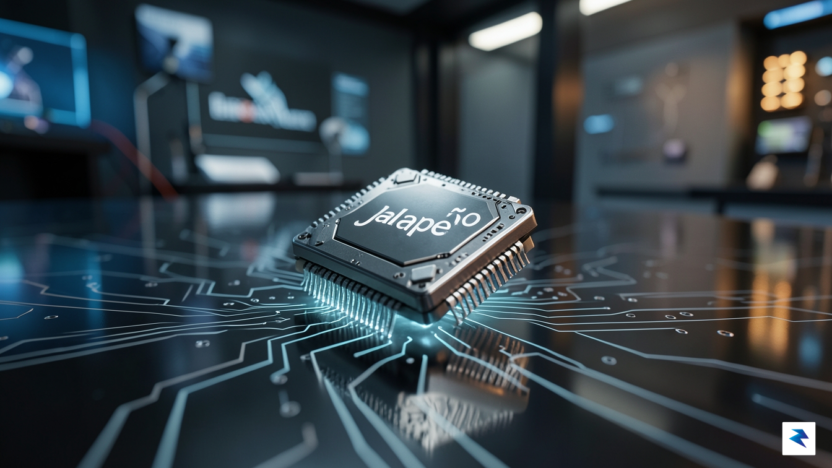
The Strategic Shift: Why OpenAI is Moving to Custom Silicon

For years, OpenAI—like much of the tech industry—has operated in a world defined by the constraints of commodity hardware. Relying on general-purpose GPUs has been a necessary stepping stone, providing the flexibility required to experiment with rapidly evolving transformer architectures. However, as models grow exponentially in parameter count and complexity, the limitations of these off-the-shelf components have become glaringly apparent. General-purpose chips are designed to handle a vast array of computing tasks, which inevitably leads to inefficiencies when applied to the hyper-specific, massive-scale matrix multiplications that power large language models (LLMs). By pivoting to custom silicon, OpenAI is signaling a departure from the “one-size-fits-all” era, opting instead for a vertical integration model that optimizes every transistor for the unique needs of its proprietary neural networks.
The economic pressures driving this transition are just as significant as the technical ones. As inference costs continue to mount, relying exclusively on third-party hardware providers creates a precarious dependency that eats into profit margins and constrains scalability. When a single inference request requires massive compute resources, even minor inefficiencies in memory bandwidth or power consumption can lead to millions of dollars in wasted operational expenditure. By owning the silicon design, OpenAI can theoretically slash these costs by stripping away unnecessary features and fine-tuning the hardware specifically for the inference workloads of the next generation of models, such as GPT-5 and beyond.

Beyond the balance sheet, there is the issue of physical bottlenecks. Current GPU-centric architectures often struggle with the “memory wall”—the phenomenon where the speed of processing data exceeds the speed at which that data can be moved from memory to the processor. Custom hardware allows engineers to rethink the interconnects and memory hierarchies, ensuring that data flows as seamlessly as possible through the chip. This level of optimization is essential for models that are too large to fit on a single chip, necessitating sophisticated multi-chip communication that off-the-shelf solutions are simply not built to handle at scale.
The shift toward custom silicon is not merely about performance; it is about reclaiming control over the entire computing stack to ensure that future AI breakthroughs are not limited by the hardware available on the open market.
Ultimately, this move represents a maturation of the AI industry. Much like Apple transitioned to its proprietary M-series chips to achieve a level of power efficiency and performance that Intel could not provide, OpenAI is betting that the path to Artificial General Intelligence (AGI) requires hardware that is as bespoke as the software running on it. By partnering with industry titans like Broadcom to translate their architectural requirements into physical silicon, OpenAI is effectively building a bespoke engine for its own future, ensuring that as their models grow, their infrastructure can keep pace without hitting the inevitable performance ceilings of general-purpose architecture.
The Role of Broadcom in the 'Jalapeño' Project

The transition from a software-centric organization to a silicon-design powerhouse is a monumental shift, and OpenAI’s decision to partner with Broadcom for the “Jalapeño” project is a calculated strategic move. While OpenAI possesses the deep architectural insights and algorithmic requirements necessary to define what the next generation of AI compute should look like, they lack the decades of iterative, industrial-scale experience required to transform those blueprints into physical silicon. Broadcom acts as the essential bridge in this equation, providing the technical muscle to navigate the notoriously complex world of Application-Specific Integrated Circuit (ASIC) design, verification, and high-volume manufacturing.
Broadcom’s selection was not merely a matter of supply chain convenience; it was rooted in the company’s peerless history of engineering high-performance networking and data center silicon. Creating a chip that can handle the massive memory bandwidth and low-latency communication required by Large Language Models (LLMs) is a task that requires specialized knowledge in chip-to-chip interconnects and power management—areas where Broadcom has set the industry standard. By leaning on Broadcom’s established design methodologies, OpenAI can focus on the unique software-hardware co-design patterns that give their models a competitive edge, rather than getting bogged down in the minutiae of physical layout and thermal dissipation constraints.

The collaborative process between these two giants functions as a symbiotic feedback loop. OpenAI contributes the “what”—the specific architectural features that optimize for Transformer-based workloads—while Broadcom executes the “how”—the intricate process of silicon realization. This includes everything from the selection of the most efficient process nodes to the complex logistics of coordinating with foundries to ensure consistent yields. Without this partnership, OpenAI would have faced a steep, multi-year learning curve to master the intricacies of modern chip fabrication. Instead, they have essentially “outsourced” the manufacturing risk and technical hurdles to a partner that has successfully navigated these waters for the world’s most demanding tech companies.
The synergy between OpenAI’s software-first architectural vision and Broadcom’s hardware-first engineering execution represents a new model for AI development: one where the software dictates the silicon, and the silicon enables the software to reach unprecedented performance tiers.
Ultimately, this partnership marks a fundamental pivot in how AI infrastructure is being built. By moving away from off-the-shelf general-purpose processors, OpenAI is signaling that the future of artificial intelligence is inextricably linked to custom-built hardware. Broadcom’s role here is to ensure that this vision does not remain a theoretical exercise but evolves into a reliable, mass-produced reality. As the “Jalapeño” project matures, this marriage of algorithmic intelligence and engineering precision will likely serve as the blueprint for how software companies attempt to reclaim control over their compute destiny in an increasingly hardware-constrained world.
Decoding the Architecture: What Makes Jalapeño Different?

At the heart of the Jalapeño design lies a fundamental shift in philosophy: while the NVIDIA H100 and B200 are designed as versatile powerhouses capable of both massive model training and general-purpose compute, Jalapeño is a specialized engine built explicitly for the rigors of inference. Traditional GPUs rely on a massive cache of general-purpose cores that prioritize raw floating-point operations, which is excellent for training but can lead to inefficiencies when simply serving pre-trained models to millions of users. By stripping away extraneous features that are not strictly necessary for inference, OpenAI has developed an architecture that prioritizes the rapid, iterative movement of data through the system.

The primary technical differentiator is how Jalapeño manages memory bandwidth. In traditional GPU architectures, the bottleneck often occurs when fetching weights from memory to the processing cores, a constraint known as the memory wall. Jalapeño addresses this by implementing a tighter, high-bandwidth interconnect that minimizes the physical distance data must travel, effectively reducing latency during the token generation process. This design allows the chip to sustain higher throughput for Large Language Models (LLMs) that require constant, low-latency access to billions of parameters. By optimizing the memory controller specifically for the pattern of sequence-based inference, the chip ensures that it spends less time idling and more time delivering answers to the end user.
Jalapeño represents a strategic departure from the “do-it-all” GPU approach, opting instead for a streamlined, inference-first architecture that treats latency as the most critical performance metric.
Furthermore, the thermal and power efficiency gains of this custom silicon cannot be overstated. General-purpose GPUs are designed to handle peak thermal loads during intensive training phases, requiring massive power envelopes and sophisticated cooling solutions. Because Jalapeño is tailored for inference, it operates with a much more predictable and stable power draw, allowing for higher density within server racks. This efficiency translates into significant operational cost savings for OpenAI, as it reduces the energy-per-inference metric—the holy grail for companies scaling AI services to a global audience. By rethinking the silicon at the architectural level, OpenAI is no longer beholden to the power-hungry constraints of general-purpose hardware, paving the way for a more sustainable and cost-effective future in model deployment.
Ultimately, this transition signals that OpenAI has reached a scale where off-the-shelf solutions are no longer sufficient to maintain their performance standards. While NVIDIA’s hardware remains the gold standard for innovation in training, Jalapeño provides the specialized precision necessary for the high-volume, real-time demands of ChatGPT and other generative AI applications. By controlling the hardware stack, OpenAI gains the ability to tune their software and silicon in lockstep, ensuring that every cycle of the processor is utilized to its maximum potential for the specific mathematical operations required by their proprietary transformer models.
Impact on the AI Compute Landscape and GPU Market

The emergence of OpenAI’s custom silicon, developed in partnership with Broadcom, represents a tectonic shift in the artificial intelligence industry, signaling the beginning of the end for the monolithic “GPU-only” era. For years, NVIDIA has maintained an iron grip on the market, effectively functioning as the gatekeeper of progress by providing the essential, high-performance engines required to train large language models. By moving toward internal hardware development, OpenAI is signaling that the era of being beholden to a single hardware supplier is drawing to a close. This strategic pivot is not merely about performance; it is a calculated effort to bypass the so-called “NVIDIA tax”—the immense capital expenditure that AI labs must funnel into third-party hardware to sustain their massive computing needs.

As major AI labs transition from being mere consumers of hardware to active designers of their own infrastructure, the industry is witnessing the rapid commoditization of compute. When companies like OpenAI, Google, and Meta design their own application-specific integrated circuits (ASICs), they effectively strip away the general-purpose overhead inherent in standard graphics cards. This shift allows for unprecedented optimization, tailoring the physical architecture of the chip to the specific mathematical operations required by deep learning models. Consequently, the reliance on general-purpose GPUs will likely diminish over time, forcing incumbents to justify their premium pricing models in an increasingly competitive and diversified landscape.
The move toward custom silicon is ultimately a play for vertical integration, allowing AI companies to exert granular control over their supply chains while insulating themselves from the volatile pricing and availability constraints of the broader GPU market.
This move creates a significant competitive threat to traditional semiconductor manufacturers, who have enjoyed a period of unprecedented pricing power. While NVIDIA remains the leader in flexibility and developer ecosystem support, the success of OpenAI’s custom initiative could pave the way for a tiered market. In this future, massive foundational model training might rely on highly customized, hyper-efficient proprietary chips, while general-purpose GPUs are relegated to smaller-scale development and inferencing tasks. By diversifying their hardware stack, OpenAI is not only improving its long-term profit margins but also gaining the architectural sovereignty necessary to scale AI development at a pace that general-purpose hardware simply cannot sustain. Ultimately, this entry into hardware design serves as a clear warning to the semiconductor industry: the giants of AI are no longer content to simply rent compute—they intend to own the foundation upon which their intelligence is built.
Future Outlook: From Dependency to Vertical Integration

The introduction of OpenAI’s custom silicon, codenamed Jalapeño and developed in collaboration with Broadcom, marks a pivotal moment that extends far beyond a single product launch. This initiative is unequivocally the first strategic volley in what will become a much broader campaign for vertical integration, fundamentally reshaping OpenAI’s operational model and its competitive posture in the fiercely contested AI landscape. We can anticipate that future iterations of this hardware roadmap will not merely refine existing designs but will branch into more specialized architectures, potentially targeting specific modalities like advanced vision processing, complex natural language understanding, or even novel forms of AI computation. OpenAI is clearly playing the long game, aiming to cultivate an entire ecosystem where its research breakthroughs are seamlessly translated into optimized silicon, thereby establishing unparalleled control over performance, cost, and innovation velocity.
For software developers building applications on OpenAI’s platforms, this shift towards proprietary hardware carries significant implications. While the immediate impact might be subtle, over time, developers can expect to encounter APIs and development tools that are increasingly tailored to extract maximum efficiency from this custom silicon. This could unlock entirely new capabilities, allowing for more intricate models, faster inference times, and more complex real-time interactions that were previously constrained by off-the-shelf hardware limitations. However, it also suggests a potential trajectory towards a more curated, and perhaps less open, development environment. Developers will likely need to adapt to leverage these unique hardware features, potentially requiring a deeper understanding of the underlying architecture to truly optimize their AI applications, thereby fostering a more specialized skill set within the OpenAI developer community.
One of the most immediate and tangible benefits of this vertical integration will be the substantial reduction in latency for real-time AI applications. Custom chips, meticulously designed for the unique computational demands of AI workloads, can drastically shorten the processing time between input and output. This is achieved through highly optimized data paths, closer integration of compute and memory resources, and specialized instruction sets that accelerate common AI operations far beyond what general-purpose CPUs or even commercially available GPUs can offer. Imagine the impact on conversational AI, where responses become virtually instantaneous, or on autonomous systems, where split-second decision-making is paramount. This enhanced responsiveness will not only improve user experience across a multitude of applications but also enable entirely new categories of interactive AI, pushing the boundaries of what’s currently possible in areas like real-time content generation, complex simulations, and adaptive user interfaces.
OpenAI’s foray into chip design is not an isolated incident but rather a potent signal of an inevitable trend among top-tier AI firms: the metamorphosis into hardware design powerhouses. Companies like Google, with its Tensor Processing Units (TPUs), Amazon, with its Inferentia and Trainium chips, and even Apple, leveraging its M-series silicon for on-device AI, have already demonstrated the strategic imperative of owning the silicon stack. This vertical integration provides crucial advantages, including superior performance tailored to specific AI models, significant cost efficiencies at scale, greater supply chain resilience, and the invaluable protection of intellectual property. As the competitive intensity in AI continues to escalate, the ability to co-design hardware and software will increasingly become a non-negotiable requirement for maintaining a leading edge, effectively creating a new battleground where silicon innovation is as critical as algorithmic breakthroughs. This trend will likely lead to further specialization within the industry, with fewer players capable of competing at the highest tiers, thereby solidifying the positions of those who embrace this comprehensive approach to AI development.