
The End of the AI 'Wild West' Era

For the past eighteen months, the corporate world has existed in an unprecedented state of generative AI exuberance. When large language models first became accessible, the prevailing philosophy in many organizations was one of unbridled exploration; employees were encouraged to experiment with these tools for everything from drafting routine emails to summarizing lengthy meeting transcripts. This “Wild West” phase was characterized by a lack of oversight, where the primary objective was simply to integrate AI into daily workflows as rapidly as possible to gain a competitive edge. During this honeymoon period, the incremental cost of a single prompt or a minor automated task seemed negligible, creating a false sense of security that AI was an essentially low-cost utility.
However, this unchecked enthusiasm inadvertently birthed the phenomenon of “tokenmaxxing”—a practice where staff members offloaded even the most trivial cognitive tasks to expensive AI models. Whether it was asking a sophisticated model to perform basic grammar checks or requesting a summary of a document that was only three sentences long, the accumulation of these micro-tasks began to exert significant pressure on corporate balance sheets. Because per-token pricing models are designed to scale linearly with usage, these small, seemingly innocuous queries aggregated into massive, unbudgeted expenses that caught leadership teams entirely off guard. What began as a series of minor monthly invoices quickly ballooned into enterprise-wide financial liabilities that threatened to outpace the measurable productivity gains of the technology.

The sudden realization that these disparate costs were cannibalizing departmental budgets has forced a rapid, often painful, pivot toward fiscal responsibility. Leadership teams are no longer measuring success solely by the number of AI-integrated workflows, but rather by the return on investment for every single prompt executed. This transition marks the end of the experimental phase and the dawn of a new era of AI governance. Organizations are now implementing stricter access controls, migrating toward more cost-effective model routing, and educating their workforces on the financial implications of “tokenmaxxing.” As companies move from a state of total freedom to one of strategic rationing, the focus has shifted from “what can AI do?” to “what should AI do to remain profitable?”
True innovation in the enterprise is not defined by how much technology we use, but by how efficiently we apply it to solve the right problems at the right cost.
Ultimately, this shift represents a maturing of the corporate relationship with artificial intelligence. By moving away from the “Wild West” mentality, businesses are creating a more sustainable framework where AI acts as a precision instrument rather than a blunt force for every task. While the days of unlimited experimentation may be ending, they are being replaced by a more rigorous, intentional strategy that prioritizes long-term viability over short-term hype. This evolution ensures that when AI is utilized, it is done so with a clear understanding of its value proposition, effectively balancing the drive for innovation with the necessity of fiscal discipline.
Why Token Rationing is the New Corporate Standard
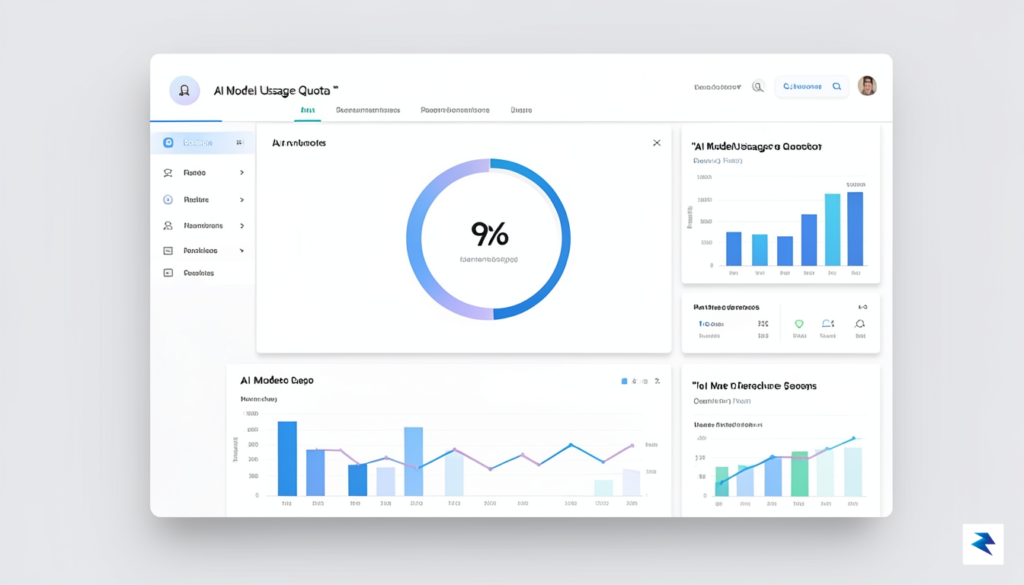
As organizations transition from the experimental phase of artificial intelligence to full-scale operational integration, the “wild west” era of unrestricted API access is rapidly drawing to a close. IT departments are finding that without strict oversight, the cumulative cost of thousands of employees using large language models for trivial tasks—such as summarizing short emails or drafting basic reminders—can lead to budget overruns that rival traditional cloud infrastructure spend. Consequently, the implementation of token rationing has become the primary mechanism for fiscal sanity. By imposing hard limits on how many tokens an individual or department can consume within a billing cycle, organizations are effectively shifting the culture from one of infinite experimentation to one of calculated, high-value utilization.

To enforce these new boundaries, technical teams are deploying sophisticated API key management platforms that act as gateways between the workforce and external AI providers. Rather than granting broad, company-wide access, administrators now issue scoped keys tied to specific projects or departmental buckets. This granularity allows IT managers to monitor real-time consumption patterns and intervene before a “rogue” workflow—perhaps a poorly optimized script running in an infinite loop—drains the monthly budget. By treating AI compute as a finite utility rather than an inexhaustible resource, companies are forcing developers and non-technical staff alike to consider the economic impact of their prompts, ultimately driving more efficient engineering practices.
“When every prompt carries a measurable cost, the focus shifts from ‘can we automate this?’ to ‘should we automate this?’ This change in mindset is essential for sustainable AI growth.”
Beyond technical restrictions, the most significant shift is the adoption of internal chargeback models. Under this framework, departments are no longer provided with “free” AI access; instead, usage costs are directly attributed to their respective budgets. This creates an immediate feedback loop: when a project manager sees that a specific automation workflow is consuming significant capital, they are naturally incentivized to optimize the underlying logic or reconsider the necessity of the task. This transition toward internal accountability ensures that computational resources are reserved for high-impact operations, such as deep data analysis or complex product development, rather than being squandered on low-value, repetitive queries that could be handled by more traditional software solutions. By integrating these financial guardrails, enterprises are successfully balancing the democratization of AI tools with the cold reality of bottom-line profitability.
The Hidden Costs of Micro-Task AI Overuse

At first glance, the price of a single Large Language Model (LLM) query feels negligible—often fractions of a cent per token. This perceived affordability has created a “penny-wise, pound-foolish” dynamic within modern enterprises, where the convenience of delegating minor tasks to AI outpaces the visibility of the underlying costs. When thousands of employees across a global organization begin using AI to summarize every email thread, draft routine status updates, or reformat simple spreadsheets, the cumulative financial leakage becomes staggering. What started as a productivity-enhancing tool quickly transforms into a significant, unbudgeted line item that can erode margins faster than traditional operational inefficiencies.

To understand the economic impact, one must look at the difference between human-automated workflows and AI-automated workflows. Historically, business process automation relied on deterministic software—scripts that performed a fixed set of actions at a near-zero marginal cost. In contrast, LLMs represent probabilistic automation, where every iteration requires significant computational power and specialized hardware. While a human employee may take twenty minutes to draft a report, an AI can do it in seconds; however, if that AI is invoked for tasks that do not actually require cognitive synthesis—or for tasks that could be handled by a basic macro or a template—the company is essentially burning expensive GPU cycles on low-value output. This shift turns “intelligence” into a commodity that is being squandered on trivialities rather than reserved for high-leverage strategic initiatives.
The core of the issue is not the cost of the technology itself, but the lack of friction in the deployment process. When AI becomes as easy to trigger as a spell-check function, the enterprise loses the ability to distinguish between essential labor and automated noise.
The Shift Toward Operational Discipline
As CFOs begin to scrutinize cloud compute bills, the mantra within the C-suite is shifting from “AI-first” to “AI-appropriate.” Organizations are realizing that just because you can use a sophisticated model to perform a task, it does not mean you should. There is a growing movement toward categorizing workloads based on their economic impact: routine, logic-heavy tasks should remain in the domain of deterministic software, while high-value, generative work is prioritized for LLMs. This distinction is vital for long-term scalability. By curbing the impulse to “token-max” every minor internal process, companies can preserve their budgets for the AI applications that actually drive top-line revenue or provide a genuine competitive advantage, rather than letting their infrastructure costs spiral out of control through a thousand small, invisible cuts.
Strategies for Managing Enterprise AI Budgets

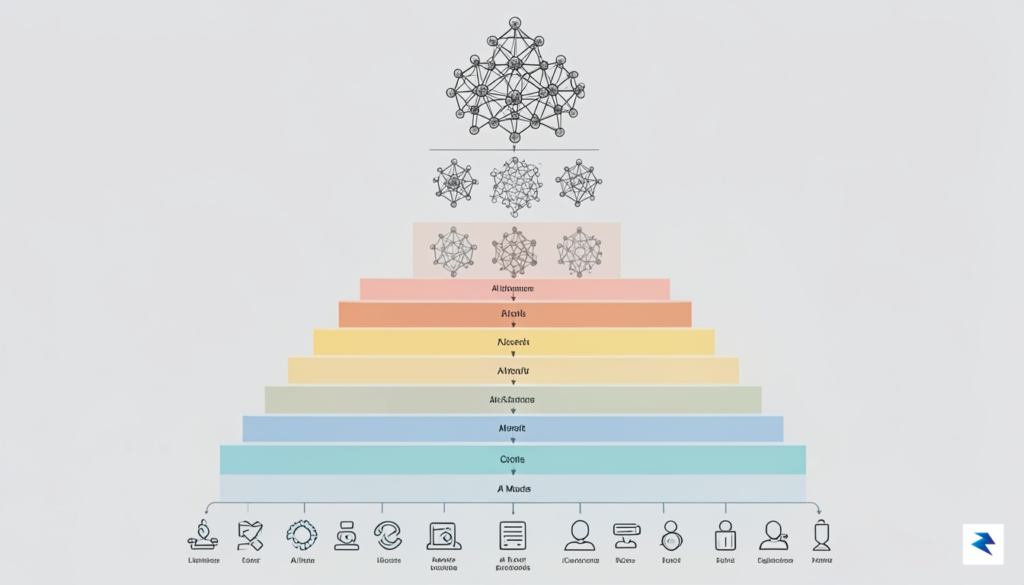
Achieving fiscal discipline in the age of generative AI does not have to come at the expense of corporate ingenuity. Instead of imposing blanket bans or rigid limitations that stifle experimentation, leaders should adopt a tiered approach to model access. By categorizing tasks based on complexity, organizations can route simple, high-frequency queries to leaner, cost-efficient models while reserving high-performance, expensive large language models (LLMs) for mission-critical strategic work. This nuanced allocation ensures that a minor administrative request doesn’t inadvertently consume the budget intended for advanced data modeling or high-stakes content generation.
Empowering Through Education
Governance is only as effective as the workforce is informed. Employees often “max out” budgets simply because they lack an understanding of the underlying cost structures associated with different prompts and models. Organizations should prioritize internal training programs that teach staff the art of cost-efficient prompting. By mastering techniques such as prompt chaining, leveraging system instructions to limit output length, and understanding how to optimize context windows, employees can achieve superior results while drastically reducing token consumption. When teams understand that an efficient prompt is a professional skill rather than just a technical detail, they become partners in fiscal responsibility rather than unintentional drivers of ballooning costs.
To manage AI spend effectively, shift the culture from “unlimited access” to “intentional usage.” By treating tokens as a finite, valuable company resource, you empower employees to optimize their workflows rather than blindly consuming them.
The Role of the AI Center of Excellence
To further maintain control without stifling progress, forward-thinking enterprises are establishing internal AI Centers of Excellence (CoE). These cross-functional teams serve as the primary gatekeepers for vetting new tools, ensuring that any AI application brought into the workflow adheres to strict security, compliance, and financial standards. Instead of employees signing up for disparate, unvetted “shadow AI” subscriptions that fragment the budget, the CoE provides a curated, approved library of high-value tools. This centralized procurement not only grants the company greater leverage in negotiating enterprise-level pricing but also creates a feedback loop where the most cost-effective tools are surfaced and shared across departments, fostering a culture of collective efficiency rather than isolated, expensive experimentation.
- Implement Tiered Access: Use lightweight models for daily tasks to preserve budget for high-compute initiatives.
- Promote Prompt Engineering: Train staff on how to minimize token count while maximizing output quality.
- Centralize Procurement: Utilize an AI CoE to vet tools, preventing redundant subscriptions and shadow IT costs.
Cultivating an Efficient AI-First Culture

The transition toward an AI-first organization should never be measured by the sheer volume of prompts processed, but rather by the tangible value those interactions generate. Many enterprises currently fall into the trap of rewarding “AI-active” employees who use large language models for every minor inconvenience, regardless of whether a simple script or a traditional spreadsheet could have achieved the same result more efficiently. To move beyond this, leadership must pivot the corporate narrative from mere access to intentional stewardship. By framing computational resources as a finite budget—much like office supplies or travel expenses—employees begin to evaluate whether a task truly warrants a high-latency, high-cost model call or if a lighter, more surgical approach is more appropriate for the objective at hand.
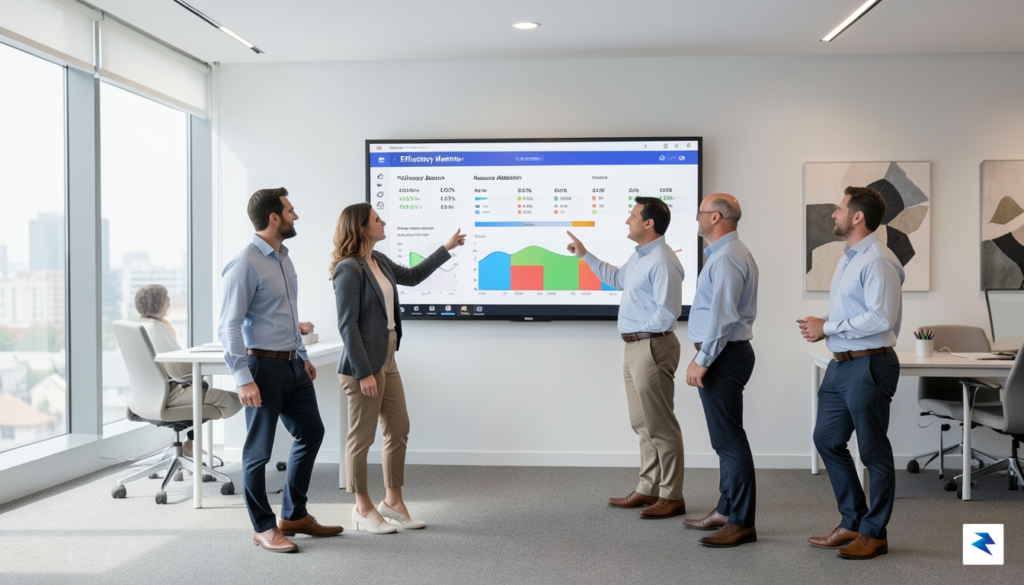
True productivity in the age of AI isn’t about how many tasks you can outsource to an algorithm; it is about how effectively you can apply intelligence to solve problems that actually move the needle for the business.
Cultivating this mindset requires a structural shift in how teams define “success” within their workflows. Instead of incentivizing the maximum number of automated tasks, companies should implement recognition programs that reward workflow optimization. For instance, an employee who identifies a redundant, high-token-cost process and replaces it with a streamlined, cached, or local AI solution provides far more long-term value than one who simply uses AI to churn out mass-produced emails. This approach turns employees into architects of their own productivity, encouraging them to treat the company’s infrastructure with the same care they would apply to their own personal financial investments.
Ultimately, building a sustainable AI culture is about fostering a deep sense of accountability. When team members understand the cost-benefit analysis behind their choices, they become more discerning users of technology. Management should provide the necessary transparency regarding the costs of various AI tiers, empowering staff to choose the right tool for the complexity of the job. By democratizing the knowledge of what these tools cost to run, organizations transform their workforce from passive consumers of AI into savvy resource managers who prioritize high-impact results over low-value automation. This shift not only protects the bottom line but also creates a more disciplined, thoughtful, and highly skilled team capable of navigating the complexities of modern enterprise software.