The Evolution of AI Agency: Introducing Computer Use
The way we interact with artificial intelligence is undergoing a profound transformation, moving decisively beyond the familiar realm of passive text generation. For years, even the most advanced AI models, while capable of astonishing feats of understanding and creation, have largely been confined to operating within a structured, API-bound environment. This meant they could generate code, draft emails, or summarize documents, but their interaction with external software was typically through pre-defined programming interfaces. They could *call* a function to check your calendar, for instance, but they couldn’t *open* the calendar application, visually navigate its interface, and *click* to create a new event in the same way a human user would. This fundamental limitation meant a significant barrier existed between AI’s cognitive abilities and its capacity for active, direct engagement with the digital world.
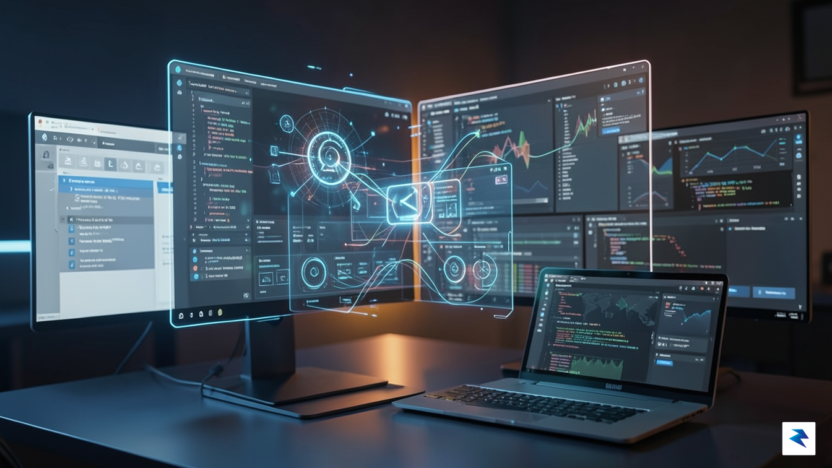
However, a pivotal shift is now underway with the introduction of ‘Computer Use’ in Google’s Gemini 3.5 Flash, marking a significant leap toward true digital agency for AI. This groundbreaking capability empowers the AI to perceive and interact with software interfaces much like a human operator, effectively granting it eyes and hands within your digital environment. Instead of relying solely on structured data exchanges, Gemini 3.5 Flash can now “see” a screen, understand the context of visual elements like buttons, menus, and input fields, and then actively perform actions within those applications. This isn’t merely about executing pre-programmed macros; it’s about enabling the AI to navigate, adapt, and operate within the dynamic and often unpredictable landscape of user interfaces.
This new ‘Computer Use’ feature is a direct manifestation of what we refer to as **agentic AI**. At its core, an agentic AI is not just a tool that responds to prompts; it’s an entity capable of autonomously planning, executing, and monitoring complex tasks to achieve a given goal across various digital domains. ‘Computer Use’ provides the crucial bridge between the AI’s sophisticated reasoning and the tangible actions required to manipulate software. It allows Gemini 3.5 Flash to interpret high-level instructions, break them down into a series of UI interactions, and then carry out those steps, troubleshooting and adapting as needed. This moves AI beyond being a powerful calculator or content generator and positions it as a proactive digital assistant, capable of orchestrating entire workflows.
The choice of Gemini 3.5 Flash as the vehicle for this revolutionary capability is no accident; it leverages the model’s unique balance of speed and reasoning. Agentic tasks, particularly those involving real-time UI interaction, demand not only intelligent decision-making but also rapid execution. Flash’s exceptional processing speed ensures that the AI can perceive, analyze, and act within applications without noticeable lag, making its interactions feel natural and efficient. Simultaneously, its robust reasoning capabilities are essential for interpreting complex visual layouts, understanding the nuances of different applications, handling unexpected pop-up windows, and formulating logical steps to achieve an objective even in novel situations. This potent combination of swift action and deep understanding makes Gemini 3.5 Flash the ideal foundation for ushering in a new era of AI that truly uses your computer.
How Gemini 3.5 Flash Interacts with Your Desktop
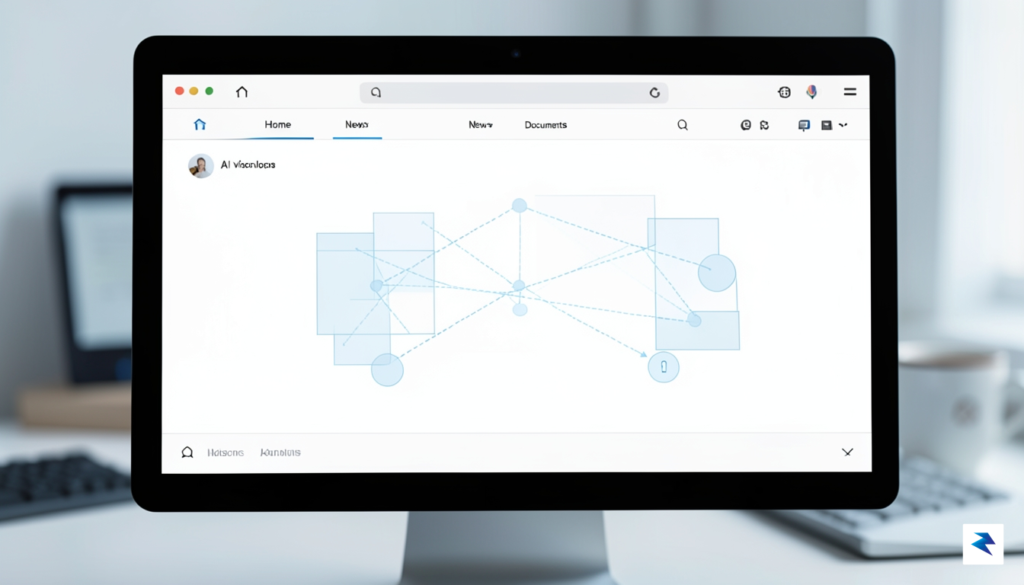
At the core of Gemini 3.5 Flash’s ability to operate a computer lies a shift from traditional, rigid automation to a more fluid, human-like approach defined by visual perception. Instead of relying on brittle scripts that require specific API hooks or hard-coded coordinates to interact with software, the model functions as a vision-enabled agent. It continuously ingests high-resolution screen captures, effectively “seeing” your desktop environment just as you do. By analyzing the spatial arrangement of windows, icons, and text, the model can reason through the user interface to identify the correct target, whether it is a subtle settings toggle or a complex web-based spreadsheet.
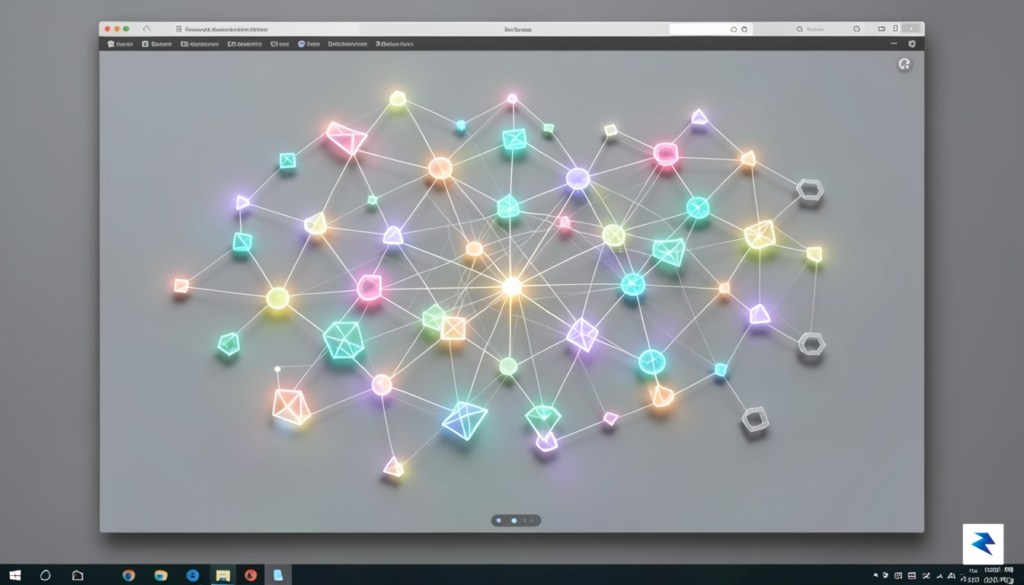
This process is anchored in a concept known as visual grounding. Rather than merely detecting that an image exists on the screen, Gemini 3.5 Flash maps specific semantic labels to the pixel coordinates of the elements it perceives. When you provide a task—such as drafting an email or summarizing a document—the model evaluates the visual layout, performs a logical assessment of the necessary steps, and then translates these intentions into precise mouse movements and keyboard strokes. This capability allows the model to navigate through unfamiliar applications or dynamic interfaces that change their layout, as it is interpreting the meaning of the interface components rather than following a fixed path.
Visual grounding allows the model to treat the computer screen as a unified visual canvas, enabling it to bridge the gap between abstract user goals and concrete mechanical inputs.
The adaptability of this agentic approach is a significant improvement over legacy automation tools that often break the moment a button moves or a UI element is updated. Because Gemini 3.5 Flash interprets the environment in real-time, it possesses an inherent resilience to aesthetic and functional changes within applications. If a menu is hidden behind a sub-tab or a button changes color due to a system update, the model recognizes the functional role of the object rather than its specific visual signature. This makes it an incredibly versatile tool for multi-tasking, as it can seamlessly switch between browser windows, desktop utilities, and legacy software without requiring the developer to rewrite underlying code for every minor interface shift.
Ultimately, the interaction loop consists of a rapid sequence of observation, reasoning, and execution. The model captures the screen state, processes the visual data to locate the required UI components, and then triggers an event—such as a click or a key press—that the system registers as a native input. This creates a cohesive feedback loop where the agent verifies the outcome of its action before proceeding to the next step. By mimicking the way a human interacts with an operating system, Gemini 3.5 Flash turns the desktop into an intuitive workspace that the AI can navigate with purpose and efficiency, regardless of the underlying application architecture.
Practical Applications for Automated Productivity
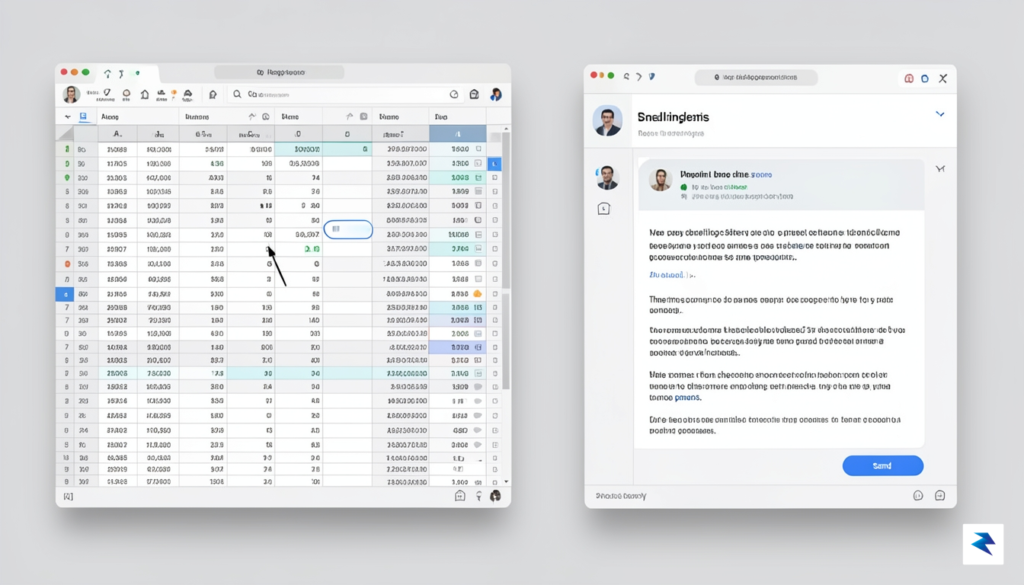
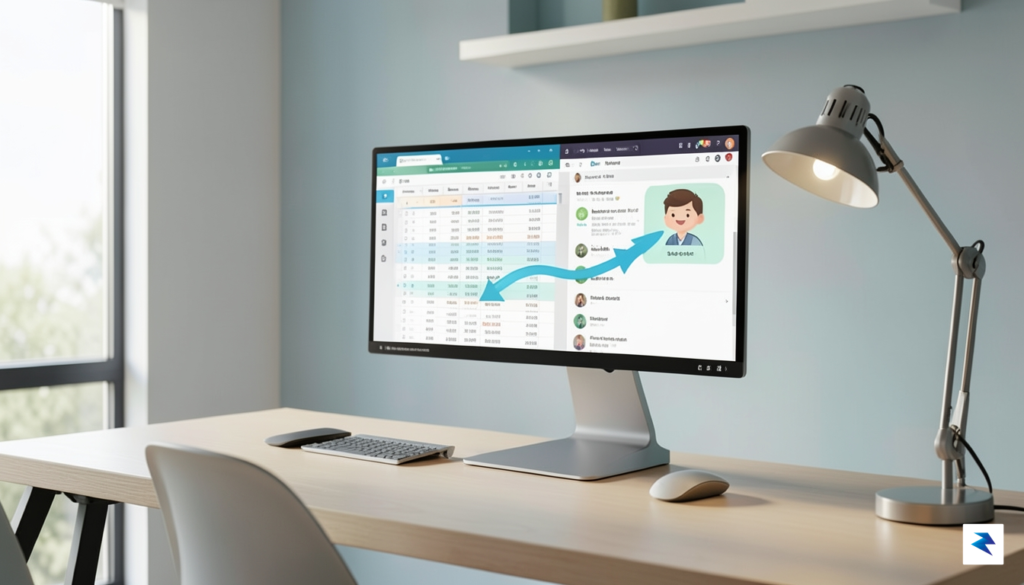
The true power of an agentic model like Gemini 3.5 Flash resides in its ability to bridge the gap between disparate applications, effectively acting as an invisible hand that navigates your digital workspace. By allowing the AI to interact directly with your desktop environment, you can offload the kind of repetitive, cross-platform drudgery that often consumes the most productive hours of your day. Whether you are reconciling data between a legacy accounting system and a modern web dashboard or systematically migrating information across multiple browser tabs, the model executes these tasks with a level of precision and consistency that minimizes the risk of human error.
Streamlining Cross-Platform Workflows
One of the most immediate benefits for knowledge workers is the automation of complex data entry and form management. Instead of manually copying and pasting values from an email client into a CRM or a rigid web-based portal, you can instruct the agent to extract the relevant data points and populate the necessary fields automatically. This capability extends to navigating cumbersome legacy enterprise software that lacks modern APIs; the model can “see” the interface, recognize buttons, and interact with menus just as a human would. By handling these tedious chores, the AI frees you to focus on high-level strategy rather than the mechanical act of moving information from one window to another.
The transition from “manual oversight” to “agentic delegation” allows professionals to reclaim hours of lost time, effectively turning a full day of administrative maintenance into a few minutes of high-level supervision.
Beyond simple data entry, Gemini 3.5 Flash serves as a tireless partner in quality assurance and systematic documentation. For developers or software testers, the model can be tasked with executing repetitive test scripts across various desktop applications, documenting the results in real-time, and flagging discrepancies for human review. This is particularly useful for:
- Automated Data Reconciliation: Comparing balance sheets across desktop-based accounting software and cloud-native project management tools to ensure financial alignment.
- Software Regression Testing: Navigating through existing user interfaces to ensure that recent updates haven’t disrupted established workflows.
- Systematic Form Completion: Parsing unstructured documents, such as PDF invoices or contracts, and inputting that data into structured web forms without requiring manual transcription.
- Cross-App Summary Generation: Aggregating insights from multiple open desktop applications to draft comprehensive status reports in a single, unified document.
This evolution in computer use transforms the AI from a mere chatbot into a functional digital assistant that understands the spatial and logical layout of your desktop. As you delegate these fragmented, multi-step processes, the model maintains a persistent awareness of the task context, ensuring that every click and keystroke serves your broader objective. By automating the “busy work” that once required constant manual intervention, Gemini 3.5 Flash enables a more fluid, efficient way of working where your technology finally works as hard as you do.
Security, Privacy, and Responsible AI Deployment

Granting an AI the capability to interface with your desktop environment—simulating mouse clicks, keyboard inputs, and navigation—is a paradigm shift in how we interact with software. While this functionality unlocks incredible productivity, it inherently necessitates a security-first approach. Google has engineered Gemini 3.5 Flash with granular permission controls that act as a digital tether, ensuring that the model cannot perform high-stakes actions without explicit, real-time user validation. By mandating a “human-in-the-loop” requirement for sensitive operations like financial transactions, terminal commands, or file deletions, the system forces a pause that allows you to scrutinize every intent before it becomes an executed reality.

The technical architecture behind this control relies on robust sandboxing and strict input validation. Rather than giving the AI unfettered access to the operating system kernel, the model operates within a restricted environment that monitors for anomalous patterns or unauthorized API requests. This structure is designed to mitigate the risks of “hallucinations”—where an AI might misinterpret a UI element or trigger an unintended sequence of events. Because the AI interprets visual cues from your screen, it must constantly reconcile its internal logic with the actual state of your desktop. To prevent errors, the system employs high-precision verification layers that cross-reference the AI’s intended actions against the specific UI components it is interacting with, ensuring that a “delete” command, for example, is only targeted at the intended file rather than a system directory.
True agency requires transparency; users must always have the final veto power over any autonomous task that alters the state of their local machine.
Furthermore, privacy remains a cornerstone of this deployment. Data leakage is a significant concern when an AI processes your screen content, which is why the processing pipeline is strictly governed by data minimization principles. The system is designed to prioritize local context processing, ensuring that sensitive information visible on your screen is not inadvertently exfiltrated or used to train external models without your explicit consent. By maintaining these strict guardrails, the technology empowers you to delegate mundane, repetitive tasks while keeping the most critical aspects of your digital life under your own direct supervision. As these agentic capabilities continue to evolve, the combination of user-centric oversight and rigorous background security will remain the definitive barrier against unauthorized access.
What This Means for the Future of Human-Computer Interaction
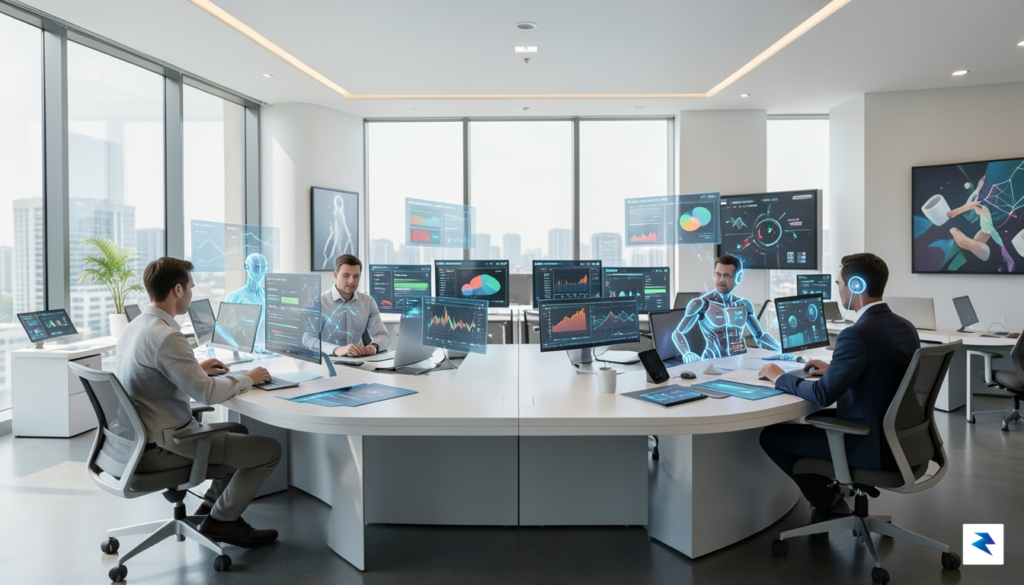
The integration of Computer Use capabilities into Gemini 3.5 Flash marks a profound departure from the traditional paradigm of human-computer interaction. For decades, we have functioned as manual operators of digital tools, tethered to the mechanical repetition of clicking, typing, and navigating through fragmented interfaces. By allowing an AI agent to perceive and interact with an operating system as a human would, we are witnessing the transition from software as a static utility to software as a dynamic collaborator. This shift effectively decouples intent from execution, enabling users to articulate a goal while the model manages the intricate, often tedious steps required to achieve it. As a result, the digital workspace is evolving from a collection of isolated applications into a cohesive, agentic ecosystem.
This evolution promises to fundamentally redefine the nature of professional work by drastically reducing the cognitive load associated with digital “busywork.” When professionals are freed from the friction of navigating complex menus, reconciling data across incompatible platforms, or performing repetitive data entry, they reclaim the mental bandwidth necessary for high-level strategy and creative problem-solving. Instead of spending hours managing the mechanics of a workflow, the worker of the future will function as a director of processes, overseeing AI agents that handle the execution. This represents a move toward a more human-centric work model, where the value of an individual is defined by their ability to synthesize information and set objectives, rather than their dexterity in manipulating software tools.
The true potential of agentic AI lies in its ability to transform the operating system from a passive platform into an active, anticipatory partner in our daily workflows.
Looking ahead, we can expect agentic capabilities to move beyond standalone tools and become deeply embedded into the fabric of our operating systems. Future iterations of this technology will likely move toward greater contextual awareness, where the system anticipates needs based on long-term project goals rather than just immediate prompts. For developers, this necessitates a move toward building more modular, accessible interfaces that AI agents can navigate with high reliability. Meanwhile, enterprise adoption will require a careful balance between the efficiency gains of automation and the implementation of robust security frameworks. Ultimately, the path forward is one where the barrier between human intent and digital output continues to dissolve, ushering in an era of unprecedented productivity where our software finally works as hard as we do.