
Inside Facebook’s New AI Companion App for Creators
Understanding Facebook's New AI Creator Companion Meta has officially signaled a major pivot in its strategy, moving beyond the…
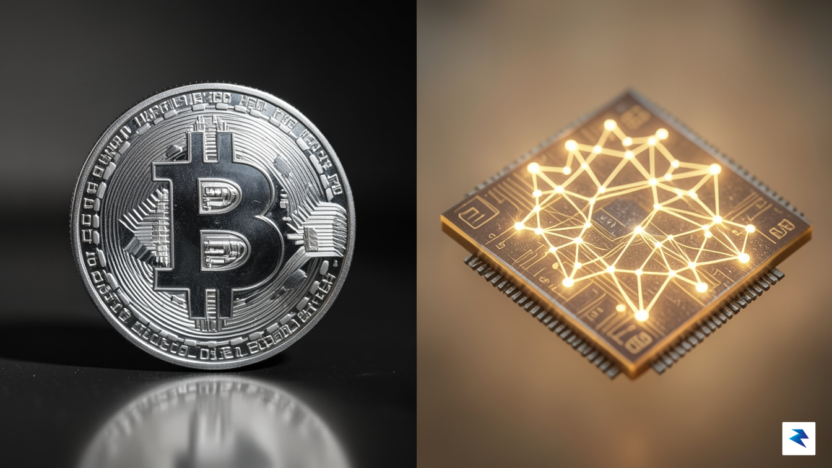

The recent retreat of Bitcoin below the $60,000 mark has served as a poignant signal of a broader transformation in global market dynamics. While digital assets were long considered the primary destination for speculative liquidity, a significant portion of both institutional and retail capital is now gravitating toward the tangible, high-growth sector of artificial intelligence. This rotation is not merely a fleeting trend but a fundamental recalibration of risk appetites, as investors increasingly prioritize companies that provide the essential architecture for the next technological era over the cyclical volatility of decentralized finance.
At the heart of this shift is the undeniable momentum behind AI infrastructure, where hardware manufacturers and memory chip giants have become the new focal points for capital allocation. Unlike the purely speculative nature of many crypto-assets, the current AI trade is anchored by massive, verifiable demand for specialized compute power. Companies building the GPUs, advanced semiconductors, and data center cooling systems that drive machine learning models are reporting record-breaking revenue growth. For a cautious investor, the appeal lies in the visibility of this demand; there is a concrete, physical output—silicon, energy, and processing capacity—that differentiates AI infrastructure from the more abstract value propositions found in the blockchain ecosystem.

The transition from speculative digital assets to AI hardware represents a move toward ‘hard’ technology, where capital is being deployed into the physical foundations of the future economy rather than purely decentralized financial experiments.
This reallocation of resources is further accelerated by the realization that AI is currently in its deployment phase, requiring immense capital expenditure to scale. Consequently, liquidity that might have previously fueled rallies in altcoins or Bitcoin is being diverted into the equity markets, specifically targeting the semiconductor supply chain and cloud infrastructure providers. As these technology firms continue to demonstrate their role as the “picks and shovels” of the AI boom, they offer a sense of security that volatility-prone crypto markets currently lack. While Bitcoin remains a dominant asset class for those seeking a hedge against traditional currency devaluation, the current market climate suggests that when it comes to explosive, growth-oriented investment, the tangible promise of AI hardware is currently winning the battle for investor attention.
Ultimately, this movement reflects a sophisticated shift in how the market values long-term utility. While crypto markets are often driven by sentiment, cycle halvings, and macro liquidity conditions, the AI trade is being driven by fundamental industrial necessity. As long as the demand for larger, more complex AI models continues to outpace the current supply of high-performance hardware, this rotation of capital is likely to remain a dominant theme, keeping pressure on the digital asset space as investors continue to chase the most visible and scalable growth opportunities available today.
The recent descent of Bitcoin beneath the $60,000 threshold is far from an isolated event; rather, it represents a complex reaction to shifting macroeconomic tides and a fundamental reallocation of global capital. For months, the digital asset market flourished under the assumption of imminent interest rate cuts and a “risk-on” environment. However, as persistent inflation data forces central banks to maintain a hawkish stance for longer than anticipated, the opportunity cost of holding non-yielding assets like Bitcoin has risen significantly. Investors are increasingly gravitating toward safer, interest-bearing instruments or, more notably, high-growth sectors that offer tangible earnings growth, such as the burgeoning artificial intelligence industry.
Beyond the broader macroeconomic backdrop, structural pressures within the crypto markets have exacerbated the downward volatility. The liquidation of large-scale positions, often triggered by automated stop-loss orders as prices breached key technical levels, created a cascading effect that further eroded buyer confidence. When the $60,000 psychological support failed to hold, it triggered a wave of retail and institutional capitulation, as traders who had previously banked on a swift recovery chose to deleverage to preserve capital. This phenomenon is a classic example of market reflexivity, where the breach of a perceived floor becomes a self-fulfilling prophecy, driving prices lower as stop-loss triggers are hit in rapid succession.
The retreat below $60,000 serves as a stark reminder that Bitcoin’s price discovery is inextricably linked to global liquidity conditions and the competitive landscape of the broader investment market.
Looking ahead, the critical question remains whether this downturn signals a structural shift in investor sentiment or a temporary, albeit painful, correction. While the “AI trade” is undeniably capturing the lion’s share of speculative capital—fueled by the tangible productivity gains promised by generative models and semiconductor manufacturing—it is too early to declare a permanent decoupling of crypto from speculative risk assets. Bitcoin’s current struggle is likely a rebalancing act; as capital rotates into sectors with immediate AI-driven growth potential, the crypto market must find a new equilibrium based on long-term utility rather than pure liquidity-driven momentum. If the broader market stabilizes and macroeconomic conditions improve, Bitcoin may regain its footing, but for now, the asset is clearly in a period of intense institutional reassessment.

The recent decision by a major memory chip titan to seek nearly $30 billion in fresh capital serves as a definitive signal to the global market: the artificial intelligence revolution is no longer just a software experiment; it is a capital-intensive industrial transformation. This staggering figure reflects a fundamental shift in how institutional investors perceive the digital economy, moving away from speculative digital assets and toward the tangible bedrock of the AI arms race. By front-loading these massive expenditures, companies are essentially acknowledging that the computational capacity required to train next-generation large language models is currently constrained by physical hardware availability. This surge in financing suggests that we are entering a phase where the ability to manufacture, package, and supply high-end semiconductors is the primary competitive moat for the world’s most valuable technology firms.

In this new landscape, high-bandwidth memory (HBM) chips have effectively become the “new gold” for institutional investors and tech giants alike. Unlike the commoditized memory chips of the past, these sophisticated components are essential to preventing the “bottleneck effect” that occurs when powerful processors outpace the speed at which data can be retrieved from memory. As companies scramble to secure their supply chains, the barrier to entry has skyrocketed; it now requires tens of billions of dollars just to reach the starting line of state-of-the-art semiconductor fabrication. Consequently, smaller players are being rapidly sidelined, leaving a handful of capital-rich behemoths to dictate the pace of global innovation. For the average investor, this indicates a structural pivot where the “AI trade” is increasingly synonymous with the physical infrastructure—the foundries, the cleanrooms, and the specialized packaging facilities—that keeps the entire ecosystem running.
The scale of these capital raises is a clear indicator that we have moved past the era of ‘cheap’ AI development. The future belongs to those who can fund the massive, energy-dense physical footprint required to power the next generation of machine intelligence.
Ultimately, this massive influx of capital into hardware is reshaping portfolio strategies across Wall Street. Investors who once sought high-growth exposure through speculative crypto-assets or pure-play software startups are now reallocating their capital toward the companies that own the critical path of the supply chain. This is not merely a short-term trend; it is a long-term commitment to the physical reality of digital growth. As the demand for AI compute continues to outstrip supply, the strategic importance of semiconductor dominance will likely remain the most significant driver of market volatility and wealth creation for the remainder of the decade. Investors are betting that while the hype cycles of digital currencies may ebb and flow, the underlying demand for the hardware that makes AI possible is an unstoppable, secular trend.


The recent retreat of Bitcoin below the $60,000 threshold serves as a poignant reminder that digital assets remain inextricably linked to the broader macroeconomic environment. Historically, cryptocurrencies have exhibited a high correlation with the technology sector, often moving in lockstep with speculative risk assets during periods of monetary tightening or shifts in investor sentiment. As capital flows begin to rotate toward AI-driven infrastructure, investors are finding that the “digital gold” narrative is being challenged by the tangible, earnings-backed growth of semiconductor giants and software innovators. For the modern investor, this dynamic suggests that relying solely on crypto-native portfolios may amplify downside risk during market rotations, necessitating a more sophisticated approach to asset allocation.
To navigate this volatility, a robust diversification strategy involves treating blockchain-based assets and artificial intelligence equities as complementary components of a forward-looking portfolio. Rather than viewing the AI boom as an adversary to crypto, savvy market participants are increasingly looking at the symbiotic relationship between the two. Blockchain infrastructure requires massive computational power, much of which is facilitated by the same high-end hardware driving the current AI revolution. By holding exposure in both sectors, you effectively hedge against sector-specific downturns while positioning yourself to capture value from the underlying technological convergence. This dual-exposure model allows one’s portfolio to benefit from the decentralized finance revolution while maintaining a safety net in the established, dividend-paying, or high-growth equity markets that define the current AI trade.
Diversification is not merely about owning different assets; it is about owning assets that react differently to the same economic catalyst. By balancing high-beta crypto holdings with the structural stability of AI-focused tech equities, investors can dampen portfolio variance without sacrificing long-term growth potential.
Implementing this balance requires a disciplined approach to risk management, specifically through periodic rebalancing and a clear understanding of correlation coefficients. If your portfolio is heavily skewed toward speculative altcoins or leveraged crypto positions, consider reallocating a portion of those gains—or future capital—into established companies that provide the foundational infrastructure for modern computing. This approach does not require exiting the crypto market entirely; rather, it emphasizes the importance of asymmetric risk mitigation. By anchoring your portfolio with assets that generate consistent revenue or play a critical role in the global supply chain, you ensure that your capital base remains resilient even when market sentiment shifts away from the digital asset space toward more traditional, yet high-growth, tech sectors.

As the current market environment experiences a distinct shift in capital allocation, the narrative surrounding Bitcoin is evolving from a singular focus on monetary debasement to a more complex positioning within the broader technology stack. While AI-driven ventures currently command the lion’s share of venture capital and retail enthusiasm, Bitcoin remains a foundational layer in the digital economy. The recent price correction below $60,000 does not necessarily signal a loss of utility; rather, it highlights an era of “capital competition” where investors are weighing the immediate, tangible productivity gains of artificial intelligence against the long-term, structural promise of decentralized, sovereign currency. The maturity of the digital asset space will ultimately depend on its ability to prove that it is not merely an alternative to traditional finance, but a necessary infrastructure for a world increasingly powered by algorithmic agents.

The potential for synergy between these two pillars is becoming increasingly clear, particularly regarding decentralized infrastructure. As AI models require vast, uninterrupted streams of data and massive amounts of compute power, decentralized networks could offer a solution to the centralization bottlenecks currently facing major tech giants. Bitcoin’s proof-of-work mechanism, often criticized for its energy consumption, may find new purpose in securing specialized decentralized compute layers or verifying the authenticity of AI-generated content. By leveraging blockchain’s immutable ledger, developers can create “trustless” environments where AI agents interact, transact, and exchange value without the need for traditional intermediaries. This convergence suggests that rather than competing for dominance, Bitcoin and AI could eventually form a symbiotic relationship, where the former provides the financial rails for the latter’s autonomous operations.
The true test of the crypto market in an AI-dominated cycle will not be price appreciation alone, but its capacity to provide the necessary security, transparency, and liquidity for the next generation of autonomous economic activity.
Ultimately, a balanced portfolio in the coming decade will likely require exposure to both the transformative energy of AI and the resilient store-of-value characteristics of Bitcoin. Investors should recognize that while AI offers explosive growth in productivity and automation, it operates within a volatile framework of regulatory uncertainty and rapid technological obsolescence. Conversely, Bitcoin provides a hedge against monetary expansion and a censorship-resistant settlement layer that remains indifferent to the shifting fashions of Wall Street. By viewing these assets as complementary rather than mutually exclusive, market participants can navigate the inevitable volatility of the current cycle with a more sophisticated perspective. The future belongs to those who view this technological transition not as a zero-sum game, but as an integration of two distinct, yet equally critical, digital revolutions.
You must be logged in to post a comment.