
The Rise of Prediction Markets in Social Media

For years, the architecture of social media has been defined by the passive consumption of content, where users scroll through algorithmically curated streams of images, status updates, and links. However, as the limitations of this model become increasingly apparent—particularly regarding the spread of misinformation and echo-chamber dynamics—platforms are beginning to pivot toward more interactive and empirical frameworks. Prediction markets, which allow users to bet on the outcome of future events, represent a fundamental shift in this landscape. By incentivizing accuracy through a structured, transparent mechanism, these platforms transform the user from a passive audience member into an active participant in collective intelligence, effectively leveraging the “wisdom of the crowd” to distill complex global events into probabilistic data points.
Historically, prediction markets have existed in niche financial or academic circles, serving as forecasting tools for political elections, economic trends, and scientific breakthroughs. Their core power lies in their ability to strip away the noise of partisan opinion and replace it with a quantified signal, where participants must have “skin in the game” to support their claims. By integrating this concept into a massive social ecosystem like Meta’s, the goal is to shift the focus from reactive, emotional commentary toward a more analytical framework. Instead of arguing over the interpretation of a news cycle, users are invited to estimate the likelihood of specific outcomes, creating a dynamic ledger of consensus that naturally resists the volatility of polarized rhetoric.
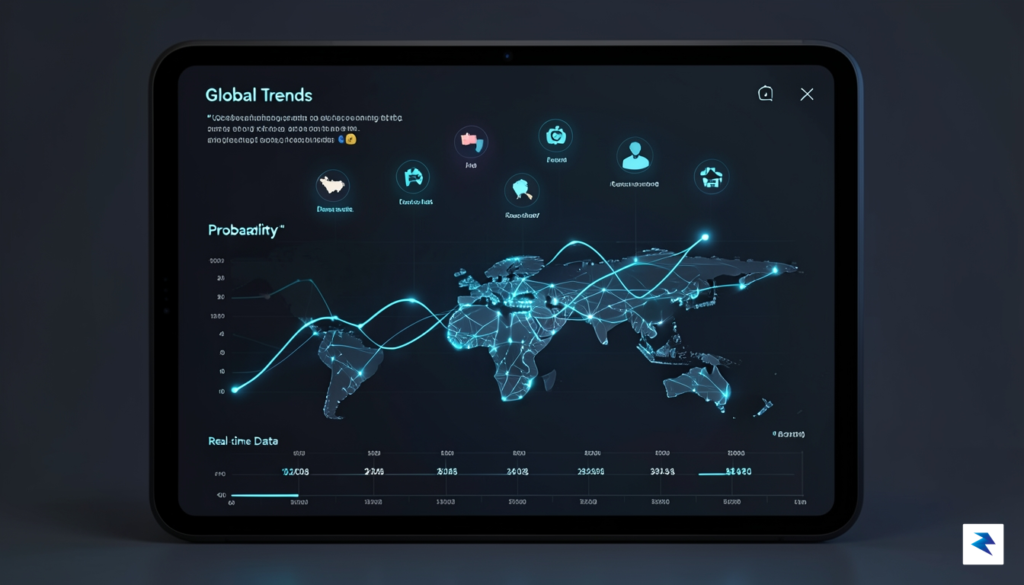
The transition toward prediction-based engagement signifies a move away from the “attention economy” and toward a “truth-seeking economy,” where utility and foresight hold more value than simple clicks or shares.
This evolution is particularly timely as social platforms struggle to maintain their credibility in an era of rampant disinformation. Current social models often reward content that triggers strong emotional responses, which frequently leads to the amplification of inaccurate or inflammatory claims. A prediction market, by contrast, creates a self-correcting environment; those who consistently provide inaccurate forecasts see their influence diminish, while those who demonstrate empirical accuracy gain credibility. This structural shift suggests that Meta is attempting to re-engineer the social experience, moving away from the static, chronological feed that has dominated the last decade toward a more sophisticated, forecasting-driven engine that provides tangible value to the user base beyond mere digital distraction.
Inside Meta's Arena: Features and Projected Mechanics

At its core, Arena is designed to function as a sophisticated social forecasting engine that gamifies the way users interact with current events. Rather than immediately plunging into the high-stakes, regulatory-heavy waters of real-money wagering, Meta appears to be employing a strategic “crawl-walk-run” approach. By launching with a point-based system, the platform lowers the barrier to entry significantly, allowing casual users to participate in prediction markets without the fear of financial loss. This mechanism serves as a crucial training ground, effectively conditioning users to think critically about probability and outcomes while building the platform’s initial liquidity and user density.
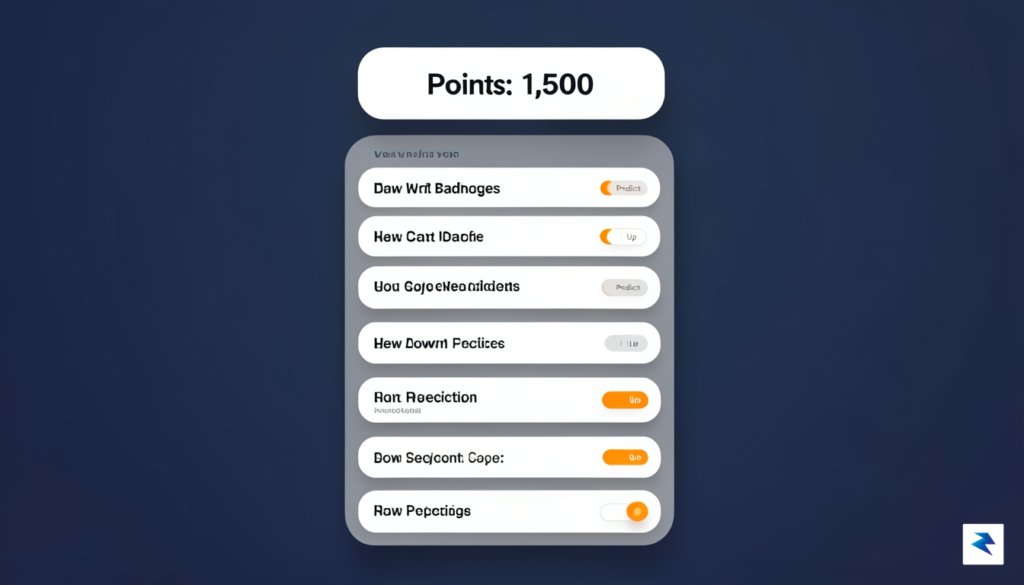
The significance of this non-monetary foundation cannot be overstated. By utilizing virtual tokens, Meta can foster a culture of competitive analysis and consensus-building without triggering the immediate legal scrutiny that accompanies real-money gambling platforms. This allows the company to iterate on the user experience—refining the way questions are phrased, how odds are displayed, and how participants engage with one another—before the complexity of financial transactions is introduced. Furthermore, a points-based ecosystem creates a safer, more inclusive environment where users can learn the nuances of forecasting as a social skill rather than a purely speculative financial activity.
However, the long-term roadmap for Arena likely hinges on a transition toward real-money markets, a shift that would fundamentally alter the platform’s risk profile. Once the user base is habituated to the mechanics of prediction, Meta may introduce features that allow these virtual points to be exchanged for, or bolstered by, real currency. This transition would bridge the gap between casual social interaction and serious, high-stakes forecasting, effectively positioning Arena as a direct competitor to platforms like Polymarket. While Polymarket operates as a specialized niche for finance-focused traders, Meta’s integration could bring the concept of prediction markets to a massive, mainstream audience, turning everyday social media users into decentralized analysts.
The transition from a gamified, point-based system to a real-money market is the ultimate litmus test for Meta’s regulatory strategy, as it moves the platform from a social curiosity into the complex domain of fintech and oversight.
Comparing Arena to existing platforms reveals the unique advantage Meta holds: its existing social graph. While competitors struggle to acquire new users one by one, Arena can leverage billions of existing connections to drive engagement and provide the volume necessary for accurate market predictions. If Meta successfully navigates the transition from virtual points to potential financial stakes, it will not only revolutionize how we consume news but also how we collectively assess the likelihood of future developments on a global scale. This evolution, while fraught with regulatory hurdles, highlights a clear ambition to turn social media from a place of passive consumption into an active, predictive utility.
The Strategic Rationale Behind Zuckerberg's Move

At its core, the launch of Arena represents a sophisticated pivot from social networking to the pursuit of predictive intelligence. While casual observers might categorize this as a venture into the betting space, Meta is actually constructing a massive, real-time feedback loop designed to harvest high-intent behavioral data. By incentivizing users to stake their reputation—or virtual currency—on future outcomes, Meta gains access to a unique dataset that reflects collective intuition, risk assessment, and information processing. This is not merely about predicting election results or sports outcomes; it is about mapping how information flows through society and how individuals weight truth, bias, and probability in real-time.

The strategic value of this data for Meta’s broader AI ambitions cannot be overstated. Modern large language models often struggle with the “truthfulness” of information, frequently hallucinating or reflecting the polarized biases found in training data. Arena offers a proprietary, high-quality stream of human-vetted insights that can serve as a training ground for AI agents. When millions of users compete to accurately predict real-world events, they effectively perform a form of crowdsourced fact-checking and sentiment analysis. By integrating these insights into their existing AI models, Meta can refine the relevance of content across Facebook, Instagram, and WhatsApp, ultimately creating a more “intelligent” ecosystem that understands the nuance of current events better than any static algorithm.
The true currency of Arena is not the digital tokens wagered by users, but the predictive certainty extracted from the crowd to sharpen Meta’s neural networks.
Furthermore, Arena acts as a powerful retention engine in an increasingly fragmented digital landscape. By forcing users to engage with high-stakes, time-sensitive topics, Meta increases the “stickiness” of its platform, ensuring that users return repeatedly to check the status of their predictions and adjust their positions based on new information. This constant engagement expands the available ad inventory while simultaneously deepening the company’s profile on every user’s risk tolerance and cognitive patterns. While decentralized betting platforms like Polymarket have pioneered this model, they lack the massive, integrated social graph that Meta possesses. By embedding these mechanics directly into their existing ecosystem, Meta creates a seamless experience that keeps users within their walled garden, effectively neutralizing the threat of niche competitors and consolidating their position as the primary destination for real-time information and social discourse.
Navigating the Regulatory and Ethical Landscape

The introduction of Arena into the prediction market ecosystem is far from a simple software deployment; it is a high-stakes entry into a complex regulatory minefield. In the United States, the Commodity Futures Trading Commission (CFTC) maintains a rigorous oversight framework for event contracts, strictly limiting what can be traded to ensure these markets don’t devolve into mere unregulated gambling. Meta will need to demonstrate that Arena provides legitimate informational value—acting as a “wisdom of the crowd” tool—rather than functioning as a digital casino. Abroad, the legal landscape is even more fragmented, with varying degrees of hostility toward speculative betting markets that could easily trigger localized bans or necessitate costly, region-specific compliance infrastructure.
Beyond the legal hurdles, Meta faces a profound challenge regarding the integrity of the information itself. Prediction markets are notoriously susceptible to manipulation, whether by sophisticated bot networks aiming to skew price trends or by bad actors with the capital to artificially influence outcomes. If a platform as large as Meta becomes the primary engine for these predictions, the risk of “information poisoning” increases exponentially. A coordinated effort to manipulate a market could inadvertently create a false perception of reality, potentially swaying public opinion on critical issues like elections or global health policies. Consequently, the platform must implement ironclad anti-manipulation safeguards that can distinguish between organic market sentiment and synthetic, manufactured trends.

Perhaps the most concerning ethical dimension involves the perverse incentives such markets might inadvertently create. There is a tangible fear that by monetizing the outcome of real-world events, the platform could provide a financial motivation for individuals to influence—or even sabotage—those very events to ensure their wagers pay off. Whether it involves spreading misinformation to move a market or, in more extreme scenarios, incentivizing harmful real-world behaviors to guarantee a specific financial outcome, the social responsibility burden on Meta is immense. To mitigate these dangers, the company will need to move beyond simple moderation and develop predictive algorithms capable of identifying and freezing markets that show signs of being coerced or manipulated by external, malicious actors.
The core challenge for Meta lies in balancing the democratization of information against the inherent volatility of human speculation; if the platform cannot guarantee the sanctity of its markets, the social cost may quickly outweigh the analytical benefits.
Ultimately, the success of Arena will depend less on its user interface and more on its ability to build a fortress of trust. If users perceive that the “wisdom of the crowd” is being steered by corporate influence or easily subverted by malicious participants, the platform will lose its utility as a reliable forecasting tool. Meta is effectively attempting to build a digital oracle, but in doing so, it must prove that it can govern these markets with a level of transparency and ethical rigor that has historically eluded the social media giant in other areas of its business.
The Future of Information Aggregation

If Arena gains widespread traction, it could represent a fundamental shift in how the digital public square functions, moving us away from the era of engagement-based algorithms toward a model defined by empirical verification. For years, social media has rewarded the loudest and most controversial voices, often prioritizing emotional reactions over factual accuracy. By incentivizing users to stake their capital or reputation on the outcomes of real-world events, Meta is effectively introducing a meritocratic filter to the information ecosystem. In this new paradigm, the value of an opinion is no longer measured solely by clicks or shares, but by its predictive utility, potentially forcing a healthier discourse where participants have genuine “skin in the game” regarding the claims they broadcast.
However, the transition toward a market-based information architecture brings significant tension between the “wisdom of the crowd” and the risks of hyper-polarized gambling. While prediction markets are theoretically excellent at aggregating disparate data points into a single, cohesive forecast, they are not immune to the biases and tribalism that currently plague the internet. There is a palpable danger that these markets could be manipulated by bad actors or that the platform might devolve into a high-stakes environment where users prioritize personal financial gain over objective truth. If the community begins to treat critical geopolitical or social events merely as instruments for betting, the nuance required to understand complex issues may be discarded in favor of binary, winner-take-all outcomes.

The ultimate success of Arena will depend on whether it can distinguish between informed consensus and the echo chambers of speculative fervor.
For Meta, the launch of Arena is a high-stakes gamble that carries both immense rewards and substantial reputational risks. Successfully integrating prediction markets could solidify Meta as the primary destination for serious news and analysis, distancing the company from the accusations of polarization that have historically haunted its platforms. Yet, if the system fails to maintain rigor—or if it is perceived as enabling a gambling culture—Meta could face intense regulatory scrutiny and public backlash. Ultimately, this experiment is a bold attempt to re-engineer the digital experience, aiming to replace the chaotic noise of modern social media with a more structured, outcome-oriented approach to understanding the world around us.