
Qualcomm Acquires Modular: What the Strategic AI Merger Means for Developers
The Strategic Rationale Behind Qualcomm's Acquisition For decades, Qualcomm has defined itself through the lens of mobile connectivity,…

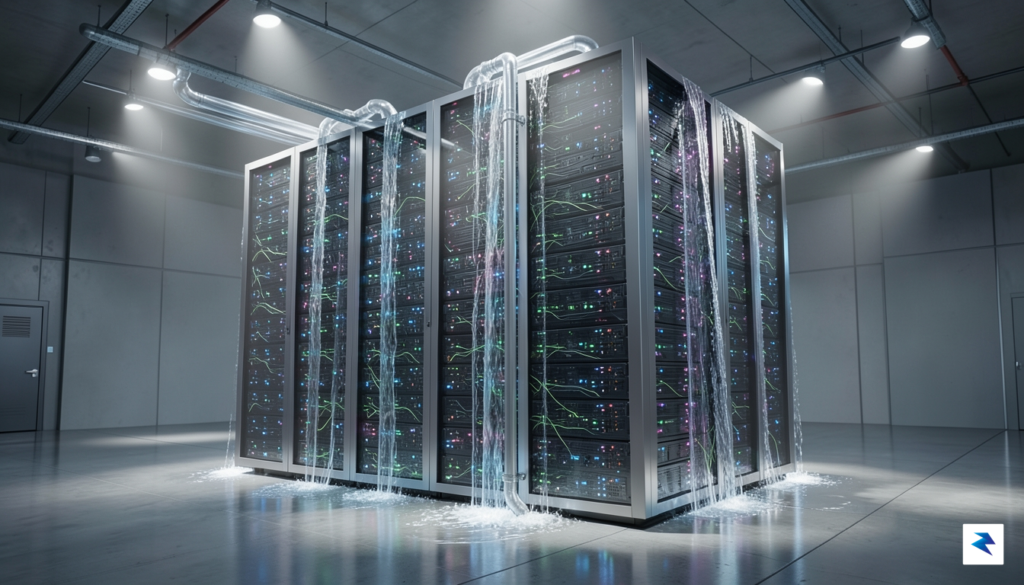
The meteoric rise of generative AI and the deployment of massive large language models have fundamentally altered the landscape of digital infrastructure. As these AI workloads demand unprecedented levels of compute density, the servers powering them generate immense heat, necessitating constant and robust cooling. Historically, the industry has relied on evaporative cooling—a process that essentially uses water as a refrigerant to whisk heat away from server racks. While this method is highly efficient at lowering temperatures, it comes at a staggering environmental cost; a single hyperscale data center can consume millions of gallons of water every day, effectively competing with local municipalities for scarce resources.
This reliance on water is increasingly problematic as the geographic footprint of these data centers expands into regions already struggling with water stress. In many arid climates where land is inexpensive and energy is abundant, the massive, continuous draw of water for cooling purposes puts an unsustainable strain on local aquifers and community water supplies. As droughts become more frequent and water security becomes a global priority, the optics and the ethics of traditional data center cooling are coming under intense scrutiny. Hyperscale operators are now finding themselves at a critical crossroads where they must balance the insatiable hunger of AI hardware with the urgent need for environmental stewardship and corporate social responsibility.
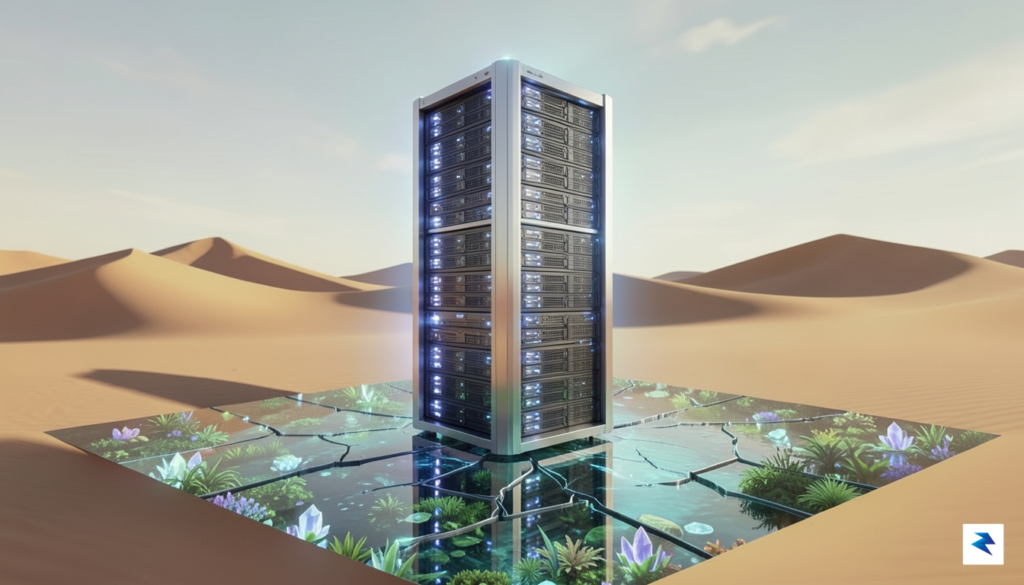
The pressure to innovate is no longer just a matter of public relations; it is an operational imperative. As regulatory bodies and local governments begin to impose stricter limits on industrial water consumption, the current paradigm of evaporative cooling is proving to be a liability. The industry is facing a future where water scarcity could become a hard ceiling for capacity growth if thermal management technologies do not evolve. Consequently, moving toward closed-loop or high-temperature cooling systems has become the primary goal for engineering teams aiming to decouple AI growth from water depletion.
The true challenge of the AI era lies in reconciling the exponential need for raw computing power with the finite reality of our planet’s natural resources.
By shifting away from water-intensive processes, data centers can transition from being seen as resource-draining facilities to becoming more sustainable components of the modern smart grid. This evolution requires a fundamental change in how we perceive server operating temperatures. By rethinking the thermal threshold at which hardware operates, we can move away from the “cool-at-all-costs” mindset and embrace a more efficient, water-neutral future that protects vital resources while fueling the next generation of technological breakthroughs.

For decades, the data center industry has been anchored to the paradigm of “colder is better.” By forcing coolant temperatures down to near-freezing levels, engineers could easily dissipate the intense heat generated by server clusters. However, this cold-temperature obsession necessitated the use of power-hungry chillers and massive evaporative cooling towers that guzzle millions of gallons of water. The industry is now undergoing a radical transformation by shifting the operational baseline to 45°C. This transition relies on a fundamental principle of thermodynamics: heat transfer is governed by the temperature differential between the source and the ambient environment. By allowing the coolant to run at 45°C, the fluid remains hot enough that it can reject its thermal load directly into the outside air, even in relatively warm climates, without requiring the artificial assistance of refrigeration.
This 45°C threshold functions as a critical “sweet spot” for modern facility design. When the coolant temperature is high enough to match or exceed the typical ambient air temperature, the reliance on water-based evaporative cooling—which functions by turning liquid water into vapor to absorb heat—becomes largely obsolete. In traditional systems, water is the primary medium for heat rejection, leading to immense consumption and potential waste. By raising the server-side inlet temperature, data centers can transition to dry, air-cooled systems that utilize heat exchangers rather than water-intensive cooling towers. This shift effectively decouples the data center’s cooling capacity from the local water supply, marking a major milestone in environmental sustainability.
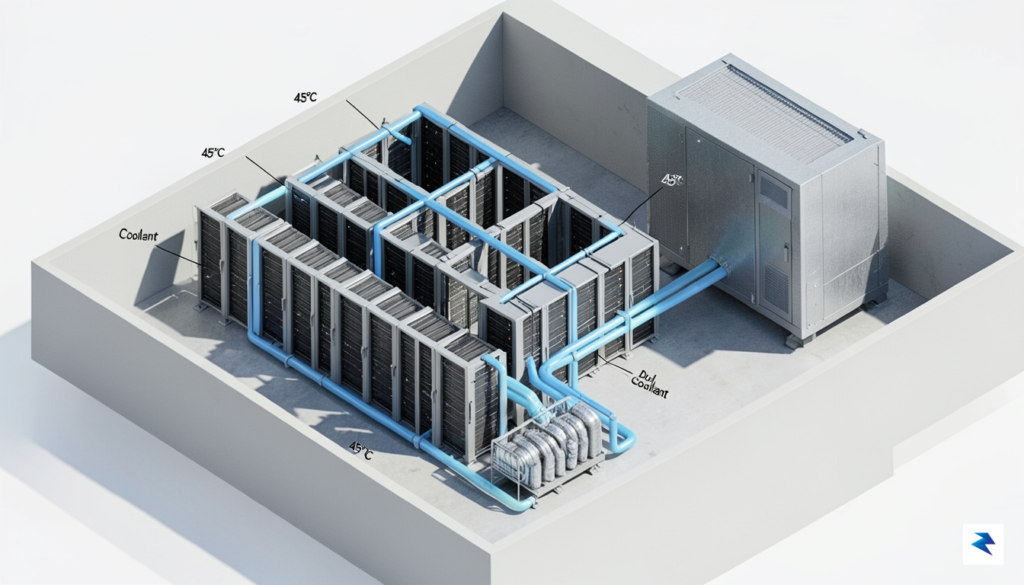
By aligning the server’s thermal output with ambient outdoor temperatures, we eliminate the need for the mechanical refrigeration cycles that have defined the last thirty years of digital infrastructure.
The engineering physics behind this change is elegant in its simplicity. Heat naturally flows from a high-temperature area to a low-temperature area; by running the coolant at 45°C, the data center maintains a consistent gradient that allows heat to be offloaded to the external environment naturally. This eliminates the need for energy-intensive chillers, which were previously tasked with “forcing” heat out of the system by cooling the fluid to sub-ambient levels. Because the coolant no longer needs to be chilled below the outdoor temperature, the compressor cycles that typically consume the bulk of a facility’s electricity are removed from the equation. The result is a dual benefit: a massive reduction in electricity usage for cooling and a near-zero dependency on water for thermal management.
This architectural shift is not merely an incremental improvement; it is a fundamental redesign of how we define efficiency. As AI workloads continue to push the boundaries of rack density and power consumption, the ability to manage heat without depleting local water resources will become the primary metric of a sustainable data center. By moving away from the artificial, energy-heavy cooling methods of the past and embracing the higher-temperature operating window, facility operators are turning the laws of thermodynamics into their greatest ally in the fight for net-zero operations.
The traditional reliance on forced-air cooling has hit a definitive thermal wall as the density of modern AI hardware continues to climb. For decades, data centers relied on massive arrays of computer room air conditioners (CRACs) and high-velocity server fans to push cool air across heat sinks. However, as high-performance GPUs and AI accelerators now generate localized thermal loads that exceed what air can effectively carry away, this legacy approach has become both inefficient and physically insufficient. Air is a poor thermal conductor, requiring massive volumes to be moved at high speeds, which translates into exorbitant energy consumption and persistent acoustic noise that plagues modern server halls.
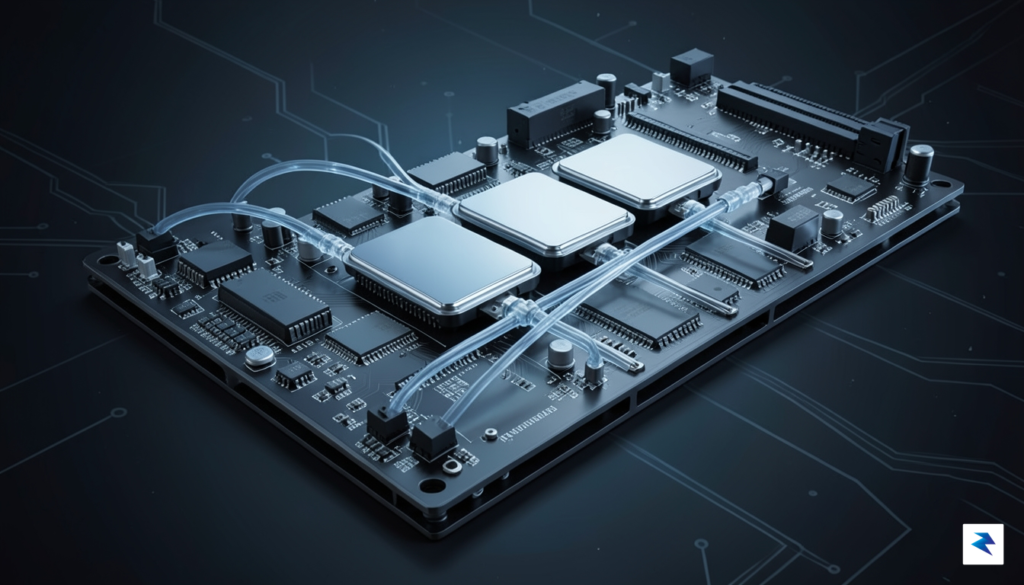
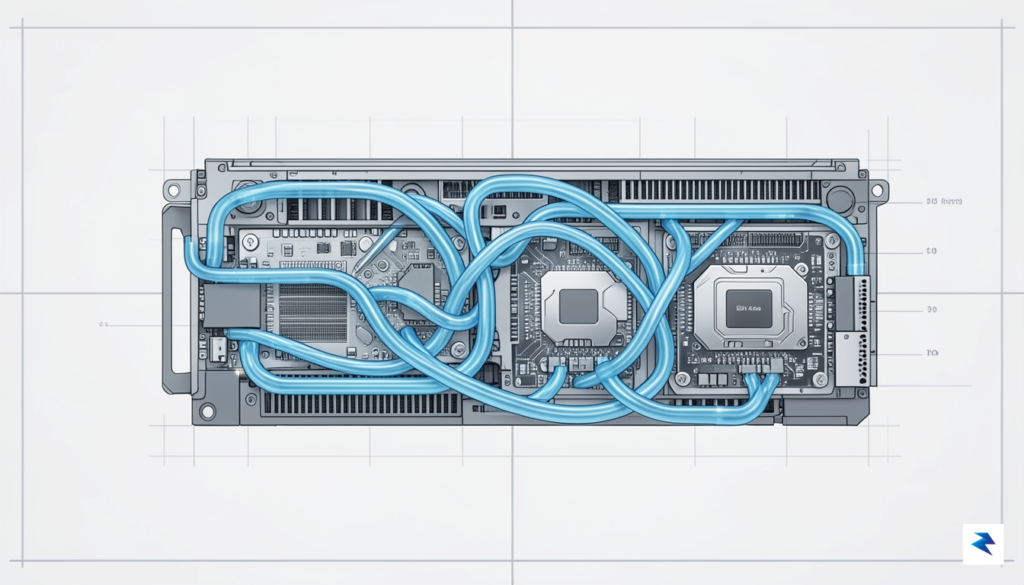
The industry is now undergoing a fundamental shift toward direct-to-chip (DTC) liquid cooling, which fundamentally changes how we manage thermal energy. By utilizing coolant distribution units (CDUs) to circulate dielectric fluids or treated water through precision-engineered cold plates mounted directly onto the heat-generating silicon, heat is captured at the source with near-perfect efficiency. Because liquids have a much higher thermal conductivity than air, this architecture allows data centers to operate at much higher inlet temperatures—reaching the 45°C threshold—without risking hardware failure. This transition moves the cooling burden away from the room-level environment and places it squarely on the component, effectively turning the server itself into a high-efficiency heat exchanger.
Direct-to-chip cooling captures heat directly at the silicon, eliminating the need to cool the entire server chassis, which allows for significantly higher power densities and reduced operational overhead.
The mechanical benefits of this transition are profound, particularly regarding power efficiency and infrastructure complexity. By removing the need for high-RPM server fans to blast air through tight, heat-sink fins, facilities can drastically lower their total power usage effectiveness (PUE). Furthermore, the silent, targeted nature of liquid distribution means that the deafening roar of a typical high-density rack is replaced by the quiet hum of pumps, creating a safer and more manageable work environment. This architectural pivot does more than just solve the heat problem; it enables the implementation of the 45°C cooling design, which allows for heat rejection to the outside atmosphere without the need for energy-intensive mechanical refrigeration or the massive water evaporation typically required by cooling towers. Consequently, data centers can now scale their AI capabilities while simultaneously stripping away the resource-heavy cooling infrastructure of the past.
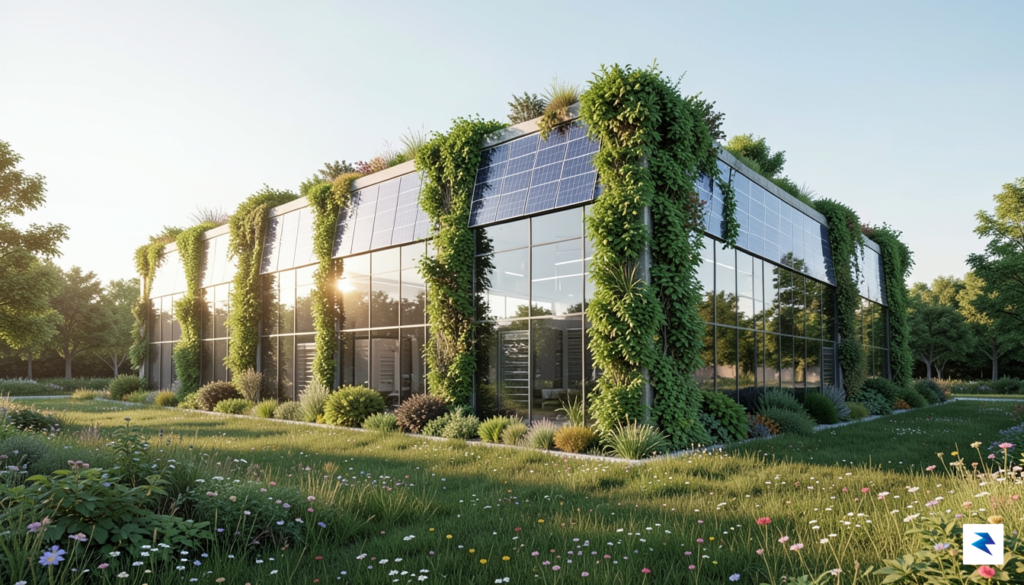
Transitioning to a 45°C cooling architecture represents a fundamental shift in how data centers manage their most critical overheads: electricity and water. By allowing server intake temperatures to rise, facilities can move away from energy-intensive mechanical chillers and water-heavy evaporative cooling systems. This transition is not merely a technical adjustment; it is a strategic maneuver that drastically lowers both Power Usage Effectiveness (PUE) and Water Usage Effectiveness (WUE) metrics. As these facilities move toward a near-zero water consumption model, they effectively insulate their bottom line from the increasing costs of municipal water usage and the volatility of energy markets, turning sustainability into a measurable competitive advantage.
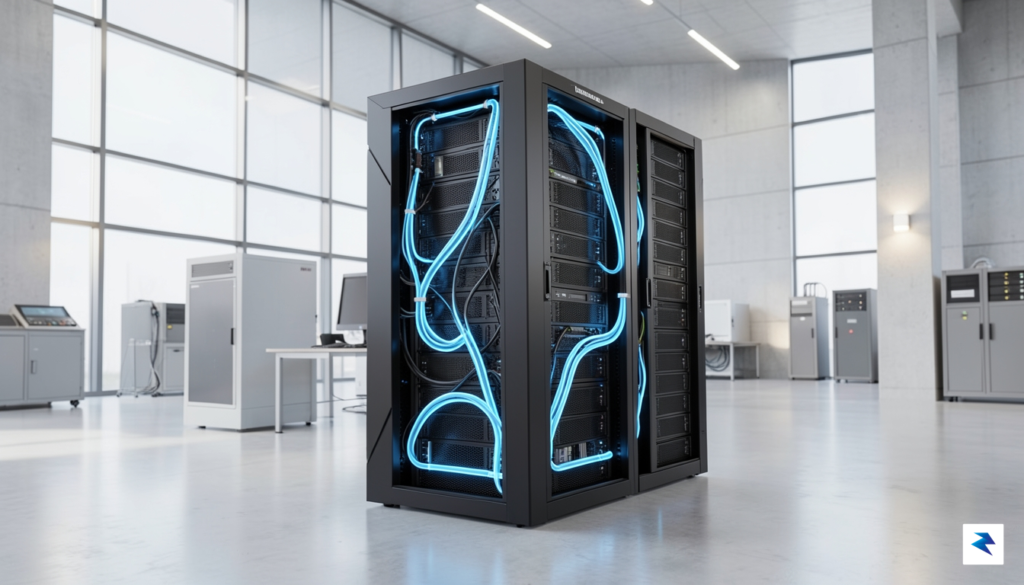
The operational cost savings generated by this shift are multifaceted. Traditional data centers often expend significant capital on water treatment and filtration systems to prevent scaling and biological growth in cooling towers. By eliminating or drastically reducing reliance on these systems, operators can see a sharp decline in utility bills and maintenance labor costs. Furthermore, the reduction in mechanical refrigeration loads allows data center operators to redirect power—previously consumed by bulky HVAC infrastructure—directly into computing tasks, effectively increasing the revenue-generating capacity of every watt of energy purchased. This creates a powerful ROI case for infrastructure upgrades, as the cumulative savings on water and electricity often pay for the system retrofits within a few years of implementation.
“Moving toward near-zero water cooling isn’t just about meeting ESG goals; it is about future-proofing data center operations against resource scarcity and rising utility costs.”
Beyond immediate financial gains, high-temperature cooling offers significant benefits for hardware longevity and regulatory standing. Operating at 45°C does not necessarily imply increased thermal stress on components; rather, it often enables more precise, direct-to-chip liquid cooling that maintains consistent component temperatures regardless of ambient conditions. This stability can extend the lifespan of high-density AI processors that would otherwise be prone to thermal cycling fatigue. From a compliance perspective, companies that adopt these technologies are better positioned to satisfy increasingly stringent government regulations regarding water usage in drought-prone regions. These environmental disclosures are no longer optional for major tech players, and by achieving near-zero WUE, organizations can bolster their sustainability reports, satisfy institutional investors, and secure a social license to operate in communities where water resources are under pressure.

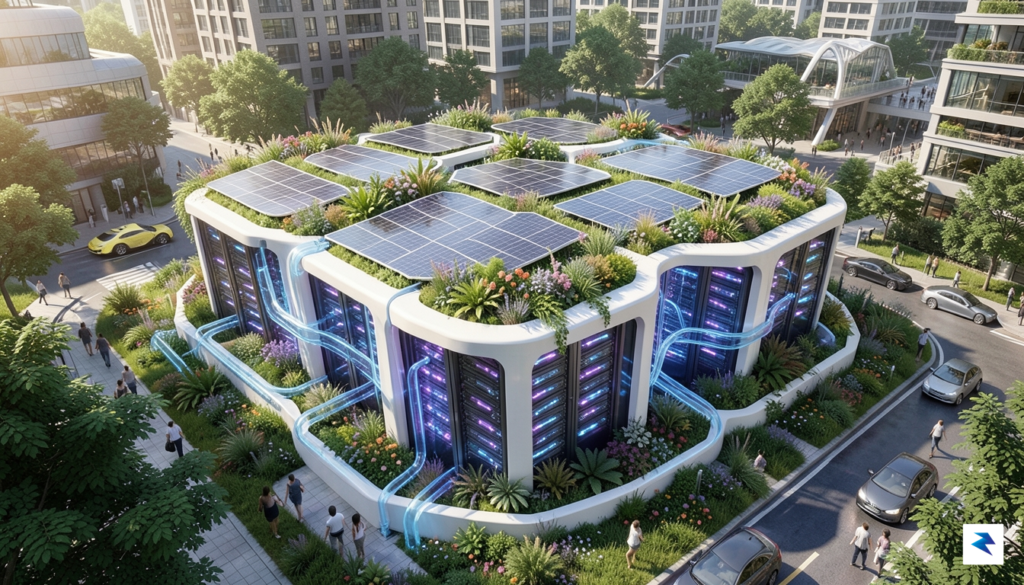
As we transition into an era defined by ubiquitous artificial intelligence, the hardware supporting these massive computational workloads must evolve to be as intelligent and efficient as the algorithms themselves. The implementation of 45°C cooling technology is not merely an incremental improvement in thermodynamics; it represents a fundamental shift in how we conceive of “AI Factories.” By raising the operating temperature for cooling systems, we are effectively decoupling the growth of high-performance computing from the finite resource of local water supplies. This shift allows data centers to be situated in regions previously deemed unsuitable due to water scarcity, thereby decentralizing the cloud and bringing processing power closer to the edge, which is essential for low-latency AI applications.
The scalability of liquid cooling will be the defining factor for the next generation of silicon. As modern AI chips continue to demand higher power densities, traditional air-cooling methods are rapidly reaching their physical limitations. Modular data center designs that incorporate advanced liquid-to-chip cooling architectures allow operators to scale their capacity incrementally, rather than building massive, monolithic facilities that are difficult to retrofit. This modularity ensures that as chip technology advances, the physical infrastructure can be upgraded or expanded without requiring a complete overhaul of the cooling plant. By standardizing these high-temperature cooling loops, the industry is creating a blueprint for infrastructure that can handle the thermal output of future-generation processors while maintaining a near-zero water footprint.
Ultimately, the future of cloud computing hinges on our ability to reconcile the insatiable appetite for AI with the urgent necessity of climate-conscious engineering. Data sovereignty and environmental stewardship are no longer competing interests; they are becoming the dual pillars of modern enterprise strategy. Innovations like high-temperature cooling prove that technical ingenuity can mitigate the environmental impact of massive compute clusters. As organizations continue to invest in AI, the focus must remain on lifecycle efficiency—not just how many teraflops a facility can output, but how it interacts with the local ecosystem.
True sustainability in the AI age requires moving beyond carbon offsets toward infrastructure that is inherently regenerative by design.
We are entering a phase where the “green” label on a data center will be measured by its water neutrality and thermal efficiency as much as its power source. By adopting these high-temperature cooling standards, we are building a foundation where the digital economy can continue to flourish without compromising the natural resources that are essential to our collective future. The path forward is clear: integrate, innovate, and insulate our digital growth from ecological depletion.
You must be logged in to post a comment.