
How Tech Giants Are Preparing Workers for the AI Revolution
The New Frontier of Corporate AI Responsibility Throughout history, industrial revolutions have typically unfolded over generations, providing…


For decades, Qualcomm has defined itself through the lens of mobile connectivity, building an empire on the back of industry-leading modems and system-on-chip architectures that power the vast majority of the world’s smartphones. However, the rapid ascent of generative AI has created a seismic shift in the semiconductor landscape, forcing a necessary evolution in how the company approaches value creation. By moving to acquire Modular, Qualcomm is signaling a departure from being a purely silicon-focused vendor toward becoming a holistic, AI-first platform provider. This pivot recognizes that in the modern era, the raw horsepower of a processor is only as effective as the software environment that orchestrates it.
The core challenge for hardware giants today is that AI performance is no longer dictated by clock speeds alone; it is defined by the tight integration of hardware and software co-design. Historically, hardware vendors have struggled to provide developers with the tools necessary to fully exploit their silicon’s potential, often leaving significant performance on the table due to fragmented software stacks. Modular, known for its expertise in optimizing AI infrastructure and its work on the Mojo programming language, provides the missing link in Qualcomm’s puzzle. By integrating these capabilities, Qualcomm can streamline the path from AI model development to deployment, effectively creating a “software-defined” hardware ecosystem that is easier for developers to navigate.
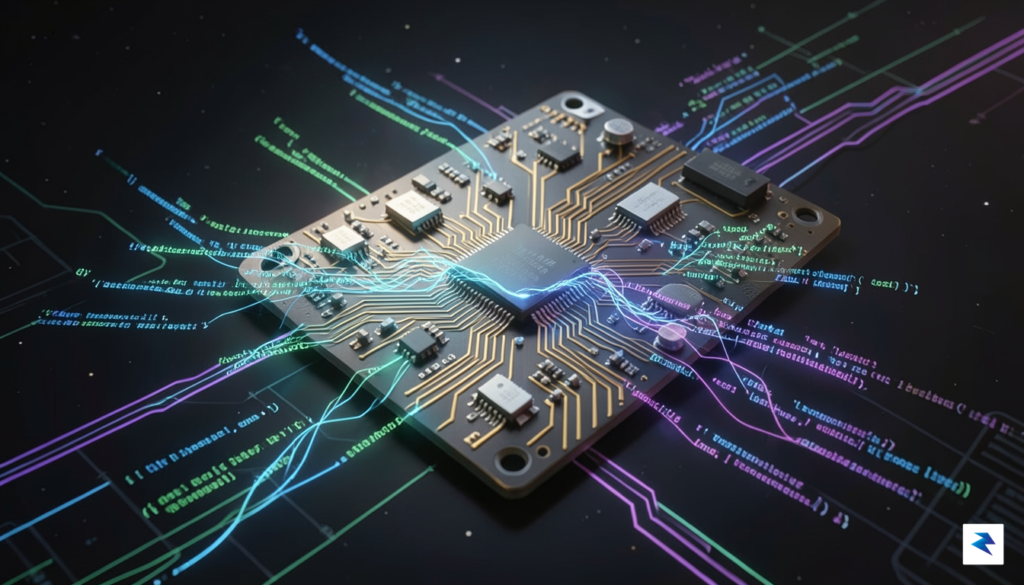
Beyond simple optimization, this acquisition serves as a defensive and offensive maneuver against the encroaching dominance of cloud-based AI. By bolstering its software stack, Qualcomm is positioning its edge devices—from laptops to automotive systems—to handle complex AI workloads locally without relying on data centers. This “on-device AI” strategy is essential for latency-sensitive applications, privacy-conscious enterprise users, and energy-efficient computing. Modular’s technological framework allows Qualcomm to unify its diverse range of products under a single, cohesive software architecture, reducing development friction for partners and cementing the company’s relevance in a market that increasingly values agility over pure transistor density.
The acquisition of Modular represents a transition from selling components to selling a complete AI development ecosystem, ensuring that Qualcomm’s hardware remains the primary choice for the next generation of intelligent applications.
Ultimately, this move reflects a broader industry truth: the barriers to entry for high-performance computing are moving up the stack. As software becomes the primary differentiator for hardware, companies that fail to master the developer experience will find themselves relegated to being commodity suppliers. By bringing Modular’s talent and technology in-house, Qualcomm is ensuring that its future is not just defined by the modems inside our pockets, but by the intelligent, AI-driven software that defines the user experience across every device in the modern digital ecosystem.
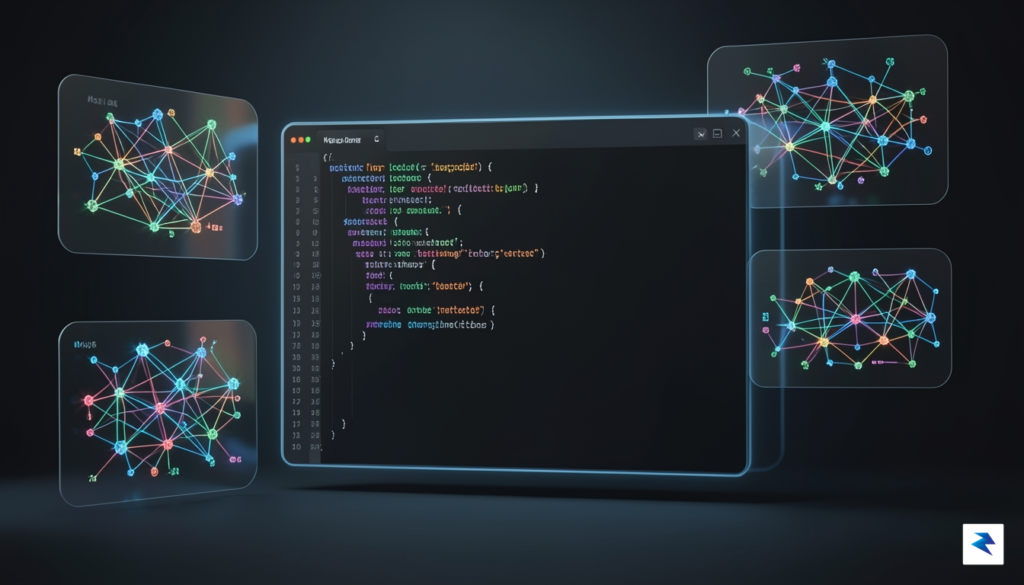
At the heart of this acquisition lies a transformative approach to software engineering that aims to solve the “two-language problem” currently plaguing the artificial intelligence industry. Historically, developers have been forced to prototype in Python for its accessibility and expansive ecosystem, only to rewrite performance-critical components in C++ or CUDA to achieve the necessary speed for production environments. Modular effectively bridges this divide through Mojo, a programming language designed to combine the high-level usability of Python with the raw, hardware-level performance of C++. By introducing a language that natively understands AI acceleration, Modular enables developers to write code that scales from simple scripts to massive, multi-accelerator models without the traditional friction of switching between fragmented toolchains.

The significance of this technology extends far beyond simple language syntax; it strikes at the core of the AI infrastructure bottleneck. Modern AI development pipelines are notoriously fragmented, often consisting of a chaotic mix of legacy frameworks, proprietary drivers, and disparate compiler backends that struggle to communicate effectively. Modular’s unified platform simplifies this complexity by providing a consistent software layer that abstracts away the underlying hardware intricacies. This allows developers to focus on model architecture rather than wrestling with the specific quirks of different silicon targets. By streamlining the path from research to deployment, Modular ensures that high-performance AI is not just reserved for those with the resources to manage specialized, custom-built environments.
The integration of Mojo into Qualcomm’s hardware ecosystem represents a fundamental shift: moving away from rigid, hand-tuned kernels toward a flexible, compiler-driven architecture that can adapt to new AI models in real-time.
Furthermore, Modular’s advanced compiler technology serves as the engine behind these performance gains, intelligently optimizing code for heterogeneous compute environments. Rather than relying on rigid, pre-built libraries, the compiler analyzes the developer’s code and transforms it into highly optimized instructions tailored for the specific AI hardware on which it will run. This approach is particularly crucial for Qualcomm, which maintains a vast portfolio of edge-computing devices. By leveraging Modular’s sophisticated infrastructure, developers can unlock the full potential of specialized chips without sacrificing the developer-friendly workflows they have come to rely on. Ultimately, this synergy promises to democratize high-end AI performance, making it significantly easier to deploy sophisticated, resource-intensive models across everything from cloud data centers to power-constrained mobile devices.

The acquisition of Modular represents a seismic shift in how hardware manufacturers approach the AI race, moving the battleground from raw silicon performance to the abstraction layers that govern developer productivity. For years, Nvidia has maintained an iron grip on the AI market not merely because of its powerful GPUs, but because of CUDA—a software ecosystem that makes it nearly impossible for developers to switch platforms without significant friction. By bringing Modular into its corporate fold, Qualcomm is effectively signaling that it intends to replicate this “moat” strategy within the edge computing domain. They are betting that the next decade of AI dominance will belong to the company that provides the most seamless, high-performance bridge between complex neural network models and local, power-efficient hardware.
This strategic pivot is a direct challenge to the fragmented nature of the current edge AI market, where developers often struggle to optimize models across diverse architectures. While competitors like Intel and Apple have made significant strides in integrating dedicated AI accelerators into their silicon, they have historically relied on more generalized software frameworks. Qualcomm’s move suggests they are no longer content with being a hardware provider; instead, they aim to become the primary platform for AI deployment. By owning the full stack—from the underlying instruction set architecture to the high-level programming tools provided by Modular—Qualcomm is positioning itself to be the “CUDA of the edge,” offering a unified environment where developers can write code once and run it with maximum efficiency across Qualcomm’s entire product portfolio.
The true value of this acquisition lies in the transition from hardware-centric design to software-defined silicon, where the ability to rapidly iterate on AI models becomes the ultimate competitive advantage.
Ultimately, this development forces a reckoning among Qualcomm’s rivals. Apple, with its tightly integrated “walled garden” of silicon and software, will find its position under increased pressure as Qualcomm offers a more open, yet equally powerful, alternative to third-party developers. Similarly, Intel’s efforts to standardize AI deployment via OpenVINO will now face a much more aggressive, vertically integrated challenger. By securing the expertise of the team behind the Mojo programming language and the MAX engine, Qualcomm is not just buying software; they are acquiring the ability to dictate how AI is written, optimized, and delivered at the edge. As the industry shifts toward local, privacy-centric AI, this merger ensures that Qualcomm’s hardware will be the primary vessel through which the next generation of intelligent applications reaches the consumer.
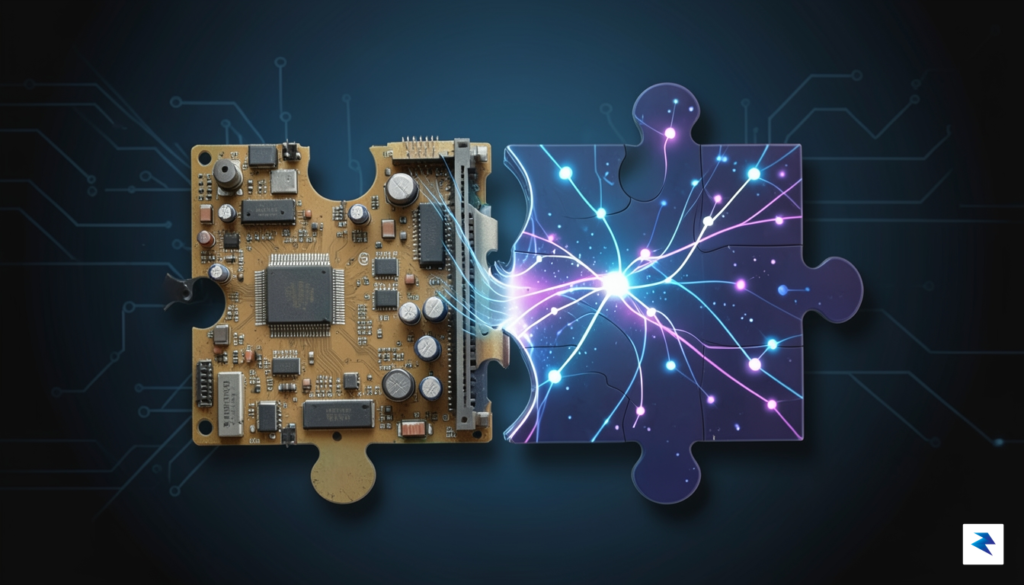
Integrating a high-velocity startup like Modular into the sprawling corporate architecture of a semiconductor titan like Qualcomm is a move fraught with both promise and peril. The primary concern among developers and industry analysts is the potential for “corporate bloat” to stifle the agile, iterative development cycles that allowed Modular to disrupt the AI infrastructure space in the first place. Large organizations often rely on bureaucratic processes and multi-layered approval chains that can inadvertently sand down the sharp edges of innovation, transforming a nimble project into a sluggish cog within a much larger machine. Ensuring that the Modular team maintains its autonomy and speed will be the single most critical factor in determining whether this acquisition fosters growth or results in a quiet stagnation of their groundbreaking technologies.

The fate of the Mojo programming language serves as the ultimate litmus test for this integration. Mojo was designed to bridge the gap between the ease of Python and the raw, low-level performance of C++, a combination that has garnered significant enthusiasm within the research and engineering communities. Under Qualcomm’s stewardship, the community is watching closely to see if Mojo will remain an open, accessible ecosystem that welcomes diverse hardware backends, or if it will be pivoted into a proprietary tool strictly optimized for Qualcomm’s Snapdragon and AI-focused hardware. Should the language become locked behind corporate gates, it risks alienating the very developers who championed its growth, potentially stalling its trajectory toward becoming a universal standard for AI programming.
The true measure of this acquisition’s success will not be found in quarterly earnings reports, but in the sustained vibrancy of the developer ecosystem that Modular has spent years cultivating.
Furthermore, aligning product roadmaps across two vastly different organizational cultures presents a significant technical hurdle. Qualcomm’s long-term hardware cycles require a level of stability and predictability that often conflicts with the “move fast and break things” philosophy inherent in successful AI startups. If the roadmap for Modular’s AI engine becomes tethered solely to the release schedule of next-generation silicon, the software’s utility for developers working on broader, cross-platform applications could be severely diminished. To avoid this, Qualcomm must strike a delicate balance: leveraging the unique capabilities of their hardware to accelerate Modular’s potential without forcing the software team to abandon their vision of a versatile, hardware-agnostic AI future. Navigating these conflicting incentives will require transparent communication and a commitment to maintaining the open-source spirit that initially placed Modular at the forefront of the artificial intelligence revolution.

For the developer community, the integration of Modular’s high-performance software stack into Qualcomm’s hardware ecosystem represents a fundamental shift in the AI development lifecycle. Historically, engineers have been forced to navigate a fragmented landscape where model training and inference optimization were siloed processes, often requiring manual, hardware-specific adjustments that stalled deployment. By unifying these stages through a cohesive software-first approach, developers can look forward to a significant reduction in the friction between model creation and real-world execution. This evolution means that the time-to-market for sophisticated AI applications will likely shrink, allowing teams to iterate on complex neural networks with the confidence that their code will perform optimally across a wide range of edge devices.

Furthermore, this move signals a broader industry transition away from an exclusive reliance on massive, centralized cloud infrastructure. As privacy concerns grow and the demand for low-latency responsiveness increases, the ability to run heavy-duty AI models directly on local hardware—often referred to as Edge AI—has become the gold standard for modern applications. By streamlining the deployment process, this acquisition empowers developers to move beyond the limitations of cloud-based APIs, enabling them to build intelligent, autonomous systems that function reliably even when offline. This democratization of high-performance computing means that powerful AI capabilities are no longer reserved for companies with massive data center budgets, but are becoming accessible to developers building for smartphones, automotive systems, and IoT devices.
The future of artificial intelligence will not be decided by hardware capacity alone, but by the efficiency and accessibility of the software layers that unlock that potential for developers.
Looking toward the next decade, the success of AI evolution will hinge on the deep, intrinsic synergy between software and hardware. As models grow in complexity and require increasingly specialized compute resources, the gap between a developer’s conceptual vision and the final execution on physical hardware must be bridged by robust, unified toolchains. This acquisition sets a new precedent for the industry, emphasizing that the most impactful advancements will come from companies that treat software as a first-class citizen alongside silicon. Ultimately, this integration provides a more stable, performant foundation for the next wave of innovation, ensuring that developers can focus on solving complex problems rather than fighting against the constraints of incompatible hardware architectures.
You must be logged in to post a comment.