
Why the White House Is Pressing OpenAI to Delay GPT-5.6
The Shift in AI Governance The landscape of artificial intelligence is currently undergoing a profound transformation as federal oversight…

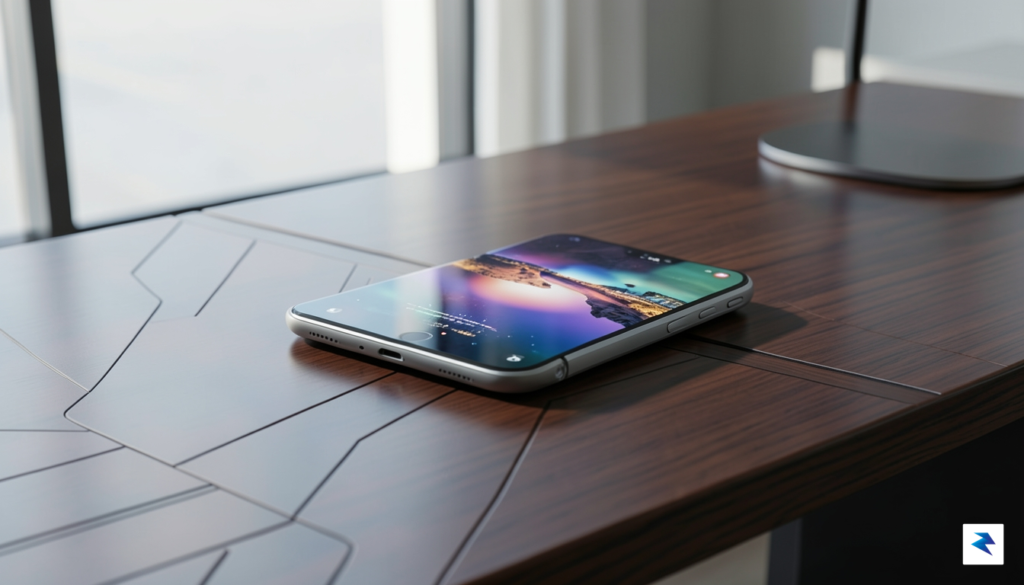
For over half a decade, the mobile industry has been locked in a high-stakes race to redefine the smartphone form factor. What began as experimental, crease-prone prototypes has steadily evolved into a mature category of hardware, with various manufacturers iterating on complex hinge mechanisms and flexible glass layers. While early adopters embraced these devices despite their fragile nature, the broader market has consistently demanded a level of durability and software optimization that only a few companies have managed to achieve. The industry is now reaching a critical tipping point where folding screens are no longer just a gimmick for tech enthusiasts, but a viable solution for users who crave the expansive real estate of a tablet within the compact footprint of a standard handset.
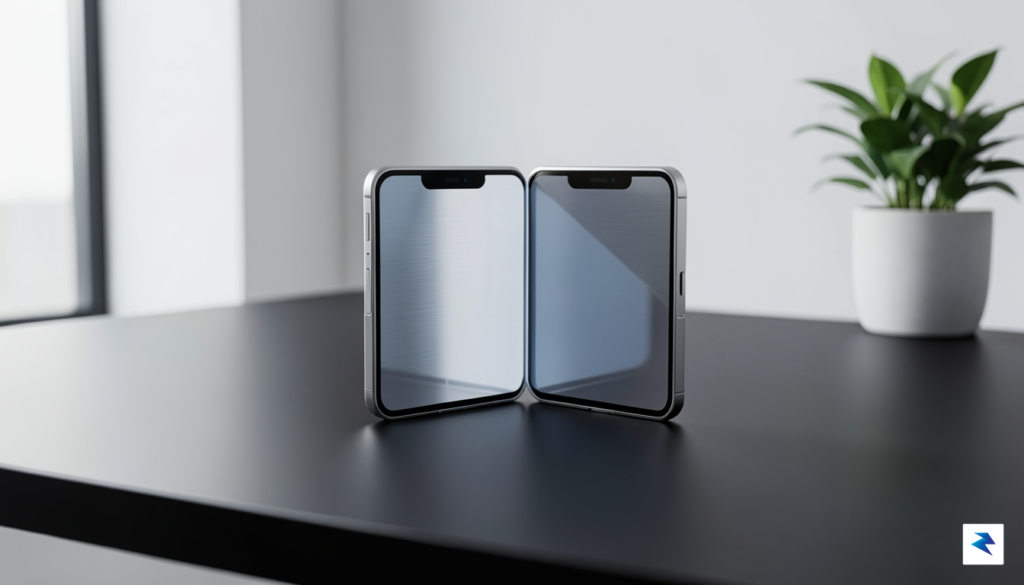
Apple’s conspicuous absence from this segment has often been interpreted as a lack of ambition, yet a closer look at the company’s historical playbook reveals a different strategy. Apple has never prioritized being the “first” to market with a new technology; instead, they operate with a disciplined “wait-and-see” approach that prioritizes long-term reliability and ecosystem integration over novelty. By allowing competitors to absorb the initial manufacturing failures and user feedback, Apple has effectively let the industry work out the kinks in foldable display technology. This calculated patience ensures that when they do launch a product, it is positioned not as a beta test, but as the new industry benchmark for polish, endurance, and seamless user experience.
“The true power of a foldable device lies not just in the hardware, but in how the software adapts to the user’s intent, transforming a pocket-sized tool into a productivity powerhouse in a single motion.”
The demand for such a device is clearly rising as consumers seek ways to balance heavy media consumption and multitasking with the necessity of pocketability. Modern users are increasingly frustrated by the trade-off between large, immersive screens and the ergonomic comfort of traditional devices. Apple’s entry into the foldable arena, bolstered by key manufacturing partnerships, is poised to solve this dilemma by introducing a device that feels like a natural extension of the current iPhone lineup. By refining the foldable experience, Apple is likely to move the needle from a niche curiosity to a mainstream necessity, forcing the rest of the market to rethink their standards for longevity and design cohesion.

The collaboration between Apple and Samsung Display for the production of foldable OLED panels is far more than a simple vendor-client relationship; it represents a strategic alignment of two industry titans. For years, Samsung has effectively pioneered the foldable market through its successful Galaxy Z Fold and Z Flip series, accumulating an unparalleled depth of expertise in hinge mechanics, screen durability, and the complex engineering required to make a display fold repeatedly without degradation. By tapping into this wealth of research and development, Apple is effectively leveraging a battle-tested supply chain to ensure that its entry into the foldable arena meets the high-performance expectations associated with the iPhone brand.

This partnership is particularly significant because of Apple’s legendary, uncompromising approach to quality control. While Samsung has already brought foldable devices to the mass market, Apple’s requirements for its own hardware often exceed current industry standards, demanding greater color accuracy, peak brightness consistency, and extreme longevity under rigorous stress testing. Integrating these bespoke specifications into Samsung’s existing manufacturing lines requires a unique synergy, where Apple’s design philosophy meets Samsung’s massive scale of production. This confluence ensures that when a foldable device eventually reaches the public, it will likely feature a display panel that addresses the common pain points—such as the visible crease or layer separation—that have plagued earlier generations of foldable technology.
The integration of Samsung’s proven manufacturing infrastructure with Apple’s design constraints suggests that we are moving toward a new era of mainstream foldable reliability.
Furthermore, relying on Samsung Display as the primary manufacturing partner allows Apple to bypass the years of trial-and-error that typically accompany the introduction of a new form factor. Samsung possesses the specialized clean-room environments and proprietary thin-film encapsulation processes necessary to protect OLED sub-pixels from moisture and air, which is the “Achilles’ heel” of flexible display tech. By securing this partnership, Apple isn’t just buying components; it is securing a technological foundation that has been refined through millions of consumer-use cycles. This strategic decision signals that the upcoming foldable iPhone will not be an experimental device, but a polished, high-performance product designed to set a new benchmark for the entire mobile industry.

The primary barrier preventing Apple from entering the foldable market has never been a lack of interest, but rather the stubborn laws of material science. For years, the foldable smartphone category has been defined by a visible, tactile crease running down the center of the display—a byproduct of the flexible polymer layers currently used in OLED panels. Apple’s internal quality control standards are notoriously rigid, and the company has reportedly been unwilling to release a product that features a permanent deformation in the glass. Achieving a perfectly flat, seamless surface that can withstand tens of thousands of folding cycles without showing signs of fatigue is a monumental engineering feat that requires a fundamental rethinking of display substrate materials.
Beyond the display itself, the hinge mechanism remains perhaps the most complex mechanical challenge in modern consumer electronics. A foldable iPhone requires a hinge that is not only robust enough to maintain structural integrity over years of daily use but also thin enough to integrate seamlessly into Apple’s ultra-slim chassis designs. This requires extreme precision in manufacturing; the hinge must be rigid enough to hold the device at multiple angles while remaining fluid enough to open and close effortlessly. Furthermore, engineers must contend with the constant threat of dust and debris ingress. Because a hinge creates a natural gap in the device’s frame, preventing microscopic particles from damaging the internal OLED layers is a hurdle that has bedeviled every manufacturer in the space thus far.
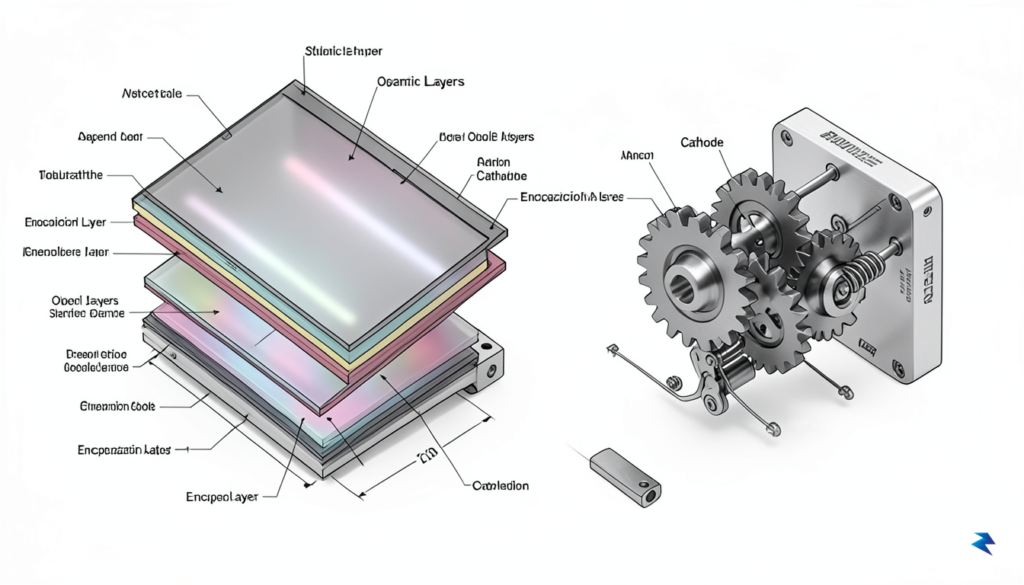
The transition from a rigid slab to a foldable form factor isn’t just a design change; it is a total reimagining of how hardware components, from batteries to logic boards, must coexist within a moving, folding architecture.
These structural hurdles explain why Apple has chosen to take a deliberate, measured approach to development. While competitors have opted for a “first-to-market” strategy, iterating through hardware revisions with each successive generation, Apple appears to be aiming for a “first-to-perfect” outcome. The partnership with Samsung to supply these advanced OLED panels is a critical step in overcoming these bottlenecks, as it combines Apple’s obsession with industrial design and material science with Samsung’s vast manufacturing experience in flexible display technology. Until these engineering teams can guarantee that the device will remain pristine after years of use, the project will likely remain in the prototyping phase, hidden away in Cupertino’s labs.
Ultimately, the delay in the foldable iPhone’s release is not a sign of stagnation, but rather a reflection of the extreme difficulty inherent in making a moving part as reliable as a static one. Achieving a “crease-free” experience requires advancements in both the flexible glass material and the supporting mechanical structure beneath it. By refining the hinge-to-display interface and ensuring long-term structural fatigue resistance, Apple is preparing to set a new benchmark for the category. The goal is to ensure that when the product finally hits the shelves, it feels less like an experimental prototype and more like the standard-bearer for a new era of mobile computing.
The entry of Apple into the foldable market represents a seismic shift that will likely transform a niche experimental category into a mainstream necessity. While manufacturers like Samsung, Google, and Motorola have spent years iterating on hardware, the “Apple effect” is poised to standardize the foldable form factor in the eyes of the general consumer. Historically, Apple rarely enters a market first, but when it does, it effectively sets the design language, usage patterns, and quality benchmarks that the rest of the industry is forced to follow. By leveraging its massive supply chain and deep integration with its hardware partners, Apple will likely move foldables away from being “enthusiast gadgets” and toward being the standard evolution of the modern smartphone.
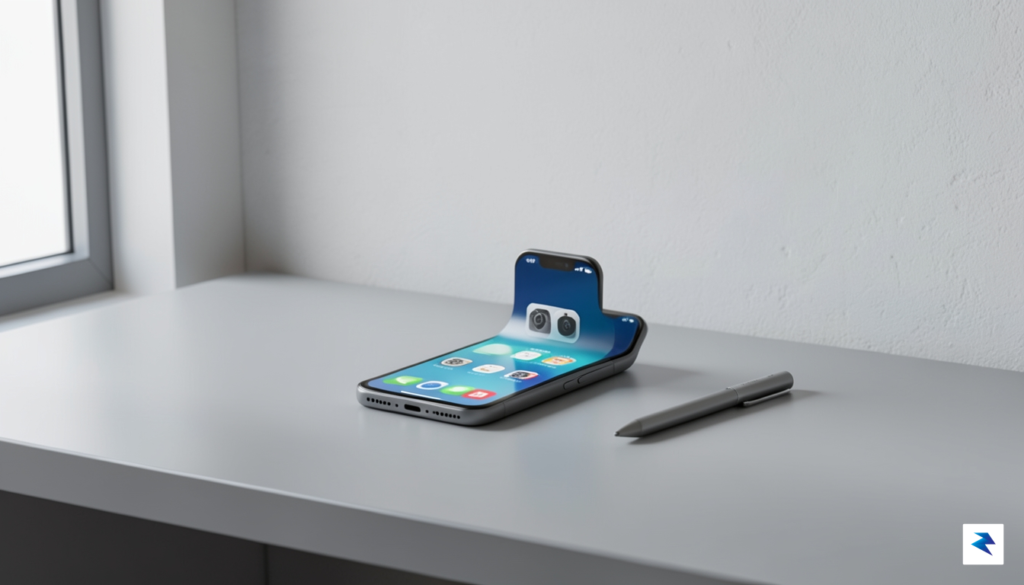
The true “killer app” for an Apple foldable, however, will not be the hinge mechanism or the screen durability, but rather the seamless marriage of iOS with a flexible interface. Android manufacturers have struggled with UI scaling and fragmented multitasking experiences, often leaving users to deal with buggy app transitions and poorly optimized layouts. Apple’s ecosystem approach, which enforces strict design guidelines for developers, will likely result in a foldable OS that feels intuitive and fluid from day one. If Apple can successfully implement a refined “Continuity” feature that allows users to seamlessly transition between a compact phone mode and a tablet-like canvas, it will set a bar for software integration that competitors will find difficult to match.
The success of a foldable iPhone will hinge less on the screen’s ability to bend and more on Apple’s ability to make the multitasking experience feel natural rather than forced.
This impending release will likely force Android manufacturers to shift their internal priorities, moving away from purely experimental hardware specifications and toward intense software refinement. For years, the foldable market has been defined by “spec wars”—who has the thinnest device, the least visible crease, or the largest outer display. Once Apple enters the fray, the competitive landscape will pivot toward user experience, application ecosystem stability, and long-term device longevity. Android OEMs will be compelled to move beyond their current iterative approach, focusing instead on optimizing the core OS experience to prevent users from migrating to the Apple ecosystem for a more polished, reliable foldable experience. Ultimately, this pressure will benefit the entire industry, pushing the foldable category toward maturity and widespread adoption.

The timeline for Apple’s entry into the foldable market has been a subject of intense speculation for years, but recent movements in the supply chain suggest that the horizon is finally coming into focus. While industry analysts previously oscillated between vague “coming soon” predictions and skepticism regarding Apple’s interest, the initiation of OLED panel production discussions with Samsung marks a tangible shift from R&D theory to prototype manufacturing. Most credible supply chain reports now converge on a release window between 2026 and 2027. This timeframe aligns with Apple’s historical strategy of allowing competitors to iron out the initial “teething problems” of new hardware categories before introducing a refined, proprietary version that prioritizes durability and user experience over mere novelty.
Several critical factors will ultimately dictate whether this launch occurs at the earlier or later end of that window. Engineering challenges, particularly regarding the crease visibility on the display and the long-term integrity of the hinge mechanism, remain the primary hurdles. Apple is notoriously averse to releasing hardware that fails to meet its rigorous quality standards; therefore, if the current test units show signs of premature degradation, the company will not hesitate to delay the launch to ensure a polished product. Furthermore, the stabilization of foldable component costs and the maturity of iOS integration for dual-screen or flexible workflows are essential prerequisites. The synergy between hardware development and software optimization will likely be the final gatekeeper, as Apple needs to ensure that a foldable device feels like an essential tool rather than a niche experiment.
To be considered a success by Apple’s standards, a foldable iPhone must offer more than just a large screen; it must solve a genuine user pain point—likely by bridging the gap between the portability of an iPhone and the productivity capabilities of an iPad—without compromising on the thinness or battery life that users have come to expect.
When the device finally arrives, its success will hinge on whether it can overcome the skepticism surrounding foldable durability. Consumers are understandably wary of expensive handsets that may suffer from screen delamination or hinge failure after a year of use. If Apple can demonstrate that its foldable iPhone is as robust as a standard flagship, it will likely catalyze a massive migration of users who have been waiting on the sidelines. Ultimately, this isn’t just about launching a folding phone; it is about establishing a new standard for a product category that has struggled to move beyond its early-adopter phase. By waiting until 2026 or 2027, Apple is positioning itself to deliver a mature, high-performance device that could redefine the premium smartphone landscape for the next decade.
You must be logged in to post a comment.